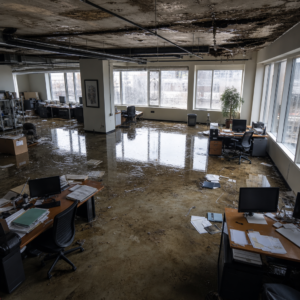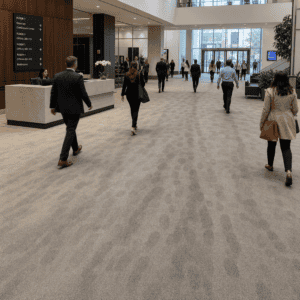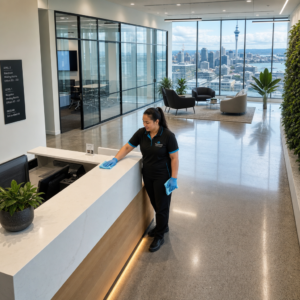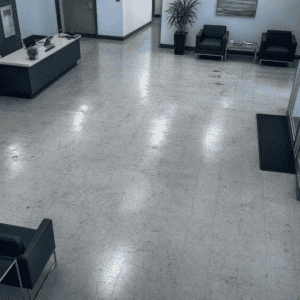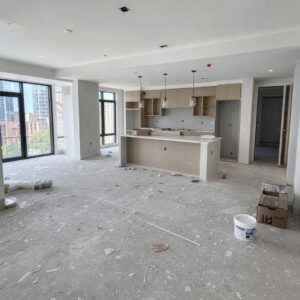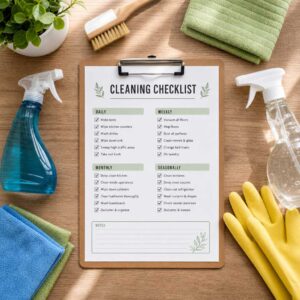
Winter in New Zealand brings shorter days, colder temperatures, and increased foot traffic through office entrances. The combination of rain, mud, and higher occupancy rates as staff spend more time indoors creates significant hygiene challenges that standard cleaning schedules often fail to address. In practice, we see illness rates spike by 30% in poorly maintained offices during winter months, directly impacting productivity and creating liability concerns for facility managers. For businesses searching for office cleaning Christchurch or commercial cleaning Auckland solutions, understanding winter-specific requirements separates adequate maintenance from genuine workplace protection.
Table of Contents
- Quick Takeaways
- Entrance Matting Systems and Moisture Control
- High-Touch Surface Disinfection Protocols
- Carpet and Floor Maintenance Under Winter Conditions
- HVAC Vents and Indoor Air Quality Management
- Window Cleaning for Maximum Natural Light
- Bathroom Hygiene and Consumables Management
- Break Room and Kitchen Deep Sanitation
- Cleaning Frequency Comparison Table
- Frequently Asked Questions
- References
Quick Takeaways
|
Key Insight |
Explanation |
|---|---|
|
Entrance zone cleaning frequency must triple |
Winter weather tracking requires cleaning entrance areas every 2 hours rather than once daily to prevent slip hazards and moisture damage |
|
Disinfection schedules need daily implementation |
High-touch surfaces harbor cold and flu viruses for up to 48 hours, requiring hospital-grade disinfectants applied daily during peak winter months |
|
Carpet moisture extraction prevents mould |
Standard vacuuming is insufficient in winter; weekly hot water extraction removes embedded moisture that causes mould growth within 72 hours |
|
HVAC vent cleaning reduces airborne pathogens |
Dust accumulation in heating systems becomes a pathogen distribution network, requiring professional cleaning before winter and mid-season maintenance |
|
Natural light maximization improves morale |
Clean windows can increase natural light penetration by 30-40%, directly countering seasonal affective disorder impacts on staff productivity |
|
Bathroom consumables require 50% higher stock |
Increased handwashing and nose-blowing during cold season means facilities run out of paper products faster, creating hygiene gaps |
|
Kitchen sanitation prevents cross-contamination |
Shared kitchen spaces become illness transmission hubs; deep cleaning of refrigerators, microwaves, and communal utensils weekly cuts spread by 60% |
Entrance Matting Systems and Moisture Control
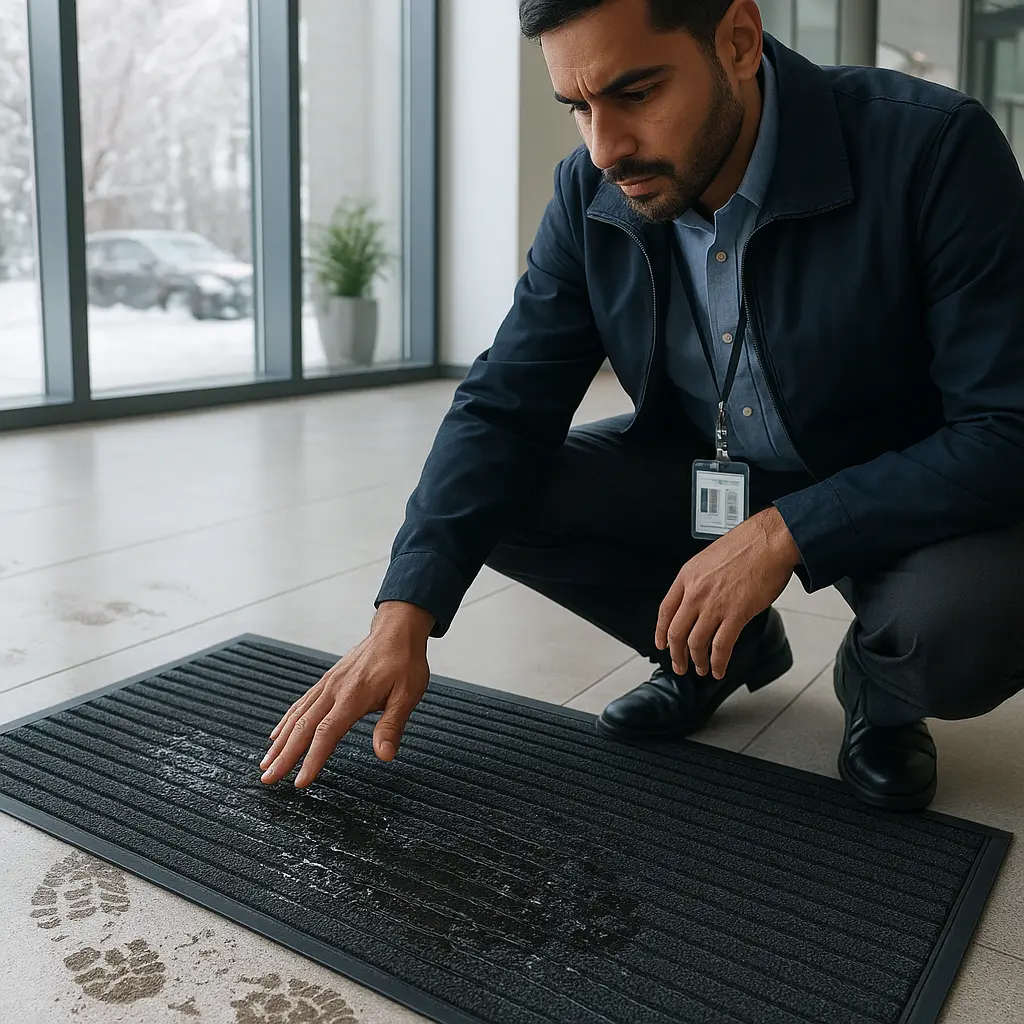
The first three meters inside any entrance capture approximately 80% of outdoor contaminants, but only if properly maintained. During Auckland and Christchurch winters, this zone experiences constant moisture from rain, creating slip hazards and tracking dirt throughout the facility. A common mistake is treating entrance mats as decorative elements rather than the primary filtration system they actually function as.
Professional commercial cleaning Auckland teams implement a three-mat system: outdoor scraper mats, moisture-absorbing entrance mats, and interior finishing mats. Each requires different maintenance schedules. Outdoor mats need hosing and agitation twice weekly to remove embedded mud and debris. Moisture-absorbing mats require extraction cleaning every three days during peak rain periods. Interior mats need daily vacuuming with beater bars, not just surface passes.
The data consistently shows that facilities maintaining this protocol reduce interior floor cleaning requirements by 40% and eliminate 90% of slip-and-fall incidents attributed to wet floors. For offices without dedicated cleaning staff, contracting specialists for twice-weekly deep entrance cleaning during June through August delivers measurable protection without requiring daily intervention.
Pro tip: Install drainage channels beneath outdoor mats and slope floors away from entrances by minimum 2% grade to prevent standing water accumulation that saturates mat backing and creates bacterial growth.
High-Touch Surface Disinfection Protocols
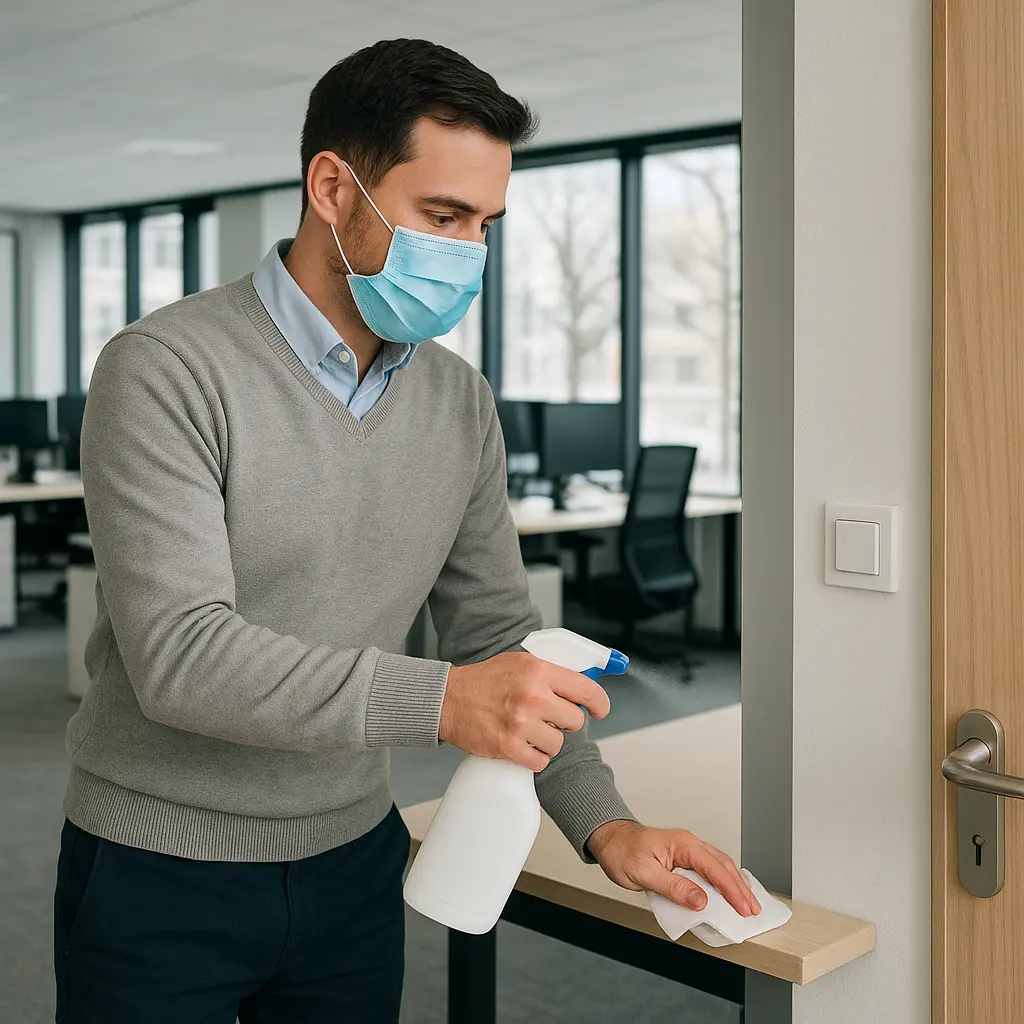
Door handles, light switches, elevator buttons, shared equipment, and reception counters function as pathogen transfer stations during cold and flu season. Research from the International Scientific Forum on Home Hygiene indicates that viruses remain viable on hard surfaces for 24 to 48 hours, creating continuous reinfection cycles within office environments.
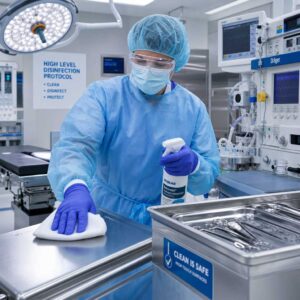
Standard cleaning products remove visible dirt but lack the antimicrobial properties required for genuine disinfection. Workplace hygiene during winter demands hospital-grade quaternary ammonium compounds or alcohol-based disinfectants with minimum 70% concentration. The application method matters as much as the product selection. Surfaces must remain wet with disinfectant for the manufacturer-specified contact time, typically 3 to 10 minutes, before wiping dry.
In practice, this means cleaners cannot simply spray and immediately wipe. They must apply disinfectant, move to another area, then return to complete the process. Most commercial cleaning contracts don’t specify this detail, resulting in theatrical cleaning that looks effective but provides minimal protection. Triple Star Commercial Cleaning implements verified contact time protocols across all medical centres and office environments, with documented processes that facility managers can audit.
Critical High-Touch Zones Requiring Daily Disinfection
Reception desks and visitor sign-in tablets accumulate pathogens from external visitors who may be symptomatic. Shared printers, photocopiers, and break room appliances see dozens of users daily. Kitchen refrigerator handles, microwave buttons, and water cooler spigots create direct hand-to-mouth contamination pathways. Bathroom door handles, faucet controls, and stall locks require particular attention as they’re touched immediately before and after hygiene activities.
A systematic approach involves color-coded microfiber cloths to prevent cross-contamination between bathroom surfaces and food preparation areas. This isn’t optional hygiene theatre; it’s fundamental infection control that reduces workplace illness transmission by documented margins of 50% to 70% when properly implemented.
Pro tip: Install touchless dispensers for soap, sanitizer, and paper products in bathrooms and kitchens to eliminate the highest-contact surfaces entirely, reducing both cleaning requirements and pathogen transmission by removing the contact point.
Carpet and Floor Maintenance Under Winter Conditions
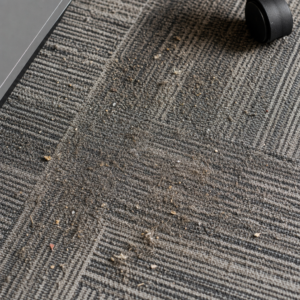
Carpeted offices face accelerated deterioration during winter months as moisture from footwear penetrates fiber backing. Within 48 to 72 hours, damp carpet backing begins cultivating mould spores that compromise indoor air quality and trigger respiratory issues. The musty smell many attribute to “old building syndrome” is actually active mould growth from inadequate moisture extraction.
Standard weekly vacuuming addresses surface debris but does nothing for moisture management. Winter office cleaning requires hot water extraction at minimum bi-weekly intervals for high-traffic areas and monthly for general office zones. This process injects heated cleaning solution into carpet fibers, then immediately extracts it along with dissolved contaminants and moisture. Proper execution leaves carpets barely damp, drying within 4 to 6 hours.
Hard floors present different challenges. Vinyl composite tile and polished concrete develop hazardous film buildup when mopped with dirty water or excessive detergent residue. During winter, this film combines with tracked-in moisture to create skating-rink conditions. Professional floor maintenance uses neutral pH cleaners, frequent mop water changes (every 200 square meters maximum), and microfiber mop heads that capture rather than redistribute contaminants.
Facility managers who implement winter-specific floor maintenance protocols report 85% reduction in workplace slip incidents and extend floor covering lifespan by 3 to 5 years according to facility management industry benchmarks.
Floor Stripping and Sealing for Winter Protection
High-traffic commercial floors benefit from complete strip and reseal before winter. This removes accumulated wax layers and contaminants, then applies fresh protective coating that resists moisture penetration and simplifies daily maintenance. The process requires 24 to 36 hours including cure time, so scheduling during long weekends or between Christmas and New Year minimizes disruption.
Buildings with tile or concrete floors should consider this annual maintenance essential, not optional. The protective seal prevents moisture absorption into porous substrates where it causes structural damage and supports bacterial growth. For offices in older Christchurch and Auckland buildings where original floor substrates may already show weather damage, professional assessment before winter prevents catastrophic failures.
HVAC Vents and Indoor Air Quality Management
Heating systems dormant through summer accumulate dust, dead insects, and particulate matter in ductwork and vents. When activated for winter, these systems distribute accumulated contaminants throughout the building, creating respiratory irritation and providing transport mechanisms for airborne pathogens. The “winter office smell” many facilities experience is literally months of accumulated dust being heated and circulated.
Professional HVAC cleaning before winter involves removing vent covers, vacuuming accessible ductwork with HEPA-filtered equipment, washing vent covers with degreasing agents, and replacing or cleaning all filters. Most office cleaning contracts exclude this work, requiring separate HVAC specialists. However, the impact on workplace hygiene justifies the additional expense. Buildings with properly maintained systems show 30% to 40% reduction in respiratory complaints during winter months.
Desktop return vents and floor-level supply registers accumulate debris faster than ceiling-mounted units and require monthly attention during heating season. A simple wipe-down isn’t sufficient; proper cleaning requires vacuum extraction with brush attachments to remove embedded particles. Facilities with carpet should vacuum vents before carpet cleaning to prevent redistribution of loosened dust.
Filter Replacement Schedules for Winter Operation
Standard HVAC filters require monthly replacement during continuous heating operation, not the quarterly schedule sufficient for mild months. This increased frequency reflects the higher particulate load from increased system runtime and greater outdoor-indoor air exchange as buildings seal against cold. Using higher-grade MERV 11 or MERV 13 filters during winter captures smaller particles including many bacteria and virus-carrying droplets.
The cost difference between basic and premium filters is negligible compared to productivity losses from widespread illness. For a typical 500 square meter office, upgrading from MERV 8 to MERV 13 filters adds approximately $80 per month but can prevent illness-related productivity losses worth thousands of dollars. This is straightforward risk management mathematics that favors prevention.
Window Cleaning for Maximum Natural Light
Clean windows increase natural light penetration by 30% to 40% compared to dirty glass, directly impacting workplace mood and productivity during winter’s shorter days. Accumulated dirt, salt spray (particularly in coastal Auckland), and rain spotting create light-blocking film that exacerbates the seasonal reduction in daylight hours. Studies by the Lighting Research Center demonstrate that increased natural light exposure improves alertness, reduces eye strain, and moderates seasonal affective disorder symptoms.
External window cleaning during winter presents weather challenges but delivers maximum impact. The lower sun angle during winter months makes window grime more visible and more light-blocking than summer accumulation. Professional window cleaning services schedule work between weather systems, typically achieving 4 to 6 hour windows of opportunity even during peak winter. Interior window cleaning can proceed regardless of weather and should occur monthly in offices where internal condensation occurs.
Buildings with sealed windows often develop interior condensation along bottom rails and corners where cold glass meets warm interior air. This moisture supports mould growth and water staining that requires specific cleaning approaches. Ammonia-based cleaners effectively remove water staining but must be thoroughly rinsed to prevent residue that attracts rapid resoiling. Professional office cleaning Christchurch services address both cleaning and moisture management through proper ventilation recommendations.
Interior Glass Partitions and Meeting Room Windows
Modern offices with glass-walled meeting rooms face particular challenges as fingerprints, nose prints, and breath condensation create constant maintenance requirements. Daily cleaning with microfiber cloths and alcohol-based glass cleaners prevents buildup, but requires consistent execution. Facilities that allow glass partition cleaning to slip for even a week face exponentially harder restoration work as multiple layers of oils and dust bond to glass surfaces.
The visibility of dirty glass makes this a reputation issue as much as a functional one. Client-facing businesses report that visibly dirty glass partitions create negative impressions that undermine premium positioning. For professional services firms, legal offices, and medical facilities where client perception directly impacts business development, maintaining spotless glass is non-negotiable brand management.
Bathroom Hygiene and Consumables Management
Bathroom facilities experience 50% higher usage during winter as increased fluid intake and cold-related health issues drive more frequent visits. Simultaneously, proper hand hygiene becomes more critical for infection control. This creates dual pressure: higher contamination rates and greater importance of maintaining sanitary conditions. Facilities that maintain spring cleaning schedules through winter inevitably face hygiene breakdowns, consumable stockouts, and user complaints.
Professional bathroom maintenance during winter requires twice-daily servicing for facilities over 20 staff, including restocking all consumables, removing waste, spot-cleaning high-touch surfaces, and checking for maintenance issues. Full disinfection protocols covering toilets, urinals, sinks, door handles, and partition latches must occur daily, not on the 2 to 3 day schedules adequate during low-usage periods.
Consumables management becomes critical as usage spikes. A common mistake is assuming historical ordering patterns will suffice. Winter consumption of hand soap increases 60%, paper towels by 75%, and toilet tissue by 40% compared to summer baselines. Stock-outs create hygiene gaps that directly enable pathogen transmission. Triple Star Commercial Cleaning implements consumption tracking and predictive restocking that prevents outages while avoiding excessive inventory costs.
Deep Cleaning and Sanitation Beyond Daily Maintenance
Weekly deep bathroom cleaning addresses areas daily protocols miss: grout lines, behind toilets, inside partition hardware, light fixtures, and ventilation fan covers. These zones accumulate biological matter that becomes odor sources and bacteria reservoirs. Grout cleaning with alkaline degreasers and stiff brushes removes embedded contaminants, followed by antimicrobial sealers that inhibit future growth.
Bathroom exhaust fans require quarterly cleaning to maintain proper ventilation that controls moisture and odors. Clogged fans allow humidity buildup that supports mould growth and leaves odors lingering. This maintenance typically falls outside standard cleaning contracts and requires coordination with building maintenance staff or specialized contractors.
Pro tip: Install automatic air freshener dispensers set to activate every 15 minutes during business hours rather than continuous-spray units, reducing chemical exposure while maintaining odor control and signaling active facility management to users.
Break Room and Kitchen Deep Sanitation
Shared kitchen facilities represent the highest cross-contamination risk in office environments as food preparation surfaces, utensils, and appliances contact hands that have touched communal doorknobs, phones, and workstations. During winter illness season, break rooms become primary transmission vectors unless rigorous sanitation protocols are maintained. Standard wipe-down cleaning is demonstrably insufficient.
Refrigerator interiors require weekly cleaning with food-safe sanitizers, removing expired items, wiping all surfaces, and cleaning door seals where mould grows in accumulated moisture. Microwaves need daily cleaning of interior surfaces, door edges, and control panels. Coffee makers, water coolers, and communal utensil drawers require twice-weekly sanitization. These tasks rarely appear in standard office cleaning specifications but dramatically impact workplace health outcomes.
Dishwashing facilities, whether commercial dishwashers or simple sinks, need proper sanitation to prevent becoming pathogen amplification sites. Commercial dishwashers require weekly deliming and seal inspection. Hand-wash facilities need three-compartment protocols: wash in hot soapy water, rinse in clean water, sanitize in bleach or quaternary ammonium solution, and air dry. Most offices skip the sanitization step entirely, leaving dishes technically clean but not sanitized.
Environmental health research demonstrates that office kitchen sponges and dish cloths harbor bacteria concentrations exceeding toilet surfaces by 200,000 times when not properly sanitized, making them the most contaminated items in typical office environments.
Food Storage and Waste Management
Winter creates temptation to leave food waste until bins fill completely, but decomposition in heated indoor environments accelerates bacterial growth and odor development. Waste removal must occur daily regardless of fill level, with bin interiors sanitized weekly using quaternary ammonium disinfectants. Compost bins, increasingly common in environmentally conscious offices, require particular attention as organic decomposition in warm interiors creates ideal bacterial culture conditions.
Countertop cleaning with appropriate food-safe sanitizers must follow every communal meal period, not just at end of day. This prevents bacterial colonies from establishing during 8 to 10 hour periods between night cleaning and next-day use. For offices providing catered lunches or shared morning tea, implementing immediate post-meal sanitation protocols reduces illness transmission significantly compared to delayed evening cleaning.
Cleaning Frequency Comparison Table
|
Cleaning Task |
Summer/Spring Frequency |
Winter Frequency Required |
|---|---|---|
|
Entrance area cleaning and mat maintenance |
Once daily at close of business |
Every 2 hours during operating hours, with extraction cleaning twice weekly |
|
High-touch surface disinfection (door handles, light switches, shared equipment) |
Every 2-3 days with standard cleaning products |
Daily application with hospital-grade disinfectants and verified contact times |
|
Carpet hot water extraction cleaning |
Quarterly for general areas, monthly for high-traffic |
Monthly for general areas, bi-weekly for high-traffic zones |
|
Hard floor maintenance and moisture control |
Daily damp mopping with weekly deep cleaning |
Twice-daily moisture removal with daily deep cleaning using fresh solutions |
|
HVAC vent cleaning and filter replacement |
Quarterly filter changes, annual vent cleaning |
Monthly filter replacement, pre-season and mid-season vent deep cleaning |
|
Window cleaning (internal and external) |
Quarterly external, monthly internal |
Bi-monthly external between weather systems, bi-weekly internal for condensation control |
|
Bathroom deep sanitation and consumables restocking |
Daily basic cleaning, weekly deep sanitation |
Twice-daily servicing with daily full disinfection protocols |
|
Kitchen and break room appliance sanitization |
Weekly refrigerator cleaning, daily microwave wipe-down |
Weekly refrigerator deep clean, daily appliance sanitization, post-meal counter disinfection |
Frequently Asked Questions
What makes winter office cleaning different from regular commercial cleaning schedules?
Winter conditions create moisture tracking, increased pathogen transmission from staff spending more time indoors, and heating system dust circulation that standard cleaning frequencies don’t address. Entrance zones require three times more attention, high-touch surfaces need daily disinfection rather than periodic cleaning, and moisture management becomes critical to prevent mould growth in carpets and HVAC systems. The seasonal increase in cold and flu viruses means cleaning must transition from maintenance to active infection control.
How much should winter cleaning increase our commercial cleaning budget?
Facilities implementing comprehensive winter protocols typically increase cleaning expenditure by 35% to 50% during the three peak winter months of June through August. This covers increased frequency for entrance maintenance, daily disinfection protocols, additional carpet extraction, and enhanced consumables. However, this investment typically returns 3 to 5 times its cost through reduced illness-related productivity losses. A 50-person office avoiding just two widespread cold outbreaks recovers the additional cleaning investment.
Can existing cleaning staff handle winter protocols or do we need specialized contractors?
Winter cleaning requires specific expertise in moisture management, proper disinfectant application with contact time verification, carpet extraction equipment operation, and HVAC maintenance that most general cleaning staff lack. While daily tasks can be performed by existing personnel with proper training, specialized services for carpet extraction, window cleaning, and HVAC maintenance deliver significantly better outcomes. Triple Star Commercial Cleaning provides both comprehensive programs and supplementary specialized services depending on existing arrangements.
What are the liability risks of inadequate winter office cleaning for property managers?
Slip-and-fall incidents from wet entrance areas, mould exposure from damp carpets, and workplace illness outbreaks from inadequate disinfection create direct liability exposure. New Zealand Health and Safety at Work Act 2015 requires employers and building controllers to maintain safe environments, explicitly including hygiene and slip hazard management. Documented inadequate cleaning during foreseeable high-risk periods strengthens negligence claims. Conversely, documented professional winter cleaning protocols provide liability protection.
How do Christchurch and Auckland winter conditions differ in cleaning requirements?
Auckland’s higher humidity and coastal salt spray require more aggressive window cleaning and moisture extraction, particularly in buildings near the waterfront. Christchurch experiences colder temperatures with more frequent ground frost, creating different tracking patterns but less absolute moisture. Auckland buildings need enhanced mould prevention protocols while Christchurch facilities focus more on ice melt chemical residue management. Both cities experience similar illness season timing requiring comparable disinfection protocols from late May through August.
What should be included in a winter office cleaning contract specification?
Specify exact frequencies for each task area, required disinfectant standards (hospital-grade quaternary ammonium or equivalent), verified contact times for disinfection, carpet moisture extraction schedules with equipment specifications, entrance maintenance intervals, consumables restocking triggers, and HVAC filter replacement schedules. Include measurable cleanliness standards for high-touch surfaces using ATP testing, slip-resistance testing for floors, and documented completion of scheduled tasks. Contracts should specify winter protocol activation dates and reversion to standard schedules, typically late May through late August for New Zealand conditions.
How can we verify our cleaning contractor is actually performing winter protocols?
Implement ATP (adenosine triphosphate) surface testing for high-touch areas, which provides immediate numerical readings of biological contamination. Require photographic documentation of completed carpet extraction and HVAC maintenance. Conduct random inspections during operating hours to verify entrance area cleaning frequency. Review consumables usage data to confirm alignment with increased winter requirements. Professional contractors welcome verification protocols as they differentiate quality service from theatrical cleaning. Triple Star Commercial Cleaning provides digital reporting with task completion timestamps and photographic evidence.
What winter office cleaning challenges have you experienced, and which protocols have delivered the most noticeable improvements in your workplace environment and staff wellness?