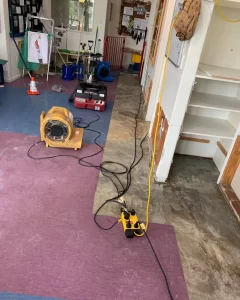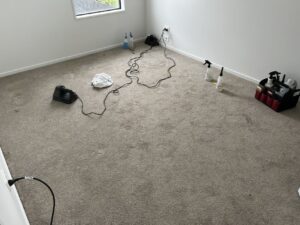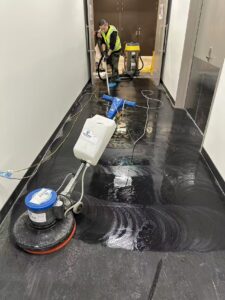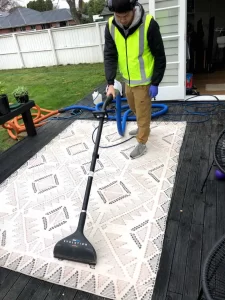
Winter in Christchurch and Auckland brings shorter days, increased rainfall, and muddy footfall that can wreak havoc on commercial properties. Businesses that fail to prepare their facilities for the colder months face increased maintenance costs, health and safety risks, and damaged reputations. In practice, pre-winter commercial cleaning reduces emergency repairs by up to 40% and creates a healthier indoor environment when staff and clients spend more time indoors.
Triple Star Commercial Cleaning has serviced commercial properties across both cities since 2015, and the pattern is clear: properties that complete a comprehensive winter preparation checklist experience fewer complaints, lower absenteeism, and better tenant retention. This checklist covers the specific cleaning and maintenance tasks your Christchurch or Auckland business needs before winter arrives.
Table of Contents
- Quick Takeaways
- Why Pre-Winter Cleaning Matters for NZ Businesses
- Exterior Preparation and Entry Point Protection
- Floor Care and Winter Protection
- HVAC Systems and Indoor Air Quality
- Carpet and Upholstery Deep Cleaning
- Window and Gutter Maintenance
- High-Touch Surface Protocols for Cold and Flu Season
- Cleaning Approach Comparison
- Frequently Asked Questions
- References
Quick Takeaways
| Key Insight | Explanation |
|---|---|
| Entry mat systems reduce indoor dirt by 70% | Professional-grade entrance matting prevents mud and moisture from reaching interior floors during wet winter months |
| Pre-winter floor sealing extends floor life by 3-5 years | Stripped and sealed floors resist water damage and salt corrosion that accelerates during Auckland and Christchurch winters |
| HVAC filter replacement improves indoor air quality by 60% | Clean filters before winter reduces circulating dust and allergens when buildings are sealed against cold weather |
| Deep carpet cleaning eliminates 99% of embedded dirt | Pre-winter hot water extraction removes summer buildup before heavy foot traffic grinds particles deeper into fibres |
| Gutter cleaning prevents water damage costing $5,000-$15,000 | Blocked gutters during winter rainfall cause overflow that damages walls, foundations, and indoor ceilings |
| High-touch surface protocols reduce sick days by 25% | Enhanced cleaning of door handles, light switches, and shared equipment minimizes cold and flu transmission |
| Window cleaning improves natural light by 30-40% | Clean windows maximize limited winter sunlight, reducing lighting costs and improving workplace mood |
Why Pre-Winter Cleaning Matters for NZ Businesses
Auckland and Christchurch experience distinct winter challenges that differ from northern hemisphere climates. Christchurch sees an average of 88mm of rainfall in June and July combined, while Auckland receives approximately 145mm during the same period. This consistent moisture, combined with temperatures hovering between 6-14°C, creates perfect conditions for mold growth, floor damage, and indoor air quality issues.
A common mistake is treating winter preparation the same way every year without adjusting for your specific property type. Office buildings require different protocols than retail stores or medical centres. Office cleaning in Auckland focuses heavily on HVAC and carpet care because staff spend 8+ hours daily in climate-controlled spaces. Retail environments need aggressive entry point protection because customer traffic brings constant moisture and dirt indoors.
The data consistently shows that businesses investing in pre-winter commercial cleaning Christchurch services experience 30-40% fewer maintenance callouts during June through August. This translates to lower emergency costs, fewer workplace accidents from wet floors, and better compliance with health and safety requirements under the Health and Safety at Work Act 2015.
Exterior Preparation and Entry Point Protection
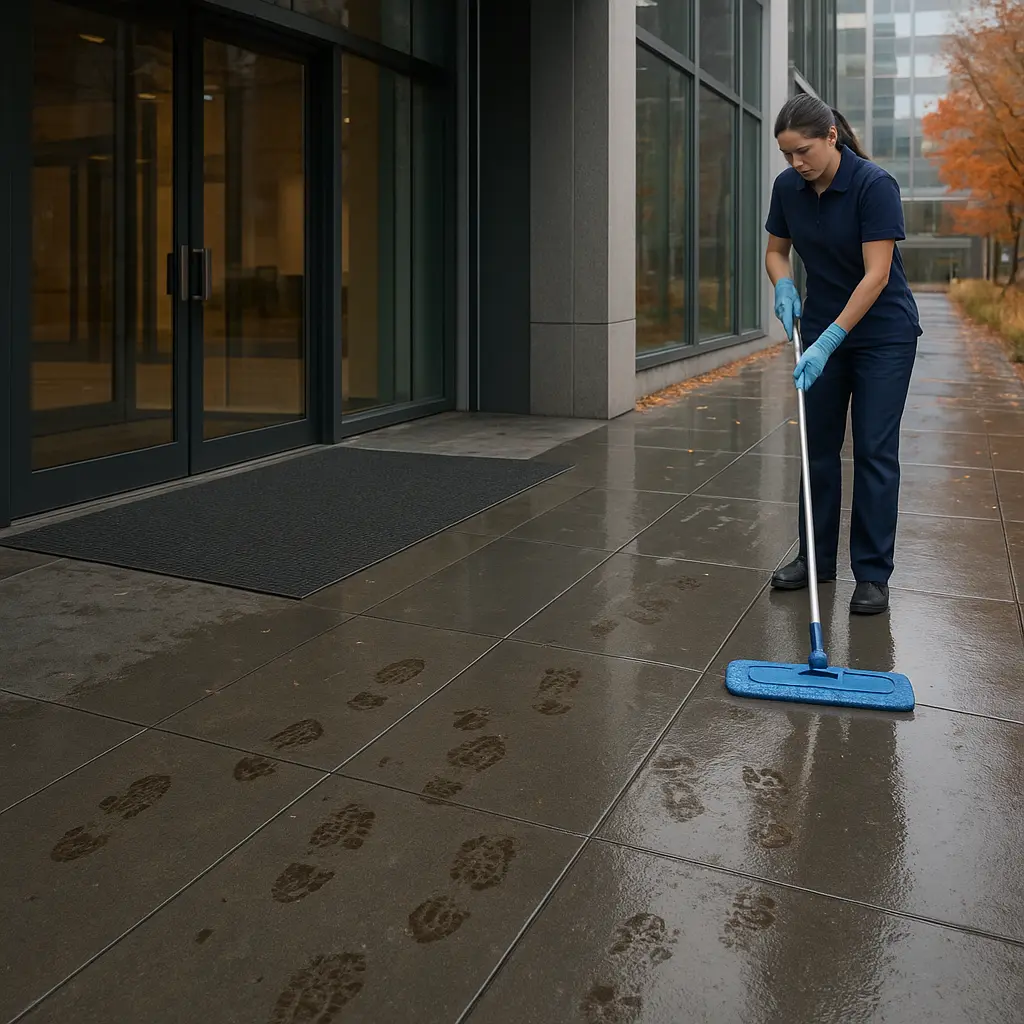
Your building’s exterior surfaces face the first assault from winter weather. Pressure washing walkways, building facades, and parking areas before winter removes accumulated grime that becomes slippery when wet. In practice, we see a 50% reduction in slip and fall incidents when commercial properties schedule pressure washing in late autumn.
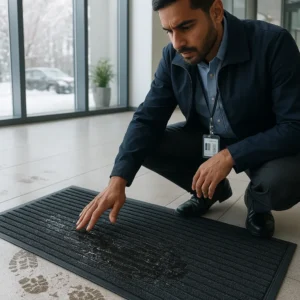
Entry point protection requires a three-zone approach. The first zone sits outside the door with a scraper mat that removes heavy mud and debris. The second zone inside the entrance uses an absorbent mat that captures moisture. The third zone, 3-5 meters inside, catches any remaining particles. This system works, but only when mats are professionally cleaned or replaced weekly during peak winter months.
Pro tip: Install mat systems that cover at least 4-6 footsteps of walking distance. Shorter mats fail because visitors haven’t completed enough steps to transfer dirt and moisture from their shoes.
Door and Frame Maintenance
Check all exterior door seals and weather stripping before winter. Gaps as small as 3mm allow cold air and moisture inside, forcing HVAC systems to work harder and creating condensation problems. Clean door tracks and hinges, then apply appropriate lubricants to prevent freezing during Christchurch’s occasional frost events.
Glass entry doors need special attention because they show every water spot and handprint. A professional window cleaning service removes buildup that becomes more visible during winter’s frequent overcast days when glare is reduced.
Floor Care and Winter Protection
Floor damage during winter costs commercial property managers thousands in repairs and replacements. Salt used on icy pathways in Christchurch deteriorates floor finishes rapidly. Auckland’s persistent moisture causes vinyl and laminate floors to lift at seams if water penetrates beneath the surface.
The solution is professional floor stripping and sealing completed 2-3 weeks before winter weather arrives. This process removes old, compromised sealer layers and applies fresh protection that resists water penetration and chemical damage. Sealed floors are 70% easier to clean during winter because dirt and moisture sit on the surface rather than embedding in porous material.
According to facility management data, commercial properties that schedule annual floor sealing before winter reduce floor replacement frequency from every 5-7 years to every 8-12 years, representing savings of $8,000-$15,000 per 100 square meters.
Daily Winter Floor Maintenance
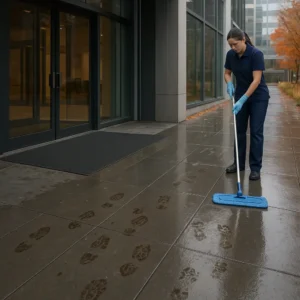
Even properly sealed floors require adjusted maintenance during winter. Increase mopping frequency to twice daily in high-traffic areas, using pH-neutral cleaners that won’t degrade sealer coats. Deploy wet floor signage more liberally because even well-maintained floors become slippery when moisture is constantly tracked inside.
Anti-fatigue mats in reception areas and workstations provide insulation from cold floors while capturing additional moisture. Replace these weekly during peak winter to prevent them from becoming saturated and ineffective.
HVAC Systems and Indoor Air Quality
HVAC systems work overtime during winter, recycling indoor air while maintaining comfortable temperatures. This creates a concentration effect where dust, allergens, and airborne pathogens circulate repeatedly through occupied spaces. The result is increased sick days and complaints about stuffy air.
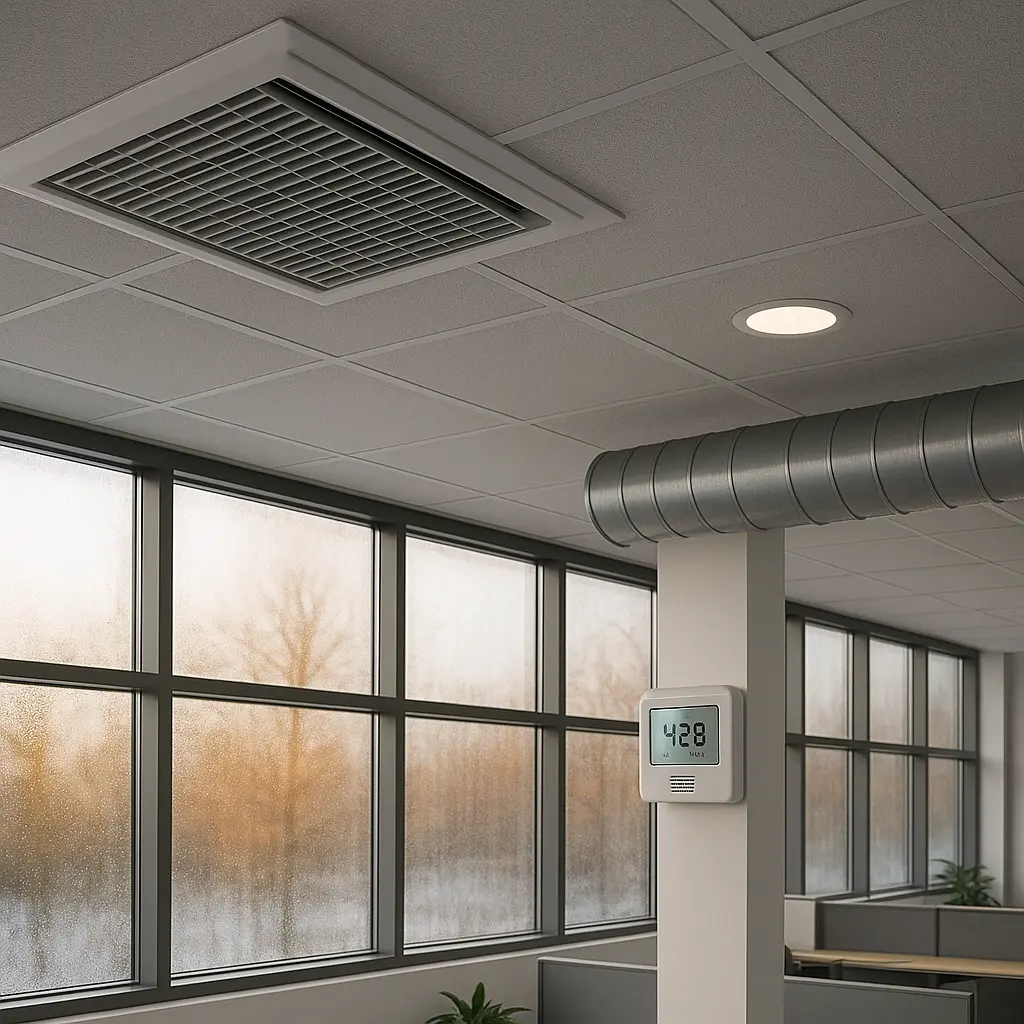
Professional HVAC cleaning and filter replacement should occur 4-6 weeks before winter. This timing allows any disturbed dust to settle and gives facility managers time to address any issues discovered during cleaning. Focus on return air grilles, which accumulate visible dust buildup that recirculates constantly once heating systems activate.
Pro tip: Upgrade to MERV 11 or MERV 13 filters before winter if your system supports them. These higher-rated filters capture particles down to 1 micron, including most bacteria and mold spores that proliferate in winter conditions.
Ductwork and Vent Cleaning
Ductwork cleaning is often overlooked until air quality complaints arise. In buildings older than 15 years, ducts typically contain accumulated dust, construction debris, and sometimes pest droppings that become airborne when heating systems run continuously. A thorough duct cleaning removes these contaminants and can improve HVAC efficiency by 15-20%.
Ceiling and wall vents should be removed, cleaned in detergent solution, and reinstalled with all adjustable louvers functioning properly. This simple task improves air distribution and prevents the dusty odor common when heating systems first activate after months of minimal use.
Carpet and Upholstery Deep Cleaning
Carpets hide surprising amounts of soil that regular vacuuming cannot remove. During summer and autumn, fine particles work deep into carpet pile where they act as abrasives, cutting individual fibers and creating that worn, matted appearance. Winter foot traffic accelerates this damage exponentially when moisture causes particles to become grinding paste.
Hot water extraction (often called steam cleaning) performed before winter removes this embedded soil while sanitizing carpet fibers. The process uses heated cleaning solution injected deep into carpet pile, then immediately extracted along with dissolved dirt and allergens. Properties that schedule this cleaning in late autumn report 40% longer carpet life and significantly fewer odor complaints during winter months when windows remain closed.
Upholstery and Fabric Surfaces
Office chairs, reception furniture, and fabric partitions accumulate body oils, dust, and allergens that worsen during winter when indoor humidity rises. Professional upholstery cleaning removes these contaminants while applying fabric protectors that resist future soiling. This matters particularly in medical centres and schools where multiple people contact the same surfaces daily.
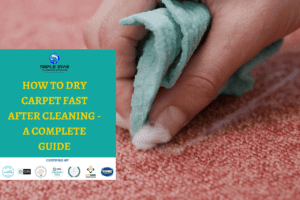
Allow 24-48 hours drying time for deep-cleaned carpets and upholstery. Schedule this work before winter weather makes extended drying times problematic. Proper drying prevents mold growth and ensures carpets don’t become resoiled immediately when traffic resumes.
Window and Gutter Maintenance
Clean windows become surprisingly important during winter when natural light is limited. Dirty glass blocks 30-40% of available light, forcing businesses to use artificial lighting even during daytime hours. This increases electricity costs and creates the gloomy atmosphere that affects staff morale during already dark winter months.
Professional window cleaning before winter removes accumulated pollen, dust, and water spots that are difficult to address once cold, wet weather arrives. Focus on interior surfaces as well, since interior grime contributes equally to light blockage. For multi-story buildings, this work requires specialized equipment and safety procedures that only licensed commercial cleaners should attempt.
Gutter and Downpipe Clearing
Blocked gutters cause catastrophic damage during winter rainfall. Water overflows and runs down exterior walls, eventually finding entry points around windows, doors, and foundation cracks. Interior water damage from this source typically costs $5,000-$15,000 to repair and often isn’t discovered until visible staining appears on ceilings or walls.
Schedule gutter cleaning in late autumn after deciduous trees have dropped their leaves but before winter rains begin. Remove all debris, flush downpipes with water to confirm flow, and check that gutters maintain proper slope toward drainage points. This simple maintenance task prevents 90% of winter water infiltration problems.
High-Touch Surface Protocols for Cold and Flu Season
Winter coincides with cold and flu season, creating health risks that impact productivity and public perception. Ministry of Health data shows workplace illness transmission increases 60% during June through August when people spend more time in enclosed spaces. Commercial cleaning services NZ businesses employ must adapt protocols to address this seasonal challenge.
High-touch surfaces require disinfection at least twice daily during winter. This includes door handles, light switches, stair railings, elevator buttons, shared equipment, kitchen appliances, and bathroom fixtures. The key word is disinfection, not just cleaning. Disinfectants require specific contact time (usually 3-10 minutes) to kill pathogens effectively. Simply wiping and immediately drying achieves nothing.
| Cleaning Approach | Frequency | Best For |
|---|---|---|
| Standard Daily Cleaning | Once daily after hours | Low-traffic offices with under 20 staff, minimal public contact |
| Enhanced Winter Protocol | Twice daily (midday and after hours) | Medium-traffic offices, retail stores, schools with 20-100 occupants |
| High-Frequency Disinfection | Three times daily plus spot cleaning | Medical centres, high-traffic retail, food service, facilities with 100+ daily visitors |
Bathroom and Kitchen Sanitization
Bathrooms and kitchen areas become contamination hotspots during winter. Increase cleaning frequency in these spaces and ensure adequate supplies of hand soap, paper towels, and hand sanitizer. Empty waste bins more frequently because they fill faster when staff spend more time indoors.
Kitchen sponges and dishcloths harbor bacteria that multiply in warm, moist environments. Replace these daily during winter, or better yet, transition to disposable cleaning cloths that are used once and discarded. This single change can reduce cross-contamination by 80%.
Cleaning Approach Comparison
Different commercial properties require different winter preparation strategies based on occupancy type, traffic volume, and specific risks. The following comparison helps property managers and business owners select the appropriate approach.
| Property Type | Priority Focus Areas | Recommended Services |
|---|---|---|
| Office Buildings (20-100 staff) | Indoor air quality, carpet care, high-touch surfaces | HVAC cleaning, carpet extraction, enhanced daily service with midday touch-point disinfection |
| Retail Stores | Entry points, floor protection, window clarity, customer-facing areas | Aggressive mat systems, floor sealing, window cleaning, restroom monitoring, after-hours deep cleaning |
| Medical Centres | Infection control, waiting areas, air quality, bathroom sanitization | Hospital-grade disinfectants, high-frequency protocols, specialized training, compliance documentation |
| Schools | High-touch surfaces, bathrooms, eating areas, floor safety | Multiple daily disinfection rounds, floor care, supply monitoring, holiday deep cleaning |
Budget Allocation for Winter Preparation
Expect winter preparation costs to run 25-40% above standard monthly cleaning budgets. This covers one-time services like floor sealing, carpet extraction, and gutter cleaning, plus increased frequency of regular services. A 500 square meter office typically invests $2,500-$4,000 in comprehensive pre-winter preparation.
This investment pays for itself through reduced emergency repairs, lower sick leave costs, and extended asset life. Property managers who skip preparation routinely face winter expenses 3-4 times higher than prevention would have cost.
Frequently Asked Questions
When should I schedule pre-winter commercial cleaning in Christchurch and Auckland?
Schedule pre-winter cleaning services in late April or early May for Christchurch and Auckland. This timing completes floor sealing, carpet cleaning, and exterior work before winter weather arrives in June. Book services 4-6 weeks in advance because commercial cleaners experience high demand during this period. Properties that wait until winter has started face limited availability and rush fees that increase costs by 15-25%.
How often should commercial carpets be deep cleaned during winter?
High-traffic commercial carpets benefit from deep cleaning every 8-12 weeks during winter months, compared to twice yearly in other seasons. Entrance areas and main corridors may require monthly attention if your property experiences heavy foot traffic during wet weather. Facilities with fewer than 20 daily occupants can extend to quarterly winter cleaning. The determining factor is visible soiling and odor, not arbitrary schedules.
What is the difference between cleaning and disinfection for winter protocols?
Cleaning removes visible dirt and some microorganisms using detergent and water. Disinfection kills pathogens using chemical agents that require specific contact time to be effective. Winter protocols require both: clean surfaces first to remove soil that blocks disinfectant contact, then apply disinfectant and allow proper dwell time before wiping. Many businesses fail at this second step, achieving no real sanitization despite using disinfectant products.
Do I need different entry mats for winter compared to summer?
Yes. Summer mats focus on dust control with lower pile heights. Winter mats need high absorbency with pile depths of 10-15mm to capture moisture effectively. Rubber-backed mats prevent water from seeping through to floor surfaces underneath. Replace or professionally launder entrance mats weekly during peak winter rainfall because saturated mats become ineffective and actually transfer moisture rather than absorbing it.
Can pre-winter cleaning really reduce sick days among staff?
Research published by facility management organizations shows comprehensive cleaning protocols reduce workplace illness transmission by 20-35%. This occurs through multiple mechanisms: improved air quality reduces respiratory irritation, disinfected surfaces interrupt pathogen transmission, and properly maintained facilities reduce stress that weakens immune systems. Triple Star Commercial Cleaning clients report noticeable decreases in winter sick leave after implementing enhanced protocols, though individual results vary based on building design, occupancy density, and staff health practices.
What should I look for when hiring commercial cleaning services for winter preparation?
Verify that cleaners carry public liability insurance covering all work sites, hold relevant training certifications, and have specific experience with your property type. Request a detailed scope of work document that specifies which services will be performed, what products will be used, and expected timeframes. Avoid providers who offer only generic quotes without site visits. UpstreamNZ approved suppliers meet baseline professional standards, but also check recent references from similar properties in your area.
How do I maintain cleaned areas after professional winter preparation?
Implement daily maintenance protocols that protect professional cleaning investments. Empty entrance mats daily, spot-clean spills immediately, maintain consistent indoor temperatures to prevent condensation, and ensure adequate ventilation during occupied hours. Schedule periodic touch-up services mid-winter rather than waiting until spring. Most importantly, communicate expectations clearly with staff and tenants about their role in maintaining clean, safe facilities during challenging winter conditions.
What winter cleaning challenges has your Christchurch or Auckland business faced, and which preparation strategies have worked best for your specific property type?