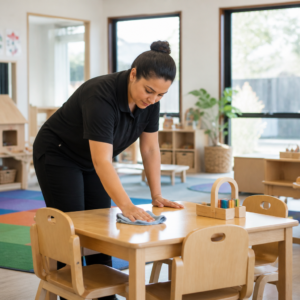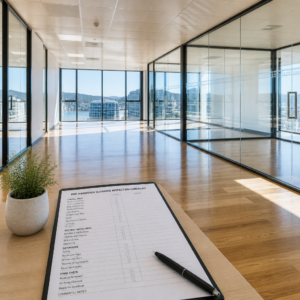
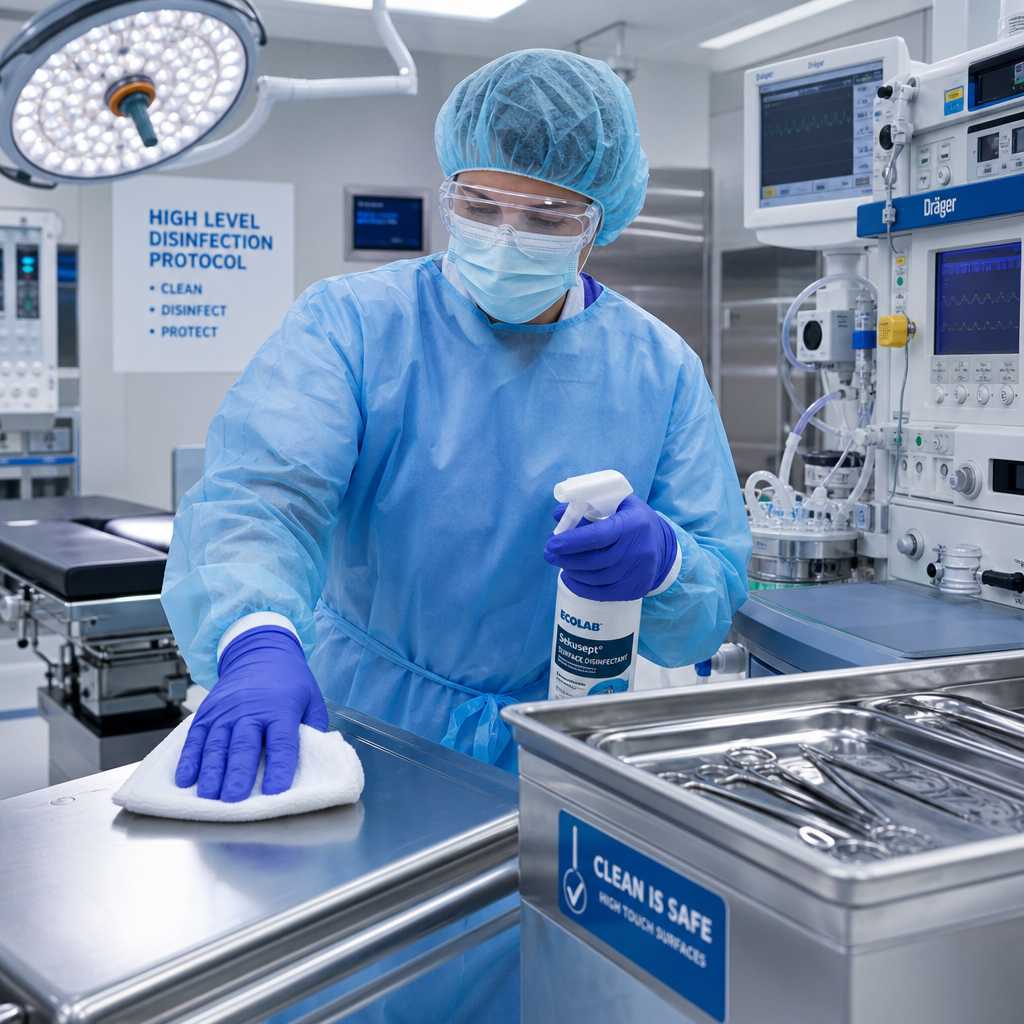
Healthcare-associated infections (HAIs) affect roughly 1 in 10 patients admitted to New Zealand hospitals, according to the Health Quality and Safety Commission. In medical centres, the cleaning standard is not a preference – it is a patient safety measure with direct regulatory implications. Yet many healthcare facilities in Christchurch and Auckland are still using commercial cleaning contractors who apply the same protocols they use for office buildings. That gap between general commercial cleaning and genuine healthcare cleaning services NZ compliance is where infections spread, where audits fail, and where reputations get damaged.
Table of Contents
- Quick Takeaways
- Why Medical Centres Need Specialist Cleaning Contractors
- The NZ Regulatory Framework Healthcare Facilities Must Follow
- Medical Centre Cleaning Standards Explained
- Zone-Based Cleaning Protocols for Clinical Environments
- Approved Cleaning Products and Disinfectants for Healthcare Settings
- Comparing Cleaning Approaches for NZ Healthcare Facilities
- Healthcare Facility Cleaning in Christchurch and Auckland
- Staff Training Requirements and Cleaning Documentation
- Frequently Asked Questions
- References
Quick Takeaways
| Key Insight | Explanation |
|---|---|
| Risk-zone classification is mandatory | Medical centres must divide spaces into clinical zones (high, medium, low risk) and apply different cleaning frequencies and disinfectants to each zone. A waiting room and a treatment room cannot share the same protocol. |
| TGA-listed or EPA-approved disinfectants are required | Generic supermarket disinfectants do not meet the efficacy standards required in clinical environments. Healthcare cleaning in NZ requires hospital-grade disinfectants with proven kill claims against relevant pathogens. |
| Colour-coded equipment prevents cross-contamination | Mops, cloths, and buckets must be colour-coded by zone. Using the same mop in a toilet block and a treatment room is a compliance breach, not just a hygiene concern. |
| Cleaning records are an audit requirement | New Zealand Health and Disability Services Standards (NZS 8134) require documented cleaning schedules and completion records. Verbal assurances from contractors are not sufficient evidence during audits. |
| Contractor insurance and accreditation matter | Healthcare facilities should only engage cleaning contractors who carry public liability insurance and have demonstrated knowledge of infection prevention protocols relevant to clinical settings in NZ. |
| Terminal cleaning after infectious cases is non-negotiable | When a patient or visitor with a known infectious condition has occupied a space, terminal cleaning using sporicidal agents is required before the room is returned to use. This is distinct from routine cleaning. |
| Frequency is as important as technique | High-touch surfaces in clinical areas, including door handles, light switches, reception counters, and shared equipment, must be disinfected multiple times per day, not just at the end of a shift. |
Why Medical Centres Need Specialist Cleaning Contractors
A standard commercial cleaning contract is designed for offices. The goal is appearance: dust-free desks, vacuumed floors, clean bathrooms. In a medical centre, appearance is the starting point, not the finish line. The real objective is pathogen reduction, and that requires a fundamentally different approach to products, protocols, and staff training.
In practice, the most common mistake made by healthcare facilities in Christchurch and Auckland is contracting a general commercial cleaner and adding a few healthcare-specific instructions to the scope of work. That approach fails because the cleaner’s team has not been trained in infection prevention, does not understand zone-based risk classification, and may be using the wrong disinfectant dilution ratios entirely. The risk is invisible until an audit or an outbreak makes it very visible.
Medical centres are legally responsible for the infection control environment they maintain. Under the Health and Disability Services Standards (NZS 8134), the facility, not the cleaning contractor, carries the compliance obligation. Choosing the wrong contractor is therefore a governance risk, not just an operational inconvenience.
The practical implication is that healthcare facility managers need to assess contractors against specific criteria: training records, product lists, zone cleaning protocols, documentation practices, and insurance coverage. A contractor who ticks these boxes is not automatically expensive. In our experience working with medical centres across Christchurch, the cost difference between a compliant specialist cleaner and a general cleaner is often modest, while the compliance and reputational risk difference is substantial.


The NZ Regulatory Framework Healthcare Facilities Must Follow
New Zealand healthcare facilities are primarily governed by the Health and Disability Services Standards (NZS 8134), administered by the Ministry of Health. This standard covers infection prevention and control across all registered health and disability services, including general practice clinics, specialist medical centres, and allied health facilities.
NZS 8134 Infection Prevention Requirements
Standard 3.5 of NZS 8134 specifically addresses infection control, requiring that facilities have documented cleaning schedules, that cleaning activities are performed by trained personnel, and that the facility can demonstrate compliance through written records. An auditor will ask to see the cleaning schedule and the completed cleaning logs. If those documents do not exist, the facility will receive a Partial Attainment or Not Attained rating, which triggers a corrective action plan.
Beyond NZS 8134, medical centres in New Zealand must also align with guidance from the Health Quality and Safety Commission New Zealand and, where applicable, the Australian Guidelines for the Prevention and Control of Infection in Healthcare, which are widely referenced by New Zealand practitioners given the shared regulatory context across the Tasman.
WorkSafe NZ Obligations for Cleaning Staff
Under the Health and Safety at Work Act 2015, healthcare cleaning staff must be provided with appropriate personal protective equipment (PPE), trained in its correct use, and protected from exposure to biological hazards. This includes training on handling clinical waste, managing chemical exposure, and responding to spills of blood or bodily fluids. A cleaning contractor who cannot demonstrate compliance with these WorkSafe obligations should not be operating in a healthcare environment.
Pro tip: When engaging a new cleaning contractor for a medical centre, request a copy of their healthcare-specific training records and their chemical safety data sheets (SDS) for all products used on site. A reputable contractor will have these documents ready without hesitation.
Medical Centre Cleaning Standards Explained
The phrase “medical centre cleaning standards” covers a range of specific requirements that go well beyond what most commercial cleaning specifications include. Understanding what these standards actually require, in practical operational terms, is essential for any facility manager responsible for a GP clinic, specialist centre, or allied health practice in New Zealand.
Surface Disinfection vs. Surface Cleaning
Cleaning removes visible soil and organic matter. Disinfection kills or inactivates pathogens. In a medical centre, both steps are required in sequence, because disinfectants lose efficacy when applied to surfaces that have not been cleaned first. The data consistently shows that skipping the cleaning step before disinfection reduces antimicrobial effectiveness by up to 90 percent, depending on the level of organic contamination present. Combining a detergent and disinfectant in a single product is acceptable only when the product’s label specifically claims combined cleaning and disinfection efficacy.
High-Touch Surface Frequency Requirements
High-touch surfaces in medical centres include door handles, light switches, tap handles, reception counters, keyboard and mouse surfaces, chair armrests, and bed rails in treatment areas. These surfaces must be disinfected at a minimum of twice daily in low-risk areas, and between every patient in high-risk clinical zones. In practice, most compliant medical centres in Christchurch and Auckland schedule a minimum of three disinfection rounds per day for reception and waiting areas, with additional rounds during high-patient-volume periods.
Waste Management in Clinical Cleaning
Clinical waste, which includes sharps, contaminated dressings, and materials with blood or bodily fluid contact, must never be handled by general cleaning staff without specific training and appropriate PPE. Cleaning contractors working in medical centres must have staff trained to identify clinical waste streams and to follow the facility’s waste segregation protocol. Mixing clinical waste with general waste is a compliance breach under both NZS 8134 and the Health and Safety at Work Act.
Zone-Based Cleaning Protocols for Clinical Environments
Zone-based cleaning is the structural backbone of any compliant healthcare cleaning programme. The concept is simple: different areas of a medical facility carry different levels of infection risk, and the cleaning protocol, including product strength, frequency, and equipment used, must match the risk level of each zone.
Zone Classifications in NZ Medical Centres
New Zealand healthcare facilities typically apply a three-zone model. Zone 1 covers administrative and waiting areas, which carry low to moderate risk and require daily cleaning with a hospital-grade disinfectant on high-touch surfaces. Zone 2 covers consultation and examination rooms, which require cleaning and disinfection between each patient and at the end of each session. Zone 3 covers procedure rooms, minor surgical suites, and any space where invasive procedures are performed. These areas require the most rigorous protocols, including terminal cleaning and potentially sporicidal disinfectants after certain procedures.
Colour-Coded Equipment Protocols
Colour-coded cleaning equipment is not optional in a compliant medical centre cleaning programme. A common mistake is allowing contractors to bring a single set of cleaning equipment for the entire facility. In a correctly implemented programme, red equipment is reserved for toilet and bathroom areas, blue for general areas including reception and corridors, green for kitchen and food preparation areas, and yellow for clinical zones. Each set of equipment must be cleaned, disinfected, and stored separately after use.
Pro tip: Ask any prospective healthcare cleaning contractor to walk you through their colour-coding protocol before signing a contract. If they cannot describe it clearly, or if they use a different system without being able to justify it against infection control evidence, treat that as a red flag.

Approved Cleaning Products and Disinfectants for Healthcare Settings
Product selection is one of the most technically specific aspects of healthcare cleaning, and it is an area where general commercial cleaners frequently fall short. The cleaning products that are appropriate for office buildings, schools, or retail stores are often not suitable for clinical environments because they lack the required kill claims against healthcare-relevant pathogens.
What Makes a Disinfectant Appropriate for Medical Centres
In the New Zealand context, healthcare disinfectants should carry kill claims against a broad spectrum of pathogens including MRSA, C. difficile, Norovirus, and Influenza. Products used in clinical areas should ideally be TGA-listed or verified by an equivalent testing standard. The contact time stated on the product label matters critically: a disinfectant that requires five minutes of wet contact time to achieve its kill claim is not effective when a cleaner wipes a surface dry within 30 seconds of application.
Products Commonly Misused in NZ Healthcare Cleaning
The most frequent product misuse seen in practice includes using quaternary ammonium compounds (quats) in areas where C. difficile is a concern. Quats are not effective against C. difficile spores, which require a sodium hypochlorite-based solution or a sporicidal product. Using a quat-based disinfectant in a post-C. diff room and logging it as a completed terminal clean is both a clinical risk and a documentation falsification issue. Cleaning contractors must understand which products apply to which risk scenarios, and healthcare facility managers should verify this understanding before awarding a contract.
Comparing Cleaning Approaches for NZ Healthcare Facilities
Healthcare facility managers in Christchurch and Auckland typically choose between three main contractor models. Each has meaningful differences in compliance capability, flexibility, and cost structure.
| Approach | Compliance Capability | Practical Fit for NZ Medical Centres |
|---|---|---|
| National Franchise Model (e.g., Crest, Jani-King) | Variable. Standardised systems exist but individual franchisee training and accountability can differ significantly between operators. Healthcare-specific training is not always guaranteed at franchisee level. | May work for large hospital networks with strong internal oversight. Less reliable for smaller medical centres that need consistent, accountable, named cleaning staff on site. |
| Independent Commercial Cleaning Company | Depends entirely on the company. A specialist independent contractor with dedicated healthcare protocols, trained staff, documented cleaning systems, and public liability insurance can exceed franchise compliance levels. | Strong fit for medical centres, GP clinics, and specialist facilities in Christchurch and Auckland that want direct communication, consistent staff, and customised cleaning schedules tied to their specific zone map. |
| In-House Cleaning Staff | High control over training and compliance but significant HR burden. Requires the facility to manage recruitment, training, PPE supply, product procurement, and WorkSafe compliance directly. | Viable for large hospital facilities with dedicated infection control teams. Typically cost-prohibitive and operationally complex for small to medium medical centres. |
“The single biggest failure mode in healthcare cleaning is not using the wrong product. It is using the right product incorrectly, at the wrong dilution, with the wrong contact time, by staff who have not been trained to understand why those variables matter.” – Health Quality and Safety Commission NZ, Infection Prevention and Control guidance
Healthcare Facility Cleaning in Christchurch and Auckland
For medical centres operating in Christchurch and Auckland, the challenge of maintaining compliant cleaning is compounded by the practical realities of scheduling, staff consistency, and contractor accountability. Both cities have a competitive commercial cleaning market, but not every contractor in that market has genuine expertise in healthcare environments.
In Christchurch specifically, medical centres in areas like Riccarton, Papanui, and Sydenham have growing patient loads, and the pressure on cleaning schedules during high-volume morning sessions is real. A cleaning contractor who only attends once per day in the evening is not providing a compliant service for a busy GP practice with eight or more consultation rooms in active use throughout the day.
Healthcare facility cleaning in Christchurch also needs to account for the construction and renovation activity that remains ongoing in parts of the city. Post-construction cleaning to clinical standards, including HEPA vacuuming and surface decontamination before a newly renovated space is returned to patient use, is a specialised service that requires both construction cleaning expertise and infection control knowledge.
Triple Star Commercial Cleaning works directly with medical centres and healthcare facilities across Christchurch and Auckland, providing cleaning programmes built around zone-based protocols, documented schedules, hospital-grade products, and consistent named cleaning staff. As an UpstreamNZ approved supplier with full public liability insurance, the operational and compliance framework is already in place for healthcare clients who need it.
Staff Training Requirements and Cleaning Documentation
A cleaning programme is only as reliable as the documentation that supports it. During a NZS 8134 audit, a verbal description of what your cleaning contractor does is not evidence. The auditor will ask for a written cleaning schedule, completed cleaning logs with staff signatures and timestamps, product SDS files on site, and evidence of staff training in infection prevention and chemical safety.
What a Compliant Cleaning Log Must Include
A compliant cleaning log for a New Zealand medical centre must record the date and time each cleaning task was completed, the name or identifier of the staff member who completed it, the zone or room covered, the products used, and any deviations from the standard schedule with the reason noted. A generic tick-sheet that records only whether cleaning was done, without any of these specifics, will not satisfy an NZS 8134 auditor.
Training Evidence Your Contractor Should Provide
Cleaning contractors working in healthcare environments should be able to provide signed training records showing that each staff member assigned to the facility has completed training in: infection prevention and control basics, correct PPE use and removal (doffing sequence matters), colour-coded equipment protocols, spill management for blood and bodily fluids, and chemical safety for the specific products in use on the site. This training should be refreshed at minimum annually, and records should be made available to the facility manager on request.
Pro tip: Build a contract clause requiring your cleaning contractor to provide updated training records every 12 months and within 30 days of any new staff member being assigned to your facility. This puts the documentation obligation in the contract rather than relying on goodwill.
Frequently Asked Questions
What is the difference between cleaning, sanitising, and disinfecting in a medical centre context?
Cleaning removes visible dirt and organic matter using detergent and water. Sanitising reduces the number of microorganisms to a safe level as defined by a public health standard. Disinfecting kills or inactivates a defined spectrum of pathogens using a chemical agent with verified efficacy. In a medical centre, all three processes are used, but they apply to different situations. Cleaning must always precede disinfection, because organic matter neutralises most disinfectants before they can work.
How often should a medical centre be cleaned?
At minimum, a New Zealand medical centre should have a full cleaning cycle at the end of each clinical day, with additional disinfection of high-touch surfaces and patient contact areas between sessions throughout the day. Treatment rooms and consultation rooms require disinfection between each patient. Bathrooms should be cleaned and disinfected at least twice daily and inspected regularly during operational hours. This level of frequency is considerably higher than a standard office cleaning schedule.
Does a cleaning contractor need specific healthcare qualifications to work in a NZ medical centre?
There is no single mandated national qualification for healthcare cleaning contractors in New Zealand. However, NZS 8134 requires that cleaning staff be trained and competent in infection prevention and control relevant to their work environment. In practice, this means the contractor must have a documented training programme covering infection control, PPE use, zone cleaning, and chemical safety, and must be able to produce training records to demonstrate this to auditors.
What should a medical centre cleaning specification document include?
A compliant cleaning specification for a medical centre should include: a zone map of the facility with risk classifications, a cleaning schedule for each zone showing frequency and tasks, the approved product list with dilution ratios and contact times, colour-coding requirements for equipment, documentation and reporting requirements, and procedures for terminal cleaning and infectious case response. A cleaning contractor who cannot work from a specification at this level of detail is not equipped for a healthcare environment.
Can Triple Star Commercial Cleaning provide healthcare cleaning services for medical centres in Christchurch and Auckland?
Yes. Triple Star Commercial Cleaning provides specialist commercial cleaning for healthcare facilities including medical centres, GP clinics, and allied health practices across Christchurch and Auckland. The service includes documented zone-based cleaning schedules, hospital-grade disinfectants, colour-coded equipment protocols, trained cleaning staff, and full public liability insurance. As an UpstreamNZ approved supplier, Triple Star meets the supplier standards required by many commercial property managers and healthcare facility operators in New Zealand.
What happens if a medical centre fails a cleaning compliance audit in New Zealand?
Under the NZS 8134 audit process conducted by approved audit bodies, a facility that fails to demonstrate compliant cleaning practices will receive a Partial Attainment or Not Attained rating on the relevant standard. This triggers a corrective action requirement, which must be resolved within a timeframe specified by the audit body. Repeated non-attainment can affect a facility’s certification status. In severe cases, failure to maintain infection control standards can also attract attention from the Health and Disability Commissioner if patient harm is linked to the cleaning failure.
If you manage a medical centre or healthcare facility in Christchurch or Auckland, we would like to hear about the cleaning challenges you have encountered and what has worked in your setting.
References
- New Zealand Ministry of Health official guidance on health and disability services standards and infection prevention in clinical facilities
- Health Quality and Safety Commission New Zealand resources on infection prevention and control in healthcare settings
- WorkSafe New Zealand guidance on health and safety obligations for workers in healthcare and cleaning environments
- World Health Organization guidelines on cleaning and disinfection of environmental surfaces in healthcare settings
- Statista data and statistics on healthcare-associated infections and cleaning compliance rates in healthcare facilities