Most commercial carpets are cleaned far less often than they should be. Property managers typically schedule a professional clean once a year and consider that sufficient. The data tells a different story: the Carpet and Rug Institute recommends professional extraction every 6 to 18 months depending on traffic, and high-footfall commercial spaces often need quarterly attention to avoid permanent fibre damage. Getting commercial carpet cleaning frequency wrong does not just affect appearance. It accelerates wear, creates hygiene risks, and can void manufacturer warranties. This guide gives property managers and facility teams a precise, defensible maintenance schedule they can actually use.
Table of Contents
- Quick Takeaways
- Why Cleaning Frequency Directly Affects Carpet Lifespan
- The Traffic-Based Cleaning Schedule Property Managers Should Follow
- Cleaning Frequency by Facility Type
- Comparing Professional Carpet Cleaning Methods
- What to Do Between Professional Cleans
- Carpet Cleaning in Auckland and Christchurch: What Local Conditions Mean for Your Schedule
- Warning Signs Your Carpet Needs Cleaning Now, Not Later
- Frequently Asked Questions
- References
Quick Takeaways
| Key Insight | Explanation |
|---|---|
| High-traffic offices need cleaning every 3 to 6 months | Reception areas, corridors, and open-plan floors with 50+ daily occupants accumulate grit that cuts carpet fibres from below the surface. |
| Medical centres and childcare facilities require the most frequent cleaning | Health and safety obligations in New Zealand make quarterly professional cleaning a minimum standard, not a preference. |
| Hot water extraction outperforms dry cleaning for embedded soil removal | Dry encapsulation is faster but does not remove deep-seated allergens and bacteria the way truck-mounted or portable hot water extraction does. |
| Annual cleaning alone will shorten carpet life by up to 40 percent | Grit that is not removed acts as an abrasive. Each footstep grinds particles against fibres, causing permanent pile crush and colour loss. |
| Retail stores in high footfall locations need cleaning every 8 to 12 weeks | Customer-facing spaces carry reputational risk from soiled carpets. Stains and odours directly affect customer perception and dwell time. |
| Post-construction cleaning requires a dedicated carpet clean before occupancy | Construction dust contains silica and fine particulates that embed immediately into new carpet. A standard vacuum is insufficient. |
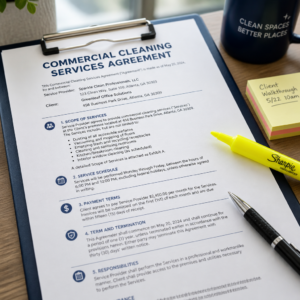
| Documented cleaning schedules protect property managers legally | Keeping a written maintenance log demonstrates due diligence under Health and Safety at Work Act 2015 obligations in New Zealand. |
Why Cleaning Frequency Directly Affects Carpet Lifespan
Commercial carpet is an expensive asset. A quality broadloom installation in a medium-sized Christchurch office building can cost tens of thousands of dollars. Most manufacturers rate their products at 10 to 15 years of service life, but that rating assumes correct maintenance. In practice, carpets in under-maintained commercial spaces fail visibly within 5 to 7 years.
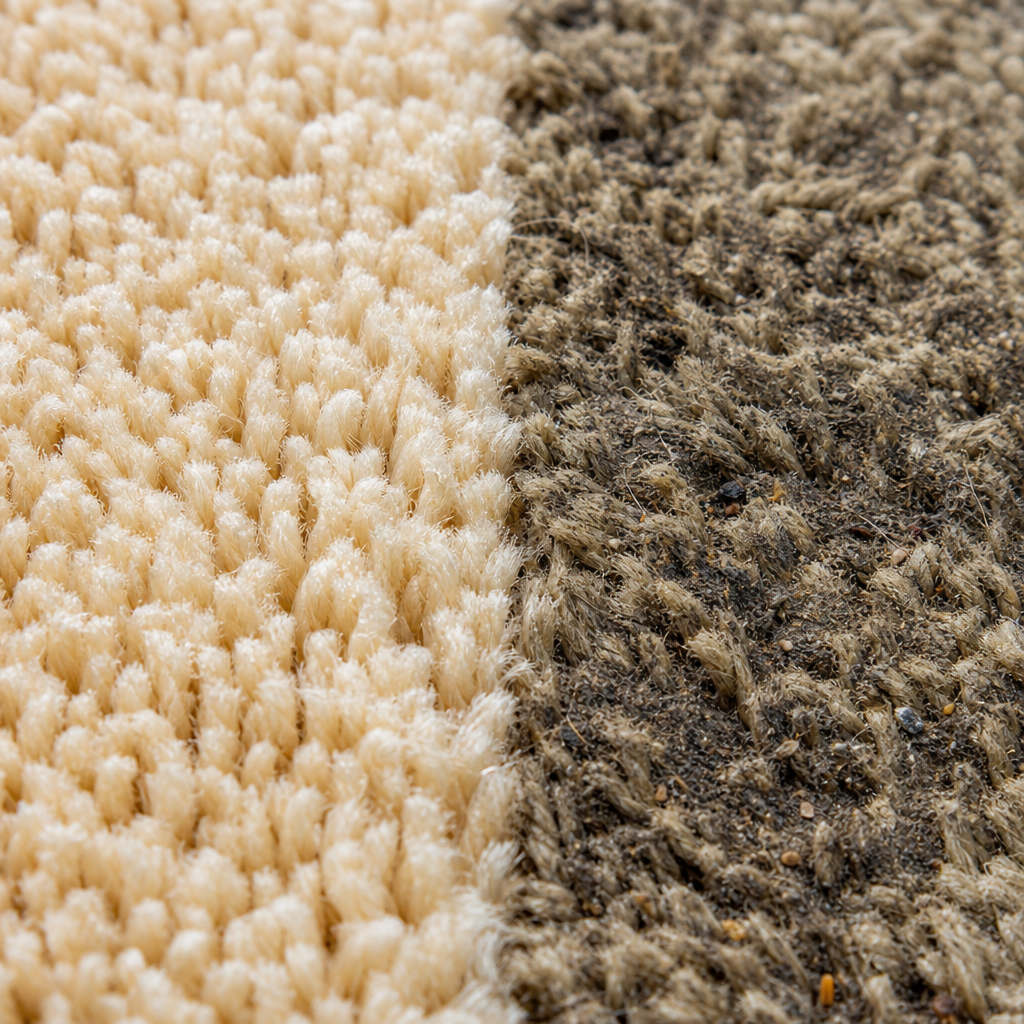
The mechanism is straightforward. Foot traffic pushes dry soil, grit, and organic debris below the surface pile where vacuum cleaners cannot reach. Once embedded, these particles act as an abrasive against the carpet backing and individual fibres with every step. The Carpet and Rug Institute notes that up to 80 percent of the soil load in a commercial carpet sits below the top layer of fibres. Vacuuming addresses surface debris only.
Professional hot water extraction removes the embedded load. Without it, the abrasive action continues 24 hours a day, 7 days a week, silently degrading the asset. This is why the cleaning interval is not a cosmetic decision. It is an asset management decision.
For property managers in Auckland and Christchurch managing multiple tenancies, the commercial carpet cleaning frequency you set today directly determines your capital replacement costs in five years.
The Traffic-Based Cleaning Schedule Property Managers Should Follow
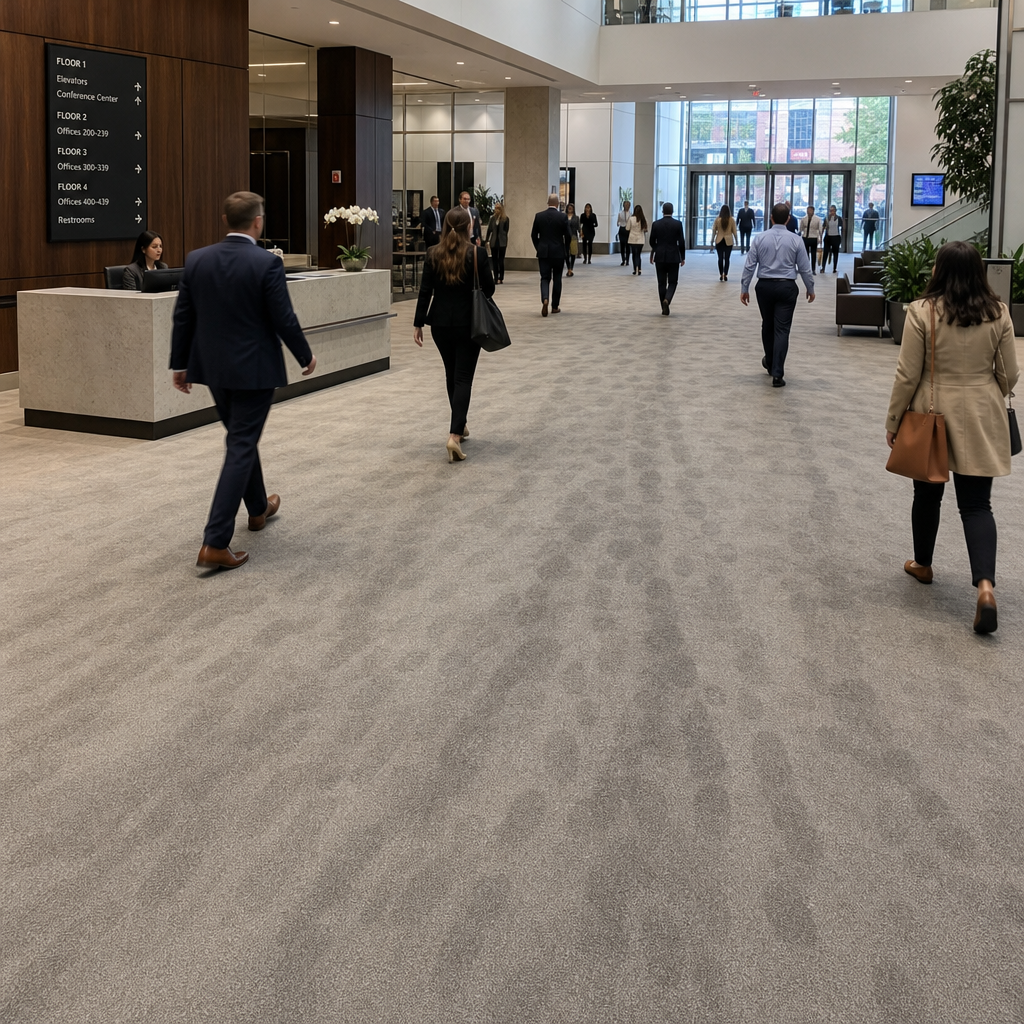
Traffic volume is the single most important variable in setting a commercial carpet maintenance schedule. The following tiers are based on industry guidance from the Carpet and Rug Institute and reflect real-world conditions that the Triple Star team encounters regularly across Christchurch and Auckland sites.
Light Traffic: Under 25 People Per Day
Spaces such as small private offices, boardrooms used occasionally, and storage areas with limited foot access fall into this category. A professional deep clean every 12 to 18 months is defensible here. Daily vacuuming and prompt spot treatment of spills will maintain appearance between scheduled cleans.
Moderate Traffic: 25 to 100 People Per Day
Standard open-plan offices, small retail spaces, and school administration areas sit in this range. Professional cleaning every 6 to 12 months is the appropriate interval. Waiting longer than 12 months in a moderate-traffic environment means the carpet is carrying a soil load that is already causing fibre damage.
Heavy Traffic: Over 100 People Per Day
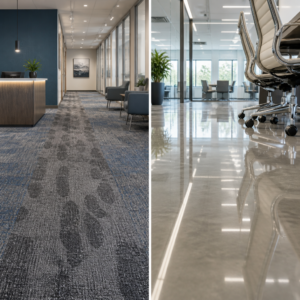
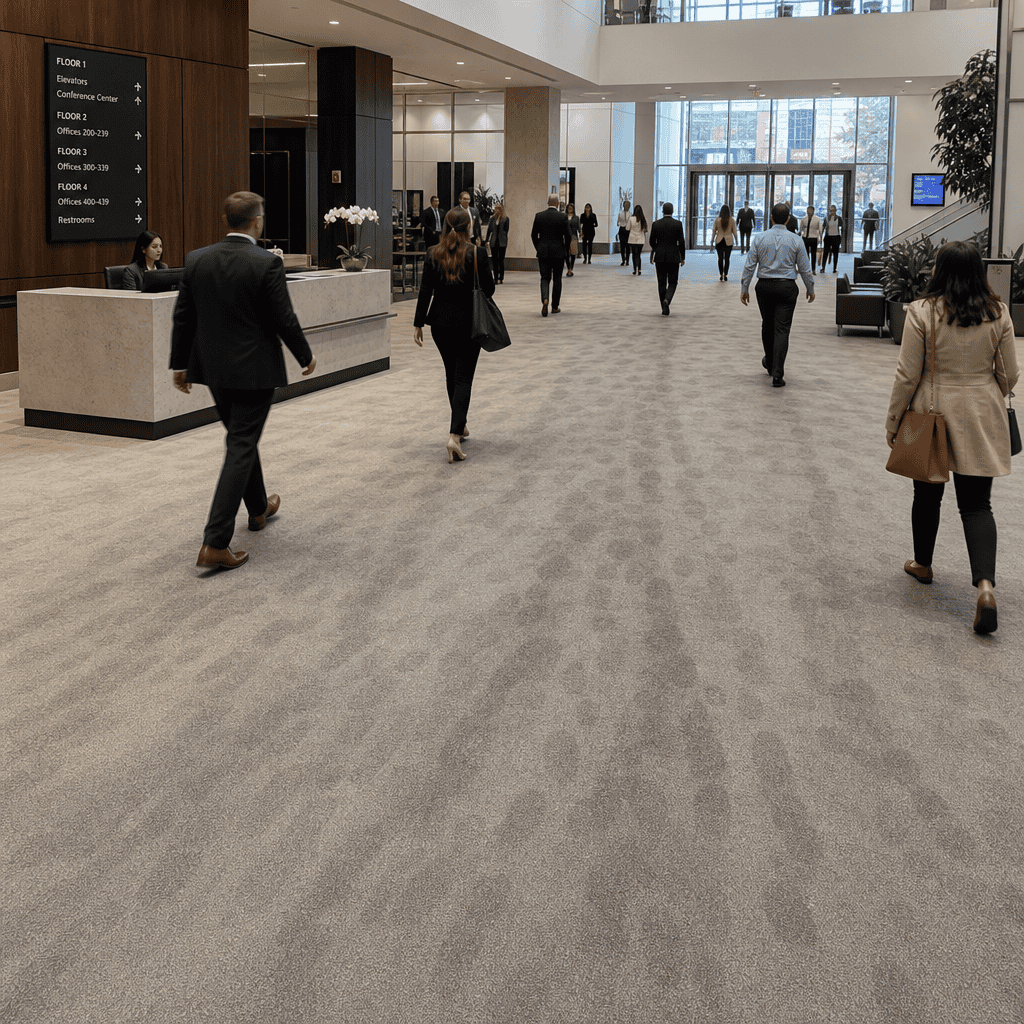
Reception areas, main corridors, retail floors, school classrooms, and medical waiting rooms all qualify as heavy-traffic zones. The correct interval here is every 3 to 6 months. A common mistake is treating an entire building as one traffic zone. The reception area of a busy Auckland office building needs cleaning three times more often than the executive suite on the top floor.
Extreme Traffic: Public-Facing or High-Density Environments
Childcare centres, hospital corridors, high-volume retail, and gyms operate under conditions where monthly or bi-monthly professional maintenance is sometimes warranted. The hygiene stakes are higher, and the soil load accumulates at a rate that standard scheduling underestimates.
Pro tip: Zone your building when setting a carpet cleaning schedule. Assign a traffic tier to each area independently, then schedule cleans for each zone at the appropriate interval rather than applying one blanket frequency to the whole tenancy.
Cleaning Frequency by Facility Type
Traffic tier is the starting point, but facility type adds a second layer of consideration. Hygiene obligations, lease conditions, and the nature of the occupants all modify the base schedule.
Office Buildings and Corporate Tenancies
For most Auckland and Christchurch office tenancies, every 6 months for general floor areas and every 3 months for reception and high-use corridors is the practical standard. End of lease cleaning, required under most New Zealand commercial lease agreements, must include a professional carpet clean regardless of the scheduled maintenance interval.
Medical Centres and Healthcare Facilities
Healthcare environments carry cross-contamination risks that override standard traffic-based calculations. Quarterly professional cleaning is the minimum. Many GP practices and specialist clinics in Auckland and Christchurch opt for monthly or bi-monthly professional maintenance in patient-facing areas. The Health and Safety at Work Act 2015 and infection control guidelines from the Ministry of Health inform the standard here.
Schools and Educational Facilities
School carpets in New Zealand take significant abuse. High-density use during term, food spills, and muddy footwear during winter make every-term cleaning (three times per year) the appropriate baseline. Classrooms should be cleaned during school holidays to allow full drying time before reoccupation.
Retail Stores
Retail environments in high-footfall locations such as Westfield or Sylvia Park in Auckland should be cleaned every 8 to 12 weeks. Customer perception is immediate. A visibly soiled carpet in a retail setting communicates neglect and directly affects brand trust.
Construction Sites and Post-Build Handover
New carpet installed during a construction project requires professional cleaning before occupancy, full stop. Construction dust, particularly silica-containing particulates from concrete cutting and sanding, embeds immediately into new fibre. Builders cleaning should always include carpet extraction as a mandatory line item, not an optional add-on.
“Carpet maintenance is one of the most cost-effective ways to extend the life of a commercial interior. A consistent professional cleaning schedule can add three to five years to a carpet’s functional life, deferring a significant capital replacement cost.” – Carpet and Rug Institute, Residential and Commercial Carpet Maintenance Guidelines
Comparing Professional Carpet Cleaning Methods
Not all professional carpet cleaning is equivalent. Property managers specifying office carpet maintenance in New Zealand should understand what they are buying when they engage a commercial cleaning contractor.
| Method | Best Use Case | Limitations |
|---|---|---|
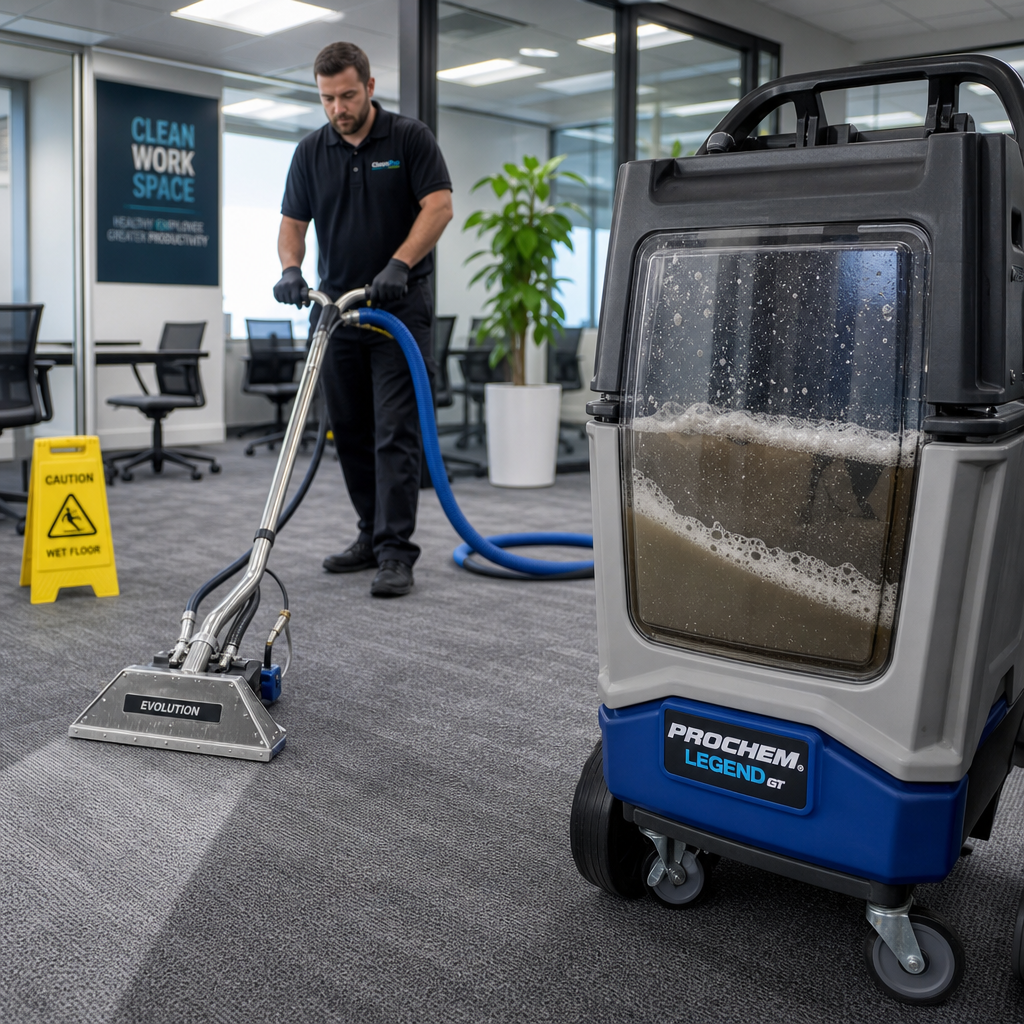
| Hot Water Extraction (Steam Cleaning) | Deep cleans for heavily soiled carpets, post-construction, medical facilities, end of lease. Removes embedded soil, allergens, and bacteria most effectively. | Longer drying time (4 to 12 hours). Requires scheduling around building occupancy. Not suitable for moisture-sensitive carpet types. |
| Dry Encapsulation | Interim maintenance cleans for moderate-traffic offices. Fast drying (30 to 60 minutes) allows same-day reoccupation. Effective for surface soil and maintenance intervals. | Does not remove deep-embedded soil or allergens. Should not replace hot water extraction as the primary annual clean. |
| Bonnet Cleaning | Quick surface refresh for low-traffic areas or before an event. Inexpensive and fast. | Pushes soil deeper into fibres over time. Not recommended for regular commercial maintenance. Can damage carpet pile with repeated use. |
In practice, the most effective commercial carpet maintenance programme combines hot water extraction for scheduled deep cleans with dry encapsulation for interim maintenance between those cleans. A building with quarterly deep clean requirements might use encapsulation in the off-months to maintain appearance without the drying downtime.
Pro tip: When reviewing quotes for carpet cleaning in Auckland or Christchurch, ask specifically whether the contractor is using truck-mounted or portable hot water extraction. Truck-mounted systems produce higher water temperature and suction, resulting in better soil extraction and significantly faster drying times.
What to Do Between Professional Cleans
Professional cleaning is the foundation, but what happens between scheduled cleans determines how much the carpet degrades before the next service. A poorly maintained carpet will look visibly dirty within weeks of a professional clean if the interim maintenance protocol is inadequate.
Daily Vacuuming in High-Traffic Zones
High-traffic commercial areas should be vacuumed daily using a commercial-grade upright or backpack vacuum with a HEPA filter. Consumer-grade vacuums used in commercial settings are consistently inadequate. They lack the airflow and filtration to capture fine particulates and they do not run long enough under commercial conditions before motor failure.
Spot Treatment Within 24 Hours
Stains that are not treated within 24 hours are significantly harder to remove. Property managers should ensure a documented spill response protocol is in place, with appropriate cleaning agents accessible to facility staff. The wrong cleaning agent can set a stain permanently or cause fibre discolouration.
Entry Matting Systems
The single most cost-effective intervention in commercial carpet maintenance is a proper entry matting system. Research cited by the Carpet and Rug Institute indicates that a well-designed entry mat system can capture up to 80 percent of the soil that would otherwise be tracked onto interior carpet. In a New Zealand context, this matters more in winter months when wet footwear carries significantly more particulate load from outdoor surfaces.
For a building in Auckland or Christchurch, use a scraper mat outside the entry, an absorbent mat inside the entry, and ensure both mats are cleaned or replaced at least weekly. An entry mat that is itself saturated with soil contributes dirt rather than capturing it.
Carpet Cleaning in Auckland and Christchurch: What Local Conditions Mean for Your Schedule
Generic carpet cleaning schedules from international sources do not account for local climate and environmental conditions. Both Auckland and Christchurch present specific challenges that affect how quickly commercial carpets soil and how often professional intervention is needed.
Auckland: Humidity and Year-Round Rainfall
Auckland’s high humidity and rainfall pattern means carpets in ground-floor commercial spaces are susceptible to moisture retention after wet-weather footfall. This creates conditions favourable for mould and mildew growth within carpet backing if hot water extraction drying protocols are not managed carefully. Carpet cleaning in Auckland should account for increased drying time management, particularly in winter months. Dehumidification during and after cleaning is sometimes warranted in older commercial buildings with limited airflow.
Christchurch: Post-Earthquake Construction Dust
Christchurch’s ongoing construction and rebuild activity means commercial buildings near active construction sites carry higher airborne particulate loads. These fine particles settle into carpet fibres faster than in typical urban environments. Property managers in central Christchurch should consider shifting from annual to six-monthly deep cleans as a baseline, particularly for street-level tenancies near active sites.
Both cities also have a significant hospitality and retail footprint where high-volume daily traffic is the norm. The carpet cleaning frequency recommendations for moderate to heavy traffic environments are not overly conservative for New Zealand commercial conditions. They are accurate.
Warning Signs Your Carpet Needs Cleaning Now, Not Later
Scheduled maintenance is best practice, but property managers also need to recognise the signs that a carpet requires an unscheduled intervention. Waiting for the next scheduled clean when these indicators are present will cause permanent damage.
Visible traffic lanes that do not respond to vacuuming indicate embedded soil that is already causing fibre crush. A persistent odour that remains after vacuuming suggests organic material (food, moisture, or biological matter) is decomposing within the carpet layer. Discolouration that spreads from seams or backing edges can indicate moisture intrusion that requires immediate attention, not just cleaning. Allergic reactions or increased respiratory complaints from building occupants are a reliable indicator of elevated allergen load in the carpet.
Any one of these signs warrants contacting a professional commercial carpet cleaning contractor immediately, regardless of when the last scheduled clean occurred. For property managers in Christchurch and Auckland, Triple Star Commercial Cleaning provides commercial carpet cleaning services across both cities with flexible scheduling to minimise disruption to your tenants.
Frequently Asked Questions
How often should office carpets be professionally cleaned in New Zealand?
For standard open-plan offices with moderate daily footfall, professional carpet cleaning every 6 to 12 months is the appropriate baseline. Reception areas and main corridors in the same building should be cleaned every 3 to 6 months. Annual-only cleaning is insufficient for any area with consistent daily traffic.
Does commercial carpet cleaning frequency affect warranty validity?
Yes. Most commercial carpet manufacturers in New Zealand and internationally specify a minimum maintenance schedule as a condition of warranty. Failing to document professional cleaning at the required intervals can void the warranty on a carpet that has failed prematurely. Always request a service record from your cleaning contractor and keep it on file.
What is the difference between hot water extraction and steam cleaning?
The terms are often used interchangeably by cleaning contractors, but they refer to the same process. Hot water (not steam) is injected into the carpet pile under pressure along with a cleaning solution, then immediately extracted by high-powered suction. This removes embedded soil, allergens, and biological material far more effectively than surface cleaning methods. It is the method recommended by most carpet manufacturers for periodic deep cleaning.
How long does a commercial carpet take to dry after professional cleaning?
Drying time depends on the method used, airflow in the space, and ambient humidity. Hot water extraction typically requires 4 to 12 hours for full drying in a well-ventilated commercial space. Dry encapsulation methods dry in 30 to 60 minutes. In Auckland where humidity is higher, plan for the longer end of the drying range and schedule cleans during off-hours to allow overnight drying before occupancy.
Is carpet cleaning required at end of lease for commercial tenancies in New Zealand?
In most cases, yes. Standard New Zealand commercial lease agreements require tenants to return the premises in the condition specified at lease commencement, which typically includes professionally cleaned carpets. Failing to do so gives the landlord grounds to deduct the cost from the bond or pursue the tenant for the expense. Property managers should confirm the specific lease obligations and engage a contractor with documented evidence of service.
Can I reduce commercial carpet cleaning costs by cleaning less frequently?
This is a false economy. Reducing cleaning frequency below the traffic-appropriate interval accelerates fibre degradation. A carpet that would last 12 years under a correct maintenance programme may need replacement in 7 years if cleaning is deferred. The cost of carpet replacement in a commercial space will always exceed the cumulative cost of the cleaning schedule you skipped.
What should I look for when choosing a commercial carpet cleaning contractor in Auckland or Christchurch?
Look for a contractor that uses truck-mounted or high-powered portable hot water extraction equipment, carries public liability insurance, can provide a documented cleaning schedule and service records, and has verifiable experience with commercial properties of your facility type. Franchise-model cleaners often subcontract to owner-operators with variable equipment standards. An independent commercial cleaning company with a dedicated team and consistent site coverage will generally deliver more reliable results for ongoing contract work.
If you manage commercial properties in Christchurch or Auckland, we would like to hear how you currently schedule carpet cleaning and what challenges you face with maintaining standards across multiple tenancies.
We would love your feedback and any insights you would share with others. What perspective would you add?
References
- Carpet and Rug Institute: commercial carpet maintenance and cleaning frequency guidelines for commercial facilities
- WorkSafe New Zealand: Health and Safety at Work Act 2015 guidance for property and facilities managers
- New Zealand Ministry of Health: infection prevention and environmental cleaning standards for healthcare and commercial facilities
- Statista: commercial cleaning industry market data and service frequency benchmarks
- Forbes Business Council: facility management best practices and commercial property maintenance cost analysis