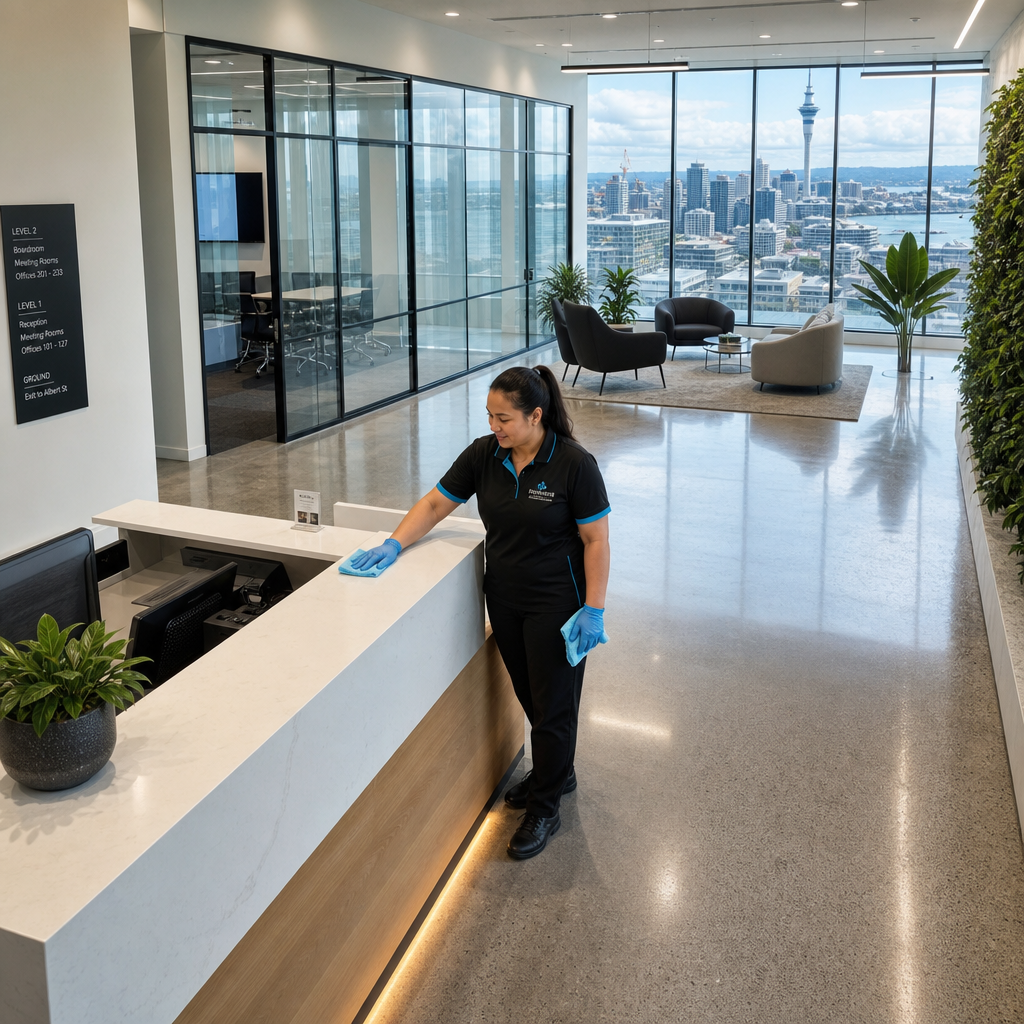
Managing commercial properties across two cities is already complicated. Add inconsistent cleaning standards, different supplier landscapes, and the pressure of keeping multiple sites presentable, and you have a real operational headache. Property managers sourcing commercial cleaning in Auckland often find the market looks quite different from what they know in Christchurch, and vice versa. This article breaks down what actually differs between the two cities, where the risks are, and how to source cleaning services that hold up across both locations without becoming a second job.
Table of Contents
- Quick Takeaways
- Why Auckland and Christchurch Commercial Cleaning Markets Differ
- Sourcing Challenges for Property Managers Managing Both Cities
- What to Compare When Evaluating Cleaning Suppliers
- Service Types That Matter Most in Each Market
- How to Structure a Multi-Site Cleaning Strategy in New Zealand
- Frequently Asked Questions
- References
Quick Takeaways
| Key Insight | Explanation |
|---|---|
| Auckland has a larger but more fragmented supplier pool | More options does not mean easier sourcing. Auckland has higher staff turnover in cleaning roles, which directly affects service consistency. |
| Christchurch pricing is generally lower but supply is tighter | The post-earthquake rebuild drove up labour costs across trades, and commercial cleaning wages followed. Expect less price flexibility from Christchurch-based suppliers. |
| Builders cleaning demand differs significantly between cities | Auckland’s construction pipeline is larger and ongoing. Christchurch rebuild projects are maturing. Post-construction cleaning needs reflect this timing difference. |
| Insurance and compliance are non-negotiable in both cities | Public liability insurance is the baseline. Any supplier without it creates direct risk exposure for property managers and building owners. |
| Single-supplier multi-site arrangements reduce management overhead | Managing two separate local suppliers creates double the admin, inconsistent standards, and harder accountability. One supplier operating in both cities simplifies this. |
| Healthcare and school sites require specific cleaning protocols regardless of city | Compliance with infection control standards does not change based on geography. A supplier unfamiliar with these environments is a liability in either city. |
| Communication responsiveness is a stronger differentiator than price | Property managers consistently report that poor communication causes more disruption than cleaning quality issues. Vet for responsiveness before signing any contract. |
Why Auckland and Christchurch Commercial Cleaning Markets Differ
The commercial cleaning market in Auckland and the one in Christchurch are shaped by completely different economic and physical conditions. Understanding these differences is not academic. It has direct practical consequences for what you pay, who is available, and how reliable the service will be.
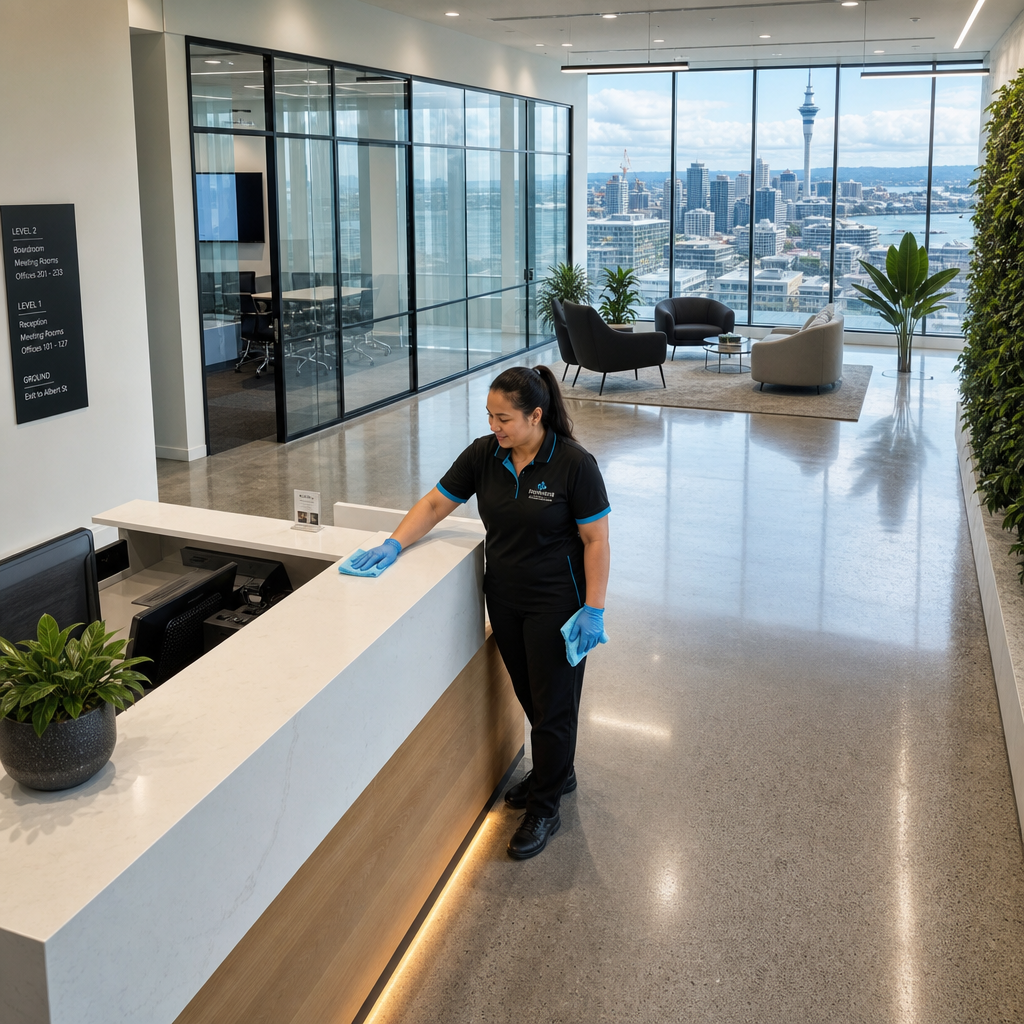
Auckland is New Zealand’s largest city with a commercial property market that reflects that scale. Higher building density, more diverse tenant types, and a much larger volume of office and retail space create consistent demand for commercial cleaning services. That demand attracts a large number of suppliers, but size creates its own problems. Staff turnover in Auckland’s cleaning industry is noticeably higher than in Christchurch, partly because of the cost of living and the competition between employers for reliable workers.
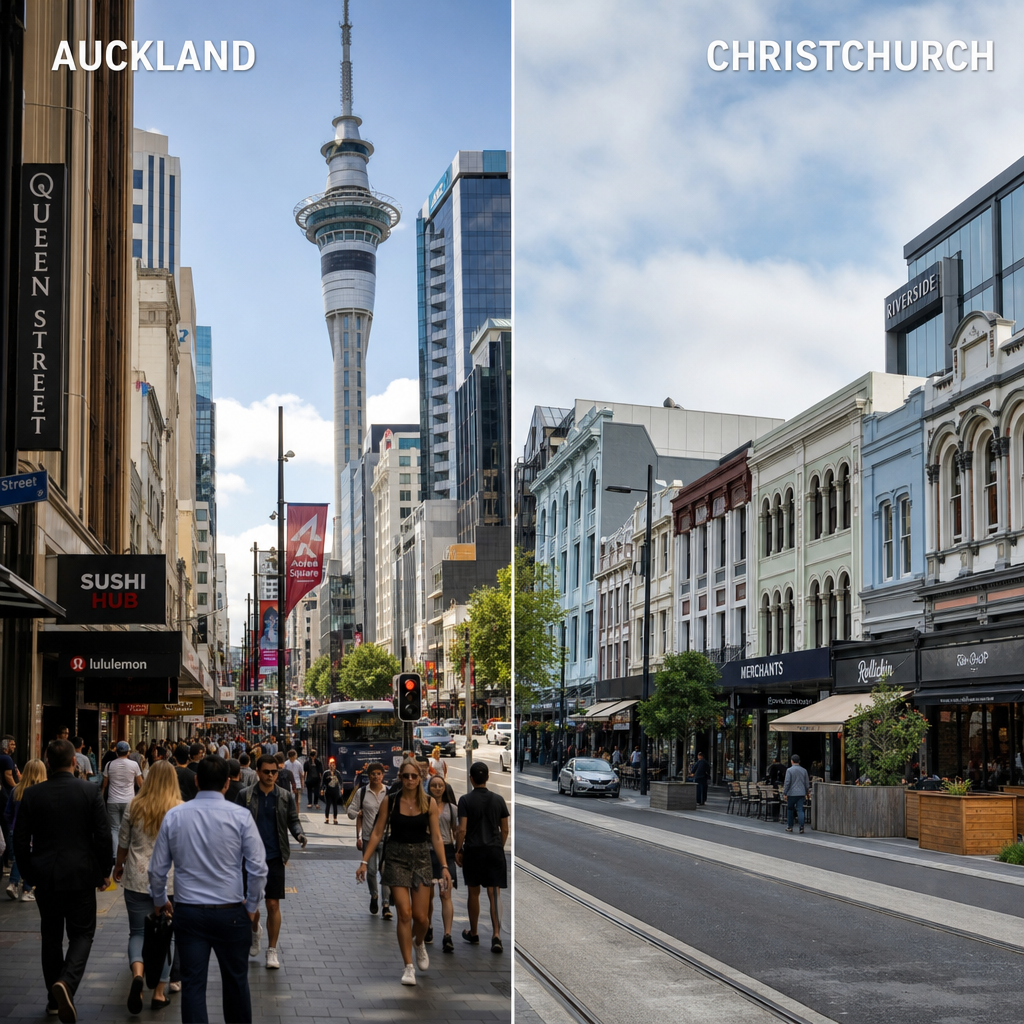
Christchurch operates differently. The post-earthquake rebuild created a decade of sustained construction activity, which pushed up wages across all trade and service categories, including commercial cleaning. The labour pool in Christchurch is smaller, and many experienced cleaners have built long-term relationships with specific cleaning companies. This makes the market less price-competitive but often more stable from a service delivery standpoint.
Regulatory environment is consistent across both cities. New Zealand’s Health and Safety at Work Act 2015 applies nationally, and cleaning companies operating in Auckland and Christchurch are held to the same legal obligations. What differs is how rigorously individual suppliers interpret and apply those standards. In practice, larger franchise operations and independent commercial cleaners vary widely in their actual compliance culture, regardless of what their websites say.
Property Types Driving Demand in Each City
In Auckland, the dominant demand comes from large office towers, multi-tenanted commercial buildings, retail centres, and an active construction sector requiring post-build cleans. Medical and healthcare facilities are also a growing category, particularly in the central and south Auckland areas.
Christchurch’s demand profile is more evenly distributed across office, retail, and educational facilities. Schools are a significant cleaning client category in Christchurch, and the city’s compact commercial centre means that route efficiency for cleaning companies is generally better than in Auckland’s sprawling geography.
Pro tip: When evaluating a cleaning supplier for a Christchurch site, ask specifically about their school and medical centre experience. These are the two most demanding environments in the city, and a supplier with real experience in them will handle your standard commercial site without issues.
Sourcing Challenges for Property Managers Managing Both Cities
Property managers responsible for assets in both Auckland and Christchurch face a sourcing problem that is not just about finding good cleaners in two places. It is about creating a system that delivers consistent outcomes without requiring constant supervision from your end.
The most common mistake is treating each city as a completely separate procurement exercise and ending up with two unrelated suppliers, two different service standards, two sets of reporting, and twice the administrative load. This approach might feel locally optimised, but it creates real risk when one supplier underperforms and you have no unified point of accountability.
“Consistency is the one thing clients never stop asking for. Not cheaper. Not faster. Consistent.” – A recurring observation from facility managers across New Zealand’s commercial property sector.
A second challenge is the qualification gap between what suppliers claim and what they deliver. The commercial cleaning industry in both cities has low barriers to entry. Any person can register a business and offer cleaning services. This means the spread between the best and worst operators is enormous. Without checking for public liability insurance, approved supplier status, and verifiable references from comparable sites, you are making a guess.
What the Franchise Model Gets Wrong for Multi-Site Managers
Several large cleaning franchise networks operate across both Auckland and Christchurch. On paper, this sounds like the solution to the multi-city problem. In practice, the franchise model creates a different issue: the franchisee running your Auckland site and the franchisee running your Christchurch site are different businesses. They share a brand but not management, not standards enforcement, and not accountability structures.
If your Auckland site has a problem, you deal with the Auckland franchisee. If Christchurch has a problem, you deal with a different person entirely. The franchisor sits above both and is typically not responsive to individual site complaints. This is a structural weakness that property managers with multi-site portfolios should weigh carefully.
Pro tip: Before signing with any franchise-model cleaning company for multiple sites, ask directly: who is the single point of contact if I have a problem across both cities? If the answer involves escalating to two different franchisees, that is your signal to keep looking.
What to Compare When Evaluating Cleaning Suppliers
Most property managers approach supplier evaluation by comparing price and looking at a website. This is insufficient and frequently leads to poor outcomes. The variables that actually predict service quality are operational, not cosmetic.
The first thing to verify is insurance. Public liability insurance is the non-negotiable baseline. A cleaning company working on your commercial property without adequate coverage creates direct financial risk for you as the property manager or owner. Always ask for a current certificate of currency, not just a verbal confirmation.
The second is approved supplier status. In New Zealand, procurement frameworks like UpstreamNZ exist precisely to pre-qualify suppliers against verified standards. A cleaning company that holds approved supplier status has already been vetted for compliance, insurance, and operational capability. This saves you significant due diligence time.
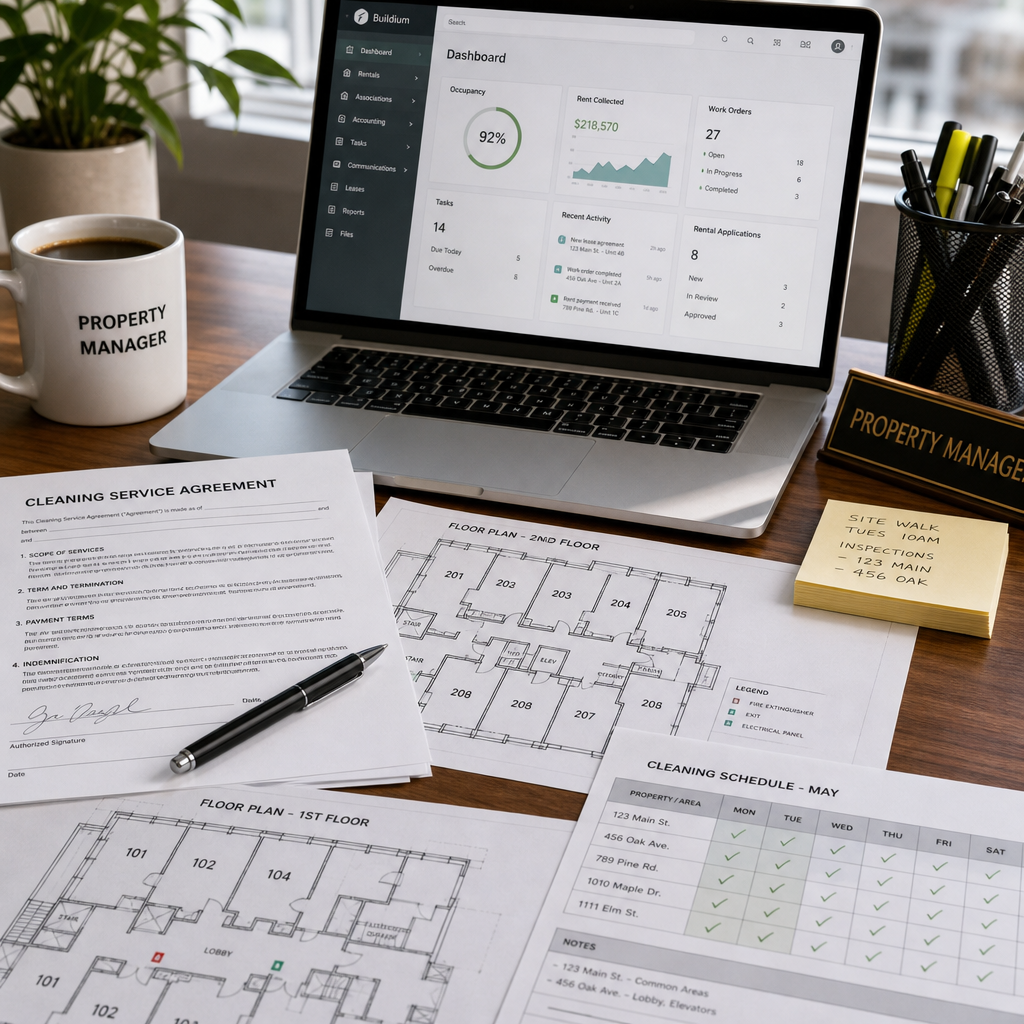
Third, ask for references from property managers or facility managers, not from individual business owners. The cleaning requirements of a property manager running multiple tenanted buildings are materially different from a single-site business. A supplier experienced with one may not be equipped for the other.
Service Types That Matter Most in Each Market
Not all commercial cleaning services are equally relevant in both cities. Understanding which services are most in demand in each market helps you identify whether a supplier genuinely has operational depth or is stretching their capability to win your contract.
Auckland: Construction and High-Frequency Office Cleaning
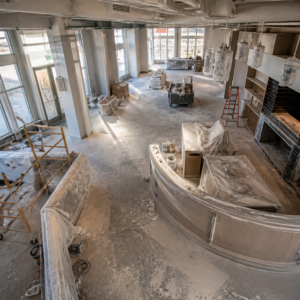
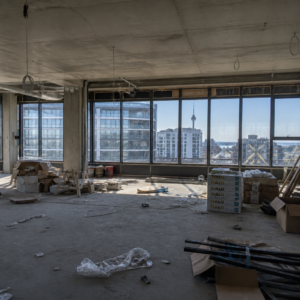
Auckland’s ongoing construction activity means builders cleaning and post-construction cleaning are high-demand, high-scrutiny services. Construction companies working on residential and commercial builds need cleaning teams who understand site safety, can work around ongoing trades, and deliver to a handover standard. A cleaning supplier in Auckland who cannot demonstrate real builders cleaning experience is not the right fit for these projects.
High-frequency office cleaning is also a core service in Auckland’s CBD and fringe commercial precincts. Buildings with multiple tenants often require daily cleaning across common areas, bathrooms, and lifts, with periodic deep cleaning of individual tenancy spaces. Scheduling flexibility matters here because tenant access requirements vary significantly.
Christchurch: End of Lease, Schools, and Carpet Cleaning
In Christchurch, end of lease cleaning is a consistently high-demand service, driven by the volume of lease transitions across the city’s commercial and residential property market. Real estate agencies, property managers, and residential tenants all need reliable end of lease cleans that meet the standard required for bond returns and new tenant readiness.
Schools and educational facilities represent a significant portion of Christchurch’s regular cleaning contracts. These sites require cleaners who understand the scheduling constraints of school environments, the hygiene requirements of high-contact surfaces, and the importance of working outside school hours without supervision. Carpet cleaning and floor stripping and sealing are also common add-on requirements for Christchurch educational and office facilities.
How to Structure a Multi-Site Cleaning Strategy in New Zealand
A functional multi-site cleaning strategy is built around three things: a single accountable supplier, a documented service specification for each site, and a clear escalation process. Without all three, you are managing cleaning reactively rather than proactively.
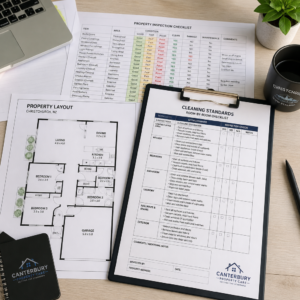
The service specification is the most commonly skipped step. Property managers often rely on a verbal brief or a generic scope of works. This creates interpretation gaps that show up as missed tasks, inconsistent quality, and disputes about what was agreed. For each site, document exactly what areas are cleaned, at what frequency, to what standard, and with what sign-off process.
Comparing Supplier Structures for Multi-City Coverage
| Supplier Type | Auckland Capability | Christchurch Capability |
|---|---|---|
| National franchise network | Wide coverage, but franchisee quality varies significantly by location and individual operator | Coverage exists, but Christchurch franchisees may be smaller operations with limited specialist services |
| Single independent company operating in both cities | Consistent standards, single point of contact, unified reporting and accountability | Same team culture and service protocols applied, no franchisee variation to manage |
| Two separate local suppliers | Potentially strong local knowledge, but no coordination between cities | Same issue, double the admin, no unified accountability for multi-site performance |
The data consistently shows that property managers who consolidate cleaning suppliers across multiple sites report lower administrative burden and faster issue resolution. The argument for using separate local suppliers in each city sounds logical until you need to manage a simultaneous issue in both cities at once.
Triple Star Commercial Cleaning operates across both Auckland and Christchurch, which positions it as a direct answer to the multi-site coordination problem. As an UpstreamNZ approved supplier with public liability insurance coverage across all sites, it removes the two most common qualification barriers that property managers face when vetting cleaning companies.
Pro tip: When setting up a multi-site cleaning arrangement, schedule a quarterly review call with your supplier that covers all sites together. This forces a cross-site view of performance and catches patterns that would not be visible if you are reviewing each site in isolation.
Frequently Asked Questions
Is commercial cleaning more expensive in Auckland than Christchurch?
Generally, yes. Auckland’s higher cost of living and greater competition for skilled cleaning staff pushes labour costs up. Christchurch has seen wage increases following the post-earthquake rebuild period, but rates still tend to run slightly lower than Auckland for equivalent services. The more important variable is scope clarity. Vague contracts produce cost blowouts in both cities regardless of the base rate.
Can one cleaning company reliably service sites in both Auckland and Christchurch?
Yes, provided the company has established operations in both cities rather than subcontracting to a third party in one location. The key question to ask is whether the same management oversight applies to both sites. A company with direct staff and operational control in both Auckland and Christchurch delivers a fundamentally different service than one that manages one city directly and outsources the other.
What services should a property manager prioritise when setting up a new commercial cleaning contract?
Start with a clearly scoped regular maintenance cleaning agreement that covers common areas, bathrooms, and tenancy spaces at agreed frequencies. Then layer in periodic services such as carpet cleaning, floor stripping and sealing, and window cleaning on a scheduled basis. Builders cleaning and end of lease cleaning can be engaged as needed. Do not bundle everything into a single monthly fee without a detailed breakdown of what is included.
How do I verify that a cleaning company has the right insurance for my property?
Ask for a current certificate of currency for their public liability insurance policy. The certificate should show the insured entity name, the coverage amount, and the expiry date. For commercial properties, the standard expectation in New Zealand is a minimum of $1 million public liability cover, though many property owners and body corporates require $2 million or more. Do not accept a verbal assurance or a policy summary sheet in place of the actual certificate.
What is the difference between builders cleaning and regular commercial cleaning?
Builders cleaning, also called post-construction cleaning, involves removing construction dust, debris, adhesive residue, paint splatter, and protective coverings from a newly built or refurbished space. It requires specific equipment, chemical knowledge, and an understanding of building materials. Regular commercial cleaning maintains an already-clean space through routine tasks. A company that only does regular commercial cleaning is not equipped to deliver a post-construction clean to handover standard.
How should property managers handle cleaning complaints from tenants in multi-tenanted buildings?
The most effective approach is to have a single escalation pathway clearly documented in your cleaning contract. Tenants report to the property manager, the property manager contacts the cleaning supplier’s account manager directly, and a resolution timeline is agreed within 24 hours. When cleaning suppliers are managed through a franchise or subcontractor structure, this pathway breaks down because accountability is distributed across multiple parties. Consolidating to a direct supplier relationship removes this friction entirely.
If you manage commercial properties in Auckland, Christchurch, or both, share what has worked for you when sourcing and managing cleaning suppliers across multiple sites.
References
- Forbes business insights on commercial property management and supplier accountability frameworks
- Statista data and market research on the commercial cleaning industry size and growth trends
- WorkSafe New Zealand guidance on health and safety obligations for commercial cleaning contractors
- New Zealand Building Performance resources on construction site cleaning and post-build compliance standards
- McKinsey research on facilities management outsourcing and multi-site operational consistency