Moving offices in New Zealand is expensive, time-consuming, and carries real financial risk on both ends of the process. The cleaning obligations alone, whether you are handing back keys to a landlord or taking possession of a new space, are precise enough that getting them wrong costs money. Office relocation cleaning in NZ is not a last-minute box to tick. It is a structured, sequenced process governed by lease obligations, inspection standards, and practical realities of commercial buildings in cities like Christchurch and Auckland. This guide sets out exactly what needs to happen, in what order, and why.
Table of Contents
- Quick Takeaways
- Why Office Relocation Cleaning Is Different from Routine Commercial Cleaning
- Vacating Your Current Office: What the Handover Clean Must Cover
- Commercial Move-In Cleaning: What to Demand Before Your Team Arrives
- Cleaning Scope by Space Type Inside a Commercial Tenancy
- Comparing Your Options: DIY, General Cleaner, or Specialist
- Timing and Sequencing: When to Book, What Comes First
- Frequently Asked Questions
- References
Quick Takeaways
| Key Insight | Explanation |
|---|---|
| Lease obligations define the cleaning standard, not personal preference | Commercial leases in NZ typically require tenants to return premises in the same condition as at the start of the lease, fair wear and tear excepted. That standard is documented, not assumed. |
| Move-in cleaning is not optional even in a “clean” space | A vacant office may look clean but hold construction dust, stale air, pest traces, and grime behind fixtures that were never addressed by the previous tenant’s cleaning team. |
| Builders cleaning and office relocation cleaning are different scopes | Post-construction handovers require removal of plaster dust, silicone residue, and trade debris. A standard move-in clean does not cover this. If your new space has been recently fitted out, request a builders clean first. |
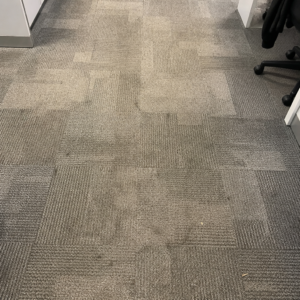
| Carpet and upholstery cleaning is a separate line item | Many businesses clean every surface then skip carpets. Landlords notice this immediately. If carpets were professionally cleaned at lease commencement, the same standard is expected at vacating. |
| Photo documentation at both ends protects you legally | Before the handover clean and immediately after, take dated photographs of every room, fixture, and surface. In any dispute, the burden of proof sits with whoever claims damage or inadequate cleaning. |
| Christchurch and Auckland have different building stock | Christchurch has a significant proportion of post-earthquake rebuild buildings and newer commercial fit-outs. Auckland has more older high-rise stock. Cleaning scope, particularly for HVAC ducts and concrete surfaces, differs between them. |
| Book the relocation clean independently of the furniture removal | Cleaning crews cannot work around removalists and removalists cannot work around cleaners. Sequence them: furniture out first, then the handover clean, then the ingoing clean at the new premises before furniture arrives. |
Why Office Relocation Cleaning Is Different from Routine Commercial Cleaning
Regular office cleaning maintains a baseline. Office relocation cleaning resets a property to a defined condition, and that distinction matters enormously when money, lease obligations, and staff productivity are involved.
A routine clean covers visible surfaces on a scheduled basis. A relocation clean must cover every surface, including those that have been obscured by furniture for years, fixtures that were never part of a weekly scope, and areas like cable trays, server room floors, and wall-mounted partitions that accumulate grime invisibly over a tenancy.
The standard expected is also different. A property manager conducting a handover inspection is not checking whether the office “looks presentable.” They are working through a checklist that includes light fittings, air vents, window tracks, door frames, skirting boards, and the undersides of desks and shelving. In practice, this is a materially higher standard than what most in-house or general cleaning arrangements deliver week to week.
The gap between what a regular cleaner does and what a commercial handover inspection expects is exactly where lease disputes and bond deductions happen. Closing that gap requires a different scope, different equipment, and a team that understands what property managers actually check.
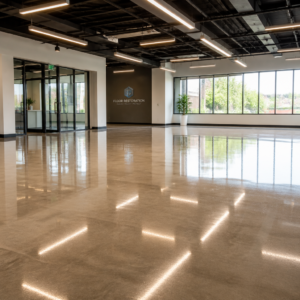
For businesses moving offices in Christchurch or Auckland, this also means understanding your specific building type. An older Auckland CBD high-rise with suspended ceilings and aged carpet tiles presents different challenges from a purpose-built Christchurch commercial unit with polished concrete floors and aluminium-framed glass partitions. The cleaning scope follows the building, not a generic checklist.
Vacating Your Current Office: What the Handover Clean Must Cover
Office handover cleaning in Auckland and Christchurch is governed primarily by what your commercial lease says, and most standard NZ commercial leases use the ADLS form or a variant of it. These agreements typically require the premises to be returned in the same condition as at the start of the lease, excluding fair wear and tear. That condition was usually documented in a property condition report signed at commencement.
What the Inspection Covers
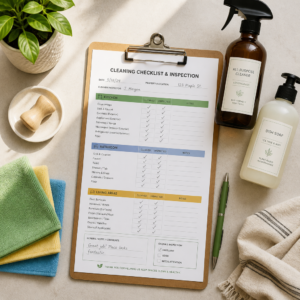
Property managers conducting outgoing inspections work through the full tenancy space systematically. Common areas of failure in commercial handovers include:
- Kitchenette and kitchen appliances, particularly inside ovens, microwaves, refrigerators, and dishwashers
- Toilet and bathroom facilities, including grout lines, behind cisterns, and extractor fans
- Window glass, window tracks, and window sills (both internal and, where accessible, external)
- Light fittings, particularly recessed downlights where insects accumulate
- Air conditioning return air grilles and supply diffusers
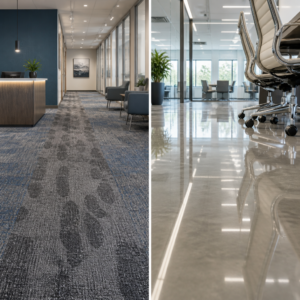
- Carpet cleaning to a professional standard throughout
- Hard floor surfaces stripped of any scuff marks or residue
- Walls wiped down and free of marks, scuffs, and adhesive residue from signage or pinboards
- All internal glass partitions cleaned both sides
- Reception areas, including any branding adhesive or signage residue on walls or glass
What Falls Outside the Cleaning Scope
Cleaning does not replace make-good obligations. If your lease requires you to remove partitioning, reinstate walls, repaint, remove cabling, or restore the premises to original layout, those are separate obligations handled by licensed tradespeople. The cleaning team works after make-good is done, not before. Trying to use cleaning to mask reinstatement failures rarely works and is not worth attempting.
Pro tip: Pull out your ingoing condition report and go through it room by room before you book a handover clean. Note any items that were recorded as already damaged or worn at commencement. These are not your responsibility to remedy, but you need to document them clearly before vacating to avoid being charged for pre-existing conditions.
Commercial Move-In Cleaning: What to Demand Before Your Team Arrives
Commercial move-in cleaning in Christchurch and Auckland is one of the most under-resourced parts of any office relocation. Businesses invest heavily in fit-out, IT, furniture, and logistics, then hand their staff keys to a space that has not been properly prepared. The result is a poor first impression, staff dissatisfaction, and, in some cases, hygiene or air quality issues from the previous tenancy.
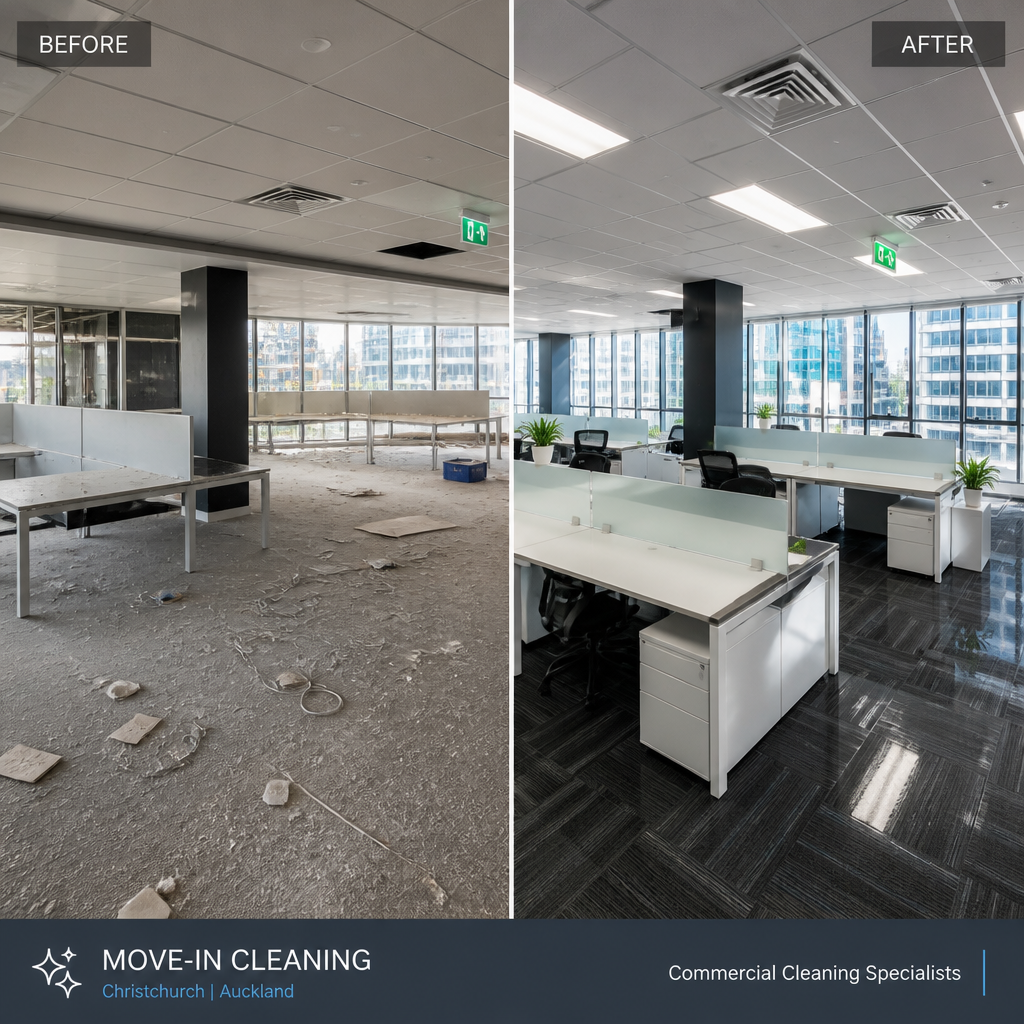
Before a single desk is moved into your new premises, the space needs to be cleaned to an occupancy standard, not just a vacancy standard. These are not the same thing. Vacancy cleaning removes visible debris. Occupancy cleaning prepares every surface that a person will touch, breathe near, or work on.
Minimum Scope for a Commercial Move-In Clean
At minimum, a pre-move-in clean of a commercial office should include:
- Full internal window clean including frames and sills
- All kitchen and bathroom surfaces sanitised and deodorised
- Carpet vacuumed and professionally steam cleaned if not replaced
- Hard floors cleaned, buffed, and sealed if applicable
- All air vents, diffusers, and return air grilles cleaned and checked
- Internal partitions and glass cleaned both sides
- All light fittings dusted and wiped
- Skirting boards, door frames, and architraves wiped down
- All electrical switch plates and door hardware sanitised
When the Space Has Been Recently Fitted Out
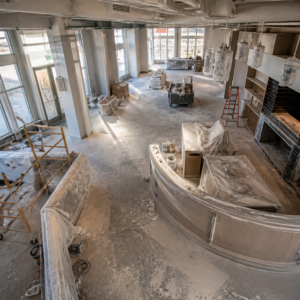
If the premises have had a new fit-out, builders cleaning comes before the move-in clean, not after. Construction work leaves behind fine plaster dust, silicone residue, paint splatter, adhesive, tile grout haze, and metal filings that spread across every surface and penetrate carpet fibres. A standard cleaning team using standard equipment will not remove this effectively. A post-construction clean requires specialist equipment, appropriate chemicals, and a team that knows the sequence: dry dust removal first, then wet clean, then final detail, then any floor sealing or carpet clean.
At Triple Star Commercial Cleaning, we handle both builders cleaning and the follow-on pre-occupancy clean as part of the same relocation process, so nothing falls through the gap between the two scopes.
Pro tip: Do not assume that a landlord or developer’s “end of construction” tidy is sufficient for occupancy. Builders cleans done by the construction team are typically a broom-sweep standard designed to hand the space to the tenant, not to prepare it for staff to work in. Always commission your own independent pre-occupancy clean.
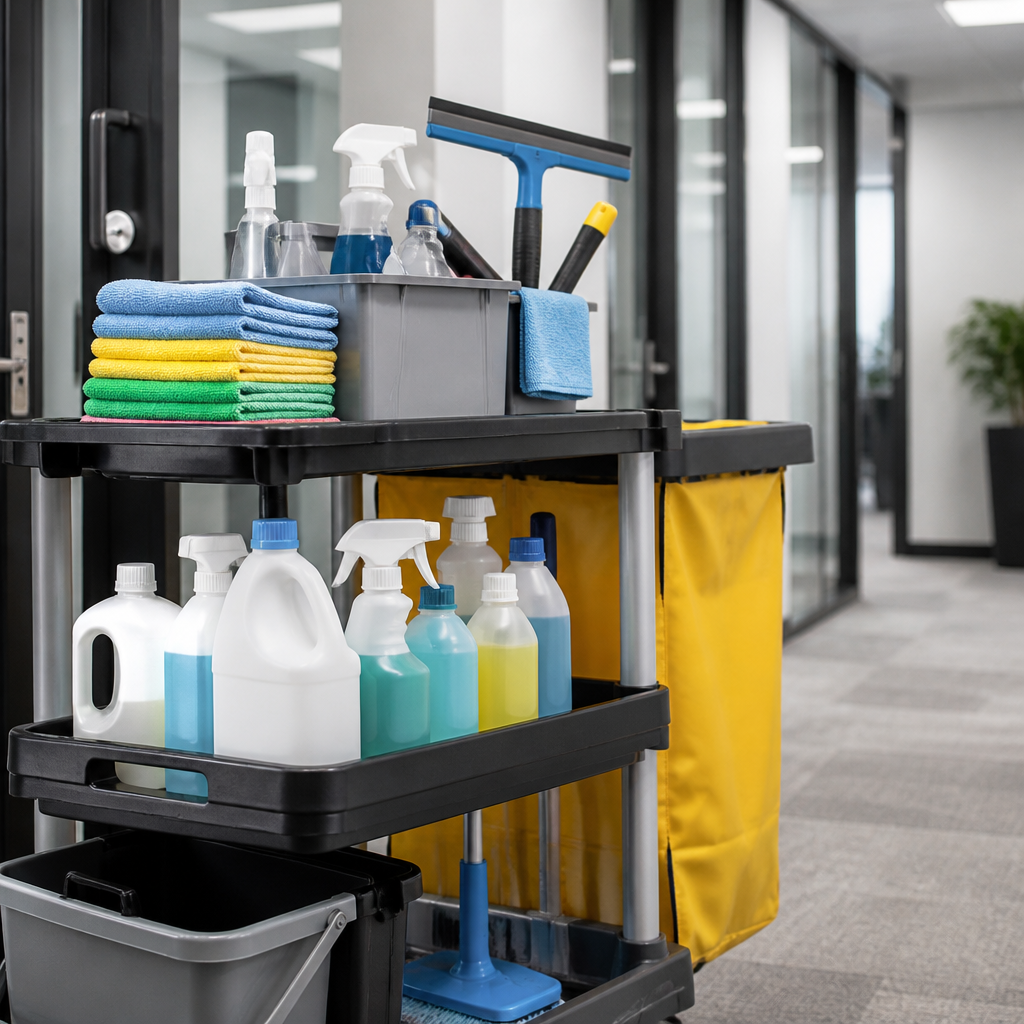
Cleaning Scope by Space Type Inside a Commercial Tenancy
Not every area in a commercial office requires the same approach. Understanding which zones carry the highest inspection risk, and the highest impact on staff experience, helps you prioritise where to concentrate effort and where a standard approach is sufficient.
Open Plan Work Areas
These are the largest surfaces by floor area and the most visible. Carpet cleaning, desk surface cleaning, and partition cleaning dominate this zone. The most commonly missed items are the tops of partitions, cable management trays, and the underside of work surfaces where keyboards and chairs have pushed grime over years of use.
Kitchen and Welfare Areas
Kitchen areas attract the most deductions in commercial handover inspections. Grease, food residue, and limescale build up in places that standard weekly cleaning misses: behind and beneath appliances, inside rangehoods, inside dishwashers, and under sink cabinets. These areas require chemical dwell time and mechanical action, not a wipe-down.
Bathrooms and Amenities
Commercial bathroom cleaning for a handover involves full sanitisation including behind cisterns, extractor fan covers, tile grout, silicone seals around fixtures, and the full floor area including under vanity units. The presence or absence of limescale on taps and shower heads is always noted by inspecting property managers.
Reception and Entry Areas
Reception areas carry the branding of the previous tenant and accumulate scuff marks, adhesive residue, and wear on the floor surface near entry points. High-traffic hard floor areas near the entrance frequently need restorative cleaning or floor stripping and resealing to return to the condition documented at lease commencement.
Server Rooms and Comms Areas
These spaces are often overlooked entirely. Raised floors, cable conduits, and equipment bays accumulate significant dust over a tenancy. If the space is being handed back with the raised floor removed, the void beneath must be cleaned before handover. If the incoming tenant is taking the space with the infrastructure in place, cleaning to data centre standards is required before IT equipment is brought in.
Comparing Your Options: DIY, General Cleaner, or Specialist
Every business relocating offices faces the same decision about who handles the cleaning. Here is a direct comparison of the three main approaches:
| Approach | What You Get | Where It Falls Short for Relocation Cleaning |
|---|---|---|
| Internal staff DIY clean | Low cost, immediate availability, no scheduling required | Staff are not trained to the inspection standard. Time is underestimated by 3 to 5 times in most cases. Equipment is inadequate for carpet cleaning, floor stripping, and high-level work. Disputes with landlords are far more common. Staff morale suffers from being asked to clean on top of a stressful move. |
| General commercial cleaner | Familiar with commercial environments, reasonable cost | General cleaners work to a maintenance standard, not a handover standard. They typically lack the specialist equipment for carpet steam cleaning, floor resurfacing, high-pressure window cleaning, or post-construction cleaning. They may not understand lease inspection requirements. |
| Specialist commercial relocation cleaner | Trained to handover inspection standards, correct equipment, full scope coverage, documented results, public liability cover | Higher cost than DIY or general cleaning. Must be booked in advance and sequenced correctly with the move. Not all providers offer the full spectrum from builders clean through to post-occupancy maintenance. |
The financial case for using a specialist is straightforward. Lease disputes over inadequate cleaning commonly result in costs that exceed the cost of the professional clean by a significant margin, in addition to the time and stress of managing a dispute. A specialist commercial relocation cleaning service with public liability insurance, documented scope, and a team that knows what property managers inspect is the only approach that reliably produces a clean handover.
Triple Star Commercial Cleaning operates across Christchurch and Auckland with public liability insurance cover on every site, and as an UpstreamNZ approved supplier. For property managers and business owners who need documented, consistent results, that accountability structure matters.
Timing and Sequencing: When to Book, What Comes First
The single most common mistake in office relocation cleaning is leaving it too late. Most businesses treat the cleaning as the final item to sort, after everything else is confirmed. In practice, the cleaning schedule needs to be locked in at the same time as the removalists.
The Correct Sequence for a Commercial Move-Out
For the office you are vacating, the correct sequence is:
- Complete any make-good or reinstatement work required under the lease (repainting, removal of partitions, removal of signage)
- Complete furniture and IT removal
- Book and complete the handover clean, including carpet cleaning and any floor stripping or sealing
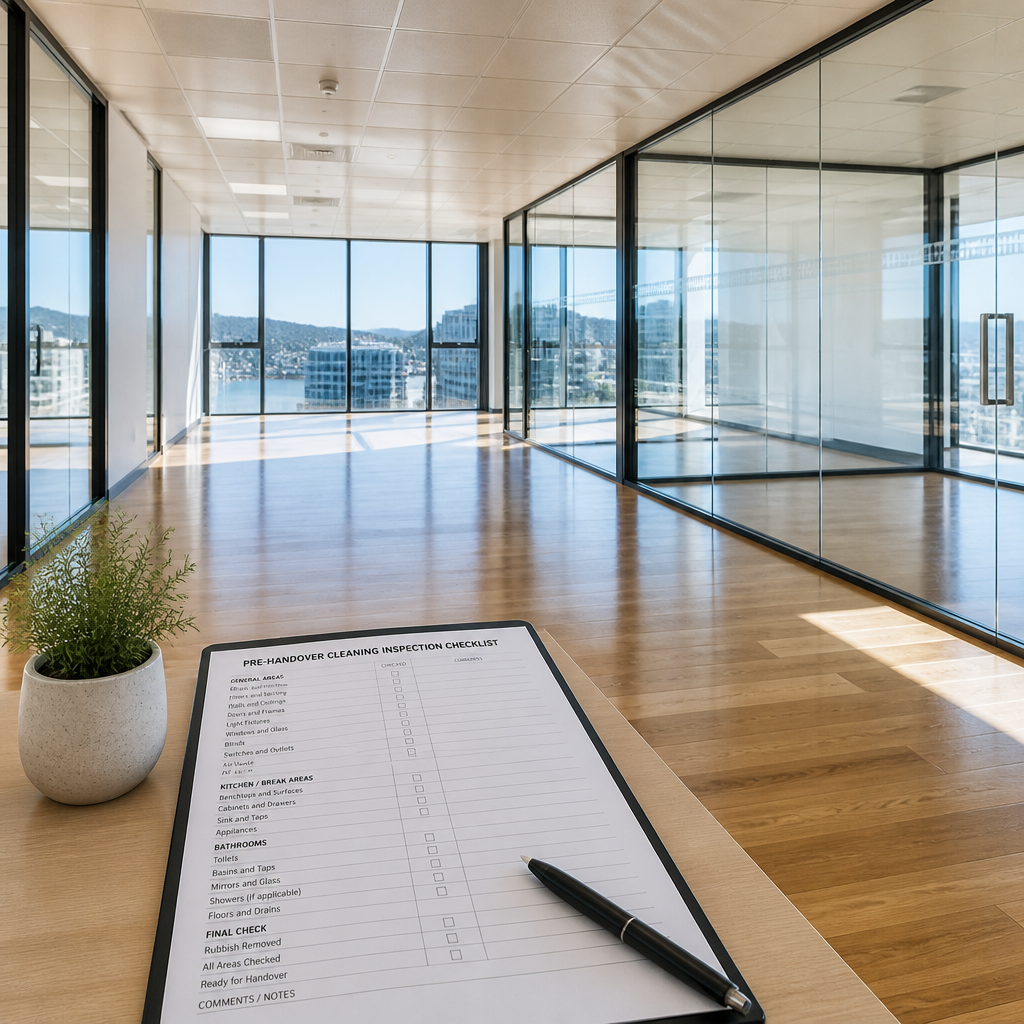
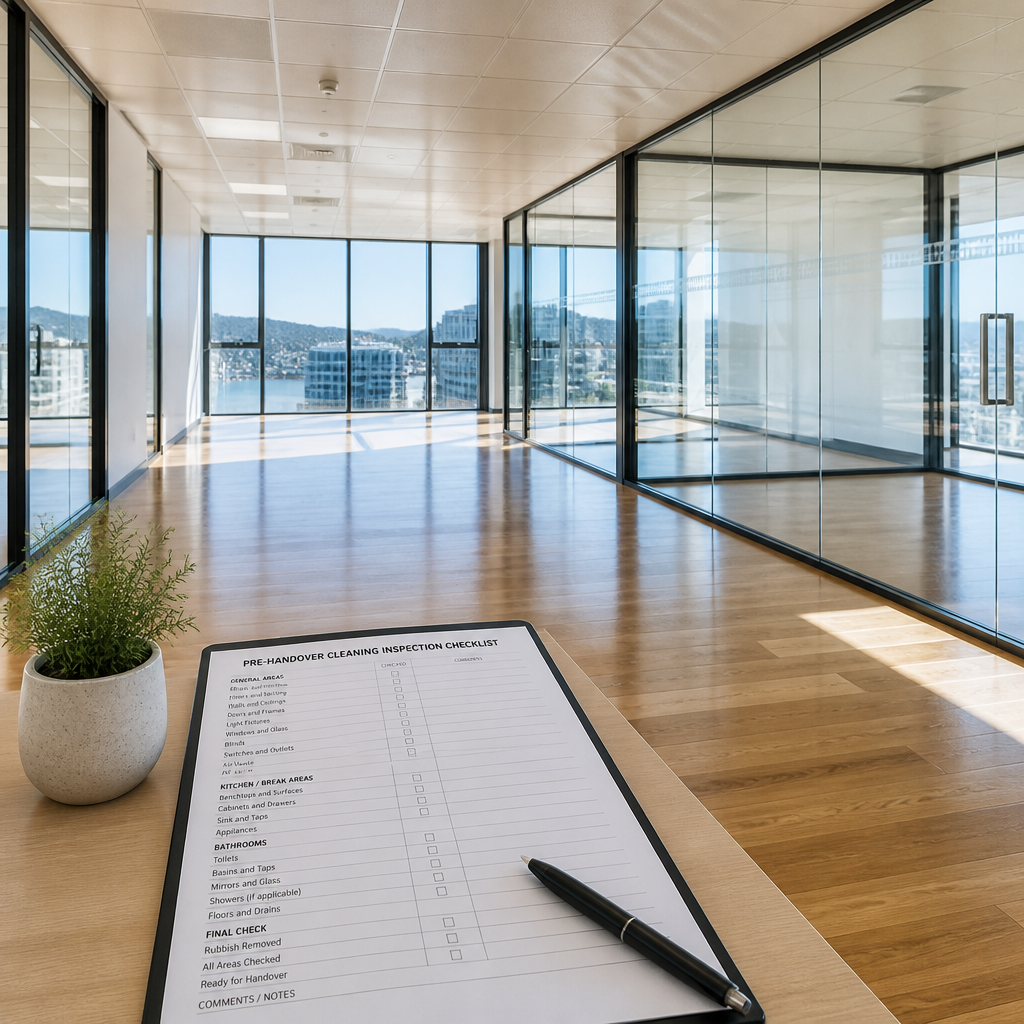
- Complete a documented post-clean walkthrough with dated photographs
- Conduct the outgoing inspection with the property manager
The Correct Sequence for a Commercial Move-In
For the office you are moving into, the sequence is:
- If the space has been recently constructed or fitted out, complete the builders clean first
- Complete the pre-move-in clean including window cleaning, carpet cleaning, and sanitisation of all amenity areas
- Move furniture and equipment into a clean space
- Schedule ongoing maintenance cleaning to start from day one
Lead Times in Christchurch and Auckland
Allow a minimum of five to seven working days notice for a commercial relocation clean in either Christchurch or Auckland. For large-footprint tenancies, multi-level spaces, or sites requiring both builders cleaning and pre-occupancy cleaning, two to three weeks lead time is appropriate. Attempting to book at 48 hours notice during busy periods (end of financial year, October to November are typically high demand in Auckland) is a risk not worth taking.
Pro tip: When requesting a quote for office relocation cleaning, provide the square meterage of the tenancy, the floor type breakdown (carpet, hard floor, polished concrete), the number of kitchens, bathrooms, and meeting rooms, and confirm whether the space has had any construction work. This information determines the scope and the crew size, and prevents undescoped jobs where important areas get missed because the brief was vague.
Frequently Asked Questions
What does office relocation cleaning in NZ typically include?
Office relocation cleaning covers two distinct scopes. The outgoing handover clean restores the vacated premises to the condition required by the commercial lease, including carpet cleaning, kitchen and bathroom deep cleans, window cleaning, hard floor work, and removal of any marks or residue. The incoming pre-move clean prepares the new space for occupancy by sanitising all surfaces, cleaning windows and floors, and addressing any residual grime from the previous tenancy. If the new space has had construction work, a builders clean is completed before the pre-occupancy clean.
How far in advance should I book a commercial handover clean in Auckland or Christchurch?
A minimum of five to seven working days is needed for a standard commercial handover or move-in clean. For large or complex sites, including multi-level offices, spaces with recently completed fit-outs, or tenancies requiring both builders cleaning and pre-occupancy cleaning, two to three weeks lead time is realistic. Booking early also allows time for a site visit and accurate scope confirmation, which prevents disputes about what was included.
Is carpet cleaning compulsory when vacating a commercial office in NZ?
In most cases, yes. If carpets were professionally cleaned at the commencement of your lease, you are expected to return them to that same standard at vacating. This is typically documented in the ingoing condition report. A commercial vacuum clean is not equivalent to professional carpet steam cleaning. If the carpets were in poor condition at the start of your lease and that was documented, you are not required to restore them beyond that documented starting condition.
What is the difference between builders cleaning and pre-move-in cleaning?
Builders cleaning, or post-construction cleaning, is a specialist clean performed after construction, renovation, or fit-out work. It removes plaster dust, silicone residue, paint splatter, adhesive, tile grout haze, and trade debris using specialist equipment and chemicals. Pre-move-in cleaning, or commercial move-in cleaning, prepares a vacant but construction-free space for occupancy by sanitising surfaces, cleaning windows and floors, and ensuring all amenity areas are ready for staff. The two scopes are sequential: builders clean first, then pre-occupancy clean.
Who is responsible for cleaning when taking over a commercial lease in NZ?
The incoming tenant takes the space in the condition it is in at handover from the landlord. If the previous tenant failed to clean adequately, or if the landlord cannot demonstrate that the space was cleaned to a professional standard before your tenancy commenced, you have a basis to request cleaning or to document the existing condition in the ingoing condition report. Regardless of who is responsible for the current state, commissioning your own pre-occupancy clean ensures your staff enter a space that has been prepared to your standard, not assumed to be clean by others in the chain.
Does Triple Star Commercial Cleaning handle both the outgoing handover and incoming pre-occupancy clean?
Yes. Triple Star Commercial Cleaning provides commercial handover cleaning, pre-move-in cleaning, builders cleaning, carpet cleaning, window cleaning, and floor stripping and sealing across Christchurch and Auckland. Managing both ends of a relocation with one provider simplifies scheduling, removes the risk of scope gaps between cleaners, and ensures consistent documentation throughout the process. All sites are covered by public liability insurance.
What should I check after the handover clean but before the property manager’s inspection?
After the clean is complete, walk the entire tenancy systematically before the outgoing inspection. Check inside all appliances, including the oven, microwave, and refrigerator. Check window tracks and sills on every window. Look at light fittings, air vents, and the tops of door frames. Check for adhesive residue from signage, cable holes in walls that need filling, and any scuff marks on painted surfaces. Take dated photographs of every room. If anything was missed, contact the cleaning provider immediately rather than waiting for the property manager to note it on the inspection report.
Have you recently managed an office move in Christchurch or Auckland? We would like to hear what part of the cleaning process caused the most difficulty, or what you wish you had known before booking.
References
- Office relocation guide for New Zealand businesses, covering timelines, costs, and move-day preparation
- Seven key considerations for commercial tenants reviewing a lease agreement in New Zealand
- End of lease cleaning in Christchurch: obligations for tenants and landlords including inspection standards
- End of lease cleaning checklist for Christchurch properties with bond protection guidance