Most office managers clean the desks, the kitchen bench and the carpet every week, yet the chairs their staff sit in all day rarely get more than a quick wipe. That gap matters. Upholstered seating, reception sofas and fabric-covered meeting room chairs soak up dust, skin oils, food spills and allergens, and they do it quietly. Commercial upholstery cleaning NZ businesses rely on is about more than appearance. In this guide, we look at why office furniture hygiene deserves a place in your cleaning schedule, what actually builds up in fabric, and how to choose a method that suits busy offices in Christchurch and Auckland.
Table of Contents
- Quick Takeaways
- Why Office Upholstery Collects More Than You Expect
- Hygiene, Productivity and Staff Health
- Fabric Types That Need Different Methods
- Cleaning Methods Compared
- Scheduling Upholstery Cleaning Around Office Hours
- Higher-Risk Sites: Schools, Medical Centres and Retail
- Choosing a Provider in Christchurch and Auckland
- Frequently Asked Questions
- References
Quick Takeaways
| Key Insight | Explanation |
|---|---|
| Upholstery holds more soil than hard surfaces | Fabric traps dust, skin oil and spills that a desk wipe-down never reaches, so a chair can be dirtier than the desk beside it. |
| Check the care label before any product goes on | Ask the supplier for the cleaning code. If none exists, test a hidden area first, such as the underside of a seat cushion. |
| Treat meeting room and reception seating as priorities | These chairs are shared by many people each day, so they carry more contact soil and allergens than individual desk chairs. |
| Plan a professional clean every three to six months | Busy offices typically need a planned clean at this interval, with weekly wipe-downs in between to keep seats presentable. |
| Book around drying time, not just opening hours | A chair that needs several hours to dry should be cleaned after hours or on a weekend, with a backup seating plan in place. |
| Get the scope, drying time and insurance in writing | A clear quote lists each piece of furniture, the method, the drying window and any stains that may not lift completely. |
Why Office Upholstery Collects More Than You Expect
In practice, the chairs in a typical office are the least cleaned surface in the building. Staff wipe their desks and keyboards, but the seat cushion, backrest and armrests sit untouched for months, sometimes years.
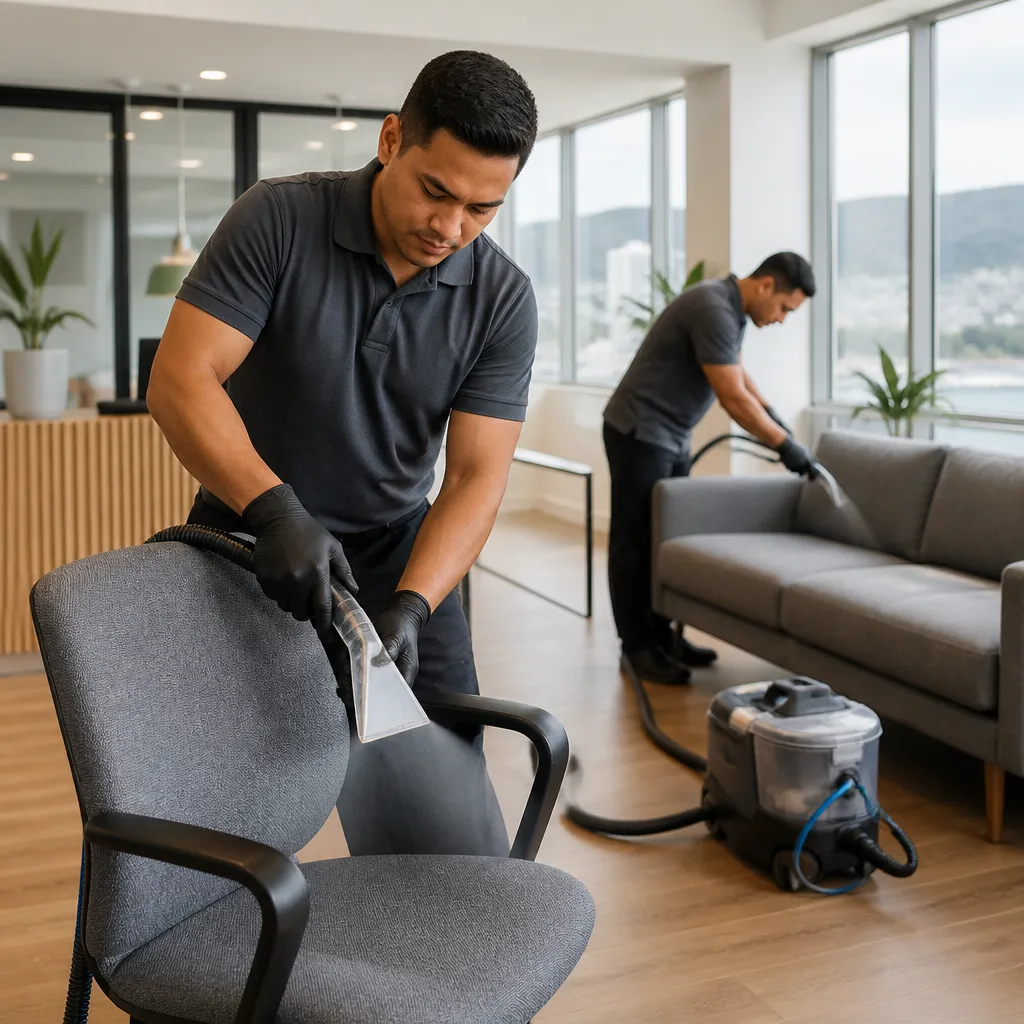
Fabric is porous. Dust settles into the weave, skin oils and sweat soak into the foam, and crumbs from lunch get pushed down the gap between the seat and the backrest. A hard desk shows you when it is dirty. Upholstery hides the problem until it smells or develops a darker patch on the seat.
Dust, skin oil and crumbs in the seat
The seat is where the most contact happens, and that contact is mostly skin. Over a working week, a chair in a shared office picks up oils, perspiration and fine particles from clothing. Those residues attract more dust, so the fabric greys over time even when nobody spills anything.
Crumbs and drink spills are the other half of the problem. Most of them never stay on the surface of the seat. They work into the foam, where a quick vacuum cannot reach them, and over time they start to attract bacteria and odour.
Reception sofas and waiting room seating
Reception sofas take the heaviest traffic in the building. Visitors arrive from outdoors, put down bags, lean back with coffee cups and perch on armrests. Within a few months, a sofa that looked fine on installation can carry more grime than the carpet in front of it.
We often see reception areas that are cleaned daily while the seating is never touched. The floor looks spotless, but anyone who sits down on the sofa gets a different impression of the business.
Furniture is the part of the office that gets touched the most and inspected the least.
Pro tip: Photograph two or three chairs under bright light before your first professional clean. Before and after photos are the fastest way to get budget approval from a property manager who has never looked closely at the furniture.
Hygiene, Productivity and Staff Health
Hygiene is usually framed as a compliance issue, but it also affects how people feel at work. A stained, tired-looking chair signals that the business does not look after its environment, and staff notice that before they consciously think about it.
An office furniture retailer’s blog cites a University of Warwick study finding that employees are more likely to be at the office when they actually enjoy their work. The same blog argues that the workspace is one of the few factors an employer controls directly. A clean, well-kept room is part of that control, and upholstery makes up a large share of how the room feels.
Why a worn chair affects how people feel at work
Comfort and cleanliness go together. A chair that smells, feels sticky or has frayed fabric makes people reluctant to sit in it for long periods. Staff who avoid their own chairs tend to perch, lean on desks or migrate to the sofa, which creates postural problems of its own.
A LinkedIn article on office furniture and employee performance makes a related point: by reducing physical discomfort and strain, ergonomic furniture helps employees focus on their tasks. Clean, supportive seating is the easiest part of that equation to maintain, and the part most often ignored.
Allergens and shared seating
Most offices have people with allergies or asthma, and few managers know which chairs carry the most dust. Upholstery acts as a reservoir for allergens, which are released each time someone sits down or stands up. Regular professional extraction removes much of what a vacuum leaves behind, particularly in shared meeting rooms where several people use the same chair each day.
In practice, we recommend treating meeting room chairs as a higher priority than individual desk chairs. Those seats cycle through different people all day, and they are often the source of odour complaints when nobody has cleaned them in a long time.
Fabric Types That Need Different Methods
Not all upholstery responds to the same treatment. Using the wrong method on the wrong fabric can leave a bigger problem than the one you started with, including water marks, shrinkage, colour bleed and residue that attracts dirt faster than before.
Before any work starts, check the care label or ask the furniture supplier for the cleaning code, if one exists. If the label is missing, which is common with second-hand or older furniture, test a hidden area with the proposed solution before treating the whole chair.
Woven and blended office fabrics
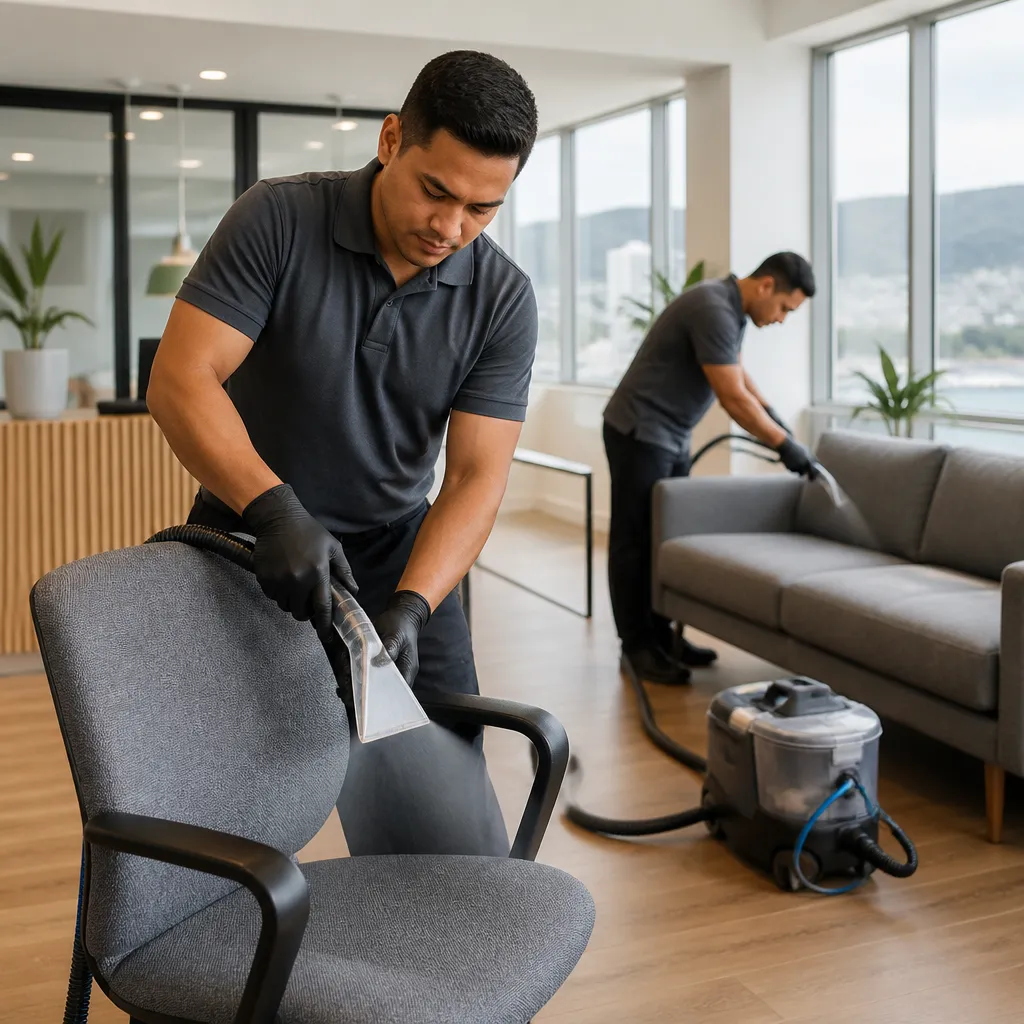
Most task chairs and meeting room seats use woven or blended synthetic fabric. These fabrics handle hot water extraction well, which lifts embedded soil from deep in the weave. The critical step is drying. Fabric left damp for too long can develop odour and, in poorly ventilated rooms, mould at the base of the foam.
Ask for a drying plan as part of the quote. A good operator will tell you how long the seats will be out of use and whether air movers will be used to shorten that window.
Leather and vinyl seating
Leather and vinyl are often wiped rather than extracted, and that is usually the right call. Strong alkaline cleaners and oil-based products can dry out leather, cause cracking or leave a film that attracts dust. A pH-neutral cleaner, applied sparingly and wiped off fully, does most of the work.
Avoid soaking any leather or vinyl seat. Excess moisture can get into the stitching and under the top coat, and the damage often shows up weeks later rather than on the day of cleaning.
Wool and natural fibre upholstery
Wool and other natural fibres appear on some premium reception furniture and heritage-style office spaces. They need low-moisture methods. Too much water can cause water marks, shrinkage or distortion, and that damage is hard to reverse.
Pro tip: Ask any cleaner to test an inconspicuous area, such as the underside of a seat cushion, before they start. A ten-minute test patch can prevent a repair bill that costs far more than the clean itself.
Cleaning Methods Compared
Three methods cover most commercial upholstery work. They are not interchangeable, and the right choice depends on the fabric, how dirty the furniture is and how quickly the room needs to return to use.
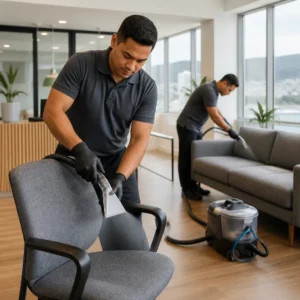
Surface wipe-downs are the cheapest option and should happen weekly in every office. They remove dust and fresh marks but do nothing for soil that has worked into the foam. Hot water extraction is the most thorough method for woven fabric, and low-moisture encapsulation suits furniture that cannot stay wet for long.
| Method | Best suited to | Watch out for |
|---|---|---|
| Surface wipe-down with an approved cleaner | Routine upkeep between professional cleans, leather, vinyl and visible marks | Does not reach soil in the foam, and too much product can leave residue |
| Hot water extraction | Woven and blended fabric, heavy soiling, meeting room and reception seating | Long drying time, and a risk of over-wetting natural fibres or older foam |
| Low-moisture encapsulation | Furniture that must return to use quickly, and fabrics sensitive to water | Needs thorough vacuuming afterwards, and results depend on the cleaning agent used |
In practice, most offices end up using a combination. Weekly wipe-downs keep the furniture presentable, and a planned professional clean every few months handles the soil that builds up beneath the surface. Hot water extraction is reserved for the heaviest seating, while encapsulation covers pieces that cannot wait for a full drying cycle.
Scheduling Upholstery Cleaning Around Office Hours
The biggest objection to upholstery cleaning is disruption. Nobody wants to lose half the meeting room for a day, and most offices cannot close their reception area. The answer is planning, not postponing the job until the furniture is badly soiled.
Matching the cycle to foot traffic
A practical rhythm for most busy offices is a professional clean every three to six months, with reception and client-facing seating at the shorter end of that range. Low-traffic areas such as storage rooms or private offices can stretch longer. The schedule should reflect how the space is used, not just how old the furniture is.
Book the upholstery clean in the same window as any carpet work. Both jobs need the space emptied or partly cleared, and doing them together means one disruption instead of two.
Working with drying time
Drying time is the main reason after-hours or weekend bookings make sense. A chair that needs several hours to dry should not be cleaned on a Monday morning with staff waiting to use it. Ask for a realistic timeline and plan the room around it, with a backup seating option ready.
Clear communication matters here. Tell staff in advance which rooms will be out of use, how long they will stay that way and where to sit in the meantime. Most complaints about disruption come from surprise, not from the cleaning itself.
Pro tip: Mark cleaned seats with a removable sign that says when the furniture is ready to use. It stops people sitting on damp fabric and saves a conversation with the facilities team.
Higher-Risk Sites: Schools, Medical Centres and Retail
Some environments need a stricter approach to upholstery. Schools, medical centres and busy retail stores see more contact, more spills and more people who are vulnerable to infection or allergies. The standard for these sites should be higher than for a standard office.
Medical centre waiting rooms
Waiting room seating in a medical centre turns over constantly. Patients arrive unwell, sit for long periods and often lean back against the fabric while coughing or wiping their faces. The furniture needs a cleaning method that can be repeated often, and the chosen product must suit the fabric and fit the clinic’s infection control routine.
We recommend agreeing on a schedule with the practice manager, then reviewing it after the first quarter. Waiting rooms with heavy patient numbers often need more frequent attention than the building’s general timetable suggests.
School staffrooms and shared reading areas
In schools, upholstered furniture takes punishment from spills, paint, glue and sticky hands. Staffrooms see less intensive use than classrooms, but they are often where lunch is eaten, and coffee and food stains build up there quickly. Soft reading corners and foam seating in common areas need regular attention, particularly where children sit on the floor and then move onto the furniture.
Retail spaces are different again. Customers try on clothes, sit on display sofas and carry food or drinks around the shop. Upholstery in fitting rooms and customer lounges is often overlooked, so it is worth adding to the schedule before a problem shows up in a customer review.
Choosing a Provider in Christchurch and Auckland
Whether you are in Christchurch or Auckland, the questions to ask a provider are largely the same. Price matters, but a low quote for an unclear scope often turns into extra charges, unfinished work or furniture that looks worse than before. Look for a provider who can explain what they will do, how long it will take and what happens if a stain does not lift.
For office managers and property managers, the decision also depends on how the company handles access, timing and documentation. A commercial cleaner should be comfortable working around your staff, your building rules and any existing cleaning contracts.
What to put in writing
A proper quote should list the furniture being cleaned, the method for each fabric type, the drying time and any items the provider will not treat. It should also say whether the price includes stain treatment or only general cleaning. If a stain is a known risk, the quote should say so before work begins.
We also recommend asking for a short completion note with photos of each piece. It gives your team a record for the property file and makes the next clean easier to plan.
Insurance and access
Ask for confirmation of public liability insurance before the first job. At Triple Star Commercial Cleaning, every site we clean is covered by public liability insurance, and we are an UpstreamNZ approved supplier. Any provider you are considering should be able to show you the same. Access arrangements, key holding and after-hours contacts should also be agreed in writing, so the job does not stall on the day.
Finally, look for a provider who will come back and fix problems. A good commercial cleaner treats upholstery as part of wider building maintenance, not a one-off job forgotten once the invoice is paid.
Frequently Asked Questions
How often should office chairs be professionally cleaned?
For most busy offices, every three to six months is a sensible starting point. Reception seating and meeting room chairs may need attention more often, while private office furniture can usually go longer.
Is commercial upholstery cleaning worth it for a small office?
Yes, especially if you have shared seating or regular visitors. A small team still sits in the same chairs every day, and one worn sofa in reception can shape how clients judge the business.
Can upholstery be cleaned while staff are still working nearby?
Often, yes. Many jobs can be done in sections so that part of the room stays open, but drying time means furniture will be out of use for a few hours. Ask your provider which areas need to be closed.
What is the difference between upholstery cleaning and carpet cleaning?
Carpet cleaning focuses on the floor, while upholstery cleaning deals with fabric and foam at body height. Different materials need different solutions, so a carpet method should never be applied to a chair without checking the fabric first.
Will every stain come out of office fabric?
No. Some stains, particularly older dye transfer or ink, may only partly lift. A reputable provider will tell you before work starts if a stain is unlikely to come out fully, rather than promising a perfect result.
Do you need a quote before booking upholstery cleaning in Auckland or Christchurch?
A written quote is the best way to confirm scope, timing and pricing. Send photos of the furniture and a list of rooms, and ask for a written breakdown before you confirm the booking.
We would like to hear how often your team’s seating gets professionally cleaned, and what you noticed after the last clean.