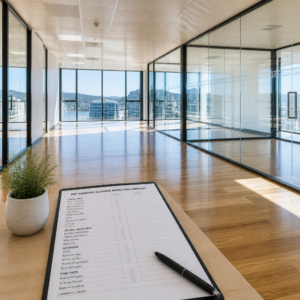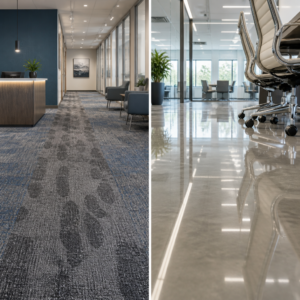
Most Christchurch offices look fine on a Tuesday afternoon. The desks are clear, the bins are empty and the reception carpet has had a quick vacuum. The problem is what that routine cannot reach. Soil in carpet traffic lanes, grime on high ledges and buildup behind restroom partitions develop quietly over months. Knowing when a routine clean is enough and when you need a full office deep clean in NZ saves money and keeps staff and visitors comfortable.
Table of Contents
- Quick Takeaways
- What a Routine Maintenance Clean Covers
- What an Office Deep Clean Covers
- Comparing Routine, Deep and Carpet Restoration Cleans
- Warning Signs Your Office Needs a Deep Clean
- How Often Christchurch Offices Need Each Clean
- When Water Damage Changes the Schedule
- Booking a Clean Around Your Staff
- Frequently Asked Questions
- References
Quick Takeaways
| Key Insight | Explanation |
|---|---|
| Routine cleaning holds the daily standard | Bins, floors, shared surfaces and restrooms need regular visits. High-traffic offices should plan for daily routine cleaning. |
| Deep cleaning responds to buildup | Book a deep clean when odours, dull carpet or grime in hidden areas persist after routine visits, not on a random calendar date. |
| Entrances and corridors wear first | Inspect entrances and main corridors before private offices. They take the most outside soil and foot traffic. |
| Headcount sets the routine visit length | Offices up to 5 employees need about 1 hour per visit. Offices with 5 to 20 employees need 1.5 to 2 hours. Offices with 20+ employees need 2 hours or more. |
| Wet carpet needs fast drying | Wet carpet typically takes 24-48 hours to dry. For a small room, our recommended setup is 2 air movers and 1 dehumidifier. |
| Compare quotes by zone, not total price | Ask for a scope that lists each area and what is included. Our office quotes are answered within one business day. |
What a Routine Maintenance Clean Covers
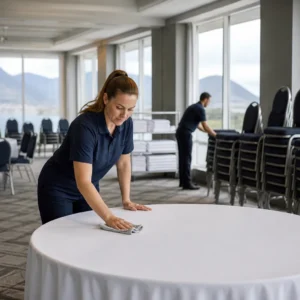
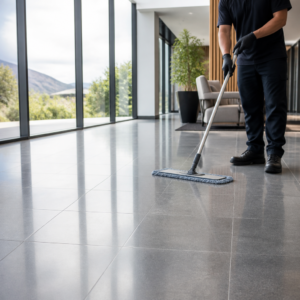
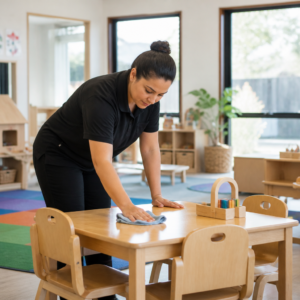
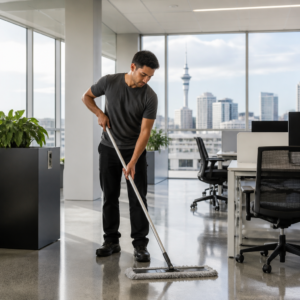
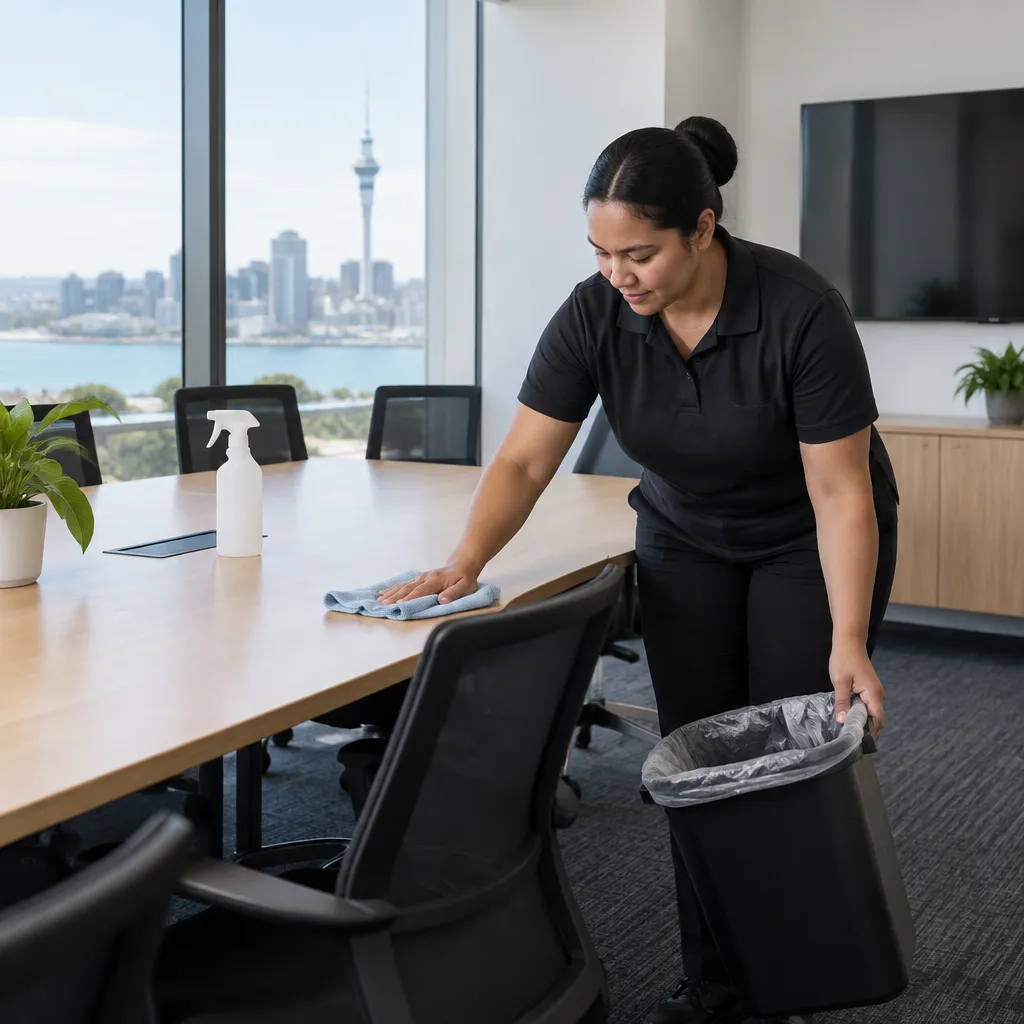
A routine maintenance clean keeps an office working from one day to the next. It is planned, repeatable work: bins emptied, floors vacuumed or mopped, desks and shared surfaces wiped, and kitchens and restrooms cleaned and restocked. In practice, it is the difference between a workplace that looks lived in and one that looks neglected.
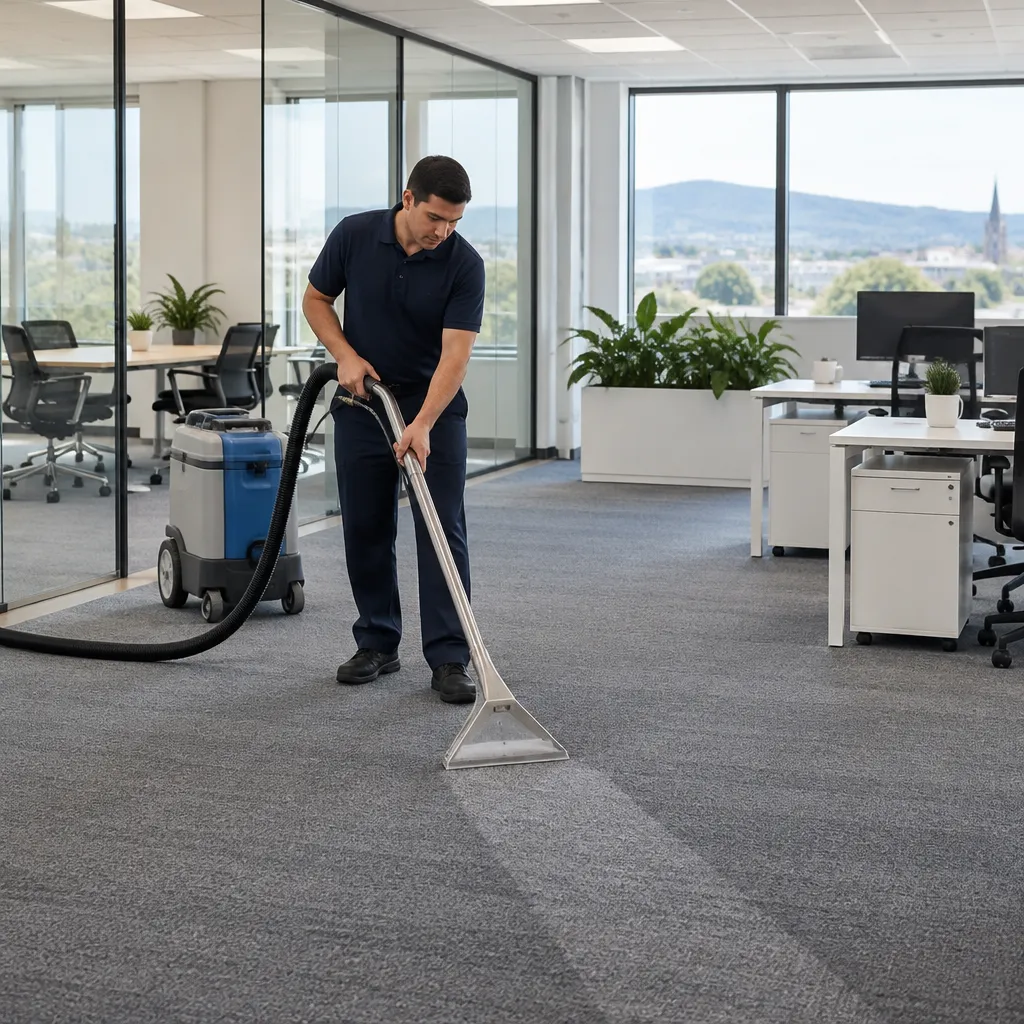
Routine visits also cover high-touch points such as door handles, light switches and shared equipment. Staff touch these all day, so they need attention every visit. Done well, routine cleaning stops daily grime from turning into a problem that needs a deep clean.
Daily tasks that hold the standard
Most of the routine scope is visible and predictable. Staff notice it when it is missed, which is why consistency matters more than intensity. A clean kitchen, empty bins and a stocked restroom tell your team the office is being looked after.
Routine work is also where small problems get caught early. A cleaner who notices a stained patch, a sticky surface or a corner building up dust can flag it before it becomes a larger job.
What routine cleaning cannot fix
No amount of regular vacuuming removes soil that has been ground into the pile of an entrance carpet over several seasons. Routine service works on the surface, and surface work has a ceiling. When a workplace relies on it alone for years, buildup goes unmanaged and the cost of fixing it rises.
Pro tip: Ask your cleaner to note which areas look worse on each visit compared with the week before. That simple log is the fastest way to decide whether a deep clean is due.
What an Office Deep Clean Covers
An office deep clean goes after the soil and detail work that builds up outside the normal cycle. The exact scope depends on your surfaces, traffic patterns and the condition of the building. For that reason, a site walk before quoting is worth the time.
A deep clean is not a longer version of the routine visit. It uses different equipment, different methods and more time on each surface. Think of it as periodic work that sits on top of the daily standard.
Carpets and hard floors
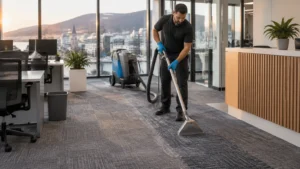
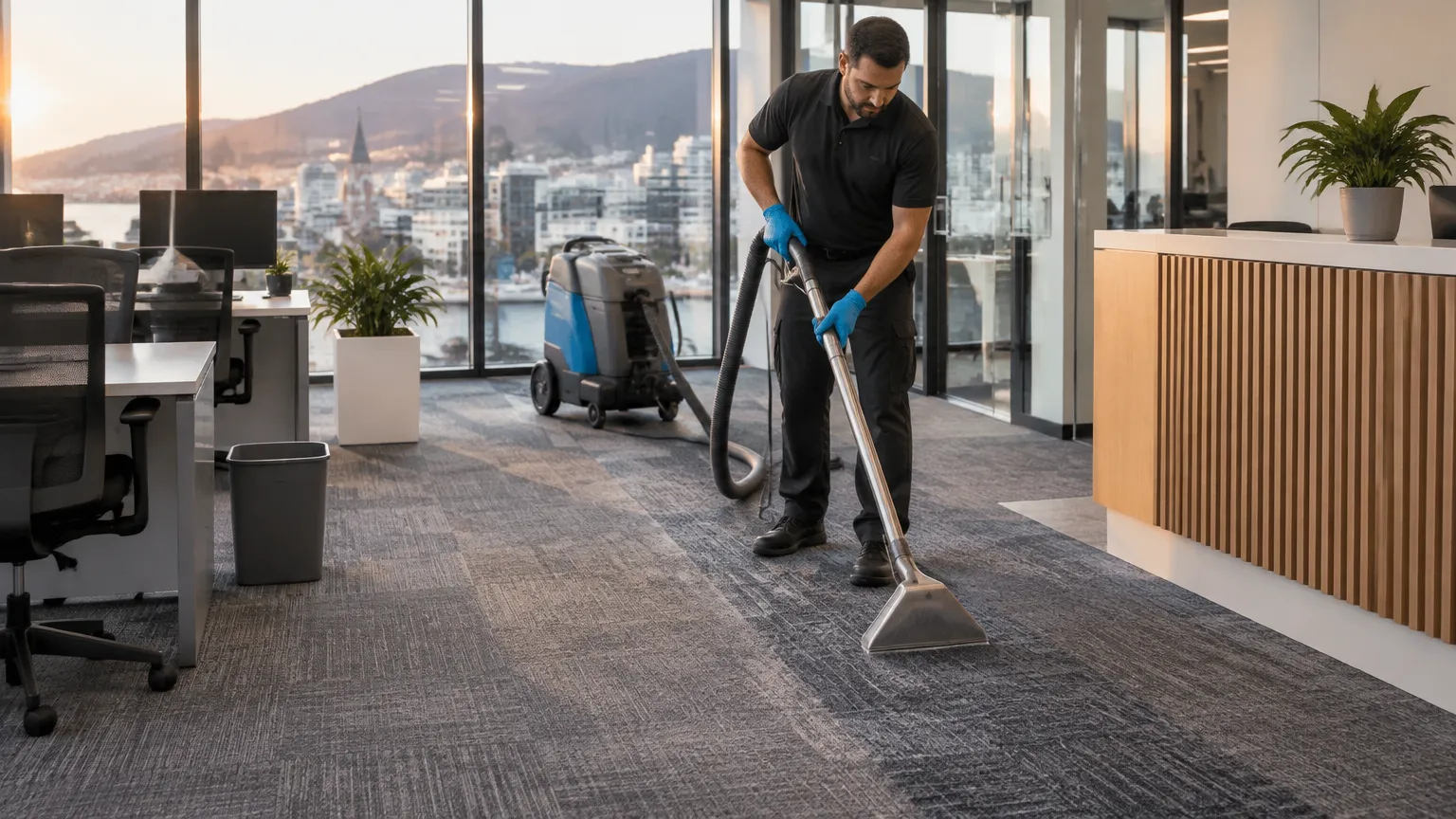
Carpet work usually includes edge detail, extraction and machine scrubbing on the lanes that take the most traffic. Hard floors get attention at the edges and corners where routine mopping never reaches. Where a floor needs restorative work, such as stripping and sealing, that is a separate project and should be scoped on its own.
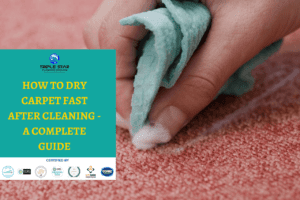
Commercial carpet cleaning is often where the difference shows fastest. A reception carpet that looks tired after months of tracked-in soil often recovers well once the lanes are properly extracted.
High and hidden surfaces
Vents you can reach, light fittings, ledges, corners and wall areas behind movable items collect dust that routine cleaning skips. Partitions and interior glass in shared spaces show a dull film quickly, and visitors notice it before anyone else does.
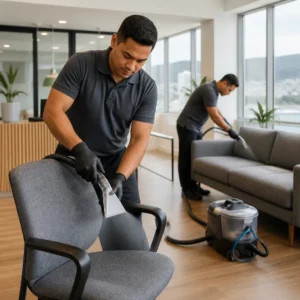
Upholstery is part of the deep clean scope when chairs and lounge seating are heavily used. Staff seating in a busy office can hold odour and soil that wiping never touches.
Restrooms and break rooms
Grout, partitions, cabinet fronts and floor edges need detailed work beyond the routine scope. A break room that looks clean from the doorway often has grease buildup on cabinet fronts and behind appliances. These are the areas staff complain about quietly, so they deserve time on a deep clean visit.
Routine cleaning keeps an office working. Deep cleaning deals with what has built up outside the daily cycle.
Comparing Routine, Deep and Carpet Restoration Cleans
Three approaches come up when Christchurch offices plan their cleaning. Each has a different job, and mixing them up is one of the most common budgeting mistakes we see. A routine clean will not solve a buildup problem, and a deep clean will not replace daily care.
| Approach | Typical Timing | What It Covers |
|---|---|---|
| Routine maintenance clean | Daily, several times a week, or per the frequency guide for your office size | Bins, vacuuming and mopping, wiping surfaces, kitchens, restrooms and high-touch points |
| Office deep clean | Planned by buildup and traffic, not a fixed calendar | Edges, high and hidden surfaces, detailed restroom work, interior glass and upholstery where used heavily |
| Carpet and floor restoration | Planned by traffic lanes, soil, weather and manufacturer guidance | Extraction and machine scrubbing on traffic lanes, plus restorative floor work where needed |
In most offices, the right answer is a routine schedule with a deep clean added when warning signs appear. Carpet restoration then targets the lanes that still look worn after the deep clean. Treating these as one job usually leads to either wasted money or stained floors that never get fixed.
The timing depends on what you are trying to achieve. If the goal is hygiene and presentation, routine work does most of the job. If the goal is to reset a neglected space, the deep clean does the heavy lifting.
Warning Signs Your Office Needs a Deep Clean
A deep clean is justified when the building starts telling you it has been too long. Five signs come up again and again in commercial spaces, and each one points to buildup that routine visits do not clear.
- Odours that persist after routine cleaning, often from carpets and upholstery holding soil.
- Rising staff sick days or allergy complaints, which can follow dust and allergens building up in soft furnishings and vents.
- Visible grime on high-touch and hard-to-reach areas, such as ledges, partitions and light fittings.
- Carpets that look dull or stained in traffic lanes despite regular vacuuming.
- Visitor comments, or clients who go quiet when they first walk into reception.
Any one of these can have other causes, so look for two or more. When several appear together, the cause is almost always accumulated soil that routine cleaning has been working around for too long.
How Often Christchurch Offices Need Each Clean
Frequency should follow traffic. Our guide is simple: high-traffic offices need daily routine cleaning, medium offices need it 2-3 times per week, and small offices need it weekly or bi-weekly. Deep cleaning does not follow the same rhythm, so it is planned around signs of buildup and heavy use in particular zones.
Entrances and main corridors usually show wear first, so inspect them before private offices. Waiting rooms and shared areas come next, since occupancy and spills drive their condition. Private offices and low-use rooms can often wait longer, but they should stay on the inspection list.
Matching visit length to team size
Team size also sets how long a routine visit takes. Offices with up to 5 employees need about 1 hour per visit. Offices with 5 to 20 employees typically need 1.5 to 2 hours, and offices with more than 20 employees need 2 hours or more.
Longer visits do not automatically mean a better clean. What matters is whether the scope matches the traffic, so ask for the scope in writing before agreeing to a frequency.
Pro tip: Count your heavy traffic zones before requesting a quote. Entrances, a shared kitchen and the walkway to the printer usually decide the schedule more than total floor area does.
When Water Damage Changes the Schedule
Water changes the timeline. A leak, a burst pipe or a flooded storeroom needs drying before carpet can be cleaned or restored. Waiting too long lets odour and staining set in, which makes the eventual clean harder and more expensive.
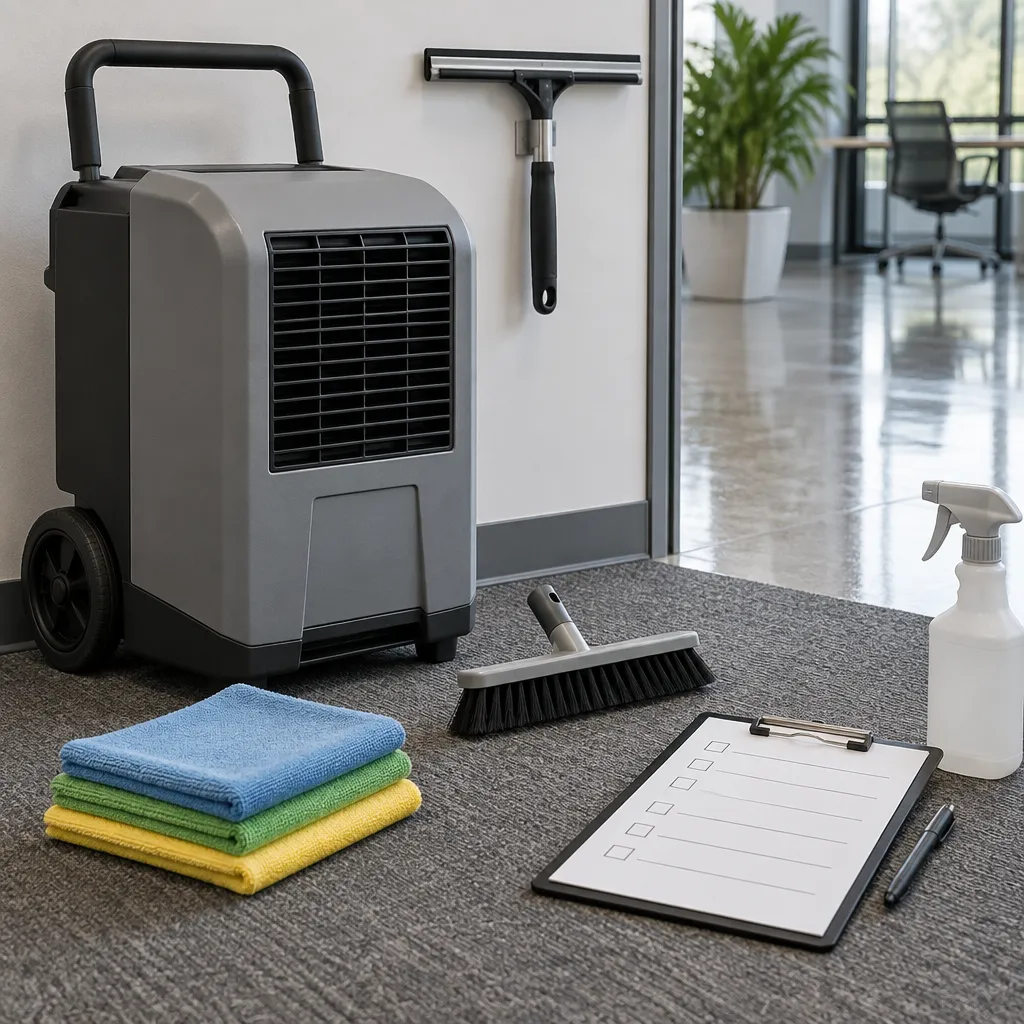
Wet carpet typically takes 24-48 hours to dry, depending on how wet the floor is, the airflow and room conditions. That window is where drying equipment matters most, and it is usually shorter when the response is fast.
Drying equipment hire in Christchurch
We hire out carpet dryers (air movers), commercial dehumidifiers and air scrubbers. Call our Christchurch team on 0800-901-223 to check availability or to arrange pickup and delivery.
For a small room, our recommended setup is 2 air movers and 1 dehumidifier. Larger areas need the setup reviewed on site, because airflow and room shape change the result.
Booking a Clean Around Your Staff
Most deep cleaning in an occupied office has to fit around people working there. We offer 24/7 flexible scheduling, including early mornings, evenings and weekends, so visible work can happen when desks are empty.
Our quotes are based on office size, cleaning frequency and site requirements, with clear pricing and no hidden costs. Quote requests for office cleaning are answered within one business day. Our work carries a 100% satisfaction guarantee, and we are an UpstreamNZ approved supplier with public liability insurance covering all cleaning sites.
Before you book, ask for a scope that lists zones rather than a single total. A room-by-room scope makes it easy to compare quotes fairly and to check that the areas you care about are included. You can request a free quote, call 0800-901-223 or email info@3plestar.nz.
Pro tip: Ask for the deep clean to be scheduled in the same window as a carpet inspection. Seeing both in one visit makes it easier to decide whether restoration is needed or whether a deep clean will be enough.
Frequently Asked Questions
How do I know if my office needs a deep clean or just routine cleaning?
If routine cleaning keeps surfaces presentable but odours, dull carpet, grime in hidden areas or visitor comments persist, you need a deep clean. Routine cleaning alone will not clear buildup that has accumulated outside the daily cycle.
Can a deep clean replace routine maintenance cleaning?
No. A deep clean targets periodic buildup, while routine cleaning keeps daily standards in place. Most offices need both, with the deep clean scheduled when the warning signs appear.
How often should office carpets be professionally cleaned?
There is no single interval that suits every office. Carpet care should be planned by traffic concentration, soil conditions, weather exposure, appearance standards, manufacturer guidance and any warranty requirements. Entrances and corridors usually need attention sooner than low-use rooms.
How long does a routine office cleaning visit take?
Offices with up to 5 employees need about 1 hour per visit. Offices with 5 to 20 employees typically need 1.5 to 2 hours, and offices with more than 20 employees need 2 hours or more.
How long does wet office carpet take to dry?
Wet carpet typically takes 24-48 hours to dry, depending on how wet the floor is, the airflow and room conditions. For a small room, our recommended setup is 2 air movers and 1 dehumidifier.
Which areas do you cover for commercial cleaning?
We cover Christchurch, Canterbury and Rolleston. Call 0800-901-223 or email info@3plestar.nz to check whether your site is in our schedule.
What has your workplace noticed first, the carpets, the odours or the visitor reactions, and how did you decide it was time for a deep clean?