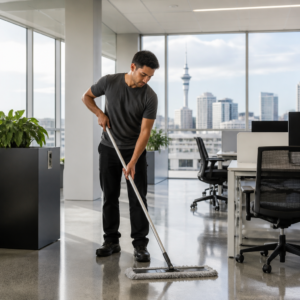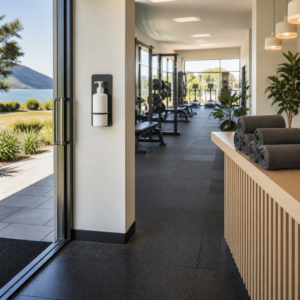
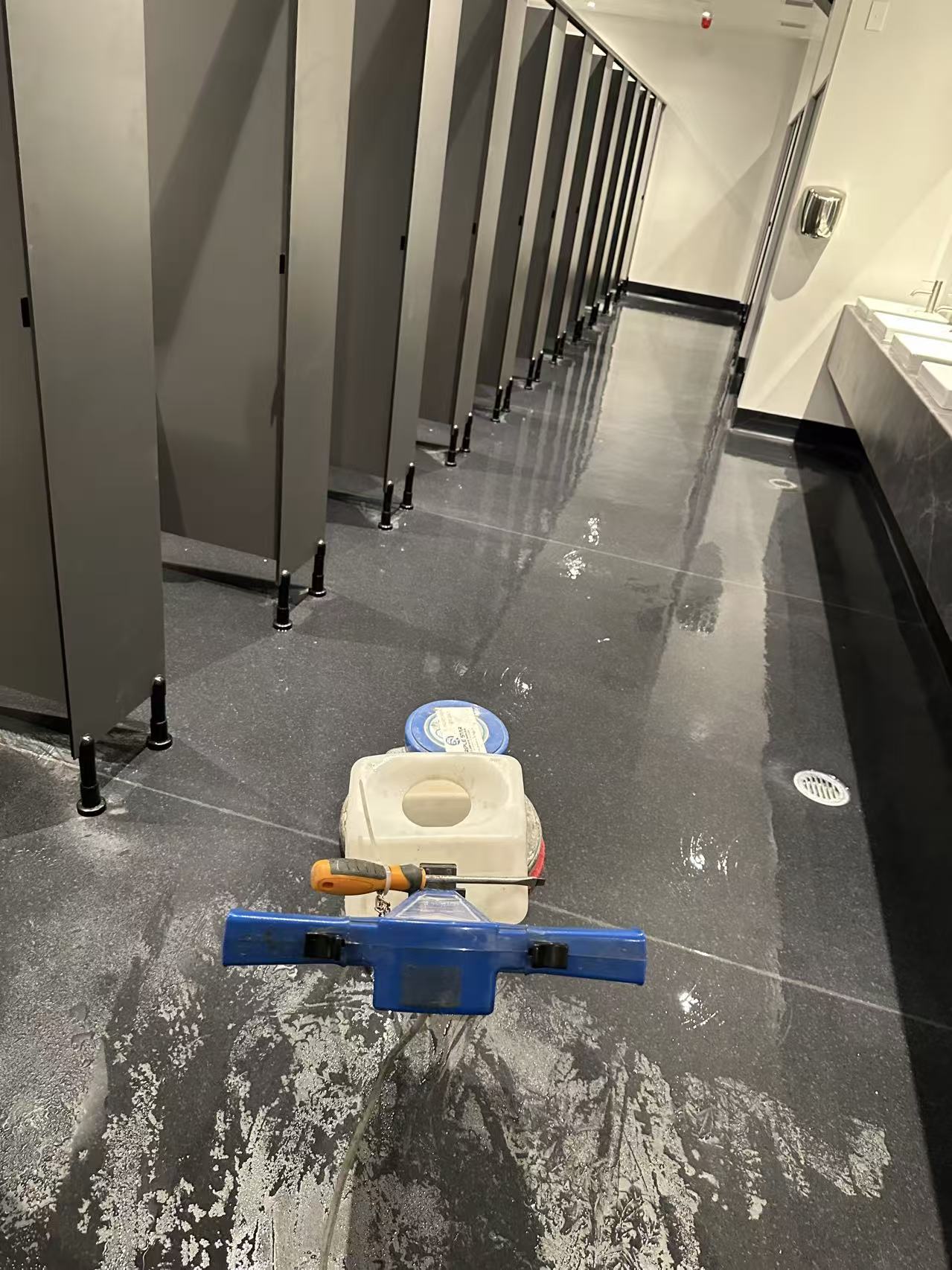
Retail cleaning in NZ summer is a timing problem before it is a product problem. Many retail centres in Christchurch, Rolleston and Lincoln stretch their opening hours over the warmer months, keeping shops open into the evening and running longer weekend trading. The extra hours help sales, but they quietly break most cleaning schedules. A routine built around a 5pm close has no room for a busy 8pm crowd, and the grit, dust and trolley traffic that summer brings does not wait for the doors to shut. This guide sets out where the pressure points sit, how to schedule around them, and which decisions tend to cause problems later in the season.
Table of Contents
- Quick Takeaways
- Why Extended Summer Trading Changes the Cleaning Plan
- Scheduling Cleaning Around Peak Footfall
- Protecting High-Touch Surfaces in Busy Stores
- Floor Care for Heavy Summer Foot Traffic
- Visible Cleaning and Customer Perception
- Choosing a Cleaning Approach for Extended Hours
- Deep Cleaning and Floor Stripping Between Seasons
- Frequently Asked Questions
- References
Quick Takeaways
| Key Insight | Explanation |
|---|---|
| Schedule by footfall, not by closing time | Map door counts for each day, then book heavy cleaning into the quietest blocks, which often sit before opening and after the evening peak. |
| Treat trolleys and baskets as high-touch surfaces | Every shopper handles them and they are rarely wiped between uses, so set a fixed wipe-down frequency during trade. |
| Swap entrance matting on a daily cycle in summer | Grit and wet weather come through the doors quickly, and a saturated mat spreads more dirt than it catches. |
| Keep cleaning visible but out of the way | Clear signage and carts placed away from main aisles reassure shoppers and reduce trip hazards. |
| Book deep cleaning before the peak, not during it | Floor stripping and sealing needs a closed or quiet window, so plan it into the weeks before the busiest trading. |
| Name an owner for every shared zone | Food courts, amenities and corridors get missed when nobody is responsible for them. A written schedule with named tasks closes the gaps. |
| Review the plan after the first month | Trading patterns shift through December and January, so adjust frequencies once footfall and staff feedback show a change. |
Why Extended Summer Trading Changes the Cleaning Plan
A standard retail cleaning plan assumes a fixed window. Floors get mopped after close, bins go out at the end of the day, and amenities are checked before the first customer arrives. Extended summer trading removes much of that window. If your centre trades until 9pm or later, the overnight block may shrink from most of the night to a few hours, and the morning reset may only leave time for a quick sweep.
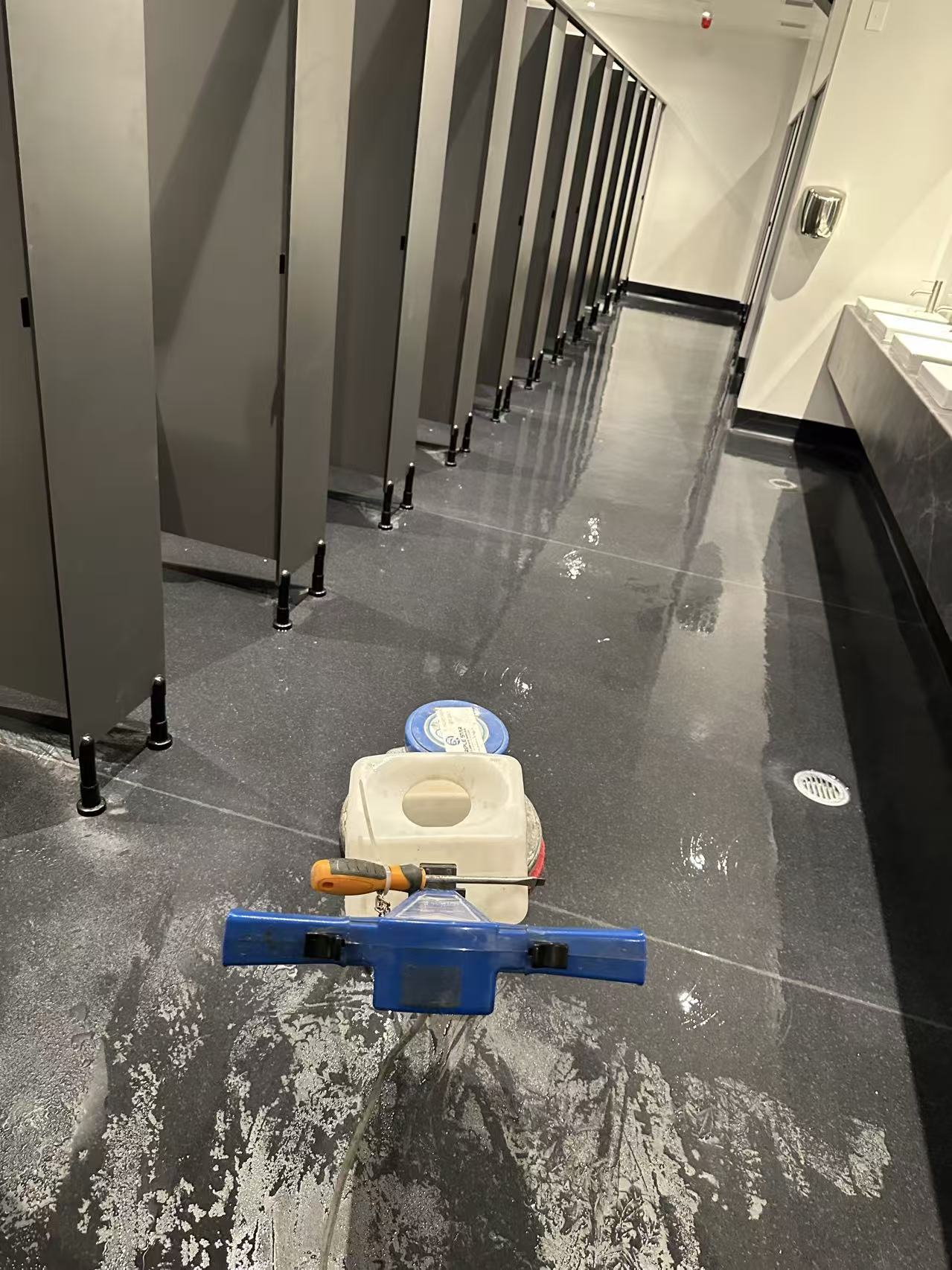
Where the cleaning window shrinks
In practice, the first task to slip is the deep clean that used to happen on a quiet weeknight. Managers push it back because the store is busy, and within a few weeks the back-of-house corridors, stockroom floors and toilet cubicles are running behind. A common mistake is to add hours to the existing contract without changing the tasks, which means the same team tries to fit a bigger job into a smaller gap.
The better approach is to write down what must happen every day, what must happen every week, and what can slip without a visible effect. Once those tasks are sorted, the schedule can be built around the gaps you actually have, not the gaps you wished you had.
What summer adds to the building
Summer brings different dirt. Shoppers arrive with dust from car parks, sand and grit on footwear, and pollen or wet grass on bags and prams. Heat also changes behaviour. Doors are propped open more often, drinks are carried through aisles, and fans or air conditioning move dust around the store. The result is more grit on hard floors and more residue on handles and trolleys by late afternoon.
The practical response is to move the heaviest tasks to the point where the dirt is landing. That usually means more frequent entrance cleaning and a second floor pass during the afternoon peak, rather than one large clean at close.
Pro tip: Ask your cleaning contractor to walk the centre during a busy Saturday afternoon before the schedule is finalised. A quiet gap on a spreadsheet is often full of shoppers in practice.
Scheduling Cleaning Around Peak Footfall
The aim of scheduling is to put cleaning into the quietest blocks and keep the busiest blocks for spot work only. For most centres, that means three windows: before opening, the mid-afternoon lull on weekdays, and the period after the evening peak. The exact times depend on your footfall, so we start every retail plan with a walk-through and, where possible, a look at door counts for a typical week.
Early mornings before doors open
Early morning is the most valuable block because the floor is clear and shelves are still set from the night before. Heavy jobs such as scrubbing hard floors, cleaning entrances and wiping down trolley handles can run here without disrupting customers. Our team offers 24/7 flexible scheduling, including early mornings, evenings and weekends, so the work can follow your trading pattern rather than the other way round.
A common mistake is to book the heaviest job into the last hour before opening. If it runs over, the floor is still wet when the first customers walk in. Leave a clear buffer so that a delay does not turn into a safety issue at the front of the store.
Evening and after-close windows
After the evening peak, the store has a short window where shelves are being restocked, fitting rooms are being cleared and the floor is covered in footprints. This is the right time for spot cleaning, bin runs and amenity checks. It is the wrong time for work that throws dust or chemical fumes into areas where staff and late shoppers are still present.
Where people are still working, spill response and restroom checks should be fast and carried out away from active checkouts. Keep the heavier equipment for a fully closed window.
Splitting daytime work into small zones
Some centres cannot close any area during the day, so the work has to be broken into short zones. A cleaner working one zone in short, timed blocks, with cones and clear signage, causes far less disruption than a large machine moving through a busy aisle. Your retail cleaning services in Christchurch should be planned this way from the start.
Set the zone order on a route card so the team knows where to start each block. Rotating zones through the day also stops the same corridor from being skipped for a week at a time.
Protecting High-Touch Surfaces in Busy Stores
High-touch surfaces are where extended trading shows most clearly. Every shopper touches trolley handles, basket rails, card terminals, door pulls, lift buttons and fitting room doors. Over a long trading day these surfaces are handled by a constant stream of people, and a single morning wipe-down will not keep up.
Equipment maker Tennant’s retail cleaning guidance notes that most health and government guidelines support more frequent cleaning and disinfecting of high-touch surfaces in retail. That point matters more when the store is open for longer, because the surfaces are being used for longer too.
Trolleys, baskets and handrails
Trolleys are the hardest surface to keep on a schedule because they move constantly between the car park, entrances and aisles. A set wipe-down at fixed points in the day works better than one pass in the morning. Place the trolley bay and entrance handrails on a route the team passes during every block of the day.
A common mistake is to list trolleys under general floor cleaning, which means nobody is assigned to them. Name them as a separate task, with a frequency and a sign-off, and the gap usually closes within a week.
Fitting rooms and counters
Fitting rooms need more attention than most managers expect. Door handles, mirrors, hooks and the floor near the entrance all collect residue, and a room may be empty for only a few minutes between uses. Counters and checkout surfaces follow the same logic, particularly where staff handle cash and card terminals all day.
Use a clear wipe-down sequence and check that each product suits the surface it is used on. Card terminals and screens need a method approved by the device supplier, so confirm this before you agree on a product list.
Pro tip: Ask for a high-touch checklist that shows the times each item is wiped and who signs it off. A written record proves the work is happening and makes gaps easy to spot during a store review.
Floor Care for Heavy Summer Foot Traffic
Floors take the most punishment during extended trading. Grit arrives on shoes, wet surfaces are walked on before they dry, and heavy stock trolleys wear the same paths every day. A floor that looks acceptable at close can look dull and tracked by the afternoon, and that hurts the first impression a store depends on.
Entrance matting and grit control
Entrance matting is one of the cheapest defences a store has, and it is often the most neglected. A mat that is saturated or packed with grit spreads dirt further into the centre than a bare floor would. Swap or vacuum entrance matting on a daily cycle during summer, and check that mats lie flat so they do not become a trip hazard.
Keep the matting zone clear of display stands and check it during the afternoon peak as well as in the morning.
Hard floor cleaning during trading hours
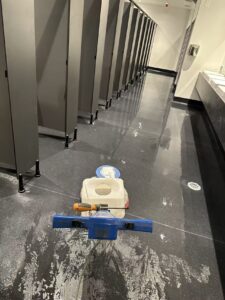
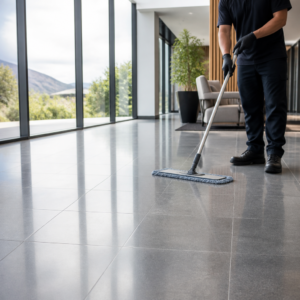
Most retail floors are hard surfaces, and the cleaning method matters more than the product name. The aim is a floor that dries without slippery residue, with wet floor signage in place while it dries. We plan hard floor cleaning around trading hours, starting in the least busy aisles and working toward the busiest ones.
A common mistake is to mop a whole floor in one go and leave shoppers to walk through a drying patch. Work in sections and keep a clear route through the store at all times.
Carpet and upholstery in showrooms
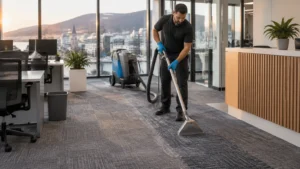
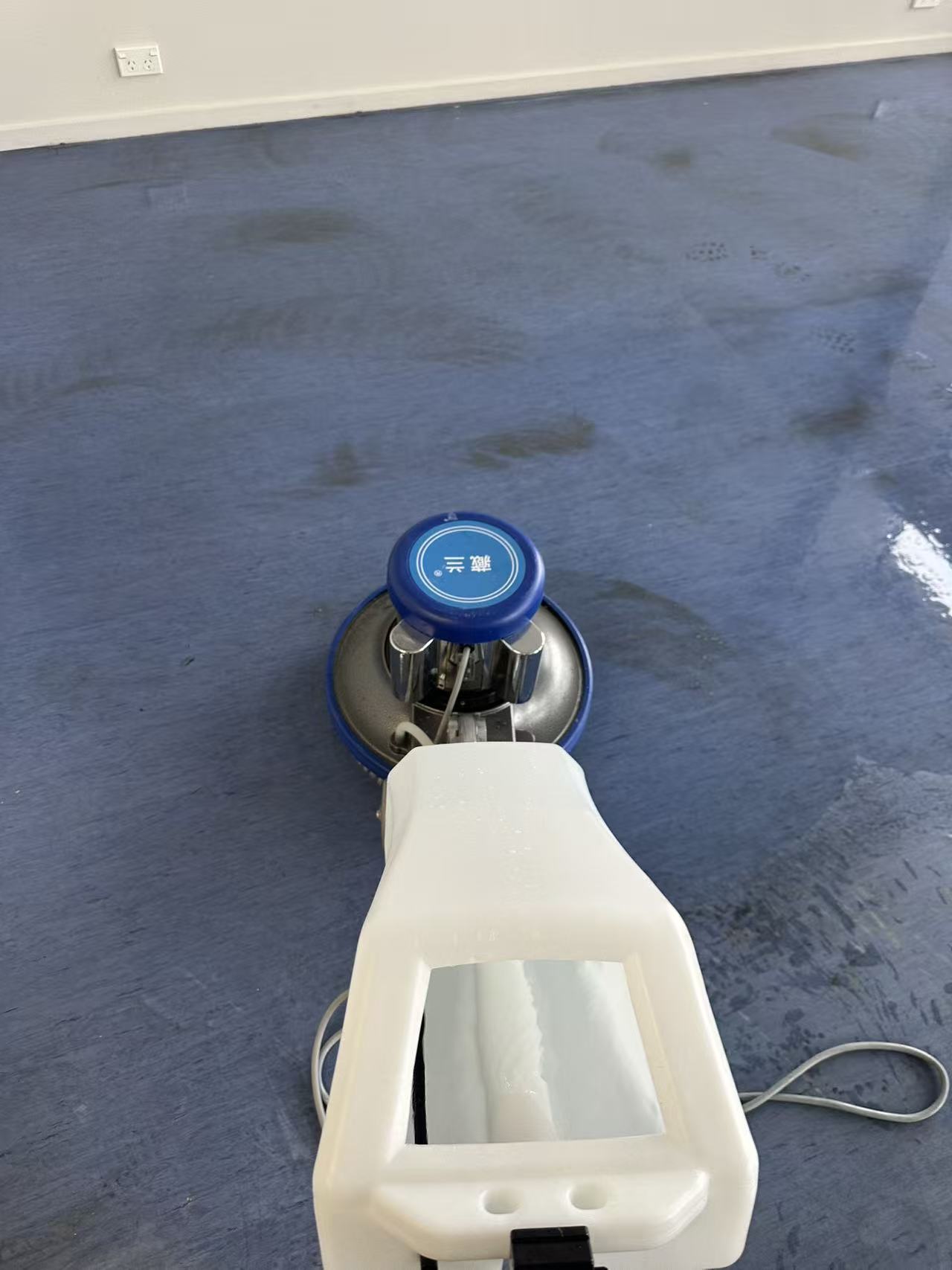
Showrooms, cafes and seating areas in retail centres often use carpet or upholstered furniture. Humidity and foot traffic take a toll on both, and spills are more likely when customers linger and eat in the evening. Our commercial carpet cleaning and commercial upholstery cleaning services suit these areas, and the work can be booked into a quiet window.
For carpet, the key decision is frequency. Zones near entrances and seating usually need more attention than the rest of the floor, so schedule them as separate line items rather than bundling them into one general clean.
Visible Cleaning and Customer Perception
Cleaning used to happen at night so customers never saw it. That approach still works for heavy jobs, but many retailers now expect some cleaning to be visible during trade, especially in high-traffic areas. Shoppers judge a store by what they see while they browse, and a team working carefully with clear signage often reads as reassurance rather than disruption.
Tennant’s guidance describes the same shift, with cleaning moved into store hours, signage posted, and hand sanitiser and disinfecting wipes made available to customers. Those steps improve the experience, but only if they are done well.
Doing it in front of customers
Visible cleaning works when the team is quick, quiet and courteous. Pick routes that keep shoppers moving, and avoid cleaning right at the checkouts or in narrow aisles at peak times. Staff should be able to explain what the team is doing if a customer asks.
A common mistake is to start a large floor job in the busiest aisle because it looks like the dirtiest area. Start it where the disruption is smallest and work toward the busy zones.
Signage and safety cones
Signage and cones are part of the job, not an afterthought. Use them for wet floors and for any work that changes the path through the store, and remove them as soon as the area is dry. Cones left out after the work is finished send the wrong message about how the store is run.
Hand hygiene stations for shoppers
Hand sanitiser and disinfecting wipes at entrances, near trolley bays and beside fitting rooms make visible hygiene easy for shoppers to notice. Keep them stocked on the same schedule as the high-touch checks, because an empty dispenser sends the opposite message to the one you intended.
Choosing a Cleaning Approach for Extended Hours
There is no single right model for extended trading. The right one depends on how many hours the store trades, how much of the work can happen in quiet blocks, and how much visible cleaning the centre wants during peak times. The three approaches below cover most of the situations we see in Christchurch retail.
Overnight close-down clean
This model keeps all heavy work after close and relies on a short morning reset. It suits centres with a firm closing time and quiet evenings. Its weakness is that it has no answer to a busy evening, so spills and high-touch wear build up during the hours when the team is not on site.
Split-shift daytime team
A split-shift model puts a small team on the floor during trade for high-touch and entrance work, with a larger crew after close for heavy jobs. It suits long trading days and centres that want visible cleaning. The trade-off is that the daytime team needs tight zone plans and supervision, or it drifts into general tidying.
Hybrid with peak-time spot cleaning
The hybrid model keeps a fixed overnight or early-morning routine for heavy work and adds short, scheduled spot cleaning during the peak. It needs more planning up front, but it gives the most control over where dirt and wear are building up. Our commercial cleaning contracts run on fixed routines and customised site-specific plans, which suits a hybrid model well.
| Approach | Best suited to | Main trade-off |
|---|---|---|
| Overnight close-down clean | Centres with a firm closing time and quiet evenings | No cover for evening peaks, so spills and high-touch wear build up |
| Split-shift daytime team | Long trading days and centres that want visible cleaning | Needs tight zone plans and supervision to avoid general tidying |
| Hybrid with peak-time spot cleaning | Extended summer trade with changing footfall | More planning up front, but the most control over problem areas |
Deep Cleaning and Floor Stripping Between Seasons
Heavy restorative work is hard to fit into a busy summer, but it is worth planning early. A deep clean and floor stripping both need a quiet window, and the weeks before the peak are often the only time a centre can close an area without losing trade. If you are reading this in late November, the window is short, so book any deep clean into the next quiet block and plan the full programme for the following quiet period.
Scheduling deep cleaning before the peak
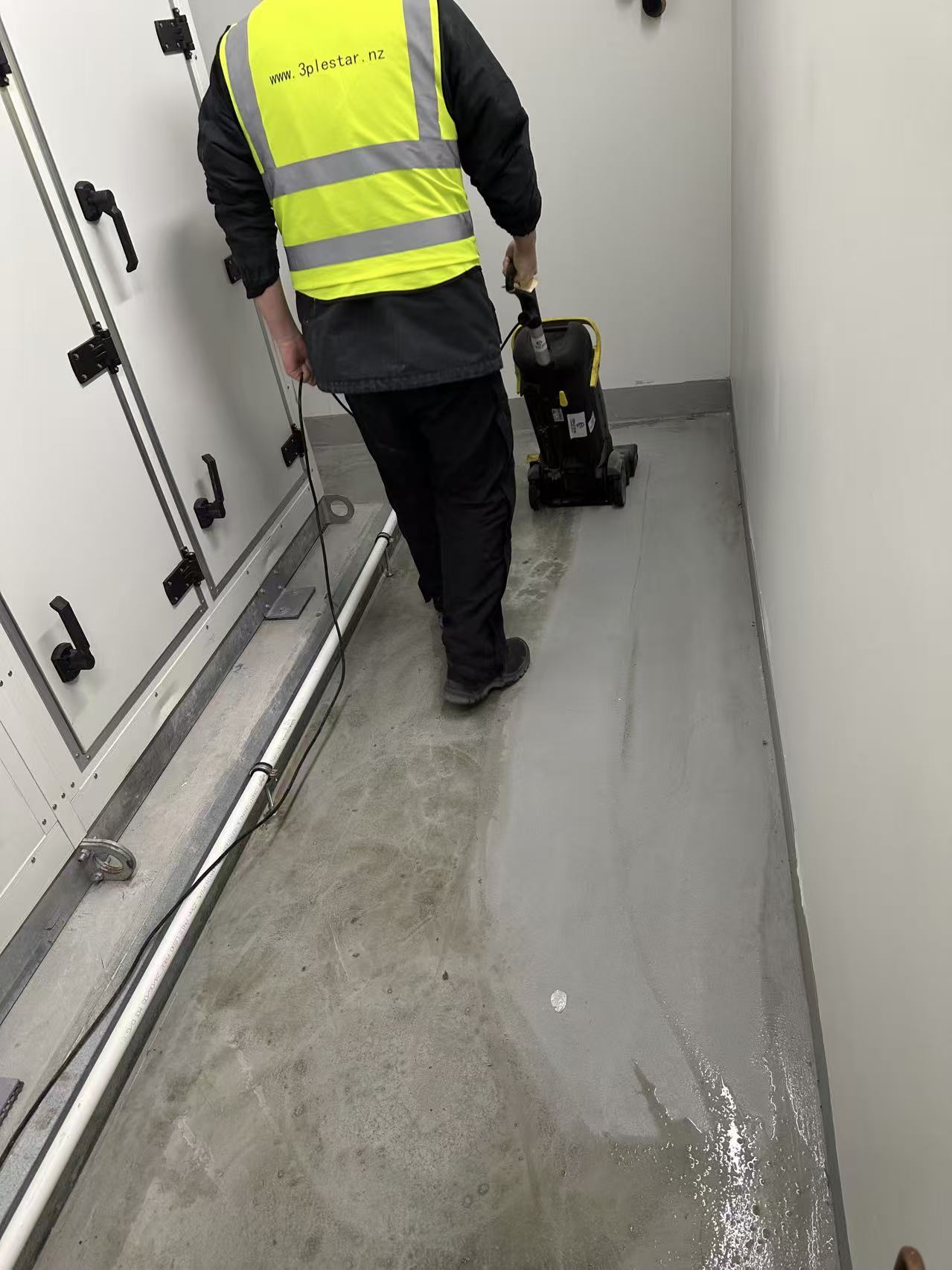
Deep cleaning covers the areas that routine cleaning cannot reach, such as high ceilings, corners, grout lines, behind shelving and vents. In a retail centre these jobs need to be booked into closed or quiet blocks. Leave them until the busiest weeks and you will be asking the team to work around the largest crowds of the year.
Write the deep clean into the contract as a separate scope with a date, so it does not get pushed back a little more each month.
Floor stripping and sealing in quiet windows
Floor stripping and sealing is the job most likely to disrupt trade, because the floor needs time to dry and the area has to stay clear. Plan it as a block, tell store staff which area will be closed well in advance, and allow the sealer to cure before the zone reopens, following the product guidance. Our commercial floor stripping and sealing work is scheduled around the trading pattern of each site.
Commercial windows and back-of-house areas
Window cleaning is often forgotten during summer. For commercial properties, our window cleaning guidance recommends monthly or quarterly cleaning, and a glass frontage smeared with fingerprints and dust undermines the first impression a shopper gets. Back-of-house areas such as stockrooms, staff rooms and amenities belong on the deep clean list too, because shoppers never see them but staff use them every shift.
Pro tip: Build a single calendar that lists every deep clean, window clean and floor job with a closed-area date. When these jobs sit in separate lists, they tend to collide with the busiest trading weeks.
If your centre is planning its summer schedule, call our Christchurch team on 0800-901-223 or send a request through our Request a Free Quote form, and we can walk the site with you before anything is booked.
Frequently Asked Questions
How often should high-touch surfaces be cleaned in a shopping centre during summer trading?
There is no single figure that suits every centre, because footfall varies by store and by day. Trolleys, entrance handrails and card terminals should sit on a scheduled wipe-down that runs several times during trade, with the frequency set after a walk-through during a busy afternoon. Ask your contractor to write the frequency and sign-off into the plan so it can be checked.
Can cleaning be done during trading hours without upsetting customers?
Yes, if the work is split into small zones, kept away from the checkouts at peak times, and marked with clear signage. Heavy jobs such as stripping or large machine work should still be booked into closed windows. Visible cleaning works best when the team is quick and the route keeps shoppers moving.
Do we need to close an area for floor stripping and sealing?
In most cases, yes. The floor needs time to dry and cure, and foot traffic can damage the surface before it sets. Give store staff notice of the closed area and confirm the cure time with the product guidance before reopening the zone.
How should a cleaning contract change when trading hours are extended?
Start by reviewing the hours, the tasks and the staffing, then move heavy work into the quietest blocks. Add short spot cleaning for the peak and agree a change schedule so the contract flexes with the store. Review the plan after the first month, because summer footfall often differs from what was expected. Pricing depends on the scope of work, so the quickest route is a free quote.
How often should commercial windows be cleaned?
Our window cleaning guidance recommends monthly or quarterly cleaning for commercial properties. Frontages that face car parks or busy roads can need more frequent attention during summer, when dust and grime build up faster.
Are your commercial cleaners insured and vetted?
Our commercial cleaning staff are fully trained, insured and background-checked, and all cleaning sites are covered by public liability insurance. If you are not happy with an area, we will re-clean it at no extra cost.
What part of your summer cleaning schedule has been hardest to keep on track, and what change has made the biggest difference for you?