Most commercial building managers in Christchurch and Auckland wait until windows look embarrassingly dirty before they book a clean. By that point, the damage to first impressions, natural light quality, and sometimes the glass itself is already done. Commercial window cleaning in Christchurch and across Auckland is not a cosmetic luxury reserved for flagship buildings. It is a routine maintenance task that directly affects your building’s value, your tenants’ wellbeing, and your business’s professional image. This article covers exactly what to look for, what it costs in the New Zealand market, and how to make a smart decision about frequency and service type.
Table of Contents
- Quick Takeaways
- Sign 1: Visible Streaks and Grime That Won’t Shift
- Sign 2: Natural Light Is Noticeably Reduced Inside
- Sign 3: Mineral Deposits or Hard Water Staining on Glass
- Sign 4: Your Building Sits Near the Coast or a Busy Road
- Sign 5: You Cannot Remember the Last Time Windows Were Professionally Cleaned
- What Commercial Window Cleaning Costs in NZ
- How Often Should a Commercial Building Be Cleaned
- Frequently Asked Questions
- References
Quick Takeaways
| Key Insight | Explanation |
|---|---|
| Streaks are not just aesthetic | Visible streaking on exterior glass signals a build-up of pollutants and exhaust residue that accelerates glass degradation over time. |
| Reduced natural light is a measurable problem | Grime-covered windows can significantly cut the amount of daylight reaching interior workspaces, affecting staff mood and energy use. |
| Hard water staining can permanently etch glass | Mineral deposits left too long become increasingly difficult to remove and may require glass restoration rather than a standard clean. |
| Coastal and high-traffic locations need more frequent cleans | Salt air and road pollution accumulate faster. Auckland waterfront buildings often need three to four exterior cleans per year. |
| Commercial window cleaning in NZ is priced per window or flat rate | Expect roughly NZ$50 to NZ$150 per window for standard commercial properties, with multi-storey and high-rise buildings quoted separately. |
| Regular contracts cost less per visit than one-off cleans | Scheduled maintenance programmes almost always work out cheaper per visit than ad-hoc bookings, and they keep your building consistently presentable. |
| First impressions happen at the facade | Dirty or streaked windows are one of the first things clients, customers, and prospective tenants notice before they enter your building. |
Understanding the signs that your building needs attention is the starting point. The five indicators below are the ones that property managers and facility teams most commonly overlook, often because the deterioration is gradual and easy to normalise.
Sign 1: Visible Streaks and Grime That Won’t Shift
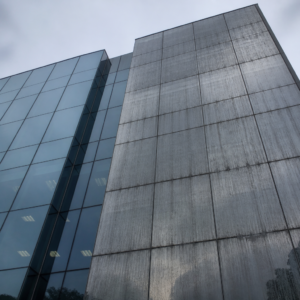
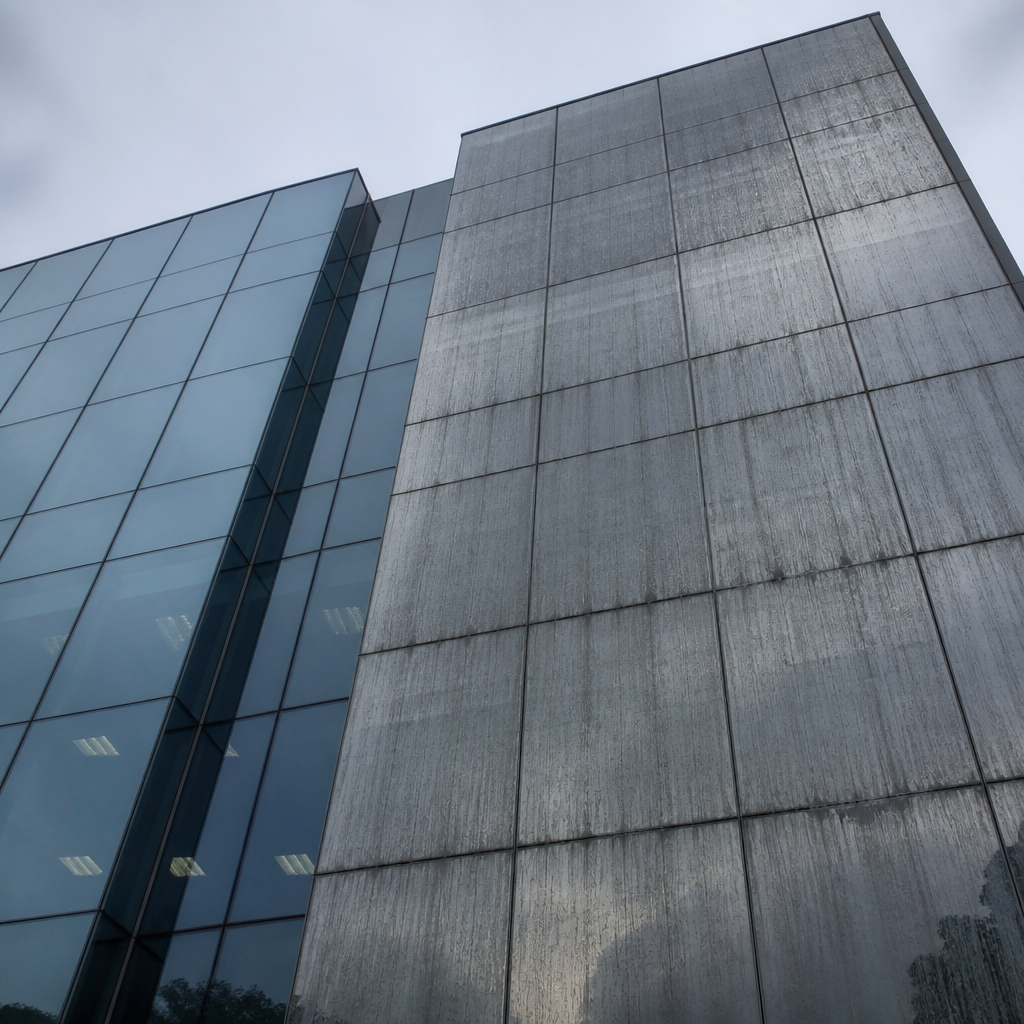
Surface-level streaking caused by rain, wind, and atmospheric particulates is the most obvious sign, but it is also the most frequently ignored because it tends to build gradually rather than appearing overnight. A property manager who walks past the same windows daily stops registering the deterioration.
The issue is not purely visual. Grime that has built up over weeks or months contains a mixture of exhaust particulates, dust, pollen, and in coastal areas, salt crystals. These compounds bond to the glass surface and, left long enough, begin to compromise the outer layer of the pane. A standard window clean at this stage removes the contamination cleanly. If you leave it too long, you move into hard water staining territory, which is a different and more expensive problem entirely.
What to check: Stand across the street from your building and look at the exterior glass in direct sunlight. Streaks that are visible from ten or twenty metres away indicate a build-up that a regular clean would have prevented. If the ground-floor windows look noticeably cleaner than upper floors, that is a reliable indicator that rain is doing some surface rinsing at lower levels while upper glass is retaining contamination.
Pro tip: If you manage multiple tenancies in a building, do a walk-around inspection from the street rather than from inside. The exterior view is what clients and passersby see, and it is far more revealing than an internal inspection.
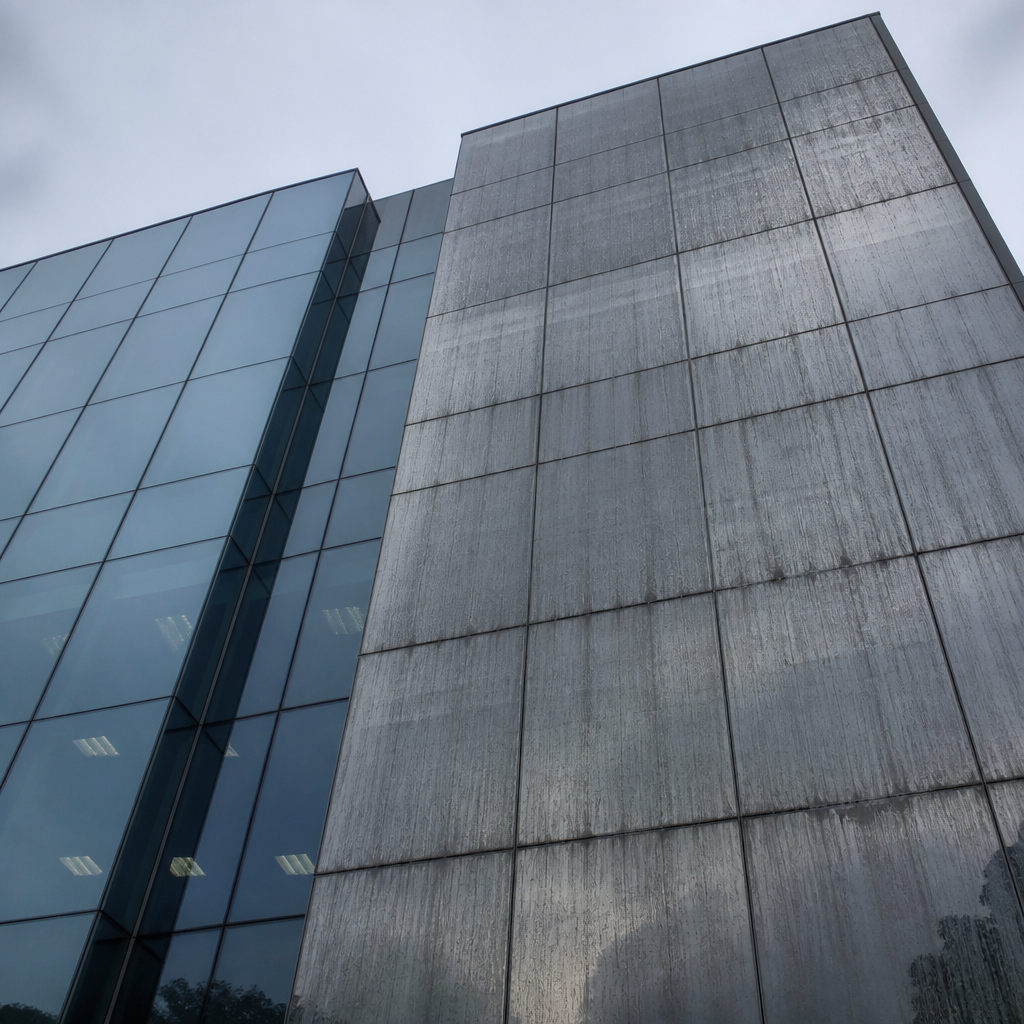

Sign 2: Natural Light Is Noticeably Reduced Inside
Dirty windows reduce the amount of natural light entering a building, and the effect is more significant than most people expect. A thin film of grime and particulate matter across a glass pane scatters and blocks incoming light, making interior spaces feel darker and often prompting staff to rely on artificial lighting earlier in the day.
For offices, medical centres, and retail spaces in Christchurch and Auckland, this is a practical problem, not just an ambience issue. Reduced natural light affects the working environment for staff and can make retail displays look duller than they should. In a medical or healthcare setting, the impression of cleanliness matters significantly, and dim, grimy windows work against that impression immediately.
How to spot the difference
A practical test: clean one window and compare it to an uncleaned pane next to it. The difference in light transmission is usually immediately apparent. If your team has started increasing artificial lighting without a clear reason, or if meeting rooms that once relied on natural light now feel dim, dirty glass is a likely contributor.
Dirty windows reduce natural light, which affects both the ambience and the wellbeing of the people working inside a commercial building. Clean glass is one of the simplest ways to improve a workspace without any structural change.
For businesses running on regular leases in commercial buildings, this is relevant at the end-of-lease stage too. Landlords and property managers notice the condition of glass as part of any outgoing inspection, and professional window cleaning services in Auckland and Christchurch are a standard part of end-of-lease preparation.
Sign 3: Mineral Deposits or Hard Water Staining on Glass
Hard water staining appears as a milky or cloudy residue on glass, often concentrated around sprinkler overspray zones, window ledges where water pools, or near air conditioning condensation drip points. It is caused by mineral deposits from water that evaporates and leaves calcium and magnesium compounds bonded to the glass surface.
Glass is highly susceptible to mineral deposit build-up due to its chemical composition, and the higher the mineral content in the water source, the faster the problem develops. New Zealand’s water mineral content varies by region, but the risk is consistent across Christchurch and Auckland properties, particularly where irrigation systems or building sprinklers reach window glass.
Why timing matters with mineral staining
Mineral deposits that are cleaned promptly, within weeks of appearing, are typically removed as part of a standard professional clean. Deposits that have been baking in the sun for months or years begin to etch into the glass surface itself. At that point, a standard window clean will not be enough. Glass restoration or polishing becomes necessary, which is a significantly more expensive process than preventive cleaning would have been.
Pro tip: If your building has irrigation systems, check whether sprinkler heads are pointing toward window glass. Redirecting them is a cheap fix that prevents expensive mineral staining from developing over a single season.
The white or hazy appearance of mineral-stained glass also sends an unintended message to building visitors. It reads as neglect, even in buildings that are otherwise well-maintained internally. Regular professional cleaning intercepts this problem before it escalates.

Sign 4: Your Building Sits Near the Coast or a Busy Road
Location is one of the most underestimated factors in commercial window maintenance. Buildings in coastal areas of Auckland, or near high-traffic arterial roads in both Christchurch and Auckland, accumulate contamination at a much faster rate than buildings in sheltered suburban locations.
Salt air damages coastal commercial buildings by depositing hygroscopic salt crystals on glass and metal surfaces. These crystals draw moisture from the air, hold it against the glass, and over time accelerate etching and staining. Auckland waterfront and coastal-exposure buildings typically need three to four exterior window cleans per year as a result, rather than the two cleans that might suffice for a sheltered inland property.
Road pollution and exhaust residue
Buildings close to busy roads face a different but equally persistent problem. Exhaust particulates, diesel residue, and fine road dust settle continuously on exterior glass, creating a brownish-grey film that becomes increasingly visible as it builds up. This type of contamination is sticky, meaning it bonds to glass more firmly than simple dust and requires professional-grade cleaning solutions and technique to remove cleanly without smearing.
If your building is within one or two blocks of a major arterial road in central Christchurch or Auckland’s CBD, your cleaning frequency should reflect that exposure. A standard quarterly schedule may not be enough, and a visual inspection every four to six weeks is a practical habit for facilities teams managing these properties.
Sign 5: You Cannot Remember the Last Time Windows Were Professionally Cleaned
This is the most straightforward sign, and the one that applies to the highest number of commercial buildings in New Zealand. If a property manager or business owner cannot readily recall when the last professional window clean was carried out, the answer is almost certainly too long ago.
The reason this matters beyond the visual is maintenance record-keeping. Well-managed commercial properties track cleaning history as part of their building maintenance schedule, not as an afterthought. When the records are blank or vague, it usually means window cleaning has been left to chance, which creates compounding problems: glass degradation, first-impression damage, and the potential for end-of-lease disputes for tenanted buildings.
What a proper schedule looks like in practice
Most central Auckland and Christchurch commercial buildings benefit from at least two exterior window cleans per year as a starting point. Buildings with higher traffic, coastal exposure, or glazed facades that form a significant part of the building’s appearance typically need more. Medical centres, schools, and retail businesses, where cleanliness is central to the customer or client experience, often run monthly or bi-monthly window cleaning as part of their broader cleaning programme.
The practical solution is to stop treating window cleaning as a reactive task and build it into a scheduled maintenance programme alongside office cleaning, floor care, and other routine services. Triple Star Commercial Cleaning provides professional window cleaning services as part of broader commercial cleaning contracts across Christchurch and Auckland, which makes scheduling straightforward for property managers who want one point of contact for multiple cleaning needs.
What Commercial Window Cleaning Costs in NZ
Pricing for commercial window cleaning in New Zealand varies based on property size, access difficulty, height, and the frequency of service. The figures below reflect current market pricing across the NZ commercial property sector and give a reliable starting point for budgeting.
Standard commercial window cleaning pricing
For standard commercial properties, pricing typically runs from around NZ$50 to NZ$150 per window, or a flat rate based on floor area. Ground-level storefronts and low-rise offices tend to sit at the lower end of that range, while taller buildings or those with difficult access equipment requirements command higher rates.
For small to medium-sized storefronts, one-off cleans often range from approximately NZ$150 to NZ$250 for the visit. Larger commercial buildings with multiple windows across several floors typically range from NZ$300 to NZ$600 or more per visit, with bespoke quotes for high-rise exteriors requiring rope access or elevated work platforms.
Comparison of commercial window cleaning service types in NZ
| Service Type | Typical NZ Cost Range | Best Suited For |
|---|---|---|
| Ground-level storefront clean (one-off) | NZ$150 to NZ$250 per visit | Retail stores, small offices with limited exterior glass |
| Multi-storey commercial building (regular contract) | NZ$300 to NZ$600+ per visit, lower per-visit cost on contract | Office buildings, medical centres, body corporates |
| High-rise or rope access exterior cleaning | Custom quote, typically higher due to equipment and compliance requirements | CBD towers, tall apartment complexes, buildings with complex facades |
Regular maintenance contracts almost always cost less per visit than one-off bookings. Large office buildings or retail spaces that commit to monthly or quarterly contracts benefit from contracted rates based on window count or square footage, which reduce the per-visit cost considerably. Always confirm whether a quote includes GST, travel, and equipment costs, as quotes from different providers can look similar but differ substantially once all costs are included.
Pro tip: When getting quotes for building window cleaning, ask for pricing structured as a regular contract rather than a one-off rate. The difference in cost per visit can be significant, and you get the added benefit of predictable scheduling rather than having to rebook each time.
For Christchurch and Auckland commercial properties managed by Triple Star Commercial Cleaning, window cleaning can be incorporated into a broader commercial cleaning scope, which simplifies invoicing, scheduling, and accountability for facilities teams managing multiple sites. You can request a quote directly to get pricing tailored to your specific building and service frequency.
How Often Should a Commercial Building Be Cleaned
The honest answer is: more often than most building managers currently schedule. The standard starting point for most central Christchurch and Auckland commercial buildings is two exterior window cleans per year. That is a minimum, not a recommendation for buildings in demanding environments.
Coastal Auckland buildings with direct waterfront exposure typically need three to four cleans annually. Buildings near busy roads benefit from quarterly cleans at a minimum. Medical centres and healthcare facilities, where the visual impression of cleanliness is part of the service expectation, often run window cleaning every four to six weeks as part of their regular cleaning programme.
The right frequency for any building depends on its location, height, facade type, and the expectations of the businesses or tenants operating inside it. A good commercial cleaning provider will assess these factors and recommend a schedule that keeps the building consistently presentable without over-servicing.
For property managers overseeing multiple commercial sites in Christchurch or Auckland, bundling window cleaning with other cleaning services through a single provider simplifies the logistics significantly. Triple Star’s commercial cleaning services cover a range of property types, from offices and retail to medical centres and schools, which allows consistent standards across multiple sites under one contract.
Frequently Asked Questions
How much does commercial window cleaning cost in Christchurch and Auckland?
For most commercial properties in Christchurch and Auckland, pricing ranges from approximately NZ$50 to NZ$150 per window for standard commercial buildings. Whole-building visits for small to medium storefronts typically run NZ$150 to NZ$250, while larger multi-storey buildings are quoted at NZ$300 to NZ$600 or more per visit depending on access, height, and window count. High-rise exterior cleaning requiring rope access or specialised equipment is priced on a custom quote basis. Contract rates for regular cleaning schedules are generally lower per visit than one-off bookings.
How often should a commercial building have its windows professionally cleaned?
The standard minimum for most commercial buildings is twice per year for exterior windows. Buildings in coastal Auckland locations, near high-traffic roads, or with glazed facades that are central to the building’s appearance should plan for three to four cleans annually. Medical centres, retail businesses, and schools often schedule monthly or bi-monthly window cleaning as part of their broader cleaning programme, where the visual impression of cleanliness matters directly to their clients or students.
Can dirty windows permanently damage commercial glass?
Yes. Mineral deposits from hard water, particularly around sprinkler overspray or air conditioning drip zones, will etch into glass if left long enough. Salt crystals from coastal environments also accelerate glass degradation. Contamination cleaned promptly as part of a regular schedule is removed without lasting damage. Deposits left for extended periods may require specialist glass restoration rather than a standard clean, which is significantly more expensive. Scheduling regular professional window cleaning is the most cost-effective way to prevent permanent glass damage.
What types of commercial buildings does Triple Star Commercial Cleaning service for window cleaning?
Triple Star Commercial Cleaning provides professional window cleaning for offices, commercial buildings, medical centres, schools, retail stores, and body corporate buildings across Christchurch and Auckland. Window cleaning can be arranged as a standalone service or incorporated into a broader commercial cleaning contract. All cleaning sites are covered by public liability insurance, and Triple Star is an UpstreamNZ approved supplier.
Is there a difference between window cleaning in Christchurch versus Auckland?
The core service and approach are the same, but environmental factors differ. Auckland’s coastal geography and higher humidity mean that salt air and moisture-related contamination are more prevalent, particularly for buildings with waterfront or coastal exposure. Christchurch buildings, particularly in the central city where significant commercial development has occurred in recent years, face road dust and exhaust particulates as a primary contamination source. Both cities have commercial buildings that benefit from regular professional window cleaning, with frequency adjusted for location and building type.
What should I check before accepting a commercial window cleaning quote in NZ?
Confirm whether the quote includes GST, travel costs, and equipment charges, since all-in pricing can look similar on paper but vary significantly in total cost. Ask whether pricing is structured as a one-off rate or a regular contract rate, as contracts are almost always cheaper per visit. Check that the provider holds public liability insurance covering your building and any third parties during the clean. For high-rise or rope access work, ask specifically about health and safety compliance and relevant certification for elevated work.
If your commercial building shows any of the five signs above, or if you simply cannot recall the last time your windows received professional attention, we would like to hear from you. What has been your biggest challenge in keeping commercial windows consistently clean? Leave a comment or get in touch with our team to share your experience.
We would love your feedback and any insights you would share with others. What perspective would you add?
References
- NZ window cleaning service cost guide covering commercial property pricing and quote factors
- Window cleaning cost guide for NZ residential and commercial properties including exterior pricing
- High-rise window cleaning in Auckland: frequency, cost, and compliance considerations
- Glass restoration and mineral deposit damage on commercial building windows in New Zealand
- Storefront window cleaning prices in the Auckland region for commercial businesses