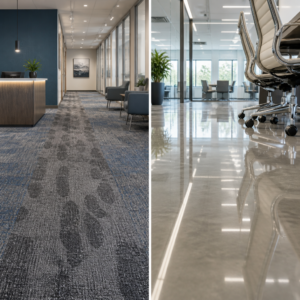
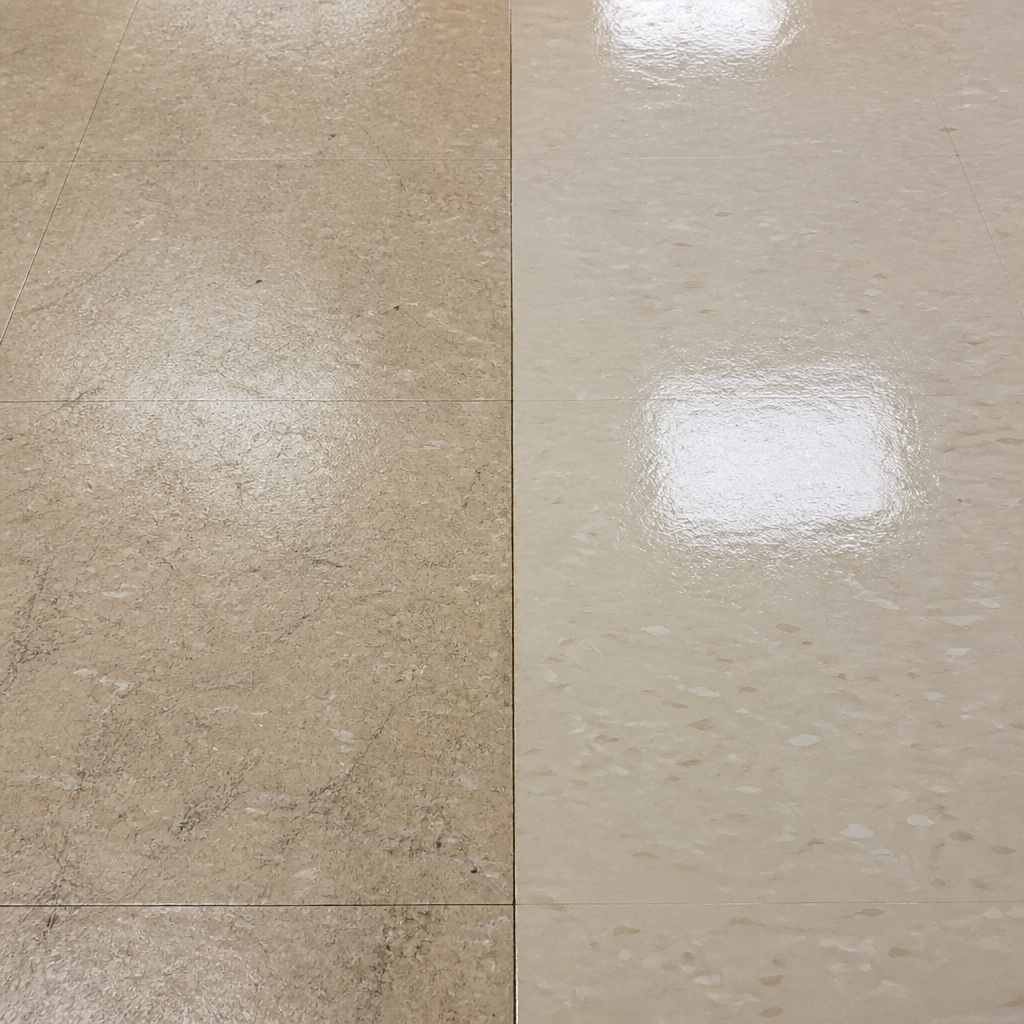
Walk into any high-traffic commercial building in Christchurch or Auckland and look down. If the floor looks dull, yellowed, or scuffed despite regular mopping, the problem is not the cleaning routine. The protective finish has broken down, and no amount of daily maintenance will fix that. Floor stripping and sealing in Christchurch is the process that actually solves this, removing degraded coatings down to the substrate and applying a fresh, durable layer that restores both appearance and safety. Businesses that skip this step do not just end up with ugly floors. They end up with slip hazards, accelerated surface damage, and replacement bills that dwarf what proper maintenance would have cost.
Table of Contents
- Quick Takeaways
- What Is Floor Stripping and Sealing?
- When Your Commercial Floor Actually Needs Stripping
- The Step-by-Step Process Professionals Follow
- Floor Types and the Right Approach for Each
- Comparing Maintenance Approaches for Commercial Floors
- How Often Should Commercial Floors Be Stripped and Resealed?
- Why Generic Cleaning Contracts Miss This Completely
- Frequently Asked Questions
- References
Quick Takeaways
| Key Insight | Explanation |
|---|---|
| Daily cleaning cannot restore a degraded finish | Once the protective coating on VCT, vinyl, or concrete breaks down, mopping only cleans the surface. It cannot rebuild the protective layer. Stripping and resealing is the only fix. |
| A damaged floor is a liability, not just an eyesore | Cracked, worn, or slippery floor finishes create genuine slip-and-fall hazards in offices, medical centres, and retail stores. Public liability insurance does not remove the duty of care. |
| Sealer choice depends on your floor type and traffic level | Water-based acrylic sealers suit VCT and vinyl. Epoxy and polyurethane sealers are better for concrete in high-traffic or industrial settings. Using the wrong sealer shortens the result. |
| Stripping frequency is driven by traffic, not by the calendar | A school corridor or medical centre may need stripping every 12 months. A low-traffic office may go two or more years. Traffic volume and finish condition are the real indicators. |
| Residue removal between steps is where most jobs fail | If stripped coating residue is not fully rinsed before sealing, the new finish will not bond properly and will peel faster. Thorough neutralisation is not optional. |
| Commercial floor maintenance in Auckland and Christchurch requires humidity awareness | Sealer curing times are affected by ambient temperature and moisture. Work done in poorly ventilated spaces or during humid conditions can result in cloudy or uneven finishes. |
| Correct buffing between coats multiplies finish durability | Applying multiple thin coats and buffing between applications creates a harder, more even surface than one thick coat. Skipping this step is a common shortcut that reduces longevity. |
What Is Floor Stripping and Sealing?
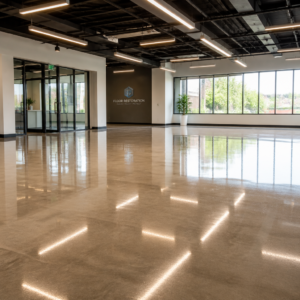
Floor stripping is the physical and chemical removal of old coatings, waxes, sealers, or finishes from a floor surface. Sealing is the application of a fresh protective layer once the substrate is clean, dry, and properly prepared. Together, these two steps form a single maintenance process that resets the floor to a protective and presentable condition.
The protective topcoat on a commercial floor is doing the same job as paint on an exterior wall. It takes the damage so the substrate does not have to. When that coat wears through, every scuff, spill, and footstep hits the raw flooring material directly. Stripping and resealing restores the barrier before that damage becomes structural.
This is not the same as polishing or buffing. Buffing works on a finish that still has life in it. Stripping is what you do when buffing no longer produces a result, because there is not enough finish left to work with.
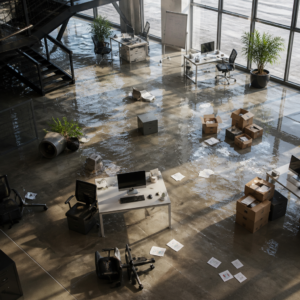
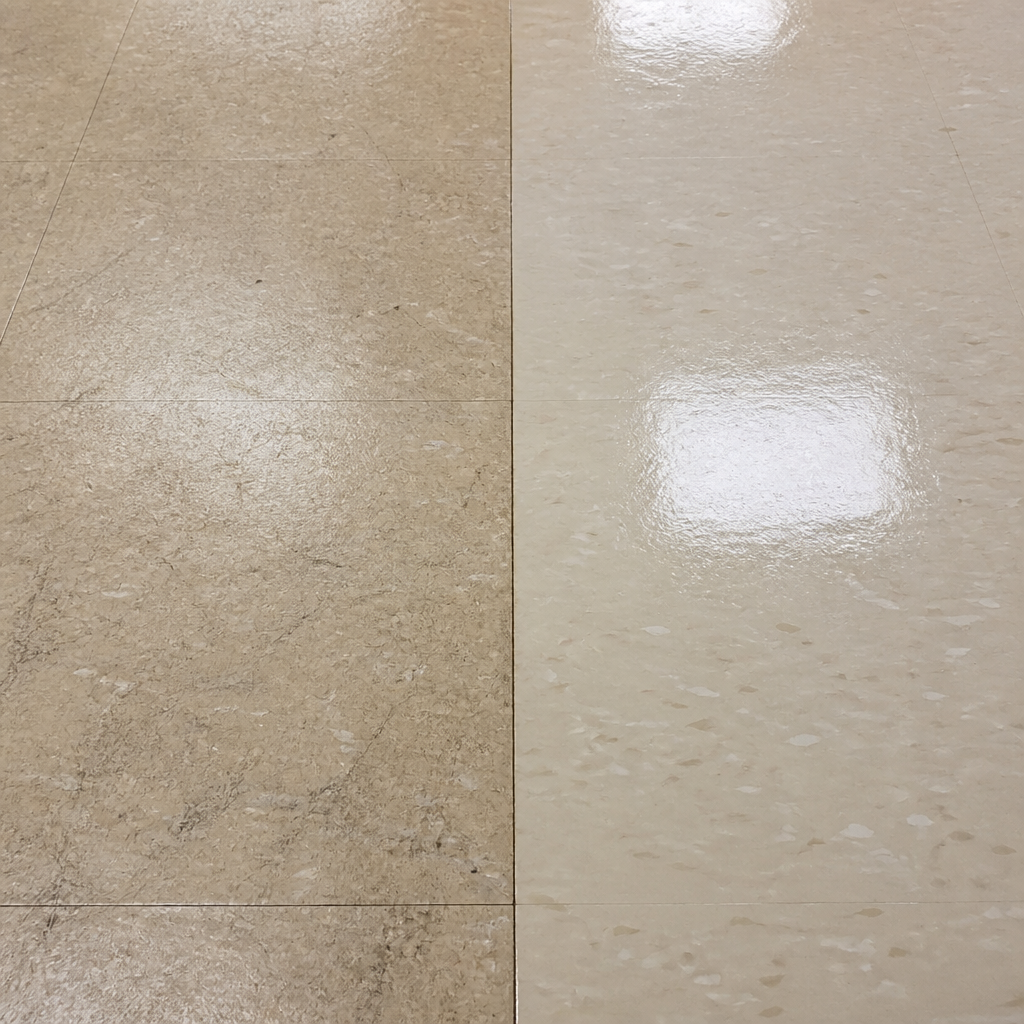
A floor finish that is heavily stained, dull, and cracked has passed the point where cleaning or polishing can recover it. At that stage, the only viable path is to strip the coating completely and start fresh with a new protective layer.
When Your Commercial Floor Actually Needs Stripping
The right time to strip a floor is not when a cleaning company recommends it on a fixed schedule. It is when the finish shows specific signs that it can no longer be restored through standard maintenance. Knowing the difference saves money and avoids unnecessary downtime.
Clear Signs the Finish Has Failed
Look for persistent yellowing or browning that does not lift with deep cleaning. This happens when old wax layers accumulate and oxidise. A floor that looks dirty immediately after mopping, or one with visible black heel marks embedded in the finish rather than sitting on top of it, has a coating that is no longer functioning.
Peeling or flaking finish is an obvious indicator. So is a floor that has developed a rough, pitted texture where the coating has worn through unevenly. In medical centres or food preparation areas, any floor showing this level of deterioration is also a hygiene concern, because bacteria can harbour in those surface irregularities.
When Buffing Stops Working
Buffing or spray burnishing restores gloss to a finish that still has adequate depth. If you buff a floor and the shine returns for a day or two before going flat again, there is still some finish to work with. If buffing produces no improvement at all, the finish is gone and stripping is the next step.
Pro tip: Before scheduling a full strip-and-seal job, have a professional assess the finish depth. In some cases, a heavy-duty scrub and recoat can extend the floor’s life by several months without full stripping. This is worth checking because stripping does remove a small amount of surface material each time it is done on certain floor types.
The Step-by-Step Process Professionals Follow
A professionally executed strip-and-seal job is not a single-step operation. Each phase matters, and cutting corners at any point affects the final result and how long it lasts.
Preparing the Area
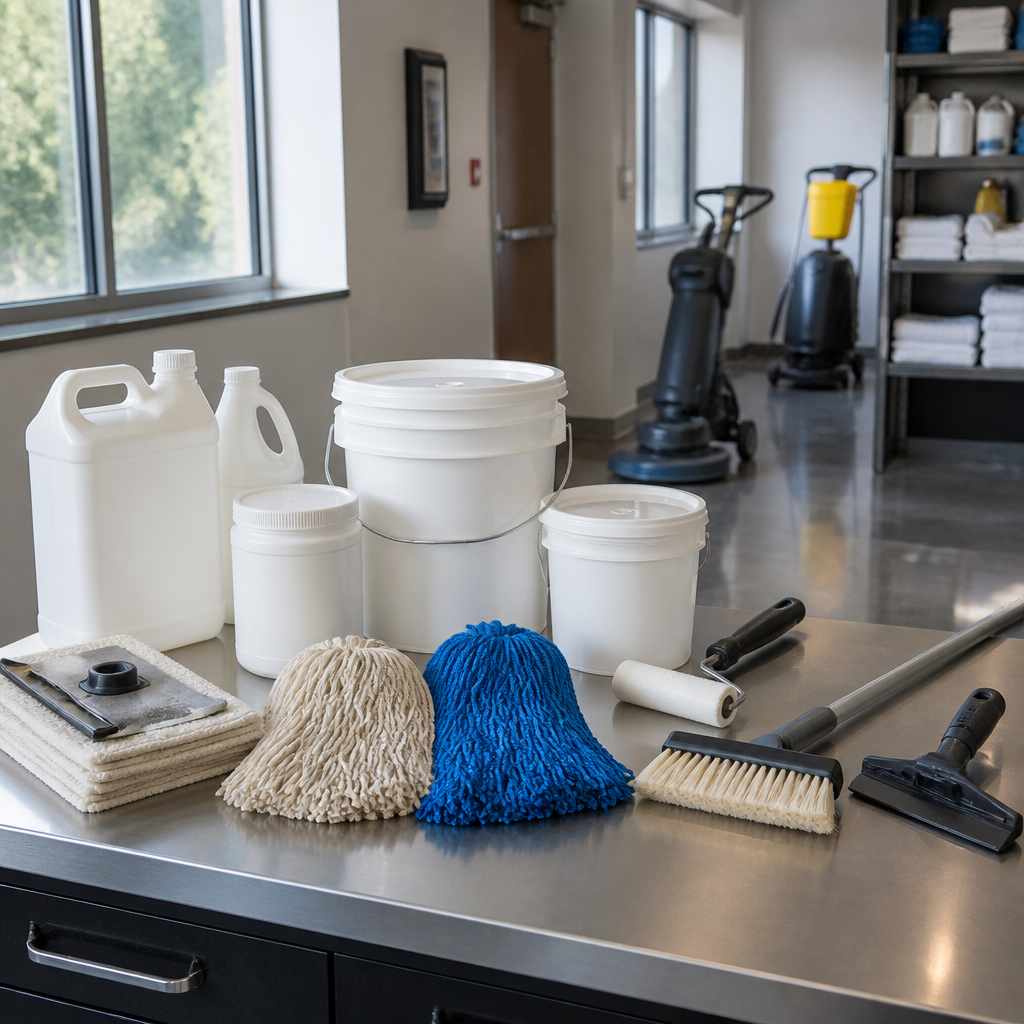
The space must be cleared of furniture, equipment, and obstacles. Floor stripping chemicals require adequate ventilation because of fumes, and the area needs to be cordoned off for safety during the process. In a commercial setting, this means coordinating with the business to schedule work outside operating hours.
Applying and Dwelling the Stripper
The stripping solution is applied to the floor and allowed to dwell. The dwell time is not a suggestion. It is the period the chemical needs to break down the bond between the old coating and the substrate. Rushing this step means the coating does not fully release, which creates uneven results and leaves residue that interferes with the new sealer.
The type of stripper used depends on the floor. Vinyl and VCT floors use alkaline or low-odour strippers. Concrete may use chemical stripping or mechanical grinding, depending on the coating type. Using the wrong stripper on the wrong surface causes damage that the new sealer cannot fix.
Scrubbing and Removing the Old Coating
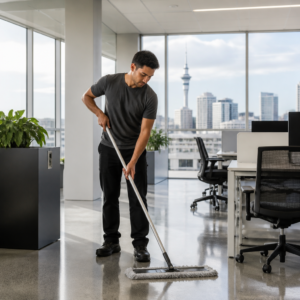
A rotary scrubbing machine agitates the softened coating and breaks it free from the surface. The slurry is then removed with a wet vacuum or mop. This step is repeated in sections to keep the stripper active on each area before it dries out.
Rinsing and Neutralising
This is the step that separates a quality job from a poor one. Any remaining stripper residue must be fully rinsed and neutralised before sealing begins. Residue left on the floor will prevent the new sealer from bonding correctly. The result is a finish that peels, clouds, or wears away faster than it should.
Applying the Sealer in Multiple Coats
The sealer is applied in thin, even coats. Multiple thin coats, with adequate drying time between each, produce a harder and more durable finish than one or two thick coats. Buffing or burnishing between coats further improves adhesion and surface hardness. Most professional commercial floor finishing jobs involve three to five coats depending on the floor type and traffic expectations.
Pro tip: Allow the final coat to cure fully before returning foot traffic to the area. In Christchurch and Auckland, ambient temperature and humidity affect curing time. A finish that looks dry may not yet have reached its full hardness. Returning heavy traffic too early is one of the most common causes of premature finish failure.
Floor Types and the Right Approach for Each
There is no single method that applies to every floor. The substrate, the existing coating, and the level of traffic all change which products and techniques are appropriate. Getting this wrong means either damaging the floor or producing a finish that fails quickly.
VCT and Vinyl Floors
VCT (Vinyl Composite Tile) is the most common commercial floor type in New Zealand offices, schools, and retail stores. It responds well to alkaline-based or low-odour strippers. The key caution is avoiding overly aggressive strippers that can dull or warp the vinyl. After stripping, a water-based acrylic or polyurethane sealer provides the right balance of durability and ease of maintenance. These floors are also suitable for ongoing buffing between full strip cycles.
Concrete Floors
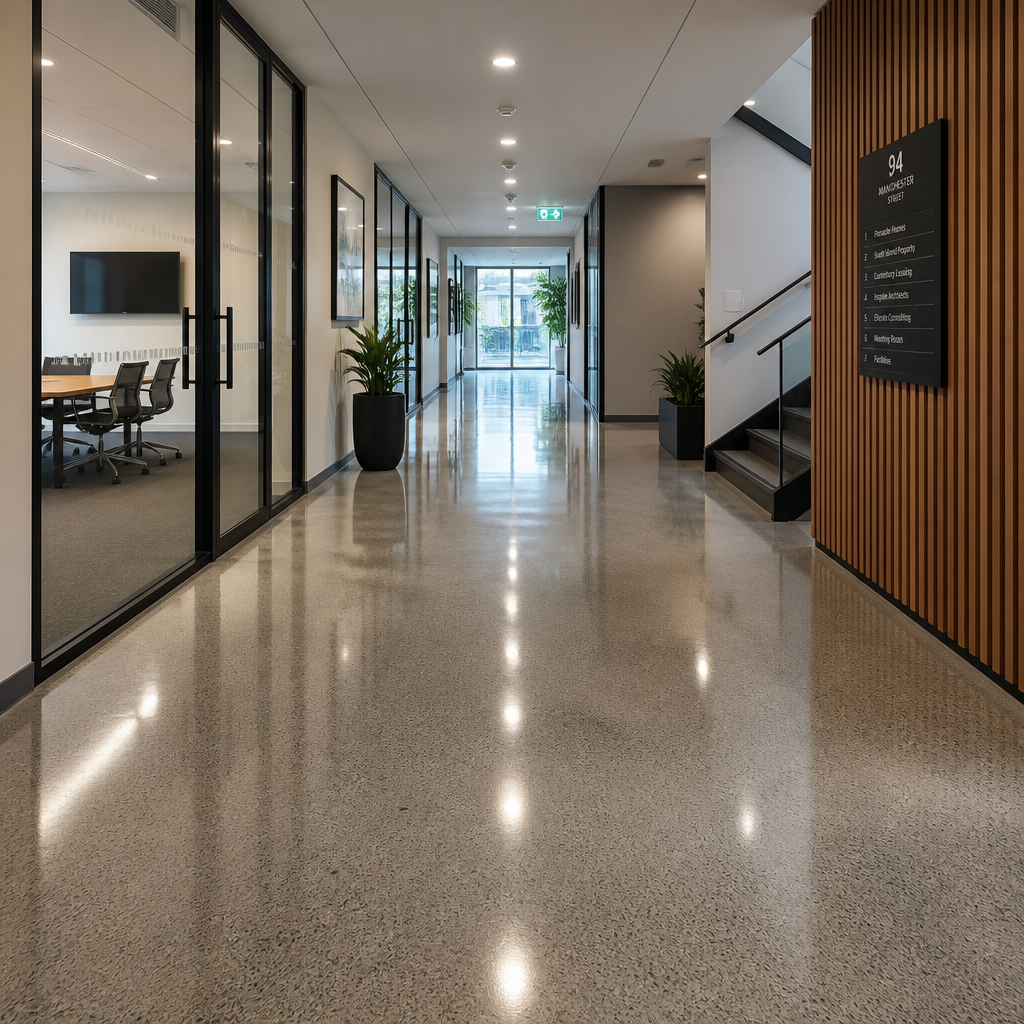
Concrete floors in commercial settings, warehouses, and post-construction environments may use chemical stripping or mechanical preparation depending on the coating. Epoxy and polyurethane sealers are the standard choice for concrete because they provide strong resistance to wear, staining, and moisture penetration. Proper ventilation during application is essential, and curing times can be longer than for VCT.
Ceramic and Porcelain Tile
Tile floors accumulate old sealers and grout contamination over time. Stripping uses alkaline cleaners followed by thorough rinsing to avoid leaving residue in the grout lines. Penetrating sealers are typically the correct choice for tile and grout, protecting against moisture intrusion without creating a film that will peel.
Timber Floors in Commercial Settings
Timber requires strippers formulated specifically for wood. Moisture is the primary risk. The floor must be fully dried before sealing, and the correct sealer, whether oil-based or polyurethane, depends on the species and finish history. Timber in commercial settings needs more careful scheduling because it tolerates moisture from the stripping process less forgivingly than vinyl or concrete.
Comparing Maintenance Approaches for Commercial Floors
| Approach | What It Does | Best Suited For |
|---|---|---|
| Daily Mopping and Cleaning | Removes surface dirt and maintains appearance of an intact finish. Does not restore or rebuild the protective coating. | All floor types as an ongoing routine. Not a substitute for stripping when the finish has degraded. |
| Buffing and Spray Burnishing | Restores gloss and surface hardness to a finish that still has adequate depth. Extends the time between full strip-and-seal cycles. | VCT and vinyl floors with an intact finish that has lost shine. Not effective once the finish has worn through. |
| Full Strip and Reseal | Completely removes old coating down to the substrate and applies a new protective finish. Resets the floor’s protective life entirely. | Any commercial floor where the finish has visibly failed, is yellowed, peeling, or no longer responds to buffing. |
How Often Should Commercial Floors Be Stripped and Resealed?
There is no universal frequency that applies to every commercial floor in Christchurch or Auckland. The honest answer is that it depends on traffic volume, the type of finish applied, and how well the floor is maintained between cycles.
In practice, high-traffic environments like school corridors, medical centre waiting areas, and busy retail floors may need a full strip and reseal every 12 months. Lower-traffic settings like small offices or back-of-house storage areas can often go two years or more between full strip cycles, particularly if regular buffing is part of the maintenance routine.
The most reliable indicator is the condition of the finish itself. A floor that still looks clean, maintains its gloss with buffing, and has no visible coating failure can wait. A floor that looks degraded despite regular maintenance cannot.
Commercial floor maintenance in Auckland and Christchurch carries one additional variable worth noting. Both cities have periods of significant temperature variation, and spaces that are poorly climate-controlled can see finishes age faster due to thermal expansion and contraction of the substrate. This is particularly relevant for VCT floors in buildings without consistent temperature management.
For businesses working with Triple Star Commercial Cleaning, the maintenance schedule is built around actual floor condition assessments, not arbitrary calendar dates. This means floors get serviced when they need it, not on a routine that may either over-service or under-service the actual condition. You can review the full range of floor stripping and sealing services available across Christchurch and Auckland, or explore the broader commercial cleaning services in Christchurch to understand how floor care fits into a complete maintenance programme.
Why Generic Cleaning Contracts Miss This Completely
The vast majority of standard commercial cleaning contracts cover routine tasks: vacuuming, mopping, bathroom sanitisation, rubbish removal. Floor stripping and sealing is almost never included in a standard contract because it is a periodic specialist service that requires different equipment, chemicals, and scheduling than daily cleaning.
This creates a gap that many property managers and facility managers only discover when their floors have visibly deteriorated. By then, the cost of remediation is significantly higher than it would have been with planned maintenance.
A cleaning provider worth working with will identify this gap and flag it before it becomes a problem. They will advise on realistic strip-and-seal intervals based on your floor type and traffic, and they will coordinate the scheduling to minimise disruption to your operations. This is the difference between a transactional cleaning contract and an actual maintenance relationship.
For schools, medical centres, and office buildings in Christchurch and Auckland, floor polishing NZ services are most valuable when they are part of a planned programme rather than a reactive fix. Booking a strip-and-seal job after a floor has failed costs more in labour, may require more coats to achieve an even result, and causes more operational disruption than scheduled maintenance would have.
Triple Star Commercial Cleaning works with property managers, body corporates, and business owners to build floor maintenance programmes that prevent this pattern. Being an UpstreamNZ approved supplier means the processes and service standards are held to a consistent benchmark, which matters when you are maintaining multiple sites or managing facilities on behalf of others. Learn more about the commercial cleaning services available in Auckland or the full range of cleaning services offered by Triple Star.
Frequently Asked Questions
How long does a floor stripping and sealing job take for a commercial space?
The timeframe depends on the floor area, the number of coats being applied, and the drying time required between coats. A medium-sized office floor might take a full working day or overnight to complete. Larger spaces, or floors needing more preparation due to heavy coating buildup, can take longer. Most commercial jobs are scheduled outside business hours to avoid disruption.
Can floor stripping damage the floor itself?
When done correctly with the right stripper for the floor type, no. The risk of damage comes from using an incompatible chemical, leaving the stripper on too long, or using overly aggressive mechanical methods on a floor that requires a gentler approach. Timber floors are the most sensitive to moisture damage during the stripping process. This is why using a professional with specific experience in commercial floor types matters.
What is the difference between floor sealing and floor polishing?
Sealing applies a protective coating to the floor substrate or a freshly stripped surface. Polishing, or buffing, restores the gloss and surface condition of an existing sealed floor. Sealing is done after stripping as a restorative step. Polishing is done as regular maintenance to extend the life of the existing seal. They are complementary processes, not the same thing.
Is floor stripping and sealing suitable for all commercial floor types in New Zealand?
The process applies to most commercial flooring types including VCT, vinyl, concrete, tile, and timber, but the specific products and methods change depending on the material. Not all floors require the same stripper chemistry, and not all surfaces suit the same sealer type. A professional assessment before starting is the correct first step, particularly for older buildings with mixed flooring materials or unknown coating histories.
How soon can the floor be used after sealing?
Light foot traffic is typically possible within a few hours of the final coat, but full cure, the point at which the finish reaches its maximum hardness and durability, takes longer. In New Zealand conditions, full cure can take 24 to 72 hours depending on the sealer type, humidity, and ventilation. Returning heavy equipment or furniture too early is one of the most common causes of premature finish failure.
Does a newly sealed floor need any special care during the first weeks?
Yes. Avoid dragging furniture across a newly sealed floor. Use soft or felt pads under furniture legs. Avoid harsh cleaning chemicals during the first few weeks that could interact with the curing finish. A neutral pH cleaner is the right choice for routine cleaning on a freshly sealed surface. Your cleaning provider should confirm the specific care instructions based on the sealer product used.
If you manage a commercial property in Christchurch or Auckland and you have questions about your current floor condition or maintenance schedule, we would genuinely like to hear about your experience and what has or has not worked for you.
We would love your feedback and any insights you would share with others. What perspective would you add?