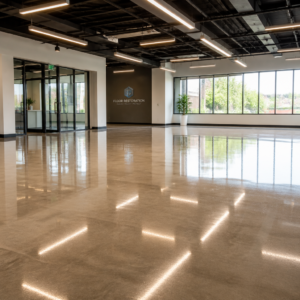
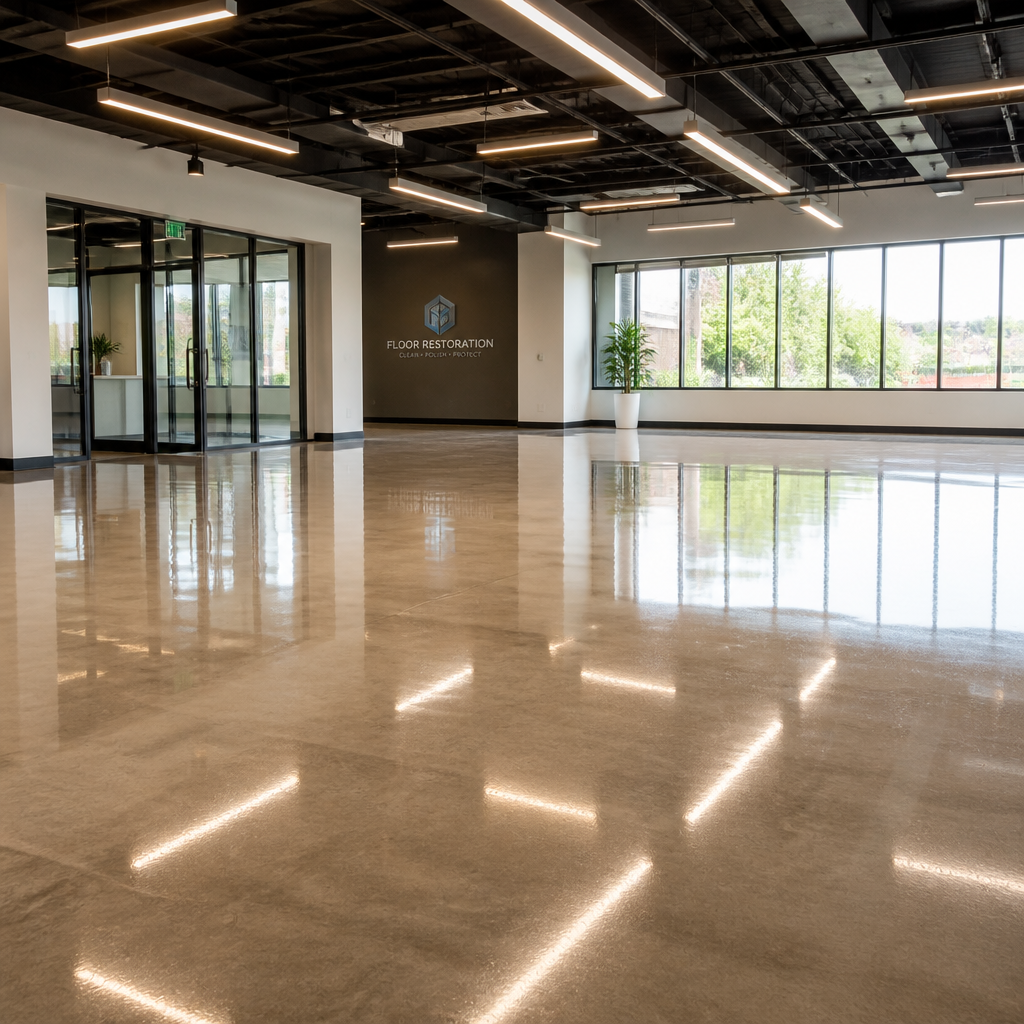
Walk into any high-traffic commercial building in Christchurch and look down. If the floor looks dull, yellowed, or scuffed despite regular mopping, the problem is not the cleaning routine. The protective finish has broken down, and no amount of daily maintenance will fix that. Floor stripping and sealing in Christchurch is the process that actually solves this, removing degraded coatings down to the substrate and applying a fresh, durable layer that restores both appearance and safety. Property managers who skip this step do not just end up with ugly floors. They end up with slip hazards, accelerated surface damage, and replacement bills that dwarf what proper maintenance would have cost.
Table of Contents
- What Is Floor Stripping and Sealing
- Quick Takeaways
- When Your Floors Actually Need Stripping
- The Step-by-Step Process
- Floor Types and What Each One Needs
- How Often Should Commercial Floors Be Stripped and Resealed
- Stripping vs. Polishing vs. Buffing
- Slip Resistance and Compliance in NZ
- Choosing a Floor Restoration Contractor in Christchurch
- Frequently Asked Questions
- References
What Is Floor Stripping and Sealing
Floor stripping is the physical and chemical removal of old coatings, waxes, sealers, or finishes from a floor surface. Sealing is the application of a fresh protective layer once the substrate is clean, dry, and properly prepared. The two steps are always done in sequence. You cannot seal over a degraded finish and expect the new coat to bond or perform correctly.
The process applies to most commercial hard flooring types including vinyl composition tile (VCT), sheet vinyl, concrete, ceramic tile, and some timber finishes. The specific products and methods change depending on the material, which is why a one-size approach does not work on a mixed-floor building.
Quick Takeaways
| Key Insight | Explanation |
|---|---|
| Dull floors after mopping signal finish failure, not poor cleaning | Once the protective coating breaks down, no cleaning product can restore the surface. Stripping and resealing is the only fix. |
| High-traffic floors in Christchurch commercial buildings need resealing every 12 months | School corridors, medical centre waiting areas, and retail floors wear through their finish faster than low-traffic spaces. Waiting longer causes compounding damage. |
| Using the wrong chemical stripper damages the floor permanently | Vinyl and VCT use alkaline or low-odour strippers. Concrete may require mechanical grinding. Mismatched chemistry causes surface etching that new sealer cannot hide. |
| Sealer coat count matters more than sealer brand | Three to five thin coats of sealer, each fully dried before the next, build a durable finish. One thick coat cracks and peels quickly. |
| Buffing and stripping are not the same service | Buffing restores gloss to a finish that still has depth. Stripping is needed when buffing produces no lasting improvement. Confusing the two wastes money. |
| NZ slip resistance standards apply to resealed floors | The New Zealand Building Code requires a minimum coefficient of friction on commercial floor surfaces. A high-gloss sealer applied incorrectly can create a compliance risk. |
| Scheduling matters as much as the service itself | Stripping and sealing requires the floor to be clear of foot traffic until each coat is fully cured. Work scheduled overnight or across a weekend avoids business disruption. |
When Your Floors Actually Need Stripping
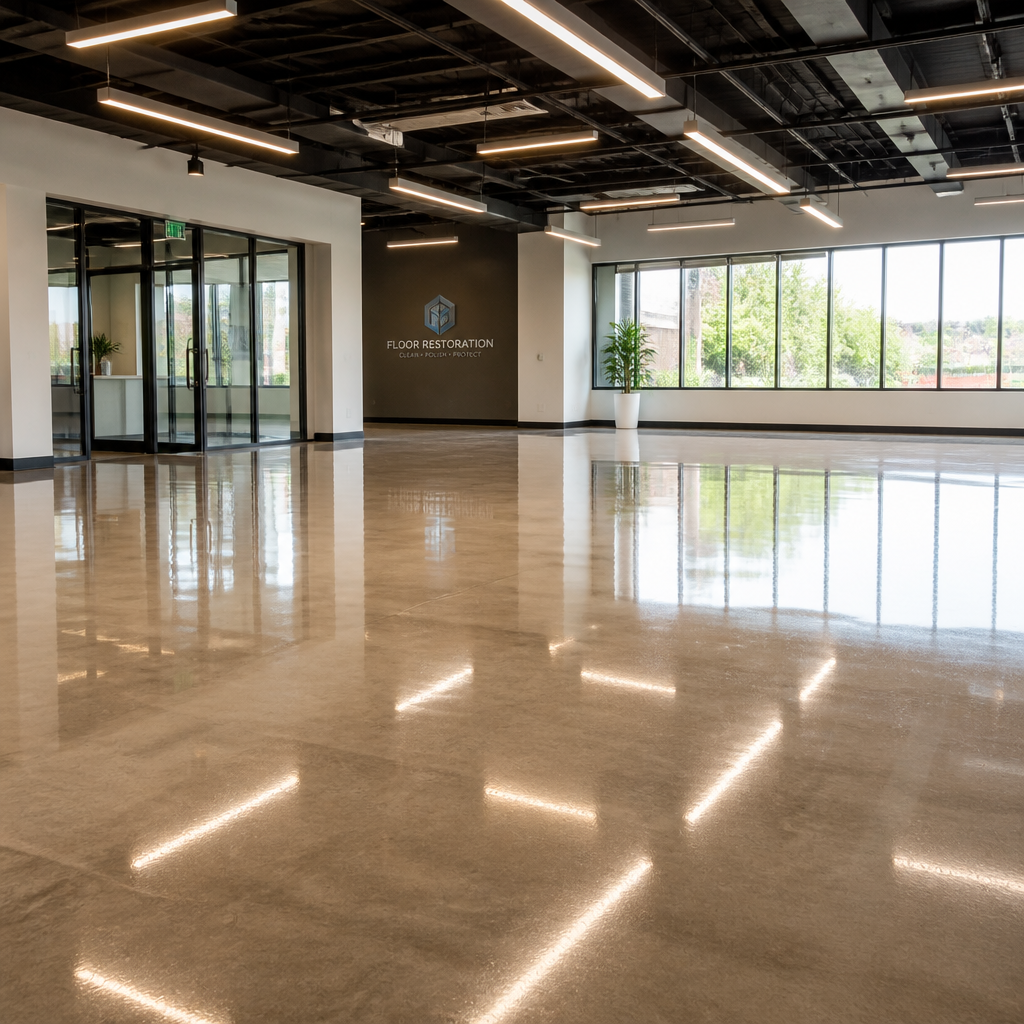
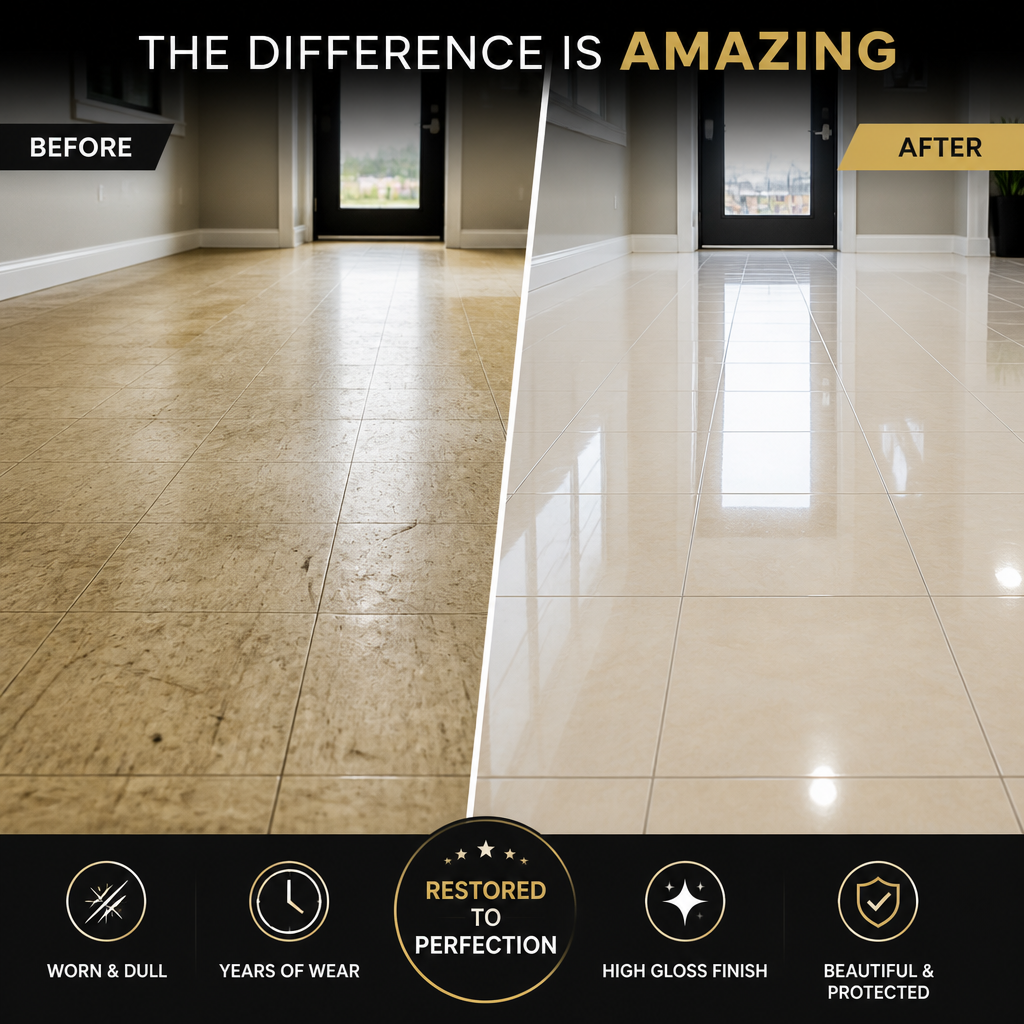
The most reliable test is the buffing test. Buffing or spray burnishing restores gloss to a finish that still has adequate depth. If you buff a floor and the shine returns for a day or two before going flat again, there is still some finish to work with. If buffing produces no improvement at all, the finish is gone and stripping is the only path forward.
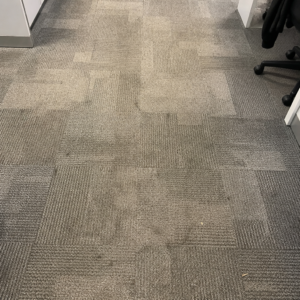
Beyond that test, look for these signs in your Christchurch commercial property. Yellowing that appears across the whole floor rather than in isolated patches is almost always a finish problem, not a soiling problem. Black marks from rubber-soled shoes that cannot be removed by normal cleaning indicate the finish layer has thinned to the point where contamination is reaching the substrate. Uneven sheen, where some areas look polished and others look completely flat, means successive polish coats have built up unevenly and a full strip is needed to start clean.
Sticky surfaces after mopping are a sign that old wax and polish layers are absorbing cleaning chemicals rather than repelling them. This is common in buildings where strip-and-reseal has been deferred for two or more years.
Pro tip: Before booking a strip and reseal, ask your cleaning contractor to buff a small inconspicuous section of the floor and review it the next day. If the shine has already faded, you have your answer and can avoid debating whether buffing alone will do the job.
The Step-by-Step Process
Understanding what actually happens during a professional strip and reseal helps you hold a contractor accountable and spot shortcuts that will cost you later.
Step 1: Preparation and Furniture Clearance
All furniture, equipment, and moveable fixtures must be cleared from the floor area. Any items left in place will create shadow zones where the old finish is not fully removed and the new seal does not bond evenly. Good contractors communicate this requirement clearly in advance.
Step 2: Chemical Stripping
A stripping solution appropriate to the floor type is diluted and applied to the surface, then allowed to dwell so it softens and breaks down the existing coating. The type of stripper depends on the floor material. Vinyl and VCT floors use alkaline or low-odour strippers. Concrete may use chemical stripping or mechanical grinding, depending on the coating type. Using the wrong stripper on the wrong surface causes damage that no new sealer can fix.
Step 3: Machine Scrubbing and Slurry Removal
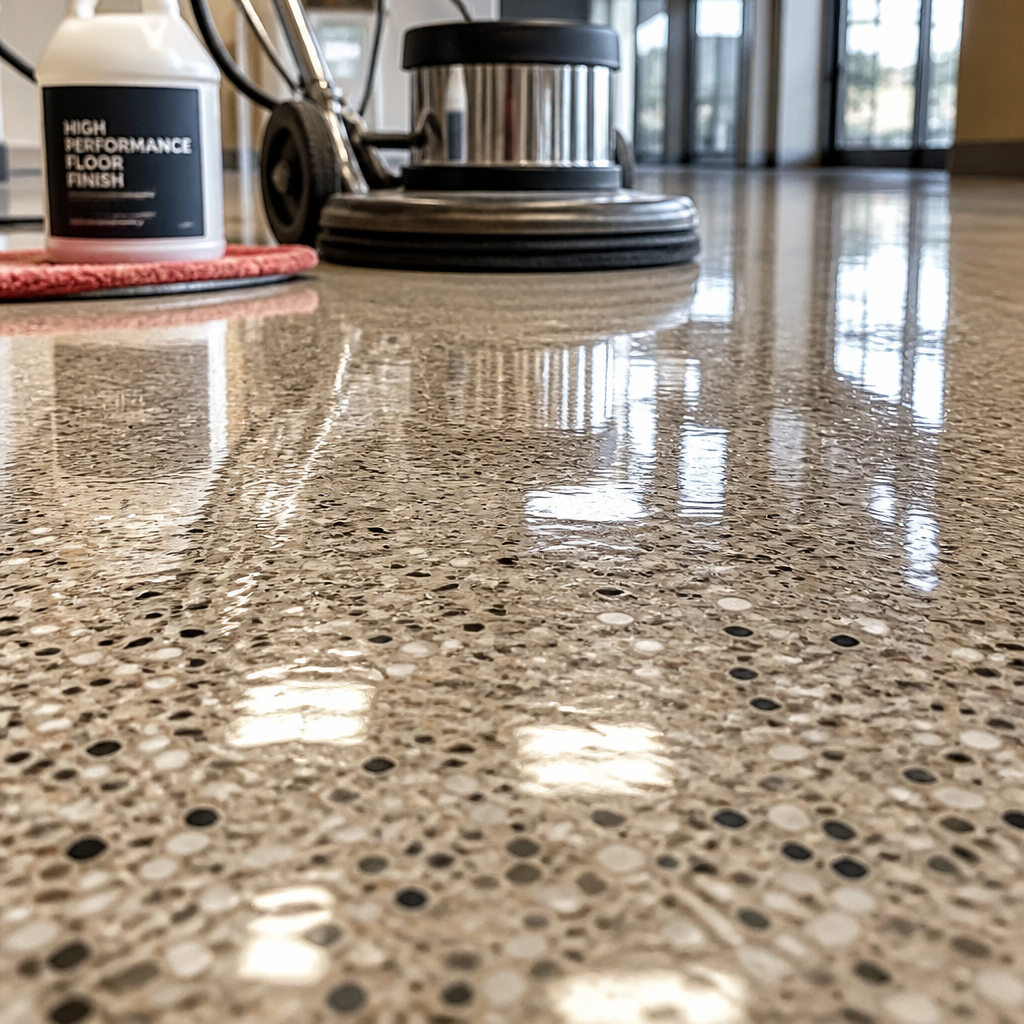
A rotary scrubbing machine agitates the softened coating and breaks it free from the surface. The resulting slurry is removed with a wet vacuum or wide mop. This step is often repeated in heavily built-up areas. A common mistake is to skip a second scrub pass on high-traffic zones to save time. The result is residual old finish under the new sealer, which causes adhesion failure within weeks.
Step 4: Rinsing and Drying
The floor must be rinsed thoroughly to remove all chemical residue and then allowed to dry completely. Any moisture or residual stripper chemistry left on the surface will prevent the sealer from bonding correctly. Drying time varies with humidity and ventilation conditions. Rushing this step is one of the most common causes of sealer peeling.
Step 5: Sealer Application in Multiple Coats
Sealer is applied in thin, even coats using a flat-head applicator. Each coat must dry fully before the next is applied. Three to five coats is standard for a durable commercial finish. A thicker single coat does not produce the same result and is far more likely to crack or peel under foot traffic. The final coat may be a higher-gloss finish coat, or a matte option where glare is a concern.
Pro tip: Ask your contractor how many coats of sealer they include in their quote. A low price often reflects two coats where the floor needs four or five. Recoating fails within months on a high-traffic floor that was under-sealed from the start.
Floor Types and What Each One Needs
The most common hard floor surfaces in Christchurch commercial buildings are sheet vinyl, vinyl composition tile, polished concrete, ceramic tile, and some sealed timber floors. Each behaves differently under stripping chemistry and requires a different sealer type.
Vinyl and VCT Floors
Vinyl is the most common hard floor surface in commercial environments across New Zealand. It is durable and cost-effective, but it is not maintenance-free. Vinyl floors require regular stripping of old finish layers before new polish is applied. A floor that simply receives coat after coat of polish without stripping develops a yellowed, uneven build-up that no amount of buffing will resolve. After stripping and resealing, vinyl floors benefit from regular buffing or burnishing between full strip-and-reseal cycles.
Polished Concrete
Polished concrete is increasingly common in contemporary commercial fit-outs, particularly in Christchurch retail and hospitality spaces. It looks excellent when maintained but shows neglect quickly. Concrete requires penetrating sealers rather than surface-film sealers in most cases. Applying a wax-based product designed for vinyl to a concrete floor is a frequent and costly error.
Ceramic and Porcelain Tile
Tile floors require grout line attention as much as surface sealing. A tile surface can look clean while the grout is absorbing bacteria and staining permanently. Grout sealing is a separate step that many contractors skip unless it is specified in the scope of work. Property managers should confirm grout treatment is included when booking floor restoration on any tiled surface.
How Often Should Commercial Floors Be Stripped and Resealed
Frequency depends on foot traffic volume, floor type, and the quality of interim maintenance. In practice, high-traffic environments like school corridors, medical centre waiting areas, and busy retail floors may need a full strip and reseal every 12 months. Lower-traffic settings like small offices or back-of-house storage areas can often extend to 18 to 24 months between full cycles.
A floor maintenance programme built around scheduled annual or biannual strip-and-reseal services costs a fraction of what premature floor replacement costs. The floors that get replaced early are almost always the ones that were never stripped and resealed on a proper schedule.
For property managers overseeing multiple tenancies across a Christchurch commercial building, the most efficient approach is a documented floor maintenance schedule that logs the date of each strip and reseal, the contractor used, the number of coats applied, and the floor area treated. This record protects you in the event of a slip incident and gives you objective data for budgeting future maintenance cycles.
Stripping vs. Polishing vs. Buffing
These three terms get used interchangeably by building occupants, but they describe completely different interventions. Confusing them costs money and delays the right fix.
| Service | What It Does | When to Use It |
|---|---|---|
| Stripping | Removes all existing coatings, waxes, and sealers down to the bare floor substrate using chemical and mechanical action | When the existing finish has degraded beyond recovery, shows heavy yellowing or build-up, or when the surface needs to be reset before resealing |
| Sealing / Resealing | Applies a fresh protective coating in multiple thin layers after stripping and thorough cleaning | Always follows stripping. Also used on new floors before they enter service for the first time |
| Buffing / Polishing | Uses a high-speed or low-speed rotary machine to restore surface gloss to an existing sealed floor without removing the underlying finish | Routine maintenance between strip-and-reseal cycles, when the finish still has depth and just needs its surface condition restored |
Polishing is done as regular maintenance to extend the life of an existing seal. Stripping is done when that seal has reached the end of its useful life. They are complementary processes, not competing ones. A well-managed floor programme uses both in the right sequence.
Slip Resistance and Compliance in NZ
This is the part most property managers underestimate. The New Zealand Building Code sets requirements for floor slip resistance in commercial spaces. The standard AS/NZS 4586 classifies slip resistance, with R10 being the minimum slip threshold recognised in New Zealand for most commercial applications. For wet access routes in commercial buildings, the required coefficient of friction is no less than 0.4 under the relevant standard.
A freshly sealed floor that has been over-polished to a very high gloss can fall below the minimum slip resistance threshold in wet conditions. This is not a theoretical risk. It is a genuine liability issue for property managers, particularly in building entrances, corridors near bathrooms, and food service areas where floors can become wet during normal use.
When briefing a contractor for commercial floor restoration in NZ, confirm that the sealer product they are using has been tested for slip resistance, and that their application method does not compromise that rating. A reputable contractor will be able to provide product data sheets that include slip resistance classifications.
Choosing a Floor Restoration Contractor in Christchurch
The difference between a professional floor restoration result and a job that fails within months almost always comes down to preparation steps, not the sealer brand. Any contractor can buy good sealer. Not every contractor properly strips, rinses, and dries before applying it.
For facility maintenance cleaning that includes strip-and-reseal, these are the questions worth asking before signing a scope of work.
Questions to Ask Any Contractor
Ask how they identify which stripper product is appropriate for your specific floor type, and how many rinse passes they complete before drying. Ask how many coats of sealer are included in the price, and what the drying time between coats is. Ask whether they carry public liability insurance and whether the work is covered if something goes wrong.
A contractor who cannot clearly answer the preparation and coat-count questions is a contractor who is likely to rush those steps in practice. Public liability insurance is non-negotiable for any commercial cleaning work in New Zealand. Triple Star Commercial Cleaning holds public liability insurance on all commercial cleaning sites and is an UpstreamNZ approved supplier, which provides property managers with additional confidence in service quality.
Scheduling Around Your Business
Hard floor cleaning in Christchurch commercial spaces needs to be scheduled when the area is clear of foot traffic and can remain clear until the sealer is fully cured. Overnight or weekend scheduling is standard for most occupied commercial buildings. For medical centres or schools that operate six or seven days a week, a staged approach, treating one section at a time while the rest remains operational, is often more practical than closing the entire floor.
Confirm cure times with your contractor before scheduling. Sealer that is walked on before it has fully cured will be permanently damaged and will need to be redone. The time pressure is real on commercial sites, and a contractor who quotes unrealistically fast cure times should be questioned.
Frequently Asked Questions
How long does floor stripping and sealing take for a typical commercial office?
For a standard office floor of around 200 to 400 square metres, the stripping, preparation, and application of three to five coats of sealer typically takes one full night’s work, with the floor ready for normal use the following morning. Larger areas, heavy build-up, or complex floor shapes take longer. Your contractor should give you a specific timeline based on a site assessment, not a generic estimate.
Can floor sealing be done on top of old sealer without stripping first?
Not with reliable results. Applying new sealer over degraded old finish traps the failing layer underneath and the new coating will not bond to the substrate properly. The result is a finish that peels, bubbles, or wears through quickly, often within weeks on a high-traffic floor. Stripping back to the substrate is the only way to ensure the new sealer performs as intended.
What types of floors can be stripped and resealed in a Christchurch commercial building?
Vinyl, VCT, concrete, ceramic tile, and some sealed timber floors can all be stripped and resealed. The chemistry and process differ for each material. Not every floor type is suitable for the same stripper or sealer, which is why a site inspection before quoting is important. An experienced contractor will assess your specific floor type and specify the correct products before starting work.
Is floor stripping and sealing disruptive to a business?
It requires the floor area to be completely clear and off-limits while the work is done and while each sealer coat dries. With proper scheduling, this disruption is easily managed. Most commercial strip-and-reseal work in Christchurch is done overnight or over weekends. For businesses that cannot vacate the entire floor, a staged approach covering one section at a time keeps most of the space operational throughout the process.
How do I know if my floor just needs buffing or a full strip and reseal?
Buff a small area and check it the next day. If the shine has returned and held, the existing finish still has usable depth and regular buffing is the right maintenance step. If the buffed area looks flat again by the following morning, the finish is exhausted and stripping is the correct next step. A contractor who recommends buffing without doing this assessment first is guessing rather than diagnosing.
Does Triple Star Commercial Cleaning provide floor stripping and sealing in both Christchurch and Auckland?
Yes. Triple Star Commercial Cleaning provides floor stripping, sealing, and hard floor restoration services for commercial buildings in both Christchurch and Auckland. Services cover offices, medical centres, schools, retail stores, and other commercial properties. All sites are covered by public liability insurance.
If you manage a commercial property in Christchurch or Auckland and are unsure whether your floors need stripping, buffing, or something else entirely, we would be glad to hear about what you are seeing, drop your question or experience in the comments below.
We would love your feedback and any insights you would share with others. What perspective would you add?
References
- Guide to vinyl floor strip and reseal for commercial properties in New Zealand
- Understanding slip resistance standards and AS/NZS 4586 classifications in New Zealand
- New Zealand Building Code slip resistance requirements for commercial floor surfaces
- Commercial floor care and maintenance programme guide for New Zealand businesses
- Hard floor stripping and sealing services overview for commercial facilities in NZ