If your Christchurch or Auckland office has started to feel a little stale, a little grimy, or just plain tired, there is a good chance your regular cleaning schedule is no longer cutting it. Most businesses underestimate how quickly bacteria, dust, and embedded grime build up in commercial spaces, especially in high-traffic environments like medical centres, retail stores, and open-plan offices. Ignoring these warning signs does not just affect appearances. It affects staff health, client impressions, and ultimately your bottom line. Recognising when you need deep cleaning services in Christchurch or Auckland is the first step toward protecting your workspace and the people in it.
Table of Contents
- Quick Takeaways
- Sign 1: Lingering Odours That Never Fully Disappear
- Sign 2: A Spike in Employee Sick Days
- Sign 3: Visible Stains, Grime, and Scuff Marks
- Sign 4: Dust Buildup in Overlooked Areas
- Sign 5: Clients or Visitors Have Made Comments
- Sign 6: Your Restrooms Are Failing the Sniff Test
- Sign 7: Carpets and Upholstery Look Dull or Matted
- Sign 8: Post-Construction Dust and Residue Is Still Present
- Sign 9: Hard Floor Surfaces Are Dull, Stained, or Sticky
- Sign 10: You Have an End of Lease Inspection Coming Up
- Deep Clean vs. Regular Clean: What Is Actually Different
- Frequently Asked Questions
- References
Quick Takeaways
| Key Insight | Explanation |
|---|---|
| Odours signal embedded contamination | Persistent smells in carpets, air vents, and upholstery cannot be removed by surface wiping. A professional deep clean targets the source, not just the symptom. |
| Sick day spikes often trace back to the office | High-touch surfaces like keyboards, door handles, and shared equipment harbour bacteria that standard cleaning misses. Deep disinfection reduces the pathogen load significantly. |
| Visible dust is the visible fraction of a larger problem | If you can see dust on shelves or vents, far more has accumulated in hidden areas, including inside HVAC grilles, under furniture, and behind equipment. |
| Client perception is formed within seconds | A stained reception carpet or grimy restroom signals to clients that your standards are low across the board, regardless of the quality of your actual work. |
| Post-construction sites need specialist cleaning | Builders dust is fine, heavy, and pervasive. It requires industrial-grade vacuuming and surface treatment, not a standard mop-and-wipe routine. |
| End of lease cleans have a legal dimension in NZ | Tenants in New Zealand can face bond deductions if a property is not returned in a professionally cleaned condition. A thorough deep clean protects your bond. |
| Floor surfaces telegraph neglect faster than anything else | Dull, sticky, or scuffed hard floors that no longer respond to regular mopping need stripping and resealing, not just another mop pass. |
Sign 1: Lingering Odours That Never Fully Disappear
Walk into your office or commercial space early in the morning, before the day’s activity masks everything, and pay attention to what you actually smell. A stale, musty, or vaguely unpleasant scent is one of the clearest indicators that your current cleaning routine is not reaching the source of contamination.
Odours embed themselves in carpets, fabric chair upholstery, wall-to-wall soft furnishings, and air conditioning vents. Regular vacuuming and surface wiping do not extract the biological material causing the smell. It just gets pushed around. A professional commercial deep clean breaks this cycle by treating carpets with extraction equipment, sanitising vents, and deodourising fabric surfaces rather than masking the problem with spray products.
In Christchurch and Auckland offices, kitchenette and break room areas are a common culprit. Food residue behind appliances, under sinks, and inside microwave cavities builds up quickly. If your kitchen smells off the moment someone walks past it, that is not a cleaning frequency problem. It is a cleaning depth problem.
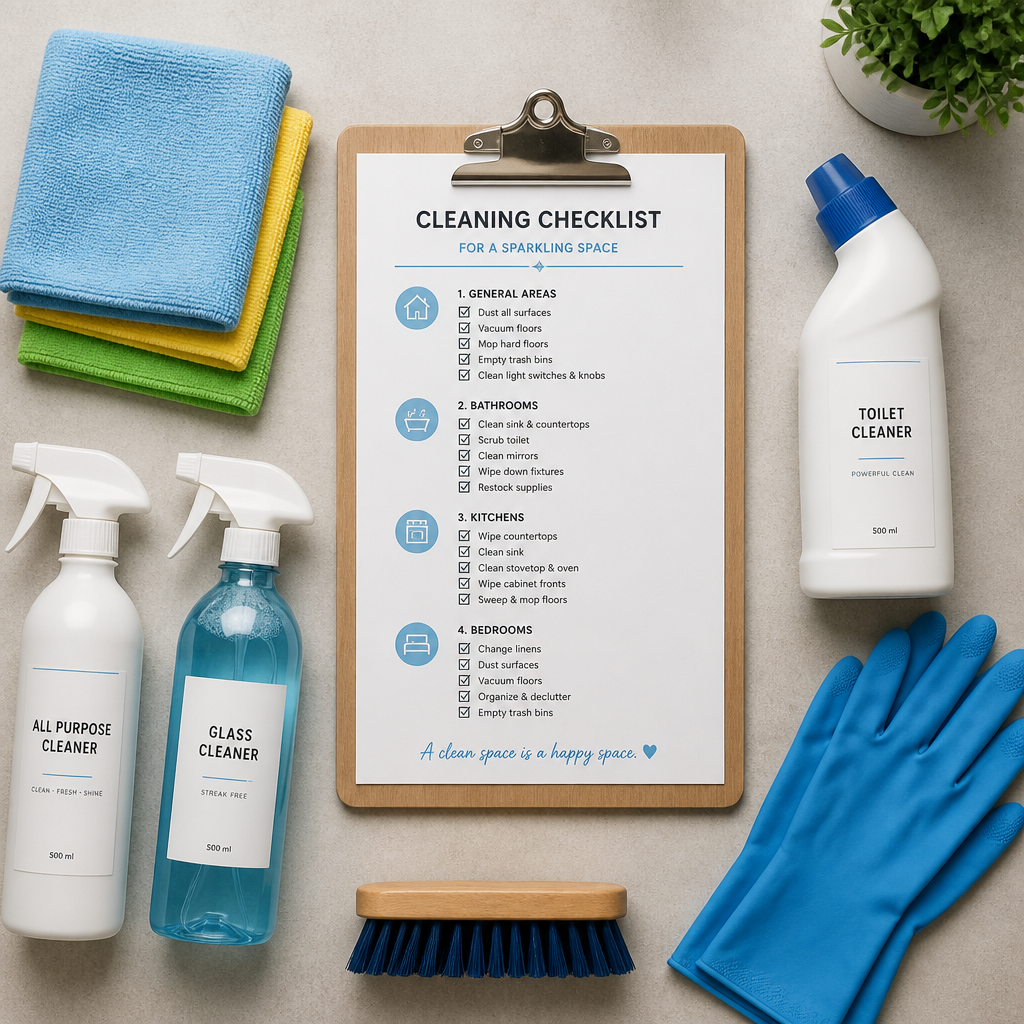
Pro tip: Before calling a cleaner, open your commercial space on a cold morning before any activity starts and take a full walk-through with fresh air in your lungs. What you detect in the first 30 seconds is what your clients and visitors detect every single time they arrive.
Sign 2: A Spike in Employee Sick Days
If your team’s absence rate has crept up and you cannot point to a clear external cause, your workspace environment deserves serious scrutiny. High-touch surfaces in shared offices, including keyboards, door handles, light switches, meeting room remotes, and shared printers, are vectors for bacterial and viral transmission that a standard wipe-down cannot adequately address.
This is not alarmist. It is practical. Standard commercial cleaning schedules typically involve surface wiping of visible areas. They do not include thorough disinfection of every shared touchpoint, sanitisation of upholstered chairs, or treatment of air handling units where mould and allergens can accumulate. A deep clean addresses all of this systematically.
What a Deep Disinfection Actually Covers
A proper commercial deep clean for a Christchurch or Auckland office includes disinfection of all high-contact surfaces using appropriate sanitising products, vacuuming and treatment of soft furnishings, cleaning of air vent grilles and return air points, and thorough attention to shared amenity areas. These are the zones that drive respiratory issues and contagious illness transmission in enclosed work environments.
If your team works in a healthcare facility, school, or high-density retail space, the stakes are even higher. These environments carry elevated contamination risk by nature, and deep cleaning schedules should reflect that. Triple Star’s work across medical centres and schools in Christchurch and Auckland is built around exactly this kind of systematic sanitisation approach, not just a surface-level tidy.
A workspace that looks clean to the eye can still harbour significant bacterial loads on shared surfaces and in soft furnishings. Appearance and hygiene are not the same thing. Deep cleaning addresses hygiene, not just appearance.
Sign 3: Visible Stains, Grime, and Scuff Marks
This one sounds obvious, but it is remarkable how quickly commercial spaces normalise visible grime. When you walk the same hallways and reception areas every day, you stop seeing what visitors see the moment they step through the door. Take a deliberate, critical look at your space through a stranger’s eyes.
Check skirting boards, the corners of tiled floors, the edges of lift doors, and the lower panels of glass partitions. Look at chair bases, under desks, and around the feet of furniture. Grime concentrates at edges and in overlooked geometry. If you find it, your regular cleaner is not reaching it, and it has been accumulating for longer than you think.
Why Stains on Carpet and Hard Flooring Matter Beyond Aesthetics
Stained carpets and scuffed hard floors in lobbies and corridors send a specific message to clients and visitors: that your standards of upkeep are low. That impression extends to your products, your service, and your professionalism. It is not fair, but it is how human perception works. A professional deep clean that includes carpet extraction and floor refinishing restores the first impression your space makes, which is one of the highest-return investments a business can make in its physical environment.
Sign 4: Dust Buildup in Overlooked Areas
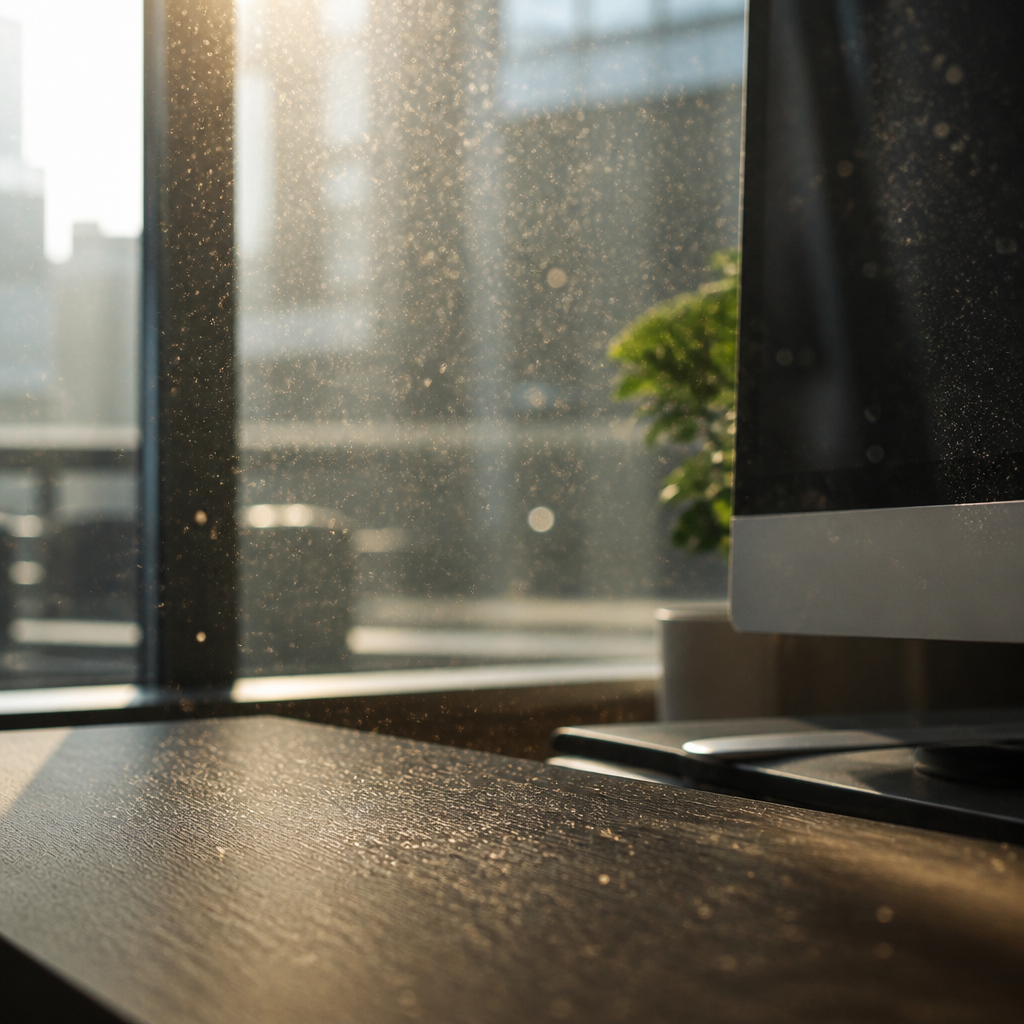
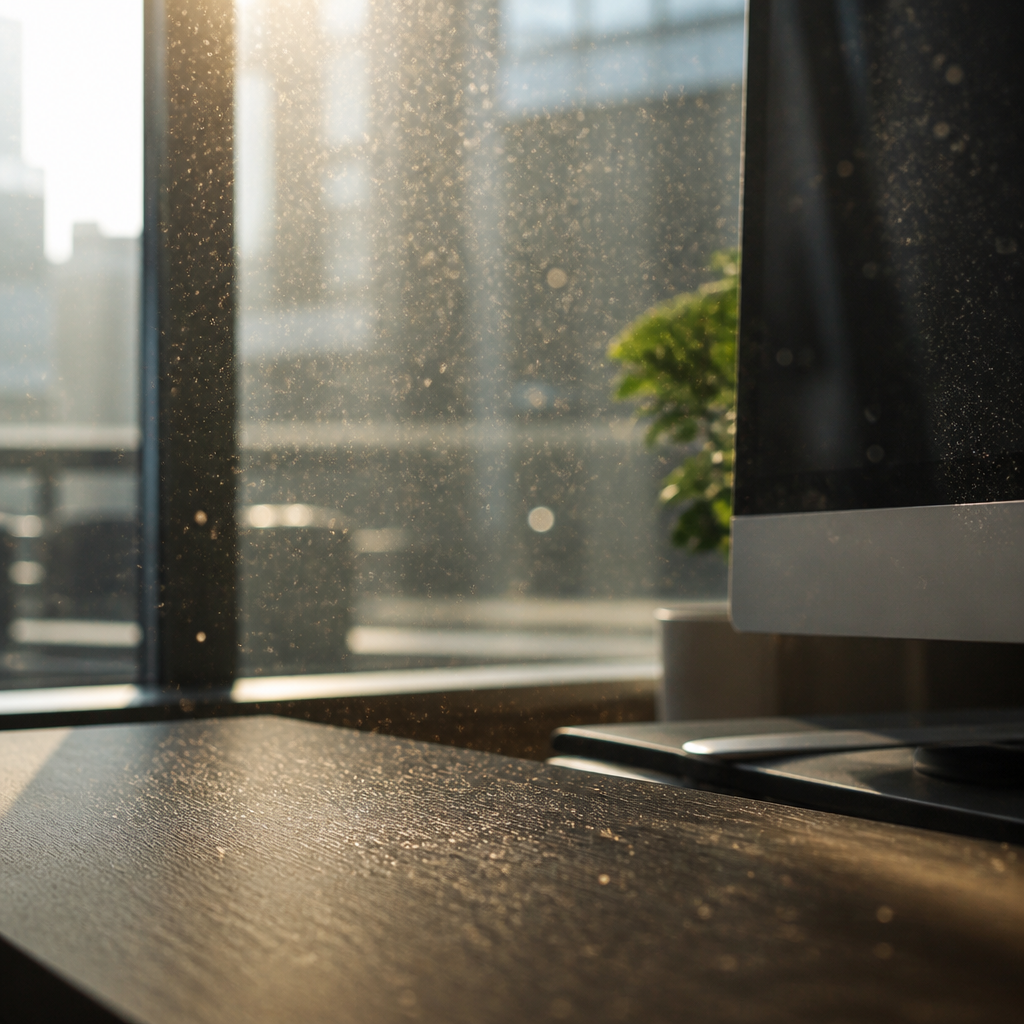
Run your finger along the top of a door frame, behind a monitor, or across the top of a filing cabinet. What you find is instructive. Visible dust on accessible surfaces means significant dust accumulation in the areas your regular cleaner does not reach: inside air conditioning vents, on light fittings, on top of ceiling-height storage, behind server racks, and on window blind slats.
Fine dust particles are a direct respiratory irritant, particularly for employees with asthma or allergies, which are common in both Christchurch and Auckland. Beyond health, dust accumulation on electrical equipment is a fire risk, and dust in HVAC systems gets recirculated through your entire workspace every time the system runs.
Pro tip: If your regular cleaner’s scope of work does not explicitly list air vent cleaning, blind cleaning, and high-surface dusting on a scheduled basis, those areas are almost certainly not being cleaned. A deep clean is the reset that gets those zones back to baseline before a proper ongoing maintenance plan can take over.
Sign 5: Clients or Visitors Have Made Comments
This is the most uncomfortable sign on the list, because it means the problem has already reached an external audience. Whether someone mentioned restroom cleanliness, noticed a smell in your reception area, or made an offhand comment about your carpet, the fact that they said something means others have noticed and stayed silent.
Client-facing comments about cleanliness are not minor feedback. They represent a credibility problem. A business that cannot maintain its own physical environment creates doubt about whether it can maintain standards in its core work. The fix is not a conversation with your current cleaner. It is a full professional deep clean followed by a review of your ongoing cleaning scope and frequency.
Sign 6: Your Restrooms Are Failing the Sniff Test
Commercial restrooms in high-use buildings accumulate scale, bacteria, and odour-causing organic matter in areas that are structurally difficult to clean: under toilet rims, inside cisterns, around floor-to-wall junctions, inside extractor fan housings, and behind fixtures. Standard daily cleaning maintains surface appearance but rarely addresses these zones with the depth they require.
When a restroom smells unpleasant despite daily servicing, the issue is almost always embedded contamination in one or more of these hard-to-reach areas. A deep clean treats the restroom comprehensively, including descaling of fittings, grout cleaning and sanitisation, and complete disinfection of every surface, including those behind and under fixtures.
For Christchurch and Auckland businesses in the healthcare, hospitality, or retail sectors, restroom hygiene is not a peripheral concern. It is a direct reflection of your business’s hygiene standards, and clients will make that connection without prompting.
Sign 7: Carpets and Upholstery Look Dull or Matted
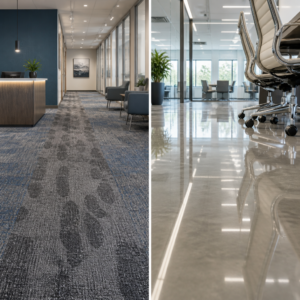
Office carpets in high-traffic zones flatten and discolour over time. Vacuuming maintains surface cleanliness but does nothing for the embedded particulate matter, oils, and biological material that sits deep in the pile. Once carpet reaches the point where it looks dull or matted regardless of recent vacuuming, it needs hot water extraction or another deep cleaning method to restore it properly.
The same applies to upholstered chairs in meeting rooms and breakout areas. Fabric seating absorbs skin oils, food particles, and airborne dust, and a standard wipe-down does not remove what has embedded itself in the weave. Professional upholstery cleaning uses extraction methods that pull contamination out of the fabric rather than redistributing it across the surface.
Triple Star provides dedicated carpet and upholstery cleaning services across Christchurch and Auckland for exactly this reason. A well-maintained carpet that is periodically deep cleaned will last significantly longer than one that receives only vacuuming. The cost of periodic deep cleaning is a fraction of early carpet replacement.
Sign 8: Post-Construction Dust and Residue Is Still Present
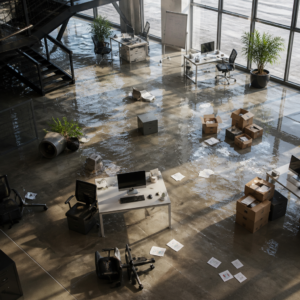
If your business has recently completed a fit-out, renovation, or new construction, and regular cleaning has already started, there is a high probability that construction residue remains in your space. Builders dust is not ordinary dust. It is fine, heavy, and pervasive, settling into every horizontal surface, inside every duct, and on every piece of equipment that was not perfectly sealed during the build.
Standard commercial cleaning equipment is not designed to handle post-construction residue. It requires specialist builders cleaning with industrial vacuums, HEPA filtration, and appropriate surface treatment for different materials including glass, raw concrete, timber, and painted surfaces. Starting a regular cleaning schedule on top of an uncleaned post-construction environment means your regular cleaners are fighting residue that should have been removed in a dedicated initial clean.
Triple Star provides post-construction and builders cleaning in both Christchurch and Auckland, working with construction companies and property developers to ensure new or refurbished spaces are properly cleaned before handover or occupation. This is not a service where cutting corners makes sense, because construction dust causes equipment damage, health issues, and a poor first impression on day one of operation.
Sign 9: Hard Floor Surfaces Are Dull, Stained, or Sticky
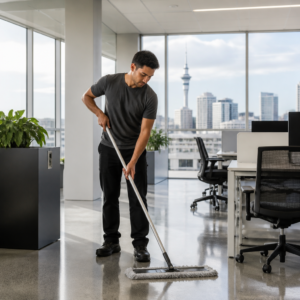
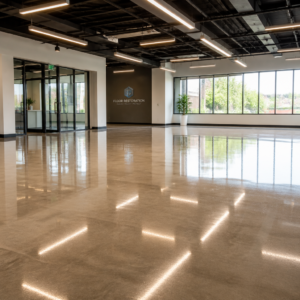
Hard floor surfaces, including vinyl, polished concrete, tiles, and sealed timber, have a finite lifespan on their protective coating. When that coating becomes worn, the floor loses its reflectivity, becomes harder to clean, and starts to pick up stains that resist mopping. If your floors look dull regardless of how recently they were mopped, or feel tacky underfoot, the surface coating has broken down and needs professional attention.
Floor stripping and resealing is the correct intervention. This is not a job for a standard commercial cleaner with a mop. It requires stripping the existing coat, preparing the surface, and applying fresh sealant in appropriate conditions. Once the floor is resealed, regular maintenance mopping becomes effective again, and the floor’s lifespan is extended substantially.
For Christchurch and Auckland businesses with high-traffic hard floor areas, including retail stores, schools, medical facilities, and warehouses, periodic floor stripping and sealing is a maintenance requirement, not an optional upgrade.
Sign 10: You Have an End of Lease Inspection Coming Up
This one has a deadline, which concentrates the mind. End of lease cleaning in New Zealand is held to a specific standard by property managers and landlords. The general expectation is that the property is returned in the same condition as it was at the start of the tenancy, normal fair wear and tear excepted. A professional deep clean is the only way to reliably meet that standard, particularly in a commercial space that has been in active use for one, two, or five or more years.
Common failure points in end of lease inspections include oven and kitchen equipment residue, bathroom grout and fixture scale, carpet staining, window cleaning, and floor condition. Each of these is addressed in a thorough professional end of lease clean. Attempting to manage this with an internal team or a basic domestic cleaner is a false economy. Bond deductions for inadequate cleaning consistently cost more than a proper professional clean would have.
Triple Star handles end of lease cleaning for commercial tenants, residential properties, and body corporates across Christchurch and Auckland, and works with real estate agencies and property managers who need a reliable, insured cleaning provider at end of tenancy.
Deep Clean vs. Regular Clean: What Is Actually Different
The distinction between a regular commercial clean and a professional deep clean is not just about time spent. It is about scope, method, and access. Regular cleaning maintains what is already reasonably clean. Deep cleaning resets a space that has accumulated grime, bacteria, or embedded contamination beyond what regular cleaning can address.
| Cleaning Type | What It Covers | Best Used For |
|---|---|---|
| Regular Commercial Cleaning | Surface wiping, vacuuming, rubbish removal, restroom servicing, kitchen bench wipe-down. Maintains visible cleanliness in already-clean spaces. | Ongoing weekly or daily maintenance of clean commercial spaces. |
| Professional Deep Clean | Carpet extraction, upholstery cleaning, high-surface and vent dusting, grout scrubbing, disinfection of all touchpoints, behind and under fixtures, window cleaning. Resets spaces with accumulated grime. | Post-construction, pre-occupation, end of lease, quarterly resets, or spaces with visible deterioration in cleanliness. |
| Specialist Floor Treatment | Stripping of existing sealant, surface preparation, and application of fresh floor coating. Restores protective layer on hard floors. | Commercial floors showing dullness, staining, or tackiness that does not respond to mopping. Schools, retail, medical, and industrial facilities. |
In practice, most Christchurch and Auckland businesses need a professional deep clean at least once or twice a year, on top of their regular cleaning schedule. High-traffic environments like retail stores, medical centres, and schools may require quarterly deep cleans. The frequency depends on footfall, the nature of the business, and the standards your clients and regulatory obligations require.
For businesses that have not scheduled a deep clean in the past 12 months, the answer to “do we need one?” is almost always yes. The question is just how urgently.
Frequently Asked Questions
How long does a professional commercial deep clean take for an Auckland or Christchurch office?
The duration depends on the size of the space and the scope of work required. A small office under 200 square metres might take four to six hours. A larger commercial space or one with significant build-up, carpet extraction, and floor treatment could take a full day or require work across multiple sessions. A reputable cleaning company will inspect the space first and give you a realistic timeframe before the job starts.
How often should a commercial space in New Zealand have a professional deep clean?
For most Christchurch and Auckland commercial spaces, a professional deep clean every six to twelve months is a reasonable baseline alongside regular maintenance cleaning. Higher-traffic environments like retail stores, medical centres, schools, and hospitality venues typically need deep cleaning quarterly. Post-construction spaces and end of lease properties need a dedicated deep clean regardless of the regular cleaning schedule.
What is the difference between builders cleaning and a standard commercial deep clean?
Builders cleaning, sometimes called post-construction cleaning, is a specialist service designed to remove construction dust, adhesive residue, paint splatter, silicone smears, and protective film from all surfaces after a build or renovation. It requires different equipment and techniques from a standard commercial deep clean. Standard deep cleaning is not an adequate substitute for a post-construction clean, because construction residue requires industrial-grade vacuuming and specific surface treatments that general commercial cleaning equipment is not designed to handle.
Does Triple Star Commercial Cleaning provide deep cleaning services for both Christchurch and Auckland?
Yes. Triple Star Commercial Cleaning operates across both Christchurch and Auckland, providing deep cleaning services including commercial deep cleans, carpet and upholstery cleaning, post-construction cleaning, floor stripping and sealing, window cleaning, and end of lease cleaning. All sites are covered by public liability insurance, and Triple Star is an UpstreamNZ approved supplier.
Can a professional deep clean help reduce employee sick days?
Yes, and this is one of the most direct practical arguments for scheduling deep cleaning regularly. High-touch surfaces in shared workspaces accumulate bacterial and viral loads that standard cleaning does not adequately reduce. A comprehensive deep clean with proper disinfection of shared surfaces, air vents, and soft furnishings lowers the pathogen load in the environment. For businesses that have noticed an uptick in sick leave, a deep clean is a productive first step alongside reviewing ventilation and hand hygiene.
Is end of lease cleaning in New Zealand a legal requirement for commercial tenants?
The legal framework governing commercial leases in New Zealand varies by the terms of the individual lease agreement. Most commercial leases include an obligation to return the premises in a clean condition comparable to the start of the tenancy. Failure to meet this standard can result in bond deductions or claims against the tenant. A professional end of lease clean, with documentation, is the safest way to demonstrate that the obligation has been fulfilled and to protect against disputed deductions.
Have you recently noticed any of these signs in your Christchurch or Auckland workspace? Share what prompted you to schedule a professional deep clean, or what put you off doing it sooner.
References
- Five signs your business needs a professional deep clean, covering odours, employee illness, and visible grime indicators
- Commercial deep cleaning indicators including carpet staining, dust buildup, and client-facing cleanliness standards
- Office deep clean warning signs including air quality, high-touch surface contamination, and visible dust accumulation