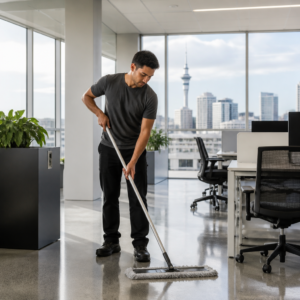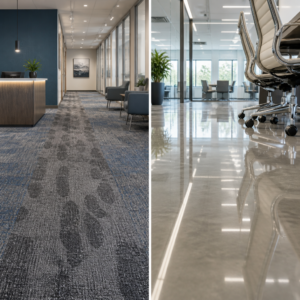
Most construction projects run over budget, over time, or both. The one thing that should not also go wrong is the final handover clean. Yet builders cleaning NZ is consistently underplanned, underbudgeted, and started too late. The result is a delayed practical completion date, a frustrated client, and a site that fails its final inspection because plaster dust is still sitting in the HVAC vents and paint smears are still visible on the glazing. This guide covers everything that construction companies, project managers, property managers, and building owners in Christchurch and Auckland need to know about post-construction cleaning, from the three cleaning stages through to how to choose a provider who will not cause problems on handover day.
Table of Contents
- Quick Takeaways
- What Is Builders Cleaning and How Is It Different from Regular Commercial Cleaning
- The Three Stages of a Proper Builders Clean
- Silica Dust and Health Risks on NZ Construction Sites
- What a Complete Post-Construction Clean Should Cover
- Post-Construction Cleaning in Christchurch and Auckland: What Differs Between the Two Markets
- Comparing Approaches: DIY, General Cleaner, and Specialist Builders Cleaner
- Timing Your Builders Clean Around the Build Programme
- What to Look for When Choosing a Builders Cleaning Provider in NZ
- Frequently Asked Questions
- References
Quick Takeaways
| Key Insight | Explanation |
|---|---|
| Builders cleaning is a specialist service, not a deep clean | It requires industrial HEPA vacuums, construction-specific chemical products, and trained technicians. A standard commercial cleaning team does not have the right equipment for this work. |
| Post-construction cleaning is a three-stage process | Rough clean, detail clean, and final sparkle clean each serve a different purpose and must happen at different points in the build programme. Skipping a stage causes rework and delays. |
| Silica dust is a regulated health hazard under NZ law | WorkSafe New Zealand identifies respirable crystalline silica as a known cause of silicosis, a progressive and potentially fatal lung disease. Post-construction cleaning using proper HEPA filtration directly supports your Health and Safety at Work Act 2015 obligations. |
| Timing the clean incorrectly is the most common mistake on NZ sites | Starting the detail clean before all trades have finished means the site gets dirty again. Starting it too late pushes out your handover date. The clean must be sequenced within your project programme, not bolted on at the end. |
| Handover documentation protects all parties | A signed-off cleaning checklist at practical completion protects the builder, the client, and the cleaning company from disputes after handover. Insist on it regardless of project size. |
| Price-only selection is a risk on construction projects | Cheap providers who use domestic vacuum cleaners and standard mops will not remove fine construction dust from vents, reveals, and surfaces. You will pay twice when the client flags the defects. |
| Public liability insurance is non-negotiable | Builders cleaning involves working on new surfaces, glazing, and joinery that can be damaged. Your cleaning provider must carry public liability insurance and you should verify this before any work starts. |
What Is Builders Cleaning and How Is It Different from Regular Commercial Cleaning
Builders cleaning, also called post-construction cleaning or a construction site clean, is the specialist cleaning process carried out once building, renovation, or fit-out work is complete. It is not a regular office clean with extra effort applied. It is a different service category that uses different equipment, different chemical products, and a structured multi-stage approach that matches the build programme.
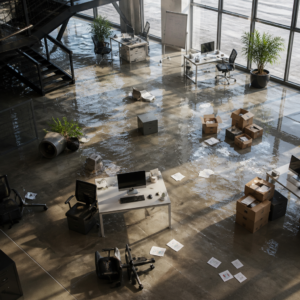
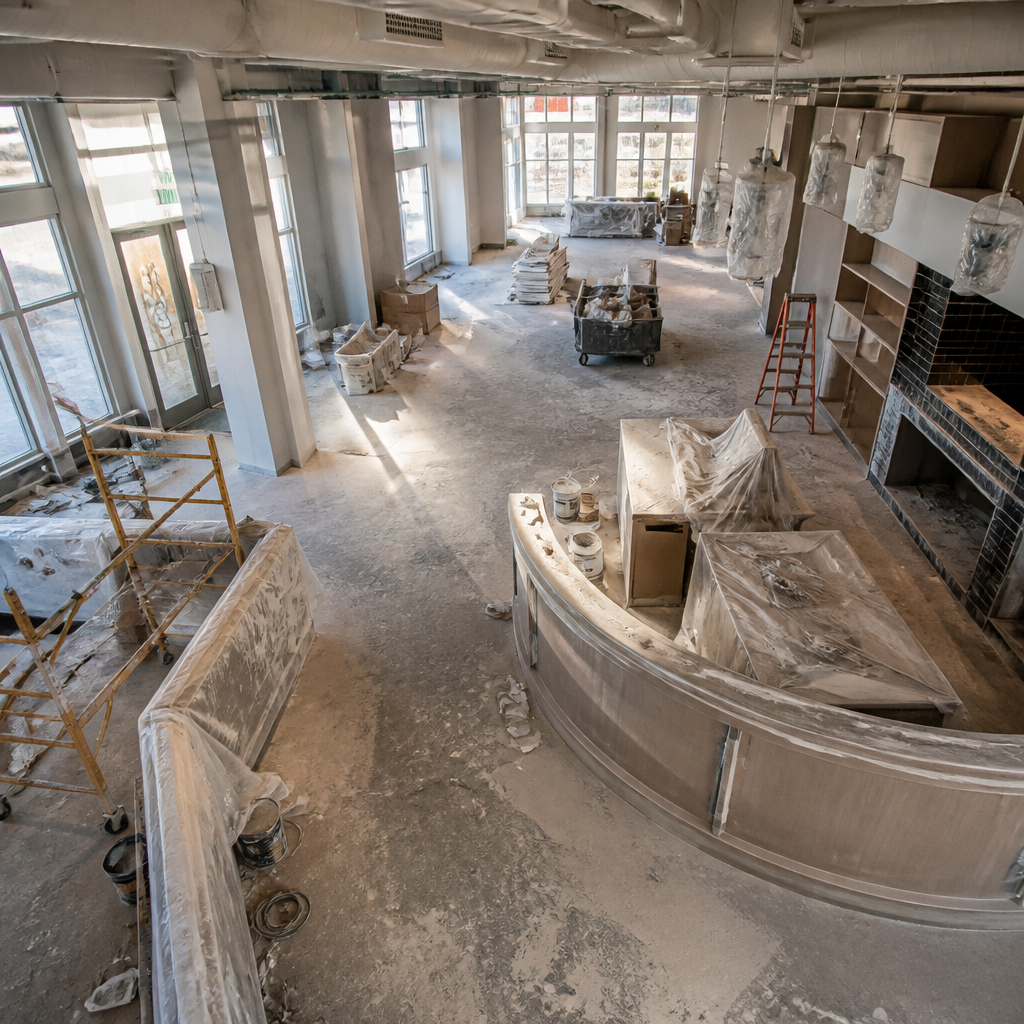
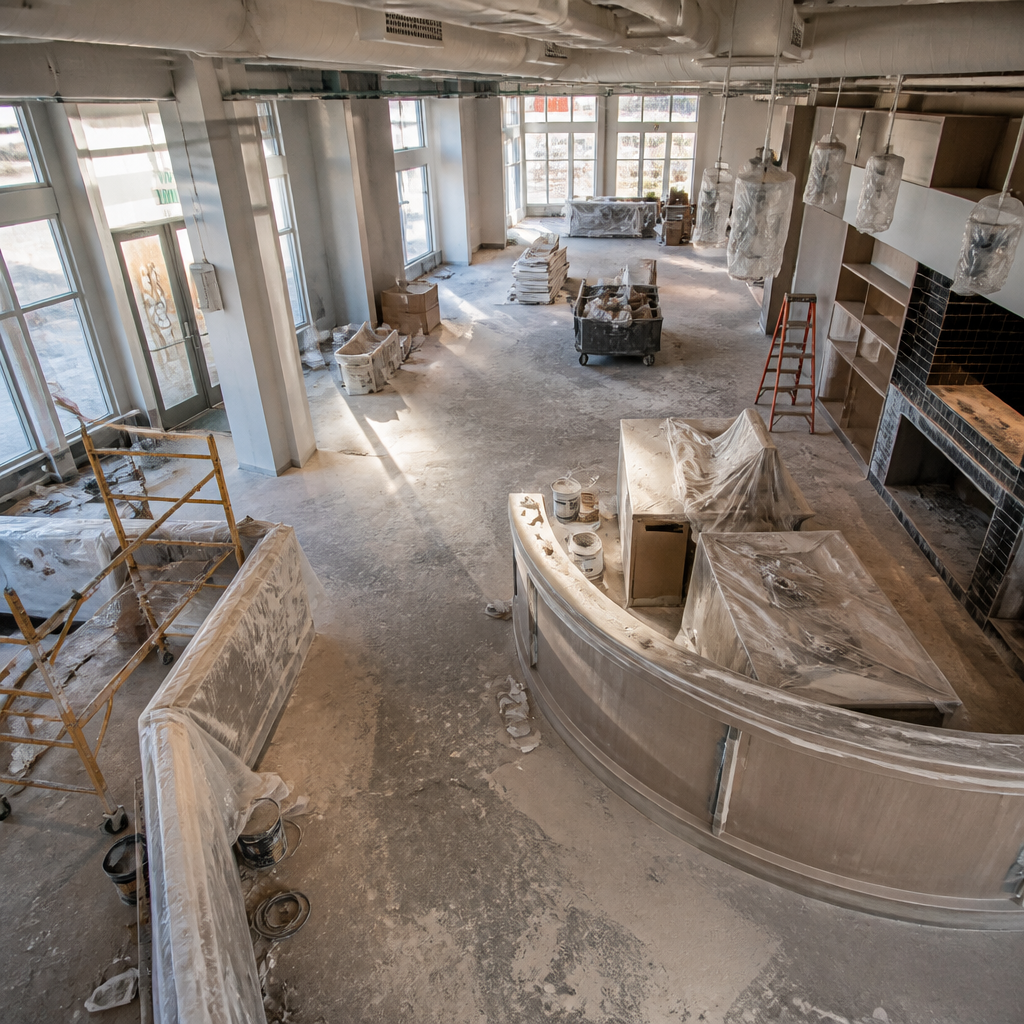
A standard commercial cleaning team cleans occupied spaces. Builders cleaning teams clean spaces that have just been through construction. The contamination is fundamentally different. Fine gypsum dust from plasterboard, paint overspray on glazing, silicone smears on tiles, adhesive residue on joinery, protective film on appliances, concrete splatter on paths, and construction debris in every corner – none of this responds to a mop and standard detergent.
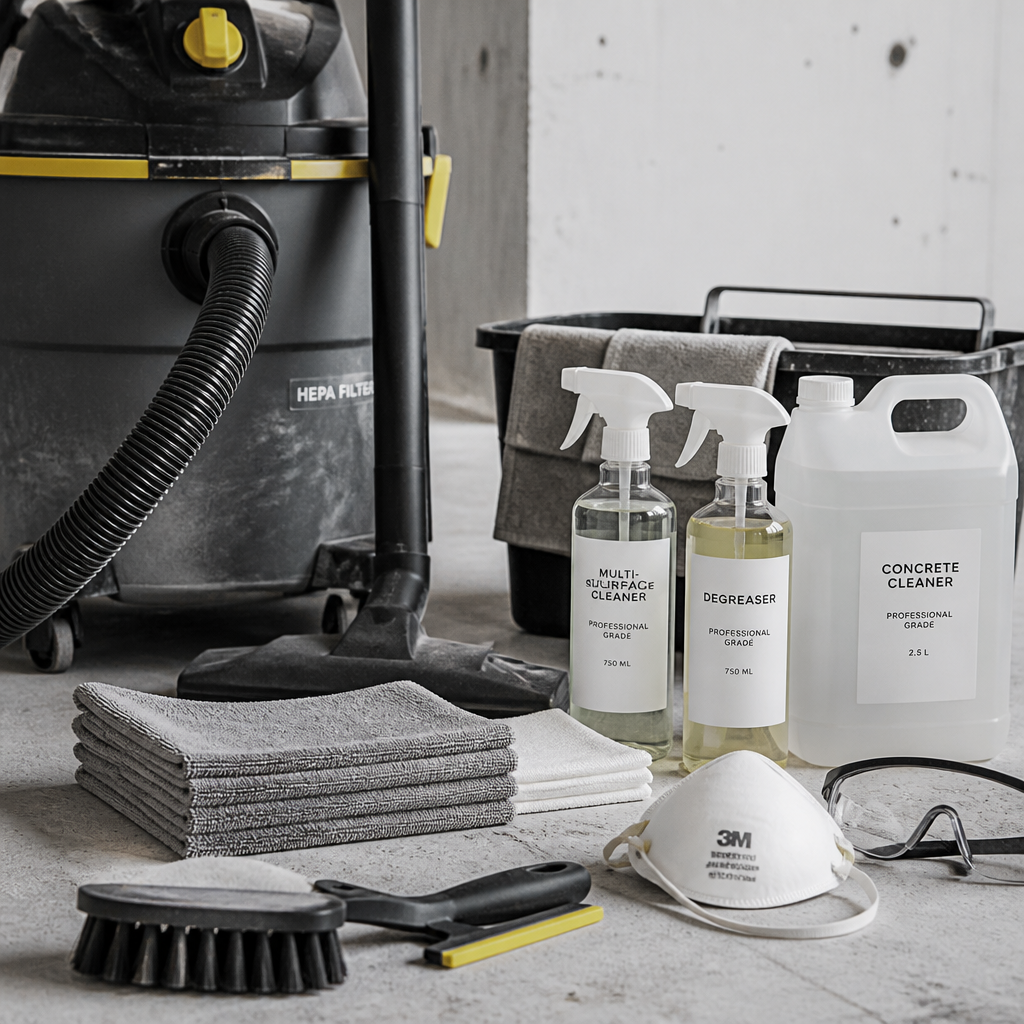
The key equipment difference is the vacuum system. Construction dust is fine enough to pass straight through domestic and standard commercial vacuum filters, which means it gets redistributed rather than removed. Industrial HEPA vacuum systems capture fine particulate matter including respirable dust, which matters both for air quality and for surface cleanliness. No HEPA system means no proper builders clean, regardless of what the provider claims on their website.
A builders clean is not the same as a deep clean. It is the last step between “built” and “done” – a process that requires specialist equipment, trained technicians, and a structured approach tied to the construction programme.
At Triple Star Commercial Cleaning, builders cleaning is a dedicated service for construction companies, project managers, developers, and property managers across Christchurch and Auckland. It is covered by public liability insurance and delivered by teams trained specifically for post-construction environments.
The Three Stages of a Proper Builders Clean
A properly structured post-construction clean in New Zealand follows three distinct stages. Each stage aligns with a specific milestone in the build programme. Treating all three as one event is what causes problems on large commercial, school, or apartment projects.
Stage 1: Rough Clean
The rough clean happens after the structural trades have finished but before the finishing trades begin their work. At this stage, the site is cleared of bulk construction debris: timber offcuts, packaging, plasterboard offcuts, rubble, and excess materials. Large debris is removed, initial sweeping and vacuuming is done, and the site is made safe and accessible for finishing trades such as painters, tilers, and flooring contractors.
The rough clean is not about presentation. It is about creating a usable workspace. Getting this right reduces the risk of finishing trades tracking debris across new flooring or contaminating new surfaces.
Stage 2: Detail Clean (Pre-Handover Clean)
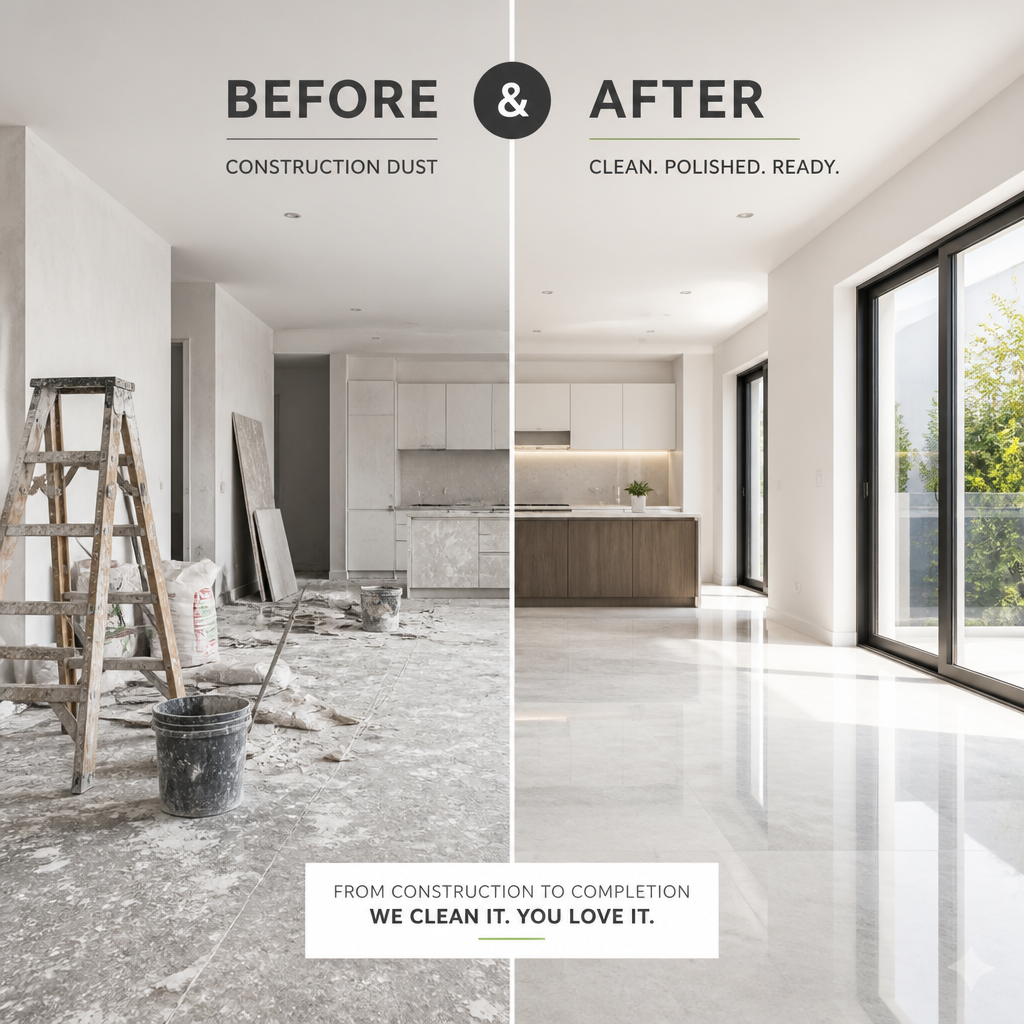
The detail clean is the most labour-intensive and technically demanding stage. It happens after all trades have left the site and before the final inspection. This is where industrial HEPA vacuuming is applied to every surface, including ceilings, walls, vents, cornices, skirting boards, window tracks, and floor cavities. Paint splatter is removed from glazing. Silicone smears are cleaned from tiles. Adhesive residue is removed from joinery and appliances. Protective film is peeled from windows, cabinetry, and appliances. Kitchens, bathrooms, and wet areas are fully detailed.
This stage takes the most time and is where unskilled teams create the most problems. Scratching new glazing, damaging new joinery finishes, or leaving adhesive residue behind because the wrong chemical was used are all common failures at this stage.
Stage 3: Sparkle Clean (Final Inspection Clean)
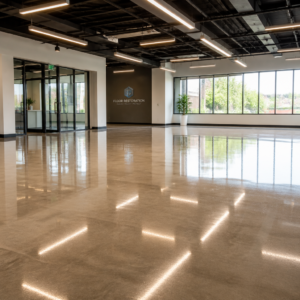
The sparkle clean happens immediately before the final inspection, photography, or client handover. It is a final pass to remove any dust that has resettled, buff surfaces to a presentation standard, and check against the handover checklist. On large projects, it may include checking each room against a room-by-room sign-off sheet.
Pro tip: On projects where the rough clean and detail clean are separated by more than a few weeks, budget for a second pass of HEPA vacuuming on hard floors before the sparkle clean. Dust settles continuously from exposed surfaces and joins between stages.
Silica Dust and Health Risks on NZ Construction Sites
Construction dust on a NZ building site is not just a cleanliness problem. It is a regulated health hazard. Respirable crystalline silica (RCS) is generated when concrete, brick, mortar, plasterboard, and fibre cement products are cut, drilled, ground, or disturbed. WorkSafe New Zealand describes silicosis as a “progressive and deadly” disease that causes fibrosis of the lungs from the inhalation of RCS dust.
The New Zealand Carcinogens Survey, whose findings were released in 2023, identified crystalline silica as a risk for builders, finding that 44% of the construction industry are exposed to RCS. As of August 2023, 190 claims had been lodged with ACC for assessment of accelerated silicosis. Under the Health and Safety at Work Act 2015, a person conducting a business or undertaking is legally required to eliminate or, where that is not reasonably practicable, minimise worker exposure to such risks.
Post-construction cleaning using industrial HEPA systems directly addresses this obligation. Sweeping or using standard vacuums on a site with RCS contamination redistributes the hazard rather than removing it. This is not a theoretical risk. It is a matter that WorkSafe takes seriously, and one that property owners, builders, and developers should understand before they decide how to handle the final clean.
Pro tip: When briefing a builders cleaning provider in NZ, ask them directly what filtration standard their vacuum systems use and whether their team is briefed on silica dust controls. A provider who cannot answer this question clearly is not equipped for post-construction work.
What a Complete Post-Construction Clean Should Cover
A thorough builders clean in New Zealand covers every surface inside and around the build. If a provider is not covering all of the following, the quote is not for a complete post-construction clean.
Interior Surfaces
All walls, ceilings, cornices, and architraves are vacuumed and wiped. Skirting boards, door frames, reveals, and window tracks are detailed. Light fittings, switches, and power points are cleaned. Vents and HVAC grilles are cleared of construction dust.
Glazing and Joinery
Interior and exterior windows are cleaned streak-free. Window frames are wiped down. Protective film is removed from all glazing, appliances, and joinery. Silicone smears are removed from tiled surfaces. Adhesive marks are removed from all surfaces.
Wet Areas and Kitchens
Bathrooms, kitchens, and laundries are fully detailed. Cabinetry inside and out is cleaned. Benchtops, sinks, taps, shower screens, and toilet suites are cleaned to a presentation standard. Grout lines are cleaned of any construction residue.
Floors
All hard floors are HEPA-vacuumed and then mopped or polished as appropriate for the floor type. New carpet is vacuumed with equipment that will not damage the pile. For commercial projects, floor sealing or floor stripping and sealing may form part of the post-construction scope.
Exterior Areas
Entry areas, driveways, concrete paths, and car parks are swept and blown clean. Concrete splatter is removed from paved surfaces. Rubbish and packaging are removed from site.
Post-Construction Cleaning in Christchurch and Auckland: What Differs Between the Two Markets
Triple Star Commercial Cleaning operates across both Christchurch and Auckland, and the two markets have genuinely different characteristics for post-construction cleaning work.
Christchurch Post-Construction Cleaning Context
Christchurch has seen substantial ongoing construction activity across commercial, residential, and community building categories since the rebuild following the 2010 and 2011 earthquakes. That sustained construction pipeline means post-construction cleaning in Christchurch tends to involve a higher proportion of new commercial builds, school rebuilds, and medical centre fit-outs. Project managers in Christchurch are generally familiar with multi-stage cleaning programmes and tend to plan the clean earlier in the build programme than their Auckland counterparts.
For construction companies working in Christchurch, the practical demand is for a provider who can flex around programme changes, handle large floor plates in a single mobilisation, and deliver a handover-ready result against a fixed date. Triple Star’s post-construction cleaning Christchurch service is built around exactly this requirement.
Auckland Post-Construction Cleaning Context
Auckland projects are typically larger in scale, more varied in building type, and subject to tighter programme pressure. High-rise residential developments, large office fit-outs, retail tenancy fit-outs, and major infrastructure projects all generate post-construction cleaning requirements that vary significantly in scope. Traffic and access logistics in Auckland also affect scheduling in ways that do not apply in Christchurch. A cleaning team that cannot mobilise to a central Auckland site during off-peak hours will add days to the schedule.
For post-construction cleaning Auckland projects, the ability to work across multiple floors simultaneously, provide a dedicated site supervisor, and operate outside standard business hours is what separates a capable provider from one that will cause programme delays.
Comparing Approaches: DIY, General Cleaner, and Specialist Builders Cleaner
There are three realistic options for handling post-construction cleaning on a NZ building project. Each has a different risk and cost profile. Here is a direct comparison.
| Approach | What It Involves | Risk for NZ Construction Projects |
|---|---|---|
| DIY (site crew or building staff) | Using the construction team or building staff to do the final clean with standard domestic or commercial equipment. No specialist products or HEPA systems. | High. Fine construction dust is redistributed rather than removed. New surfaces are at risk of scratching. Silica dust obligations are not met. Handover inspections frequently fail. You end up paying for a professional clean anyway, but later and under more time pressure. |
| General commercial cleaner | Engaging a standard commercial cleaning company that also offers post-construction cleaning as an add-on. Standard equipment, no construction-specific training. | Medium to high. Some may have HEPA vacuums but lack the experience to handle adhesive removal, silicone smears, or glazing without damage. Results are inconsistent. Often priced attractively but requires remedial work before handover. |
| Specialist builders cleaner (e.g., Triple Star Commercial Cleaning) | A provider with dedicated post-construction cleaning experience, industrial HEPA equipment, construction-specific products, site-safe practices, and public liability insurance. Operates across both Christchurch and Auckland. | Low. Correct equipment and chemicals for the task. Handover checklist process. Insurance coverage for new surfaces. Works to the build programme. First-time pass rate on final inspections is significantly higher. |
In practice, the cost difference between a general cleaner and a specialist builders cleaner is narrower than most project managers expect, particularly when you factor in the cost of remedial work, a delayed handover date, or a failed inspection. The risk-adjusted case for using a specialist is strong on any project above a small residential renovation.
Timing Your Builders Clean Around the Build Programme
Timing is where most post-construction cleaning in NZ goes wrong. The clean is treated as something to organise in the last week of the project rather than something that is sequenced into the programme from the start. This creates pressure, reduces options, and frequently results in a clean that happens at the wrong stage.
When to Book, Not Just When to Clean
Book your builders cleaning provider at the same time you finalise your finishing trades. Good builders cleaning companies in both Christchurch and Auckland carry demand across multiple projects. Calling a provider with three days’ notice and expecting a full team for a 2,000 sqm commercial fit-out is not a realistic expectation. Planning two to four weeks ahead gives you access to the best providers and allows them to align their team with your programme milestones.
The Sequencing Rule
The detail clean should not start until the last trade has left the site permanently. Any residual trade access after the detail clean begins defeats the purpose. The one exception is a staged project where floors or zones are being handed over progressively. In those cases, a phased cleaning programme, zone by zone, is the correct approach. This is standard practice for large apartment blocks, schools, and multi-tenancy commercial buildings.
Allow Time for Resettled Dust
After the detail clean is complete, airborne construction dust continues to settle for 24 to 48 hours. The sparkle clean should not happen immediately after the detail clean on a large project. Building in a gap of at least one day between the detail clean and the sparkle clean produces a materially better result at final inspection. This is a common oversight that adds cost and frustration when it is discovered the morning of handover.
Pro tip: For large-scale projects such as apartment blocks, schools, or medical centres in Christchurch or Auckland, request a phased cleaning programme in writing from your provider before work begins. This should show each cleaning stage, the floor or zone it applies to, and the planned date. It becomes part of your project programme and holds both parties accountable.
What to Look for When Choosing a Builders Cleaning Provider in NZ
Not every commercial cleaning company that lists builders cleaning on their website is equipped to deliver it properly. Here are the questions that separate capable providers from those who will create problems.
Public Liability Insurance
Ask for a copy of the certificate of currency before work starts. A builders cleaning team is working on new glazing, new joinery, and new flooring. If something is scratched or damaged, you need to know that the cleaning company has insurance to cover it. Triple Star Commercial Cleaning carries public liability insurance across all cleaning sites, which is a baseline requirement for any provider you engage.
HEPA-Rated Equipment
Ask specifically whether they use industrial HEPA-rated vacuum systems. If the answer is vague or they say they use “commercial vacuums,” that is not sufficient. The distinction matters for both surface cleanliness and for meeting your health and safety obligations around construction dust.
Construction Site Experience
A provider who cleans offices and homes five days a week and does builders cleans occasionally is not the same as a team that specialises in post-construction work. Ask how many post-construction projects they have completed in the last six months and what building types they typically work on. The answer will tell you quickly whether this is a core service or an add-on.
Handover Checklist Process
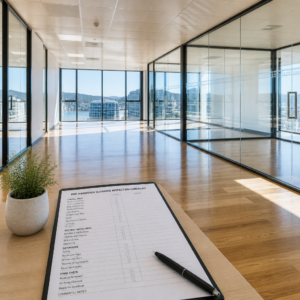
A professional builders cleaning provider will have a documented handover checklist. This is a room-by-room or zone-by-zone list that the team signs off on completion and that the client or project manager can use at the final inspection. If a provider does not have this process, they are not operating at the standard a construction project requires.
Christchurch and Auckland Coverage
For businesses and construction companies operating across both cities, having a single provider who covers both Christchurch and Auckland simplifies contract management, ensures consistent cleaning standards, and reduces the administrative overhead of managing multiple cleaning relationships. Triple Star Commercial Cleaning operates across both cities and works with construction companies, property managers, and developers who need consistent delivery in both markets.
Frequently Asked Questions
What is included in a builders clean in New Zealand?
A complete builders clean covers removal of construction dust and debris from all interior surfaces, HEPA vacuuming of all floors, walls, ceilings, vents, and joinery, removal of paint splatter from glazing, silicone smear removal from tiles, adhesive and protective film removal from windows and appliances, full detailing of kitchens, bathrooms, and wet areas, interior and exterior window cleaning, and a final walkthrough against a handover checklist. The exact scope varies by project type, build stage, and whether it is a rough clean, detail clean, or sparkle clean.
How much does post-construction cleaning cost in New Zealand?
Pricing varies significantly based on the size of the build, the number of stages required, the level of contamination, and the building type. For residential post-construction cleaning in Auckland, hourly rates typically range from around $55 to $85 per cleaner plus GST, with flat-fee packages available for standard residential builds. Commercial and large-scale projects are quoted on a site-specific basis. The most reliable approach is to request a quote from a specialist provider who has visited or reviewed the site before pricing the job.
What is the difference between a rough clean and a final clean?
A rough clean removes bulk construction debris and prepares the site for finishing trades. It is done before painters, tilers, and flooring contractors start their work. A final clean, also called a sparkle clean or handover clean, is the last clean before the client inspection or occupation. It removes all residual dust, details all surfaces, and brings the property to a presentation standard. Between these two stages sits the detail clean, which is the most labour-intensive phase and handles adhesive removal, glazing clean-up, and full surface detailing.
Do I need a specialist builders cleaning company or can a general cleaner do it?
You need a specialist. General commercial cleaners do not carry the industrial HEPA vacuum systems required to safely remove fine construction dust, including respirable crystalline silica, from surfaces and vents. They are also unlikely to have the construction-specific chemical products needed for adhesive removal, silicone cleaning, and paint splatter removal without damaging new surfaces. Using a general cleaner on a post-construction site produces inconsistent results and frequently requires remedial work before the client will sign off on handover.
When should I schedule the builders clean on my NZ construction project?
Book your builders cleaning provider at the same time you lock in your finishing trades, not in the final week of the project. The rough clean should be scheduled after structural trades complete and before finishing trades begin. The detail clean should be scheduled after all trades have permanently left the site. The sparkle clean should be scheduled 24 to 48 hours after the detail clean to allow airborne dust to settle, and immediately before the final inspection or client walkthrough.
Is builders cleaning covered by public liability insurance?
It should be, and you should verify this with your provider before work starts. Builders cleaning involves working on new glazing, joinery, appliances, and flooring that can be damaged by incorrect technique or chemicals. Your cleaning company’s public liability insurance is your protection if something goes wrong. Triple Star Commercial Cleaning carries public liability insurance across all cleaning sites as a baseline requirement. Always ask for a certificate of currency before allowing any cleaning team onto a newly completed site.
Does Triple Star Commercial Cleaning provide post-construction cleaning in both Christchurch and Auckland?
Yes. Triple Star Commercial Cleaning provides builders cleaning and post-construction cleaning services in both Christchurch and Auckland. The company works with construction companies, project managers, property managers, developers, and body corporates across both cities. You can request a quote directly through the Triple Star website or contact the team to discuss your project scope and programme requirements.
Have you recently managed a post-construction clean on a NZ building project? Share what worked, what did not, and any lessons you would pass on to others in the comments below.
References
- WorkSafe New Zealand guidance on silica dust in the workplace: risks, obligations, and controls for PCBUs
- BRANZ Level website overview of silica dust risks for the New Zealand construction industry, including ACC claims data
- HygieNZ post-construction and builders clean service overview covering what a handover-ready clean includes
- Builders clean Christchurch: what the service covers, equipment used, and stages of a post-construction clean
- Post-construction cleaning Auckland cost guide covering hourly rates, flat fees, and pricing factors