Ask three cleaning companies to quote the same Auckland office and you will probably get three numbers that look nothing alike. One comes in by the hour, one by the square metre, and one as a flat monthly fee that hides half the work. That gap is why so many business owners search for office cleaning cost auckland and then give up on comparing anything. This guide explains what drives the price of an office clean in Auckland, which pricing models are worth comparing, and how to write a brief that produces quotes you can actually use. We also show where published benchmarks can mislead you, because most of the public pricing data online comes from the United States.
Table of Contents
- Quick Takeaways
- What an Auckland Office Clean Actually Includes
- The Three Pricing Models You Will Be Quoted
- What Moves the Price Up or Down
- Reading Published Benchmarks Without Getting Fooled
- Comparing the Three Pricing Models Side by Side
- How to Ask for a Quote You Can Compare
- Budget Mistakes That Cost More Later
- Frequently Asked Questions
- References
Quick Takeaways
| Key Insight | Explanation |
|---|---|
| Compare scope before totals | Two quotes can differ by a wide margin because one includes consumables, rubbish removal and window cleaning and the other does not. Line up the inclusions first. |
| Convert every quote to one unit | Hourly, per square metre and monthly quotes cannot be compared directly. Convert them to an estimated monthly cost using the same frequency and task list. |
| Bathrooms and kitchens drive time | Wet areas, tea points and high-touch surfaces take longer than private offices, so a building with many of them costs more than its floor area suggests. |
| Treat US benchmarks as a sense check only | Published per square foot ranges are US dollar figures. Use them to test whether a quote is wildly out of line, not as a budget target. |
| Access rules change the labour bill | Early starts, locked floors, restricted lift access and shared building windows add crew hours. State them in the brief so the price reflects them. |
| Ask for insurance and approvals in writing | Every site should be covered by public liability insurance. A lower price from a provider without cover moves the risk back onto your building. |
What an Auckland Office Clean Actually Includes
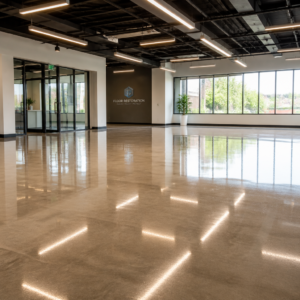
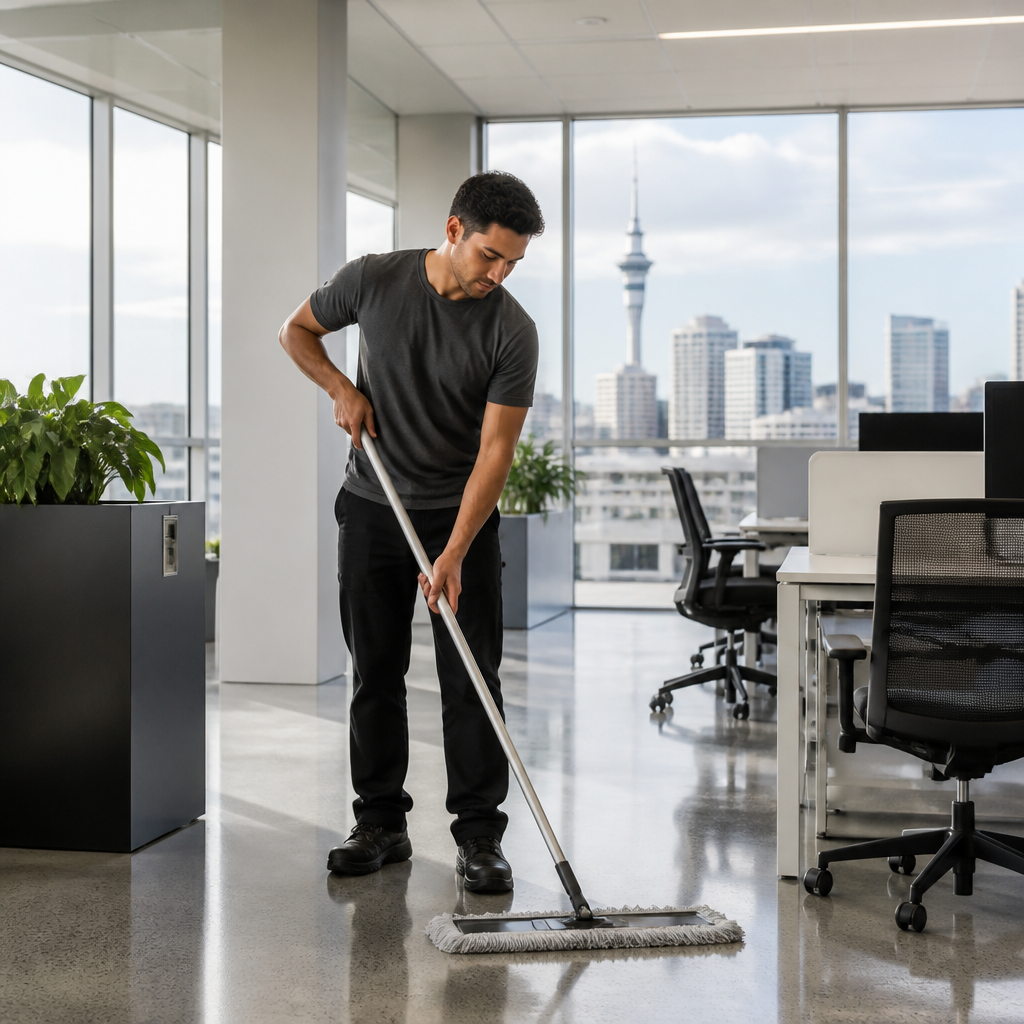
A standard office clean covers the work most people assume: emptying bins, vacuuming and mopping hard floors, wiping surfaces, cleaning kitchens and bathrooms, and tidying reception. The price depends far more on how the building is used than on the label “office”. A 40-desk open plan floor with a busy kitchen is a different job from a three-room professional suite with one toilet.
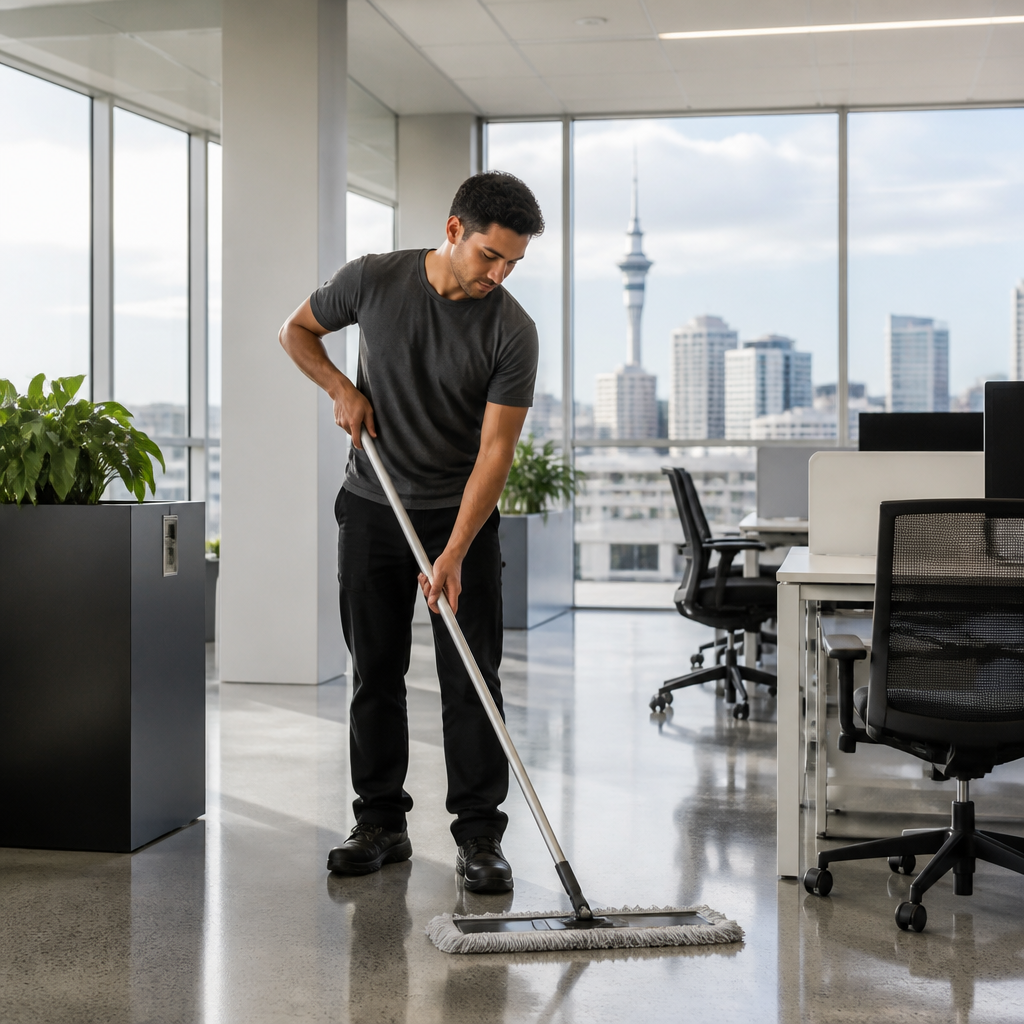
In practice, the tasks that eat the most time are rarely the ones at the top of the checklist. Bathrooms, kitchens and tea points take longer than offices because they need more wiping, more disinfecting and more attention to detail. Glass, skirting boards and high-touch points such as door handles, lift buttons and printer panels add minutes that are easy to miss when a quote is written from a phone call.
Auckland adds its own variables. Parking and access rules, after-hours windows in shared buildings, and lift bookings all change how long a crew spends on site. A multi-tenant floor that only opens to cleaners between 6pm and 8am will cost more per hour to clean than an owner-occupied building where keys are handed over at the door.
Scope also covers what is not inside the walls. Rubbish removal, recycling sorting, consumables such as toilet paper, hand soap and paper towel, and carpet extraction are often bundled or billed separately. Ask which of these appear in the price before you compare totals.
Pro tip: Walk the site with the provider, or send a floor plan with bathrooms, kitchens and high-traffic corridors marked. Quotes built from a plan are usually closer to the final invoice than quotes built from a description.
Make sure every quote states whether consumables are supplied, how rubbish and recycling are handled, and whether window cleaning is included. Those three line items can shift the total more than a small change in the hourly rate, and they are the first things to disappear from a low quote.
The Three Pricing Models You Will Be Quoted
Most Auckland office cleaning quotes come in one of three formats. Each one is legitimate, but they answer different questions, so you cannot compare them directly until you put them on the same basis.
Hourly labour rates
An hourly quote charges for crew time. The provider estimates how many hours the clean will take, then multiplies that by the hourly rate, sometimes with supplies and travel added. Hourly pricing suits sites where the workload changes from week to week, such as a building with irregular events or a clinic whose use shifts often.
The risk is that the hour estimate quietly becomes the whole budget. If the crew needs longer than quoted, the invoice grows, and a vague estimate gives you little protection. Ask for the estimated hours, the crew size and a cap on hours before work starts.
Per square metre rates
A per square metre rate multiplies the floor area by a unit price. It is simple to budget and easy to compare between providers, but it can hide the difference between an open floor and a floor full of small rooms, bathrooms and kitchenettes. Two offices of the same size can take very different amounts of time.
Use per square metre pricing only when the quote also states the cleaning frequency and the task list. Otherwise you are comparing a number without knowing what it buys. If your floor plan is in square feet, convert before comparing, since one square metre is about 10.76 square feet.
Fixed monthly scope contracts
A fixed monthly contract prices a defined schedule, for example nightly cleaning of named areas, weekly glass cleaning and a monthly deep task on a set list. The provider absorbs small variations, and you get a predictable invoice. This is the model most property managers prefer for multi-tenant buildings where the standard has to stay consistent across tenants.
The catch is the schedule itself. If the list is vague, the contract becomes an argument over what counts as “general cleaning”. A good contract attaches an itemised schedule and sets out how changes are priced when tenants move out, floors are added or the cleaning frequency changes.
What Moves the Price Up or Down
Three factors do most of the work in shaping an office cleaning quote: how big the space is, how often it is cleaned, and what the cleaning includes. The ISSA guide on commercial cleaning rates lists a similar set of variables, including building type and use, cleaning frequency, level of soil and condition, services included, and labour costs. That list matches what happens on site, although the weighting differs from building to building.
Floor area is only the starting point
Size matters, but it predicts price less well than most owners expect. Thumbtack’s US data shows average costs rising with space, from around $211 for spaces under 1,000 square feet to $834 for 4,000 to 5,000 square feet. Those are American averages, but the shape of the curve is useful. Cost climbs with space, though not in a straight line.
The cost per square metre is often higher on smaller sites because travel, setup and access time are spread across less floor. A 150 square metre suite with three bathrooms can cost more per square metre than a 1,500 square metre open floor with one kitchen. Always check whether a quote is pricing the room count or only the floor area.
Frequency changes the unit cost
ISSA notes that more frequent cleaning often lowers the per-square-foot rate because efficiency improves with routine service. That holds in general, but only up to a point. Nightly cleaning of a busy office is efficient because the crew knows the layout and the mess is predictable. A monthly clean of a building that is used every day is not cheaper per square metre, because the crew has to catch up on accumulated dirt first.
For most businesses the real question is not how often to clean the whole building but which areas need the higher frequency. Reception, kitchens and bathrooms usually justify more visits than private offices with little traffic. Splitting the schedule that way often saves more than moving the entire building to a cheaper frequency.
Service scope and hidden extras
Scope is where budgets quietly drift. ISSA lists trash removal, restroom sanitation, carpet cleaning, hard floor care, disinfection and window cleaning as services that change pricing sharply. Each one may appear as a separate line, a bundled rate, or an add-on that surfaces after the first invoice.
Pro tip: Ask for a scope table that marks each service as included, optional or excluded. A quote that only says “general cleaning” is asking you to accept the provider’s definition of the job.
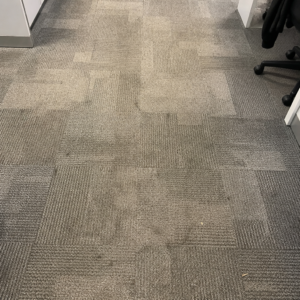
Carpet and upholstery work deserves its own line. Deep extraction needs different equipment, drying time and often a separate visit, so it rarely fits inside a standard nightly schedule. Price it separately so you can decide how often it is needed rather than paying for it by default.
Reading Published Benchmarks Without Getting Fooled
Published benchmarks are useful for sanity checks and close to useless as a budget. The ISSA guide, updated in December 2025, gives typical industry-wide ranges for general office cleaning of $0.09 to $0.17 per square foot, with medical facilities at $0.14 to $0.29 and retail at $0.07 to $0.15. Those figures are US dollars, and they describe a market with different wage rates, contract norms and building stock from Auckland.
Convert the number before you use it. At the ISSA office rates, $0.09 per square foot works out to about $0.97 per square metre, and $0.17 per square foot is about $1.83 per square metre. Treat those as a rough frame, then test them against local quotes rather than aiming for them.

Thumbtack’s page, last updated in March 2026, makes a similar point from another angle. Its national average for commercial cleaning runs from $161 to $402, with most people paying around $253, and its low and high figures run from $84 to $795. A spread that wide tells you the average hides more than it reveals. A single small suite is not comparable to a full floor in a multi-tenant building, even when both get the same label.
A common mistake is treating a benchmark as a ceiling. If your quote lands above the average, it may still be correct because the building has heavy traffic, complex access or a higher standard. Ask the provider to explain the difference in writing before you assume you are being overcharged.
Online discussions among people who price office cleaning show the same spread. Some posters quote hourly rates in the range of $35 to $50, while others describe per square foot rates that differ by an order of magnitude. Those numbers rarely include the scope behind them, which is exactly why the scope needs to come first in any comparison.
Comparing the Three Pricing Models Side by Side
The table below sets out where each pricing model tends to work and where it tends to fail. Use it to decide which format to request before you send out your brief.
| Pricing Model | Best Suited For | Main Risk |
|---|---|---|
| Hourly labour rate | Sites with irregular use, one-off jobs and buildings where access changes often | Hour estimates drift, so the final bill depends on how long the work actually takes |
| Per square metre rate | Standard offices with predictable layouts and a clearly written task list | Hides differences in bathrooms, kitchens and traffic, so similar floor areas can cost very differently |
| Fixed monthly scope contract | Multi-tenant buildings, medical centres and schools that need a consistent standard every week | A vague schedule leads to disputes over what counts as included |
As a rule, a site cleaned every night with a stable layout usually comes out ahead on a fixed monthly contract with an itemised schedule. A space used a few times a month, or one that needs occasional specialist work, usually does better on an hourly job with a capped estimate. Neither is cheaper in every case, and the choice should follow how the building is used.
The cheapest quote is only cheap if its scope matches what your building actually needs.
Whichever model you choose, insist that the provider shows the same frequency, task list and inclusions across every quote you collect. Without that, the table above cannot help you, because you will be comparing different jobs under the same heading.
How to Ask for a Quote You Can Compare
A useful quote starts with a useful brief. If you ask “how much to clean an office” you will get a number that means little. Providers can only price what they can see, so the quality of your brief decides the quality of the comparison.
What to put in your site brief
Include the floor area in square metres, the number of rooms, bathrooms, kitchens and tea points, the number of staff and their hours of occupation, and the cleaning frequency you want. Add access details such as keys, swipe cards, alarm codes, parking, and any limits on noise or working hours.
Attach photos or a marked floor plan. The provider can then see where the glass is, which areas are carpeted and whether there is a server room or specialist space. Quotes built from a plan rather than a phone call tend to match the final invoice more closely.
Questions to ask before you sign
Ask whether the price includes consumables, rubbish removal, recycling and window cleaning. Ask who supervises the work, how quality is checked and how the provider handles missed visits. Then ask how extra work requested mid-contract will be priced, because that answer decides whether the next change order is a conversation or an argument.
Check insurance and approvals before the start date. Every site should be covered by public liability insurance, and approvals such as UpstreamNZ supplier status should be confirmed in writing. A low quote from a provider without that cover moves the risk back onto your building.
Pro tip: Collect at least three quotes from the same brief, then compare the scope tables before the totals. If the totals differ widely, the scope table will usually explain the gap within a few minutes.
Budget Mistakes That Cost More Later
The most expensive office cleaning contract is often the cheapest one you signed without reading closely. A low monthly figure usually depends on a narrow scope, a lower standard, or a crew that cannot finish the job in the time allowed. Within a few months the extras stack up, and the real cost ends up above the quote you turned down.
Choosing the lowest number without a scope
When two quotes differ by a large margin, do not pick the lower one until you know what each includes. A common pattern is a cheap quote that leaves out bathroom consumables or kitchen cleaning, which tenants then raise as complaints. A simple side-by-side list of inclusions prevents most of these surprises.
Underestimating access and timing
A cleaning window that suits the crew can cost less than one that forces the crew to work around tenants. Early starts, late finishes, locked floors and restricted lift access all add labour time. If your building has these constraints, state them in the brief so the price reflects them from the start.
One-off jobs carry their own timing trap. Post-construction and end of lease cleans need far more time than routine visits, because dust, residue and paint marks sit on top of the normal workload. Pricing them at a regular clean rate underprices the job and usually creates a dispute at handover. Where a building has suffered water damage, flood restoration is a different job and should be quoted separately.
Budget for a deep clean once or twice a year on top of regular service. Carpet extraction, floor care and window work are much easier to schedule in advance than to rescue after a neglected year. A planned deep clean costs less than an emergency one, and it keeps the day-to-day contract focused on routine work.

Frequently Asked Questions
How much does office cleaning cost in Auckland?
There is no reliable public Auckland rate card, and most published benchmarks are US figures. The right number depends on floor area, room count, cleaning frequency and scope. Collect three quotes built from the same brief, then compare the scope before comparing the totals.
Is hourly or per square metre pricing cheaper?
Neither is cheaper in general. Hourly pricing suits irregular sites and one-off jobs, while per square metre pricing suits predictable layouts with a clear task list. The cheaper option is the one whose scope matches how your building is used.
Why do two offices of the same size get different quotes?
The usual causes are the number of bathrooms and kitchens, the amount of foot traffic, carpeted areas, access restrictions and cleaning frequency. Floor area alone rarely explains a gap of any size. Ask the providers to show their assumptions for each factor.
What should a written office cleaning quote include?
A written quote should include a scope table, the cleaning frequency, whether consumables are supplied, how rubbish and recycling are handled, how window cleaning is priced, who supervises the work, insurance details, cancellation terms and how extra work is charged. If any of these are missing, ask for them before you compare totals.
Does a higher cleaning frequency always cost more?
The total usually rises with frequency, but the cost per visit often falls for routine service because the crew knows the space. The efficient approach is to increase frequency for high-traffic areas such as reception, kitchens and bathrooms first, and leave low-traffic private offices on a lighter schedule.
What did your last office cleaning quote include that surprised you, and did the final invoice match the price you expected?