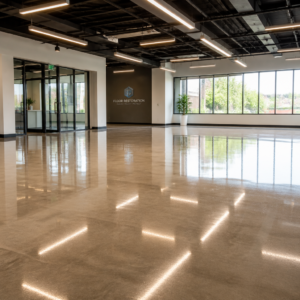
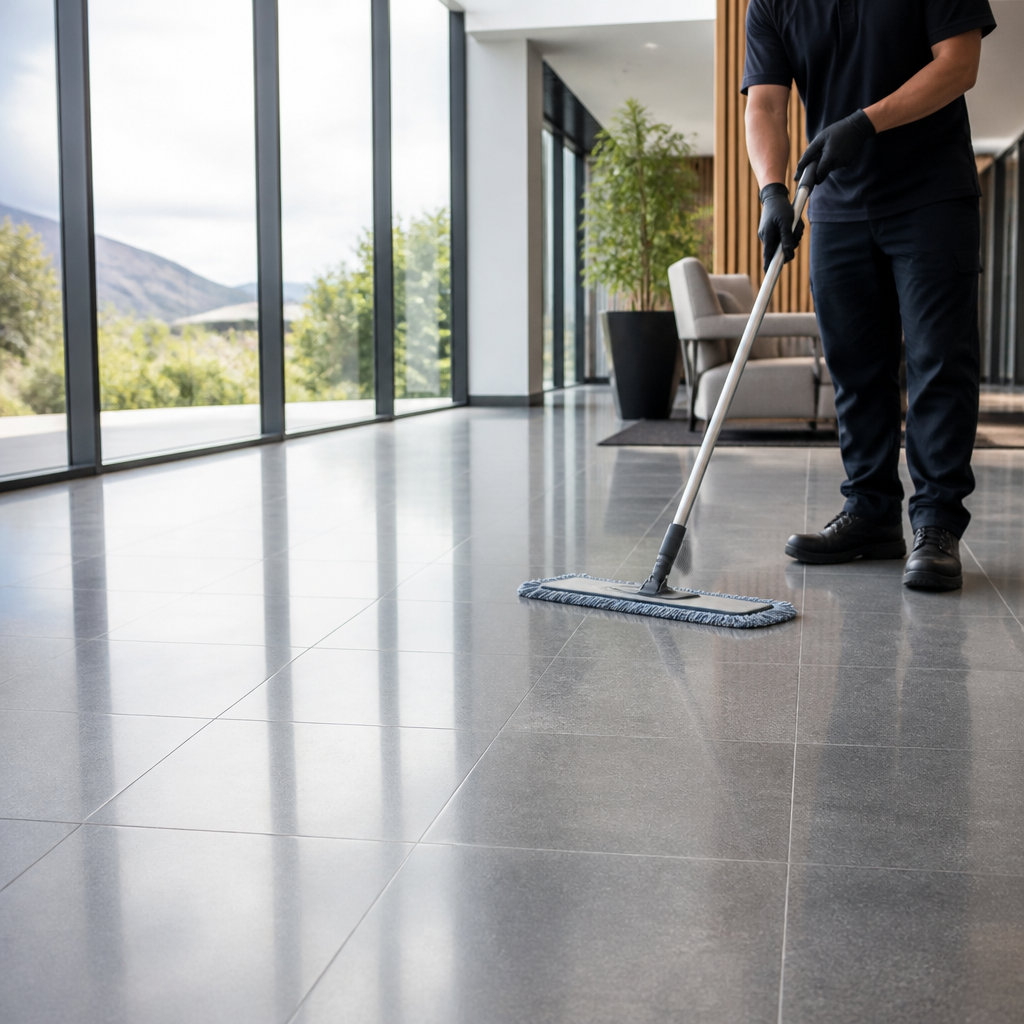
Most commercial hard floors do not fail dramatically. The finish wears away in the walking lanes, grit builds up at the entrances, and a few winters later the foyer tiles look grey however often they are mopped. For facility managers in Auckland and Christchurch, that slow decline is the real cost. A hard floor maintenance programme for commercial NZ buildings works when it is written into the annual calendar with clear frequencies and owners, rather than triggered by a complaint. This guide sets out what to schedule, when to schedule it across the New Zealand seasons, and where routine cleaning ends and restoration begins.
Table of Contents
- Quick Takeaways
- Why Hard Floors Need a Scheduled Programme
- Matching Floor Types to a Cleaning Schedule
- Building a Year-Round Floor Calendar
- Seasonal Timing in Christchurch and Auckland
- Stripping and Resealing on a Planned Cycle
- Comparing Maintenance Approaches
- Scheduling Around Occupied Buildings
- Frequently Asked Questions
- References
Quick Takeaways
| Key Insight | Explanation |
|---|---|
| Schedule by floor type, not by building | Vinyl, sealed concrete, tile and timber need different cleaners, tools and moisture levels. One floor-wide product schedule causes damage. |
| Grit at entrances is the main daily threat | Dirt and grit left at doors scratch finishes. Entrance matting and daily dust control protect the floor more than monthly stripping does. |
| Limit how long liquids and dirt sit on the surface | Spills should be wiped as they happen, because prolonged contact with dirt and liquid is what dulls and stains a finish. |
| Restoration is a planned cycle | Strip and reseal when wear is visible in the traffic lanes, and book the work into a low-occupancy window rather than waiting for a complaint. |
| Winter and wet weather change the schedule | Cold, damp weather in Christchurch and wet spells in Auckland bring more grit and moisture inside, so entrance cleaning frequency should rise for those months. |
| Book summer and holiday windows early | Late October is the time to lock in December and January works before shutdowns and busy periods fill the contractor calendar. |
| Write the programme down | A one-page schedule listing task, frequency, owner and sign-off makes the programme auditable and easy to hand to a new facility manager. |
Why Hard Floors Need a Scheduled Programme
Facility managers usually notice hard floors when something goes wrong: a slip complaint, a patch of dull tiles near the lift, or a tenant asking why the lobby looks tired. By then the damage has already built up. Grit has worn through the finish in the walking lanes, and the cleaning crew has been using a stronger product to compensate.
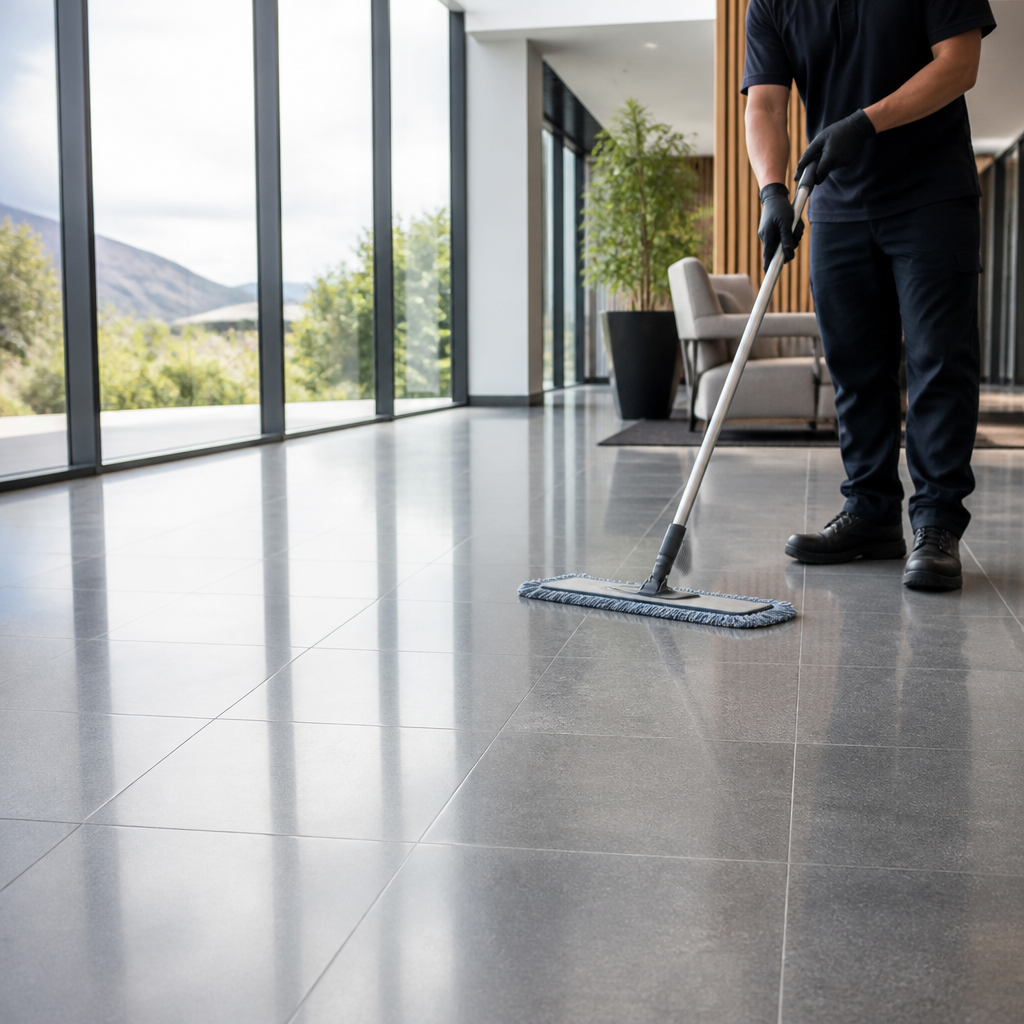
The fix is to treat floors as a preventive maintenance task. Facilities maintenance guidance separates corrective work, which fixes things after they fail, from preventive work, which runs periodic inspections and upkeep to reduce defects. Floor care sits squarely in the second category. Routine cleaning, finish inspections and minor repairs such as re-grouting all cost far less when they happen on a set date.
In practice, a programme does three things. It sets a frequency for each task, it names who is responsible for doing or checking it, and it records what was done. Without those three elements, the schedule exists only in someone’s head and disappears when that person changes roles. Prioritise the floors that carry the most foot traffic, the ones near entrances, and the ones where a slip would have the biggest consequence.
Pro tip: Walk every hard floor in the building once and sort the areas into high, medium and low traffic before you write any schedule. Most managers find that a small share of the floor area takes most of the wear, and that is where the programme should spend its effort.
Matching Floor Types to a Cleaning Schedule
A single cleaning schedule applied to every hard floor in a building is one of the most common mistakes we see. Sealed concrete, vinyl, ceramic tile and timber respond to different chemicals, tools and moisture levels. Before the first clean under a contract, list each floor type in the building, note its finish, and write a task sheet for each one.
Sealed and Polished Concrete
Sealed concrete is forgiving on a daily basis. Dry dust control and a regular damp mop keep it clean, and it copes with heavy trolley traffic better than most surfaces. The risk is the cleaner. Strong acid or harsh alkaline products can break down the sealer, so check the sealer type before choosing a product. Polished concrete needs dust control above everything else, because grit scratches the polish and makes it look dull over time.
Vinyl and Linoleum
Vinyl and linoleum are common in schools, medical centres and retail fit-outs, and they show scuffs from chair legs and trolleys quickly. Use a pH-neutral product designed for resilient flooring, and avoid solvent-based cleaners, which can soften some surfaces. A common mistake is heavy detergent use. Residue settles in the low spots and makes the floor look dirty again within days, even though it has just been cleaned.
Ceramic, Porcelain and Natural Stone
Ceramic and porcelain tile is hard-wearing, but the grout is where the problems start. Grout absorbs liquid and holds dirt, so it needs its own attention in bathrooms, kitchens and wet entrances. Marble and other natural stones are different again. Acidic cleaners etch the surface and leave dull marks that cannot be mopped away, so stick to the neutral products recommended for stone.
Timber and Engineered Timber
Timber floors in offices and reception areas need the least water and the most restraint. Damp mopping is enough for routine cleaning, and wet mopping can cause swelling at the joins. Schedule periodic buffing and recoating based on wear in the traffic lanes, not on the calendar. Get the manufacturer’s care instructions before the first service, and keep a copy in the maintenance file.
Building a Year-Round Floor Calendar
A floor calendar works best when it is split into three layers: daily and weekly tasks that protect the finish, monthly deep cleans that remove what routine work cannot, and periodic restoration checks that decide whether stripping or resealing is due. Each layer needs a frequency, a named owner and a sign-off. Without the sign-off, the calendar becomes a wish list.
Daily and Weekly Tasks
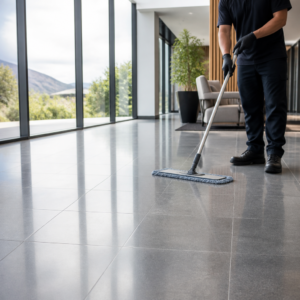
Daily work is about dust and liquids. Dry dust mop or vacuum hard floors in entrances and corridors, check entrance matting and clean or replace it when saturated, and wipe spills as they happen. Guidance on facility floors consistently points to limiting the time dirt and liquids remain on the surface, and that principle sits at the core of the daily programme. Weekly tasks add a damp mop of high-traffic lanes, detail work on edges and skirting, and a check of drains in wet areas.
Monthly Deep Cleans
Once a month, scrub high-traffic areas with a suitable neutral cleaner, using a floor machine where the area is large enough to justify one. Rinse or extract where the product requires it, then let the floor dry fully before reopening it to foot traffic. Check the lanes for finish loss and grout condition while the floor is clean, because wear is easiest to see on a freshly cleaned surface.
A floor that is scheduled gets cleaned on the right day. A floor that is “due for a clean” usually gets cleaned after someone has slipped on it.
Quarterly and Annual Restoration Checks
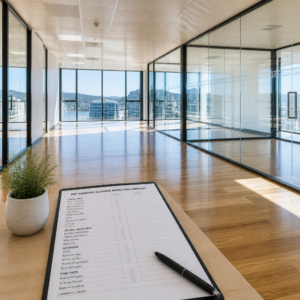
Every quarter, walk each floor with a checklist and rate it by zone. Note scratches, dull lanes, grout staining and any areas where the finish has started to lift. Once a year, use those notes to decide whether the building needs a stripping and resealing project, spot restoration, or simply more frequent maintenance. That decision belongs in the annual budget, so it is not made under pressure in the middle of winter.
Pro tip: Photograph each traffic lane from the same spot every quarter. The change in finish is often invisible day to day but obvious across a set of images, and it gives you evidence when you plan restoration.
Seasonal Timing in Christchurch and Auckland
The programme stays the same across the year, but its intensity changes with the season. In Christchurch, winter brings cold, damp conditions and a lot of grit tracked in on footwear and tyres, so entrance cleaning and matting checks need to increase during those months. Auckland’s wet spells and humid periods put similar pressure on entrances and loading areas, and mud from grounds and car parks reaches the lobby faster than most managers expect.
Spring is the right time to reset the programme. Late October is a sensible point to review how the floors came through the cooler months, complete any overdue stripping while the weather is settling, and lock in dates for the summer period. In many commercial buildings, December and January bring lower occupancy, shutdowns and high contractor demand, so summer work gets booked earlier than people think.

School sites follow the school term calendar, and medical centres and retail stores each have their own quiet periods. Map those windows against the calendar in your facility file. A restoration job planned for a term break, or for a slow trading week in retail, causes far less disruption than the same job booked into a busy week.
Stripping and Resealing on a Planned Cycle
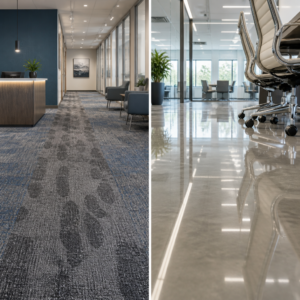
Stripping and resealing is the most expensive part of floor care, and it is also the part most often done too early or too late. Strip too soon and you remove a finish that still has life in it. Wait too long and grime bonds into the surface, so cleaning stops restoring shine and the floor starts to look permanently tired.
Signs a Finish Needs Stripping
The clearest sign is a finish that no longer responds to cleaning. Walk the lanes and look for dull paths where people walk most, a grey haze that returns within a day or two of cleaning, or small areas where the finish is peeling. If wear is confined to a few zones, spot restoration may be enough. If it is spread across the whole floor, plan a full strip and reseal.
Choosing the Work Window
Stripping produces wet, chemical-heavy work and leaves a floor unusable for hours. Book it after hours, over a weekend, or in a closure window such as a school holiday, and confirm access with the building manager before the job is quoted. Avoid stripping in the same week as a major tenant move-in, because the disruption will get blamed on the cleaner.
Protecting Floors During Curing
Sealers and new finishes need time to cure before they can take normal foot traffic. Rushing this stage is one of the most common causes of marks and early failure. Set up clear signage, block off the area, and follow the cure time on the product data sheet. Ask the cleaning provider to confirm in writing when the floor will be ready for furniture and trolleys.
Comparing Maintenance Approaches
Three approaches cover most commercial hard floor situations. Each one suits a different kind of building, and most sites end up using a mix. The table below sets them side by side so you can see where each one fits and where it tends to go wrong.
| Approach | Best suited to | Main risk |
|---|---|---|
| Reactive call-outs (corrective work after visible damage) | Low-traffic buildings with simple floor finishes and few occupants | Damage is already done, slip risk is higher, and restoration costs more |
| Scheduled routine programme (preventive daily, weekly and monthly tasks) | Schools, medical centres, offices and retail sites with steady traffic | Tasks slip without a named owner and sign-off, so the schedule exists only on paper |
| Planned restoration cycle (targeted stripping and resealing based on wear) | Lobbies, corridors and entrances in any building with heavy foot traffic | Stripping too often shortens floor life, while waiting too long lets wear spread |
In practice, the scheduled routine programme should be the base layer for every commercial site. Reactive call-outs still have a place for accidents and spills, but they should not be how a building’s floors are managed. The restoration cycle is the layer most managers skip, and it usually makes the biggest difference to how the floors look at year end.
Scheduling Around Occupied Buildings
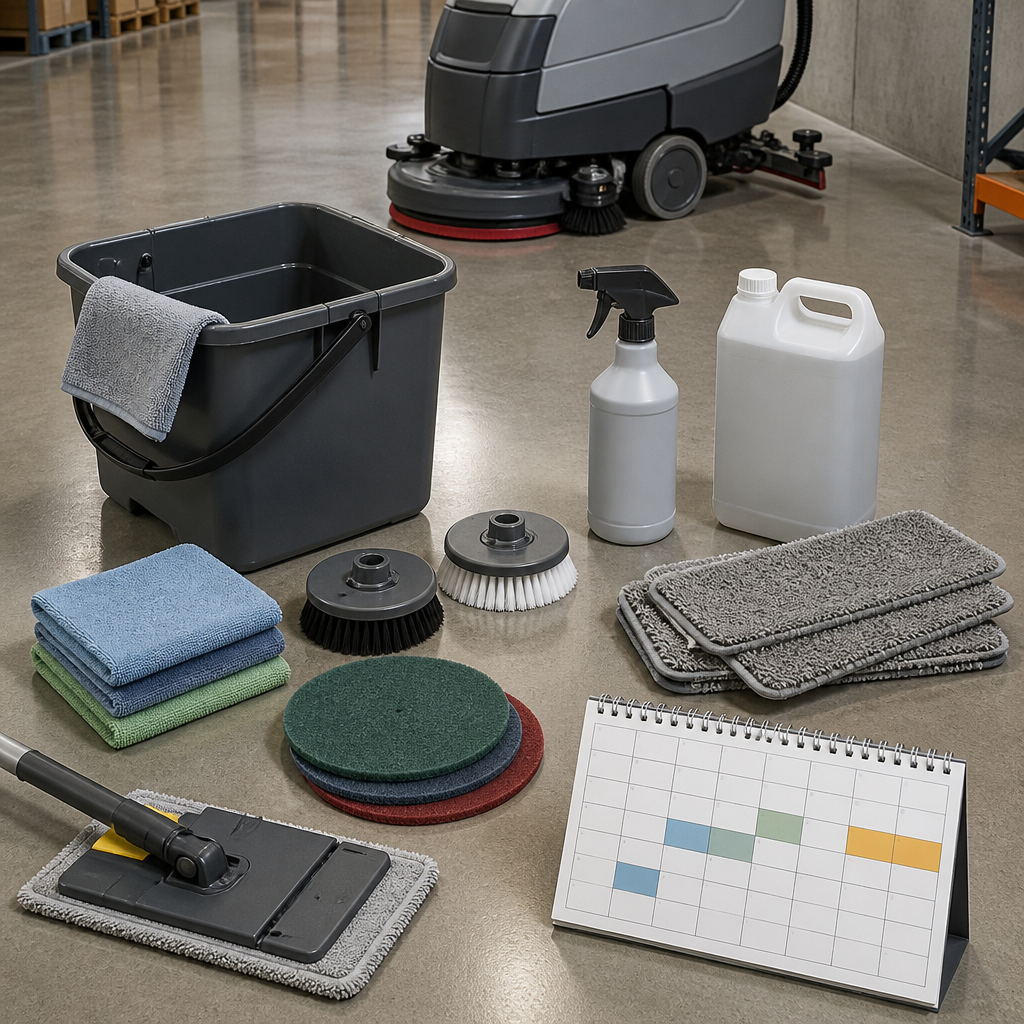
Most commercial buildings cannot close for a day while the floors are done, so the schedule has to fit around people. The cleanest approach is to split the work into tasks that can run during occupied hours, such as dust control and spot cleaning, and tasks that need the building empty, such as machine scrubbing and stripping. Agree on that split with the building manager before the contract starts.
After-Hours and Weekend Windows
Evening and weekend work suits most office and retail sites, and it lets machine scrubbing run without interrupting staff. Schools need a different approach. Term-time work has to fit around classes, so deep cleaning is usually concentrated in holidays, with daytime maintenance limited to dust control and spill response. Medical centres need extra attention to infection control, so coordinate any wet work with the clinical team.
Coordinating with Tenants and Contractors
Where a building has several tenants, or where construction trades are still active, floors are exposed to other people’s work. Put a floor protection rule into the site induction, and ask contractors to use protection sheets on finished floors. A post-construction clean is far easier when the floors were protected during the build, because the dust and paint splatter are already contained.
Access, Keys and Sign-Off
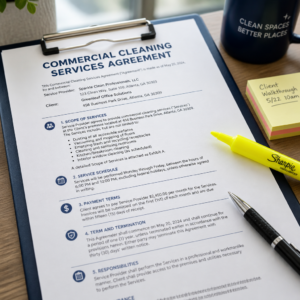
Access arrangements are the most common reason a scheduled job slips. Confirm who holds keys, alarm codes and lift access before the job, and make sure sign-off is done by someone with authority over the space. A written sign-off that records the date, the zones completed and any issues found is the simplest way to show the programme is working.
Pro tip: Ask your cleaning provider to confirm public liability cover for the site before the job starts, and to record the date, zones and products used on every visit. That record is your evidence if a slip claim or a tenant dispute ever comes up.
Frequently Asked Questions
How often should commercial hard floors be stripped and resealed?
There is no fixed interval that suits every building. Traffic levels, finish type and cleaning method all change the answer. Inspect the traffic lanes each quarter, and plan a strip and reseal only when the finish no longer responds to routine cleaning or shows visible loss in the walking paths.
Is a daily mop enough to keep hard floors in good condition?
Daily dust control and spot cleaning are the foundation, but a daily mop alone is not enough in busy areas. Entrances and corridors also need a weekly damp mop with detail work, plus a monthly scrub with a suitable neutral cleaner to remove the film that daily work leaves behind.
Why do my floors look dull straight after cleaning?
The most common cause is cleaner residue. Using too much detergent, or a product that is not suited to the floor, leaves a film that attracts dirt. Switch to a neutral product, follow the dilution instructions, and rinse or extract where the product requires it.
What should I ask a cleaning provider about floor care before signing a contract?
Ask which products they use on each floor type, how they control dilution, and what records they keep after each visit. Confirm that sites are covered by public liability insurance, and ask how they handle after-hours access and sign-off. A provider who answers these questions clearly is usually the one who will keep the programme on track.
Do Auckland and Christchurch buildings need different floor schedules?
The core programme is the same, but the seasonal adjustments differ. Christchurch winters bring cold, damp conditions that increase grit and moisture at entrances. Auckland’s wet spells and humid periods put similar pressure on entrances and loading areas, so entrance cleaning frequency should rise during those periods in both cities.
We would like to hear which floor care routine has worked best in your building, and which seasonal issue caught you out most.
References
- Best practices for keeping facility floors clean, from 3M
- Facility maintenance decisions for a better working environment, including hard floor surfaces
- Facilities maintenance management and cleaning explained, including the four maintenance types
- Facilities management best practices, including workflow tips