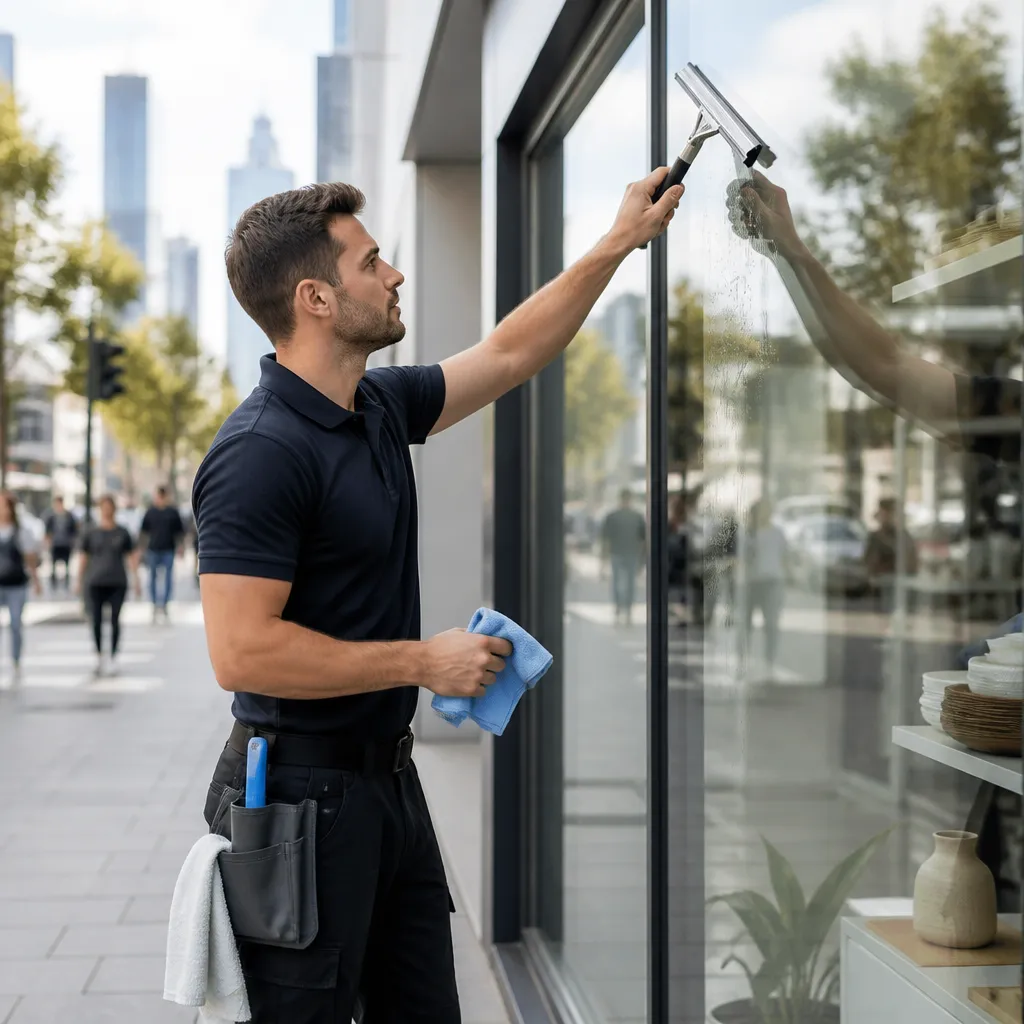
Dirty glass costs a retail store more than its appearance. Customers judge a shopfront in seconds, and a film of fingerprints, salt haze or fitout dust can make a freshly renovated space look unfinished. For commercial property managers and business owners searching for window cleaning commercial Auckland services, the decision usually comes down to three questions: how often, which method, and what to ask the provider before signing. This guide answers each one from the job site, not from a brochure.
Table of Contents
- Quick Takeaways
- How Often Should Commercial Glass Be Cleaned?
- Cleaning Methods for Retail and Office Glass
- Post-Fitout Glass Cleaning for New Retail and Office Spaces
- Access, Safety and Scheduling on Busy Sites
- Comparing Cleaning Approaches
- What to Ask Your Cleaning Provider
- Frequently Asked Questions
- References
Quick Takeaways
| Key Insight | Explanation |
|---|---|
| Shopfront glass on busy streets usually starts on a monthly cycle | Foot traffic, hand contact at the door and road dust build up faster than most owners expect. Adjust the cycle after the first three visits based on what the glass looks like. |
| New fitout glass needs a one-off clean before the regular schedule starts | Paint overspray, silicone, adhesive and plaster dust survive a normal wipe-down and turn into complaints in the first week of trading. |
| Use a plastic scraper or fresh blade only on bare glass | Applied window film, decals and privacy graphics can lift, tear or scratch if a blade touches them. |
| Book early starts before opening or late finishes after close | Working before the first customers arrive keeps the footpath clear and avoids the rush of a busy retail day. |
| Ask for the method for each type of glass in writing | A written method shows how the provider will handle ground-level frontages, upper-floor offices and coated or tinted panels. |
| Confirm public liability cover before work is booked | Work at height and near public walkways carries the most risk on site, so the certificate should be checked, not assumed. |
How Often Should Commercial Glass Be Cleaned?
There is no single answer that fits every building, but there is a practical starting point. For shopfronts on busy streets, we usually begin with a monthly clean and adjust from there. Hand contact at the door and road dust are the main culprits, and they build up faster than most owners expect.
Shopfront glass on busy streets
Retail glass takes the worst of it at the entry, where hand marks and fingerprints collect at hand height. The door glass often needs more attention than the large display panels, so it helps to treat the two separately in your schedule. If your store sits on a road with heavy vehicle traffic, exhaust film can make glass look hazy within days of a clean.
Upper-floor office glass
Office windows above ground level are cleaned less often because fewer people touch them, but they still collect rain residue and dust. On coastal sites in Auckland, salt spray leaves a haze that looks like grime but needs the right solution to lift. In Christchurch, cold, damp mornings can leave a similar film. A quarterly exterior clean with interior wipe-downs in between is a reasonable baseline for most upper-floor offices, with shorter cycles for glass facing a busy road or the sea.
When to book outside the schedule
Some events justify an extra visit: a storm that leaves debris on the glass, building works next door, or a sticker or graffiti problem at street level. A reactive clean is far easier than waiting for the next scheduled visit, because residue bonds more tightly the longer it sits on the glass.
Pro tip: Ask your provider to log the condition of each glass panel on the first visit, with a simple photo record. Comparing the glass after each service tells you whether to extend or shorten the cycle, which is far more reliable than guessing.
Cleaning Methods for Retail and Office Glass
The method matters as much as the frequency. A technique that works on a small office pane can leave streaks on a tall shopfront, and a solution that is fine on bare glass can damage the frames, seals or applied film around it. Here is how we approach the main choices on commercial sites.
Squeegee and scrubber on ground-level glass
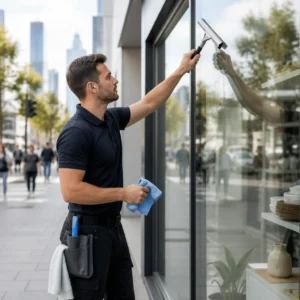
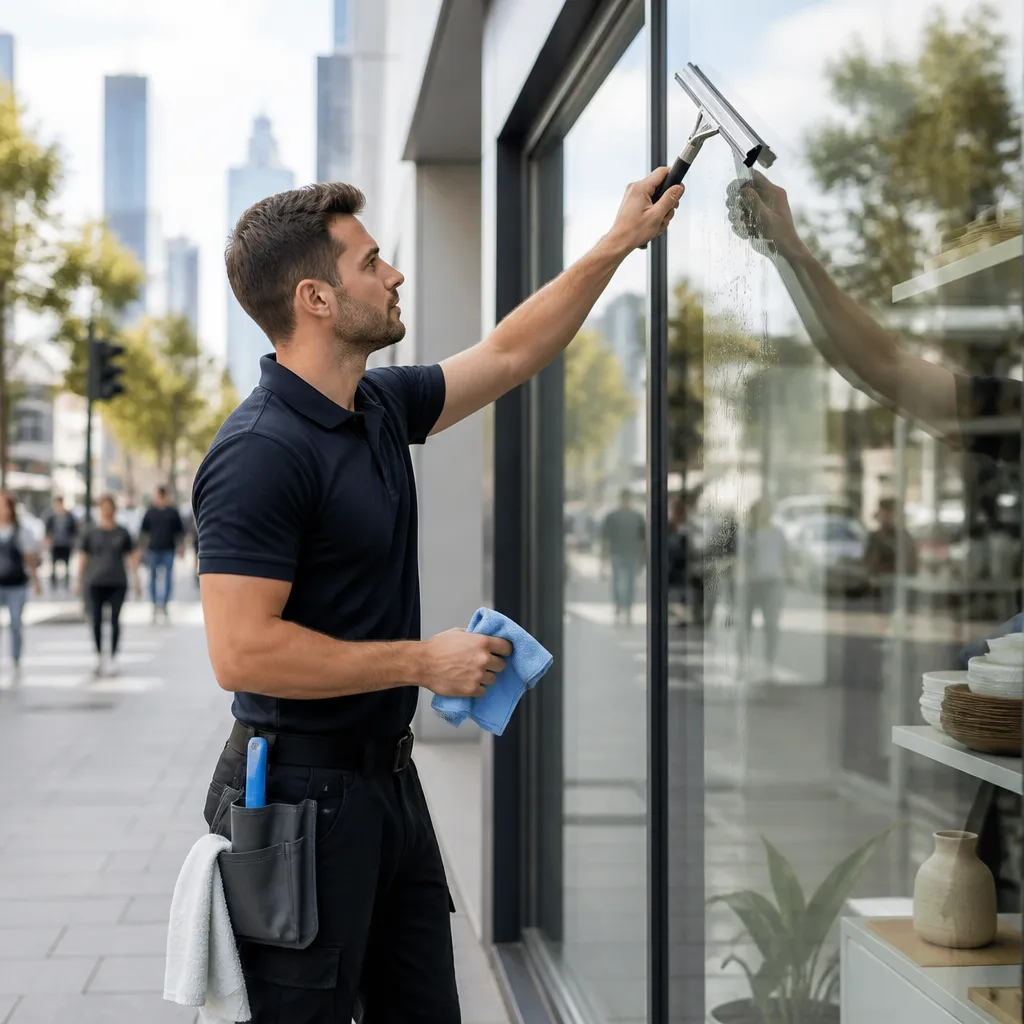
For ground-level shopfronts, a scrubber on a pole followed by a squeegee is still the fastest reliable method. The blade needs to be in good condition, because a nicked edge leaves a line on every pass. One published best-practice guide for high-traffic sites recommends softer rubber in cooler conditions and firmer rubber in warmer ones to prevent drag. In practice, we change blades more often than most crews do, because a worn blade costs more time than it saves.
Water-fed pole for tall and hard-to-reach glass
Water-fed pole systems use purified water, which dries without leaving mineral spots when it is rinsed properly. They suit upper-floor windows and high frontages where ladders or lifts would block a footpath. The trade-off is that the water must be truly pure, and the system needs a supply and a tank on site, so confirm access and power before booking.
Plastic scraper on bare glass
Where glass is bare, a plastic scraper or a fresh razor blade held at a low angle lifts paint, silicone and sticker residue. This is the first thing we check on glass that has come off a fitout. Never use a blade on applied film, decals or privacy graphics, because it will cut or lift the material.
On most busy sites the glass is not dirty evenly. It is dirty where people touch it, where water runs and where the weather settles, so the cleaning should follow those patterns rather than the size of the panel.
Post-Fitout Glass Cleaning for New Retail and Office Spaces
A fitout is hard on glass in ways that regular cleaning never fixes. Glass that looks fine during construction can show a fine speckle, a smeared seal line or a sticky patch once the walls are painted and the shelving is up.
What a fitout leaves behind
Plaster dust settles into window tracks, paint overspray dries as a fine speckle, and silicone from frame sealing gets smeared across the pane. Protective films and masking tape can leave adhesive that a standard spray only spreads around. These marks are stubborn because they bond to the glass surface, not just sit on top of it.
Sequence matters
Clean after the heavy trades finish but before signage and shelving go in, if the programme allows. Once displays are up, the glass gets handled, dusted and marked again, and the team ends up cleaning twice. For retail fitouts, a final clean on the evening before opening, plus a walk-through with the store manager, helps catch the issues that would otherwise appear in the first week of trading.
Checking the finish before handover
Inspect glass at an angle with a light behind it, because streaks and haze show up far better that way than under overhead lights. Check the corners of each pane, the frame joins and any tinted or coated glass, which can react badly to strong cleaners. Note any panels that still have residue and get them cleaned before handover, not after the keys have changed hands.
Access, Safety and Scheduling on Busy Sites
On a busy retail street, the work zone is a public hazard, not just a job site. A ladder or pole left unattended in a walkway can injure someone quickly, and a shopfront cleaned at the wrong time costs a tenant sales. Planning access and safety is part of the cleaning, not an extra.
Before the first panel is cleaned, walk the site and note uneven paving, overhead power lines and anything that could catch a ladder or pole. Set cones or barriers around the work area, put up caution or wet floor signs and keep a clear route for pedestrians and wheelchairs. This is the single most useful habit a crew can have on a street-front job.
Booking around trading hours
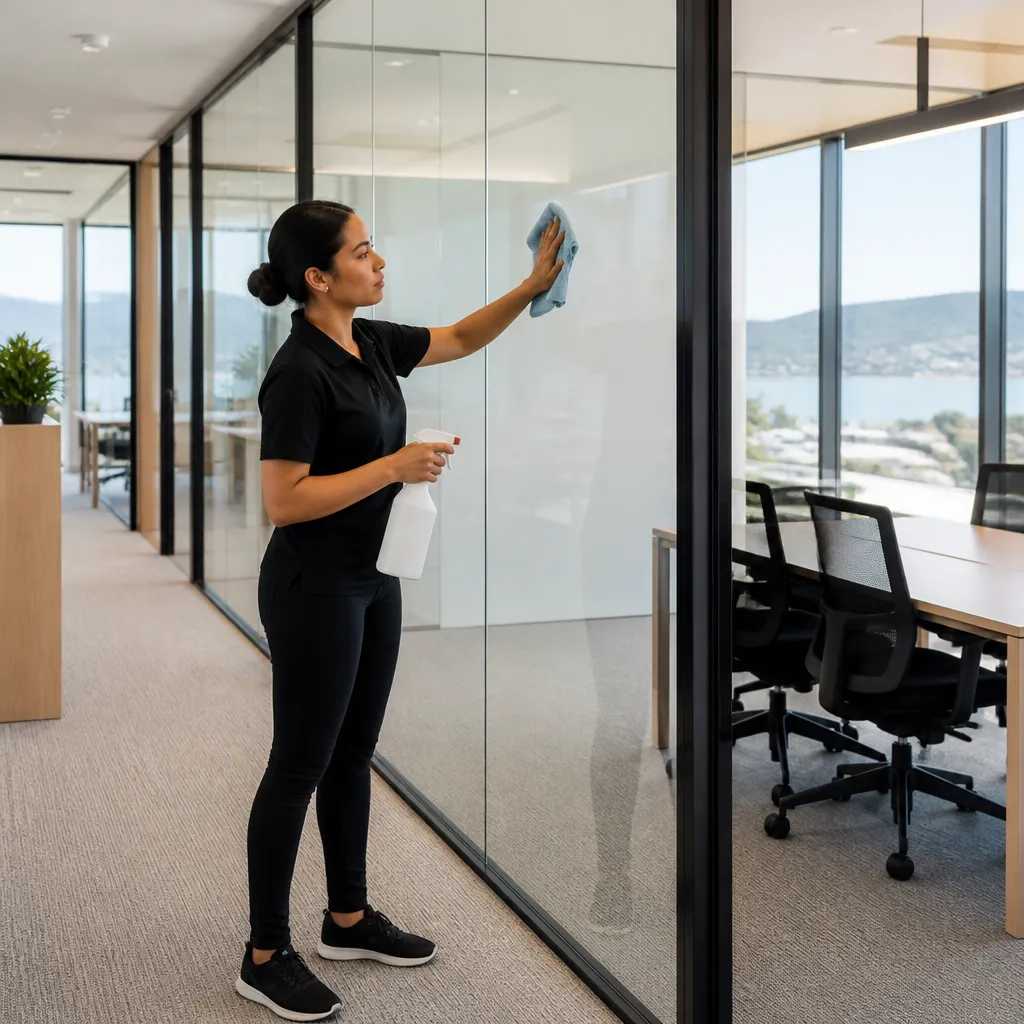
Early mornings before opening and late evenings after close are the windows that work for most retail and office sites. Medical centres and schools need a different plan, because the cleaning must avoid patient flow or classes. Agree the schedule with the property manager or site contact in writing, and confirm who signs off access for each visit.
Insurance and site documentation
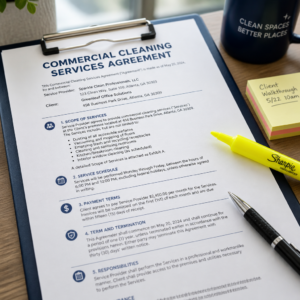
Every site we clean is covered by public liability insurance, and we can provide the certificate before any work starts. Ask any provider for the same, along with a site safety plan and a written list of the methods they will use. If a provider cannot explain how they will protect the public on the footpath, treat that as a warning sign.
Comparing Cleaning Approaches
Most providers use one of three approaches on commercial glass, and each one suits a different building. The table below shows where each method earns its place and where it tends to cause problems. The choice on any given site depends on height, access and the type of glass involved.
| Approach | Best suited for | Trade-offs |
|---|---|---|
| Scrubber and squeegee from the ground | Ground-floor shopfronts and entry doors with clear footpath access | Fast and simple to set up, but drips and streaks appear quickly if the blade is worn or the rinse is poor |
| Water-fed pole system | Upper-floor offices and tall frontages where ladders or lifts are impractical | Spot-free rinse and safer at height, but it needs a water supply and access to the site |
| Solution and microfiber on bare glass | Interior display glass, partitions and internal office panels | Good detail results, but slower on large areas and unsuitable for applied film |
Where each method earns its keep
A single building often needs all three. The exterior of a retail frontage gets the squeegee, the upper windows get the pole, and the interior display glass gets solution and microfiber. Ask your provider which method goes where, because a provider who uses one method for everything will compromise somewhere.
Why the water source matters
Pure water is only useful if it really is pure. A worn filter or an old tank can leave a film that makes clean glass look dirty, so ask how the water is filtered and how often the filters are replaced.
What to Ask Your Cleaning Provider
Many glass complaints trace back to a booking that skipped a few basic questions. A short conversation before you sign can prevent a streaky frontage, a damaged film or an unhappy tenant. These are the questions we would ask if we were on the other side of the desk.
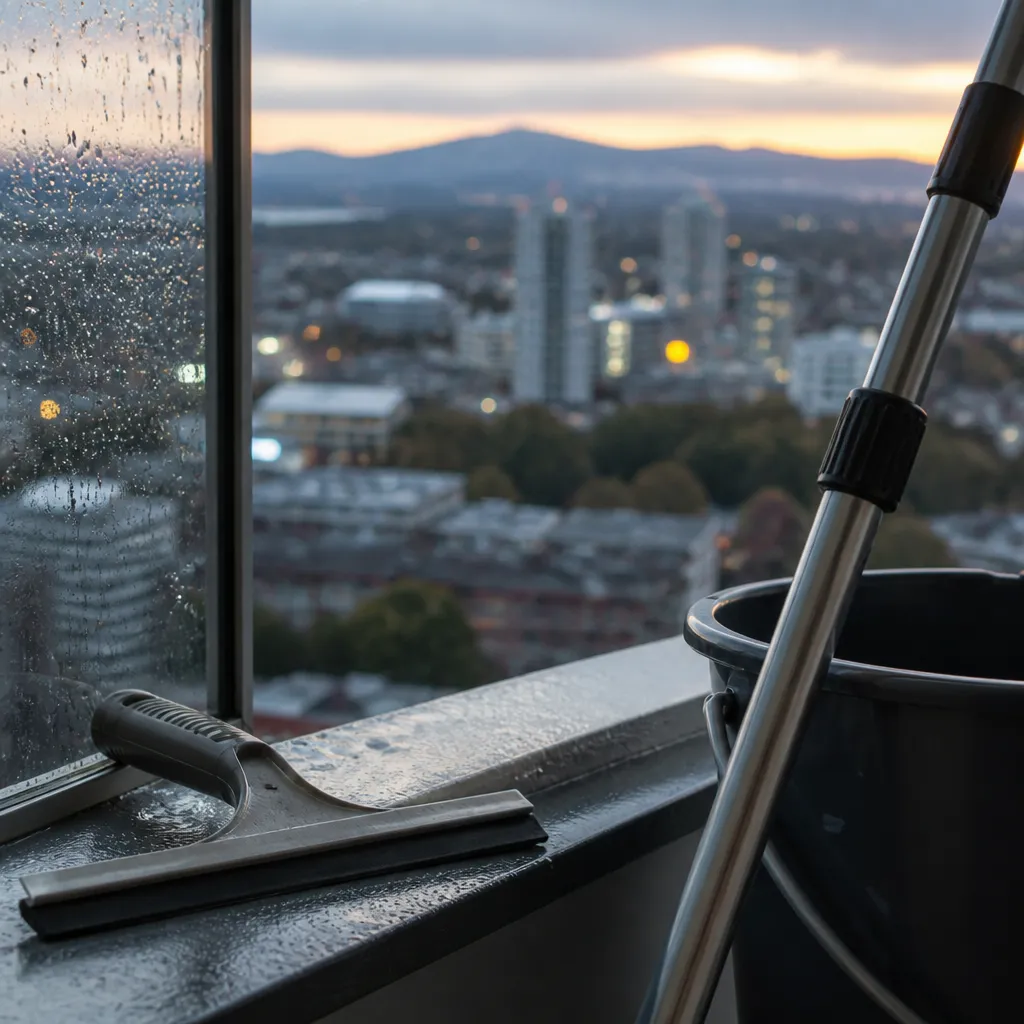
Questions about method and materials
Ask which method will be used on each type of glass, and what solution goes on coated, tinted or film-covered panels. A good answer names the tools and explains when each one is used. If the answer is “the same for everything”, press for detail.
Questions about schedule and reporting
Ask how the schedule will fit around trading or teaching hours, who will sign off access and how completion will be recorded. A written log with dates, panels cleaned and any defects found is worth more than a verbal promise.
Pro tip: Ask for a sample of the service log before the first visit. If the provider cannot show you a template, they are unlikely to keep the records you will need when a tenant or property manager asks what was done.
Questions about insurance and accountability
Ask for a current public liability certificate, a site safety plan and the name of the person responsible on the day. Ask what happens if a panel is damaged, and how that gets reported and resolved. A provider who answers those questions clearly is usually easier to work with on the next visit.
Frequently Asked Questions
How often should shopfront windows be cleaned in Auckland?
Monthly is a sensible starting point for shopfront glass on a busy street. Adjust the cycle after a few visits, and expect to clean more often on coastal sites or on roads with heavy vehicle traffic.
Is office window cleaning different from retail window cleaning?
Yes. Retail glass collects hand marks and door traffic, so the entry needs the most attention. Upper-floor office glass is usually cleaned on a longer cycle but needs careful attention to frames, seals and interior panels.
Can windows be cleaned after a fitout without damaging new film?
Yes, if the provider knows to keep blades away from applied film and uses a soft cloth and an approved solution. Ask them how they will handle film and decals before the work starts.
Do I need to be on site while the windows are cleaned?
Not always, but you should confirm access, the schedule and who will sign off on completion. For tenanted premises, make sure the tenant knows when the work will happen.
What should I check before hiring a window cleaning company?
Look for a current public liability certificate, a written method for each type of glass, a site safety plan and a clear service log. References from similar commercial sites are also useful.
Does window cleaning in Christchurch differ from Auckland?
The residue is different. Christchurch winters bring cold, damp conditions that can leave a film on glass, while Auckland coastal sites often collect salt haze. Both change how often glass needs attention and which solution works best.
What has worked best for keeping your shopfront or office glass clean, and what would you change based on your own experience?