Body corporate cleaning is one of those responsibilities that looks straightforward until something goes wrong. A missed lobby clean before a building inspection, a contractor who disappears mid-contract, or a scope of works so vague it causes monthly arguments between the committee and the provider. These are not edge cases. They are the norm in poorly structured body corporate cleaning arrangements, and they cost committees time, money, and relationships. This guide covers every stage of managing a body corporate cleaning contract properly, from setting the scope to enforcing standards, with direct reference to what actually works in multi-unit residential and commercial settings across New Zealand.
Table of Contents
- Quick Takeaways
- What Is Body Corporate Cleaning and What Does It Cover
- Setting the Scope of Works Before Tendering
- Evaluating and Selecting a Cleaning Contractor
- Contract Structure and Key Clauses
- Comparing Body Corporate Cleaning Contract Models
- Managing Performance and Accountability
- Common Mistakes Body Corporates Make
- Frequently Asked Questions
- References
Quick Takeaways
| Key Insight | Explanation |
|---|---|
| Scope of works must be room-by-room specific | Vague scopes like “clean common areas” lead to disputes. Every surface, frequency, and method should be documented in writing before signing. |
| Insurance is non-negotiable | Any contractor working on a body corporate site must carry public liability insurance. Verify the certificate before work begins, not after an incident. |
| Fixed-price contracts reduce hidden cost risk | Hourly-rate arrangements often balloon in cost. Fixed-price contracts with clearly defined inclusions give committees predictable budgeting. |
| Monthly inspection checklists create accountability | A shared digital checklist reviewed monthly by the committee and the contractor removes subjectivity from performance conversations. |
| Specialist services need separate scheduling | Carpet cleaning, window cleaning, and floor stripping and sealing are not routine tasks. They require separate line items and agreed annual frequencies. |
| Exit and replacement clauses protect the committee | A contract without a clear termination clause puts the committee at significant risk if service quality drops and the provider refuses to leave. |
| Approved supplier status signals professionalism | Contractors listed with bodies like UpstreamNZ have passed supplier vetting, which reduces the committee’s due-diligence burden during selection. |
What Is Body Corporate Cleaning and What Does It Cover
Body corporate cleaning refers to the cleaning and maintenance of shared or common property within a multi-unit building or complex. This includes apartment buildings, townhouse complexes, commercial strata buildings, and mixed-use developments. The body corporate, as the legal entity responsible for the shared property, holds the obligation to maintain these spaces to a standard that protects property values and meets the reasonable expectations of all owners and residents.
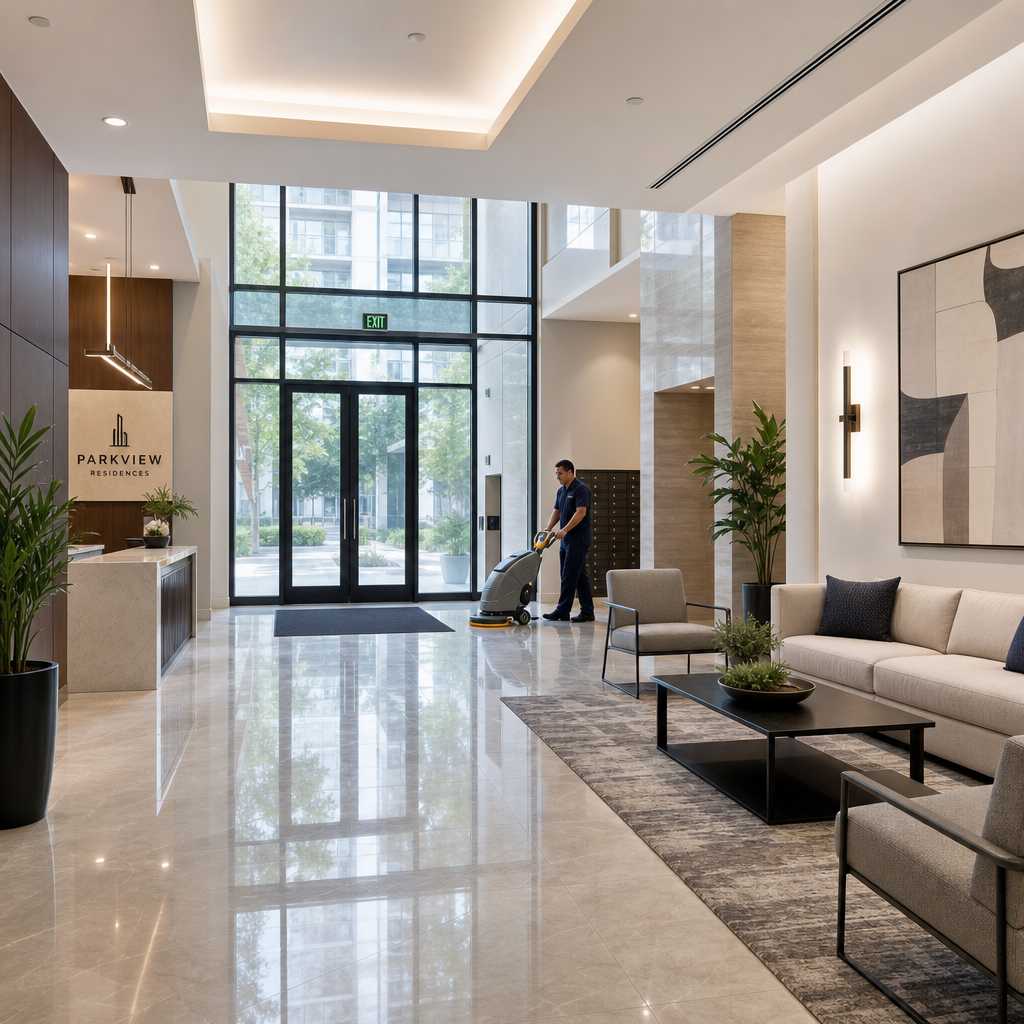
In practice, the areas covered by a body corporate cleaning contract typically include entrance lobbies, lifts and lift lobbies, stairwells, car parks and basement areas, outdoor pathways and garden surrounds, shared amenity rooms such as gyms or laundries, letter box areas, and rubbish collection zones. Some contracts also extend to window cleaning for shared glazing, carpet cleaning in corridor areas, and periodic floor treatments such as stripping and sealing.
Strata cleaning services in New Zealand operate under the same general framework as body corporate cleaning but are more commonly referenced in commercial and mixed-use contexts. The terminology shifts depending on whether you are dealing with a residential body corporate under the Unit Titles Act 2010 or a commercial property arrangement, but the operational requirements are largely identical.


“>
The body corporate committee does not need to act as a cleaning supervisor, but it does need to understand what it is buying. A cleaning contract that does not specify which common areas are included, how often each area is cleaned, and what standard is expected is not a contract. It is a loose agreement waiting to fail.
Setting the Scope of Works Before Tendering
The scope of works document is the single most important thing a body corporate committee will produce before approaching any cleaning contractor. Without a detailed scope, every quote received will be based on different assumptions, making price comparison meaningless and creating the conditions for ongoing disputes once the contract begins.
Room-by-Room Area Mapping
Before writing a word of the scope, walk the entire common property with someone who understands cleaning. Document every area that requires attention: the number of lifts, the floor types in each zone, the number of toilets in shared amenity facilities, the linear metres of exterior glass, the square meterage of car park flooring. This information directly determines the time a professional cleaner needs to do the job properly.
A common mistake is listing areas without specifying frequency. The scope should state whether each area is cleaned daily, twice weekly, weekly, fortnightly, or monthly. High-traffic lobbies in apartment buildings typically require daily attention. Car parks may only need a fortnightly sweep and a quarterly pressure wash.
Separating Routine From Periodic Services
Routine cleaning covers the regular scheduled work. Periodic services are the specialist tasks that happen less frequently but require specific equipment and expertise. These must be separated in the scope because most routine cleaning providers will either exclude them entirely or include an inflated allowance that overcharges for work done poorly.
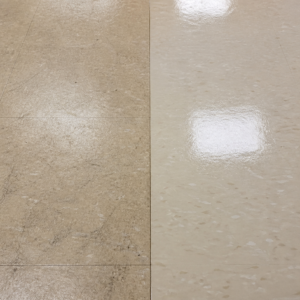
Periodic services to document separately include carpet cleaning in shared corridors, high-level window cleaning for glazed facades and atrium spaces, floor stripping and sealing for sealed hard floors, and post-event cleaning if the building has shared function spaces. Companies like Triple Star Commercial Cleaning provide both routine body corporate cleaning and specialist services including carpet cleaning, window cleaning, and floor stripping and sealing, which simplifies contract management for committees who prefer a single accountable provider.
Pro tip: Request that each contractor quote the routine scope and the periodic services as separate line items. This allows the committee to compare like for like and make informed decisions about whether to bundle services or award them separately.
Evaluating and Selecting a Cleaning Contractor
Price is the wrong starting point when evaluating body corporate cleaning tenders. The cheapest quote almost always reflects either an incomplete reading of the scope, a plan to use insufficient labour hours, or an intention to cut chemical and equipment quality once the contract is signed. The right starting point is capability and accountability.
What to Verify Before Shortlisting
Any contractor being considered for a body corporate cleaning contract must carry current public liability insurance. Ask for the certificate of currency at the quote stage. A contractor who hesitates to provide this immediately should not proceed to shortlist. For buildings in Christchurch and Auckland, check whether the company has direct experience with multi-unit residential or commercial strata properties, not just single-site office cleaning.
References from current body corporate clients are more useful than testimonials. Ask specifically whether the contractor maintained consistent standards over a 12-month period, whether they responded quickly to issues, and whether they showed up reliably without requiring constant follow-up from the committee. These three factors predict long-term contract success better than any other criteria.
Approved Supplier Status and Vetting
Contractors who are listed as approved suppliers with established property management networks have already passed a layer of supplier vetting. Triple Star Commercial Cleaning holds UpstreamNZ approved supplier status, which means property managers using that network have an independent benchmark for the company’s credibility. This does not replace due diligence, but it meaningfully reduces the research burden for committees working with property managers already operating within that network.
“The single biggest risk in facility service procurement is writing a contract that describes what you want without specifying how you will know you got it.” Property Institute of New Zealand, Facility Management Guidelines
Pro tip: Ask each shortlisted contractor to walk the site with you before submitting their quote. A contractor who prices remotely without site inspection is guessing. A contractor who asks detailed questions during the site walk is demonstrating the operational thinking that will carry through to service delivery.

“>
Contract Structure and Key Clauses
A body corporate cleaning contract needs to be specific enough to be enforceable but practical enough that it can be used operationally by both parties. Many committees make the mistake of using generic service agreement templates that were designed for single-site commercial cleaning. These templates consistently omit clauses critical to multi-unit and strata environments.
Minimum Clauses Every Contract Must Include
The scope of works must be attached as a schedule to the contract, not summarised within the body. This matters legally. If the contract says “as per the attached scope” and the scope is a detailed room-by-room document, the committee has a clear evidentiary basis for disputes. If the scope is a two-line summary in the contract body, it is almost unenforceable.
Key clauses that must be present include: the cleaning frequency and schedule for each area, the price and payment terms, the insurance requirements and who bears liability for damage, a performance standard and the mechanism for measuring it, a complaints and remediation process with response timeframes, a minimum notice period for price changes, and a termination clause that specifies the conditions and notice period for ending the contract from either side.
Term Length and Renewal Options
Most body corporate cleaning contracts run for 12 months with optional renewal clauses. A term shorter than 12 months creates re-tendering overhead without enough performance data to make a good decision. A term longer than 24 months without a performance review clause locks the committee into an arrangement that may have deteriorated significantly before the exit window opens.
The renewal clause should require active confirmation from both parties rather than automatic rollover. Automatic rollover clauses benefit the provider, not the committee, because committees often miss the notice window during AGM cycles and find themselves locked in for another term they did not consciously choose.
Comparing Body Corporate Cleaning Contract Models
There are three main models used for body corporate and apartment building cleaning contracts in New Zealand. Each has distinct trade-offs that committees should understand before selecting a structure.
| Contract Model | How It Works | Best Suited For |
|---|---|---|
| Fixed-Price Annual Contract | A single agreed price covers all routine cleaning tasks for a defined 12-month period. Periodic services are quoted separately as needed or included as fixed annual line items. | Committees with stable budgets and well-documented scopes. Provides predictability and holds the contractor accountable to a defined deliverable. |
| Hourly Rate Contract | The contractor is paid for hours worked. The committee approves hours in advance or receives invoices for time spent. Periodic services are billed at an agreed hourly rate. | Smaller complexes with variable cleaning needs or situations where the committee wants flexibility to scale up or down. Risk of cost blowout if oversight is weak. |
| Hybrid Contract (Fixed Routine + Variable Periodic) | Routine cleaning is covered under a fixed monthly fee. Specialist periodic services such as carpet cleaning or window cleaning are quoted and approved separately as required. | Mid-size to large complexes where routine work is predictable but periodic service needs vary year to year. Balances cost certainty with operational flexibility. |
In practice, the fixed-price annual contract with separately quoted periodic services is the model that works best for most body corporates. It gives committees a predictable levy contribution for cleaning costs while retaining control over periodic expenditure.
Managing Performance and Accountability
Signing a contract and starting service is only the beginning. The committees that get the best long-term outcomes from their cleaning contractors are the ones who build structured accountability into the relationship from day one, not ones who wait for problems to act.
Monthly Inspection and Sign-Off Process
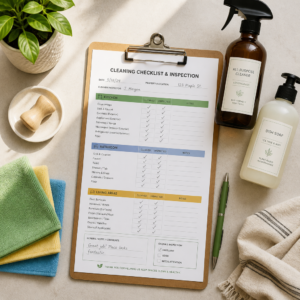
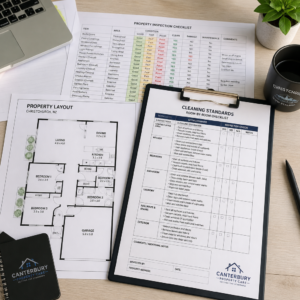
A monthly site inspection conducted jointly by the building manager or committee representative and a supervisor from the cleaning company is the most effective accountability tool available. The inspection should follow a consistent checklist that maps directly to the scope of works. Both parties sign off on the checklist, which creates a documented performance record over time.
Digital checklists shared via email or a simple property management platform are preferable to paper because they are date-stamped, searchable, and cannot be misplaced. If an issue is raised and the contractor fails to remediate it within the agreed timeframe, the documented record supports the committee’s position if the dispute escalates.
Handling Service Failures
Service failures are inevitable over a 12-month contract. The question is not whether they will happen but how quickly and professionally the contractor responds. A missed clean due to a staff illness is not a contract breach if the contractor communicates in advance and arranges a catch-up service within 24 hours. A pattern of missed cleans with no communication is a breach and should be treated as one.
The contract should define what constitutes a service failure, how it must be reported, and what remediation the contractor must provide. A reasonable remediation clause requires the contractor to address any reported failure within one business day for high-traffic areas and within two business days for lower-priority zones.
“>
Common Mistakes Body Corporates Make
Having seen how these contracts play out across a range of buildings, several patterns of error repeat consistently. Addressing them before they occur saves committees significant time and money.
Awarding on price alone. The lowest quote for body corporate cleaning is almost never the best value. Committees that select purely on price typically find themselves re-tendering within six months after service standards collapse. A provider priced 15 to 20 percent above the lowest quote with strong references and clear accountability processes will outperform the cheapest option in nearly every case.
Neglecting the periodic services schedule. Routine cleaning keeps a building looking acceptable day to day. But carpet cleaning, window cleaning, and floor treatments are what prevent cumulative deterioration. A body corporate that skips these periodic services for two or three years will face significantly higher restoration costs when they finally address the backlog.
Using a single point of contact who then leaves. If the only person managing the cleaning relationship is one committee member who eventually rotates off the committee, institutional knowledge about the contract, the contractor’s performance history, and any ongoing issues disappears with them. The contract file, inspection records, and insurance certificates should be held centrally by the body corporate’s property manager or stored in a shared committee document system.
Ignoring the impact on property values. The cleanliness of common areas directly influences how owners, tenants, and prospective buyers perceive a building. A well-maintained lobby and clean stairwells signal that the body corporate is well-managed. A dingy, poorly maintained common area signals the opposite, and that perception affects sale prices and rental demand. Body corporate cleaning is not a cost centre. It is a property value investment.
For body corporates in Christchurch and Auckland looking for a cleaning provider that covers both routine apartment building cleaning and specialist periodic services under a single accountable structure, Triple Star Commercial Cleaning offers contracts tailored to the specific demands of multi-unit residential and commercial strata properties, including public liability insurance coverage on all sites.
Frequently Asked Questions
What areas does a body corporate cleaning contract typically cover?
A body corporate cleaning contract covers all shared or common areas within a multi-unit complex. This typically includes entrance lobbies, lifts and lift lobbies, stairwells, corridors, car parks, external pathways, shared amenity rooms, and refuse areas. Some contracts also include shared glazing, carpet cleaning in common corridors, and periodic floor treatments. Individual units are excluded and remain the responsibility of each owner or tenant.
How often should common areas in an apartment building be cleaned?
Frequency depends on the building’s size, occupancy level, and traffic patterns. High-use lobbies and lift interiors in large apartment buildings typically require daily cleaning. Stairwells in medium-density complexes may be cleaned two to three times per week. Car parks are often serviced fortnightly for sweeping and quarterly for pressure washing. There is no single correct answer, but the frequency should be documented explicitly in the scope of works and priced accordingly.
What should a body corporate look for when evaluating cleaning company quotes?
Look beyond the price and assess whether the contractor has read and priced the full scope of works, carries current public liability insurance, has demonstrated experience in multi-unit or strata cleaning, provides references from comparable properties, and can demonstrate a clear process for reporting and resolving service issues. A contractor who asks good questions during a site inspection is demonstrating the operational rigour that will carry through into the contract period.
Can a body corporate switch cleaning providers mid-contract?
Switching providers mid-contract is possible but requires the termination clause in the existing contract to be triggered correctly. Most contracts require 30 to 60 days written notice. If the existing contractor has committed a material breach, such as persistent failure to deliver the agreed scope, that breach may allow the body corporate to exit with shorter or no notice, depending on the contract terms. Always seek legal or property management advice before terminating a contract early to avoid counter-claims for lost contract value.
How do specialist services like carpet cleaning and window cleaning fit into a body corporate contract?
Specialist services such as carpet cleaning, window cleaning, and floor stripping and sealing are typically handled as periodic services, scheduled separately from routine cleaning. These can be bundled into the same contract as discrete annual or bi-annual line items, or they can be tendered and managed separately. The key is that they are explicitly included in the contract documentation with agreed frequencies and pricing, rather than treated as ad hoc requests that get repriced at the provider’s discretion each time they arise.
Is body corporate cleaning different from strata cleaning services?
The terms are largely interchangeable in the New Zealand context. Body corporate cleaning refers specifically to the cleaning of common property managed under a body corporate structure, which is the legal framework governing multi-unit residential and commercial buildings under the Unit Titles Act 2010. Strata cleaning services is a broader term, more commonly used in commercial property and mixed-use development contexts, but the scope, contract structure, and service requirements are operationally identical.
Have you managed a body corporate cleaning contract and run into issues that this guide did not cover? Share your experience in the comments or reach out directly so we can address it.
References
- New Zealand legislation governing unit title properties and body corporate obligations
- Property Council New Zealand guidance on commercial property and facilities management standards
- Statista data on the commercial cleaning industry size, growth trends, and market benchmarks
- Forbes insights on commercial facilities management, outsourcing decisions, and vendor accountability
- McKinsey research on operational outsourcing, supplier performance management, and contract governance