Most carpet stains are not permanent. But most people treat them as if they are, and in doing so, they accidentally make them permanent. Whether you manage a commercial property in Christchurch, run a busy office in Auckland, or are handing back a rental at the end of a lease, carpet stain removal is one of those tasks where the wrong move in the first 60 seconds locks in damage that no amount of scrubbing will reverse. This guide cuts through the folklore and tells you exactly what works, what damages carpet fibres, and when a professional clean is the only real answer.
Table of Contents
- Quick Takeaways
- Why Stains Set and What That Means for Treatment
- The Blot, Don’t Rub Rule and Why It Matters
- Common Stain Types and the Right Approach for Each
- Cleaning Methods Compared
- What Never to Put on a Carpet Stain
- Carpet Maintenance in Commercial Settings
- When DIY Stain Cleaning Is Not Enough
- Frequently Asked Questions
- References
Quick Takeaways
|
Key Insight |
Explanation |
|---|---|
|
Act within five minutes |
Fresh stains absorb into fibre bonds slowly. After five minutes, liquid stains begin wicking deeper into the backing and become significantly harder to lift. |
|
Blot, never scrub |
Scrubbing spreads the stain laterally and breaks carpet fibre structure. Blotting with an absorbent cloth lifts the stain upward without spreading it. |
|
Cold water first for protein stains |
Blood, egg, and dairy stains must be treated with cold water. Hot water cooks the protein into the fibre, making removal near impossible without professional equipment. |
|
Dish soap diluted is usually sufficient for grease |
A few drops of clear dish soap in cold water applied and blotted repeatedly breaks down most oil-based stains in commercial and residential carpets. |
|
Vinegar does not work on every stain |
Vinegar is effective on alkaline stains like pet urine odour, but it can set tannin stains (tea, coffee, red wine) if used incorrectly or undiluted. |
|
Hydrogen peroxide can bleach dark carpets |
At concentrations above 3%, hydrogen peroxide removes colour from carpet fibres permanently. Test any peroxide solution in a hidden area before use. |
|
Professional hot water extraction removes what surface cleaning cannot |
Commercial-grade truck-mounted extraction reaches the carpet backing where residue, bacteria, and deep stains live. DIY machines rarely achieve the same water temperature or suction level. |
Why Stains Set and What That Means for Treatment

Understanding why stains become permanent changes the way you respond to them. Most carpet fibres, whether nylon, polyester, or wool, have microscopic surface pores. When a liquid spills, it enters those pores and begins bonding to the fibre at a chemical level. The longer it sits, the stronger that bond becomes.
Heat accelerates bonding. This is why blotting a coffee spill dry and then steaming it is a serious mistake. The steam drives the tannin compounds deeper and permanently bonds them to the fibre structure. The same principle applies to blood and most protein-based stains.
Oxidising stains, like red wine and some fruit juices, behave differently. Their colour compounds continue to react with oxygen after the initial spill, which is why a faint stain left overnight often looks darker the next morning. Treating these quickly with a dedicated oxidising agent is the correct approach.
Pro tip: For commercial carpet in high-traffic areas, apply a carpet protector product after every professional clean. The protector creates a temporary barrier that slows initial stain penetration and gives cleaning staff a wider response window.
The Blot, Don’t Rub Rule and Why It Matters
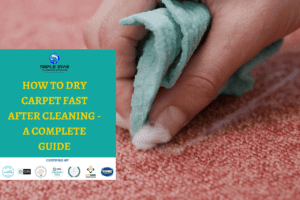
In practice, the single most common mistake made during stain cleaning is rubbing. It feels productive. It feels like you are doing more. But rubbing does three destructive things simultaneously: it spreads the stain laterally, it pushes the staining compound deeper into the pile, and it damages the fibre surface in a way that causes permanent dullness called fibre distortion.
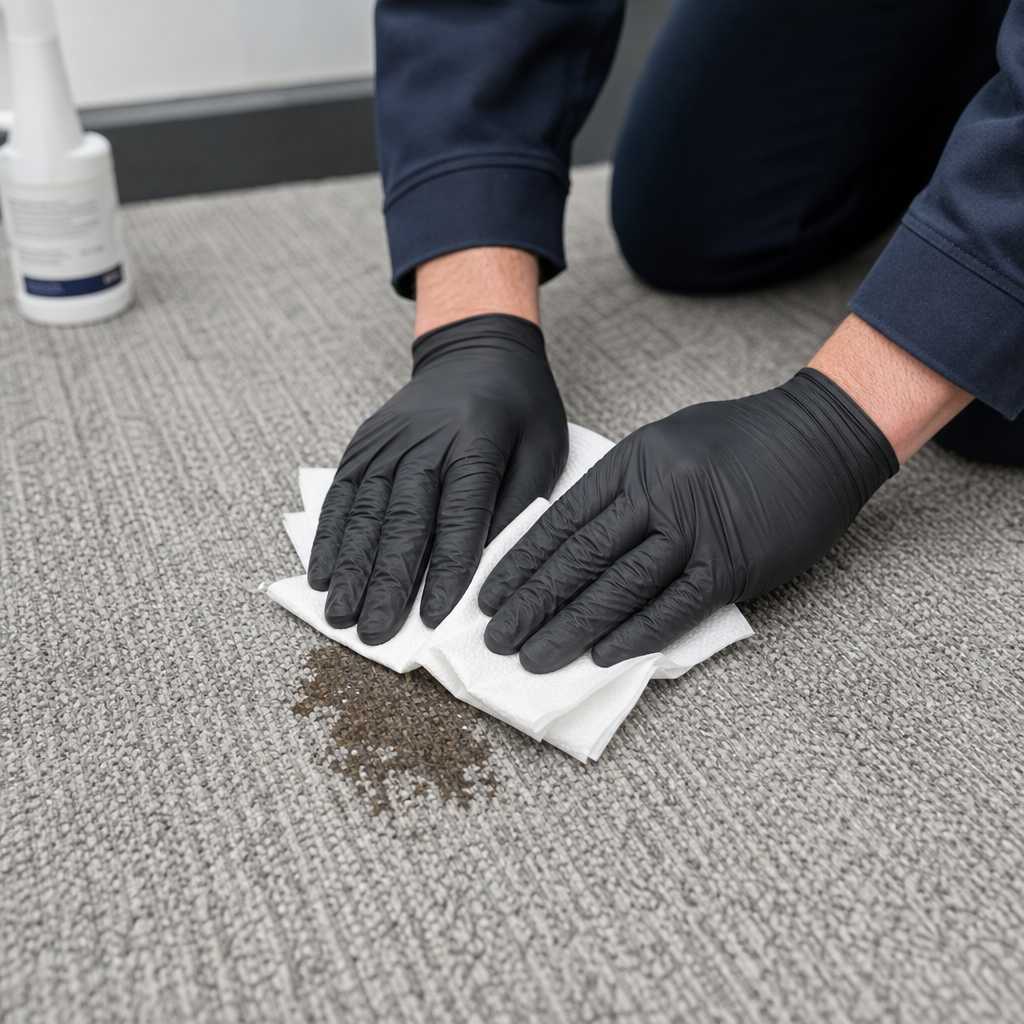
Blotting works by capillary action. A clean, dry cloth placed firmly on a wet stain will draw the liquid upward out of the fibre. Work from the outside edge of the stain inward to prevent spreading. Use a fresh section of cloth each time you press down.
For semi-solid spills like food, mud, or grease, scrape gently with a blunt knife or spoon first to remove as much solid material as possible before any liquid treatment begins. Applying cleaning solution to a stain that still has solid material sitting on top just spreads that material further into the pile.
Pro tip: In office environments, keep a stain response kit near shared kitchen areas and carpeted meeting rooms. It should contain a roll of paper towel, a clean white cloth, a small spray bottle of cold water, and a mild dish soap solution. Fast response is almost always more effective than a better product applied 30 minutes later.
Common Stain Types and the Right Approach for Each
Coffee and Tea Stains
Coffee and tea contain tannins, which are water-soluble initially but bond to fibres as they dry. Blot the spill immediately, then apply a solution of one part white vinegar to two parts cold water and blot again. Follow with a small amount of dish soap solution, blot dry, then rinse with cold water and blot a final time.
Do not use hot water. Do not let the vinegar sit for more than two minutes before rinsing. In commercial settings like offices and staffrooms, coffee stains are among the most frequent calls we receive, and most of them were preventable with a two-minute response.
Blood Stains
Cold water only. This is non-negotiable. Blot as much of the blood as possible with a dry cloth, then apply cold water and continue blotting. A small amount of hydrogen peroxide at 3% concentration can help lift dried blood from light-coloured carpets, but test first in a hidden spot. Never use hot water, steam, or enzymatic cleaners designed for general stains on fresh blood.
Red Wine
Blot immediately, absorbing as much as possible. Apply cold water and blot again. A commercial oxidising stain remover designed for tannin stains is the most effective product. Alternatively, a paste of baking soda and cold water applied and left for 15 minutes before vacuuming draws out the remaining pigment. Salt applied to a fresh spill also absorbs liquid quickly, but it must be vacuumed before any liquid treatment is applied.
Pet Urine and Odour
Pet urine is an alkaline stain. Blot as much liquid as possible, then apply an enzymatic cleaner specifically formulated for urine. These cleaners contain bacteria that digest the uric acid crystals responsible for the persistent odour. Standard carpet cleaners mask the smell temporarily but leave the crystals behind. A diluted white vinegar solution neutralises odour effectively after enzymatic treatment.
Repeat soiling in the same spot is a strong sign that urine has penetrated through to the carpet backing and underlay. At this point, professional extraction is required to prevent permanent damage and bacterial growth.
Oil and Grease
Scrape off any solid material first. Apply a small amount of clear dish soap diluted in cold water. Work from outside the stain inward, blotting repeatedly with a clean cloth. Grease stains require patience. Multiple light applications and blots work better than one heavy application. Baking soda applied to a fresh grease stain before any liquid treatment absorbs the oil and reduces the overall amount that needs to be cleaned.
Cleaning Methods Compared
Not all cleaning methods are equal. For carpet maintenance decisions, knowing the practical difference between available approaches saves money and prevents carpet damage.
|
Method |
Best Used For |
Limitations |
|---|---|---|
|
Blot and DIY Spot Treatment |
Fresh, isolated stains on commercial or residential carpet. Immediate response within five minutes of the spill. |
Cannot reach carpet backing or underlay. Ineffective on set stains or widespread soiling. Risk of fibre damage if the wrong product is used. |
|
Portable Steam or Wet Vac Machine (DIY Hire) |
Larger surface areas with general soiling. Between professional cleans for high-traffic zones. |
Consumer machines operate at lower water temperatures and reduced suction compared to commercial equipment. Often leaves excess moisture in the pile, increasing mould risk. Cannot treat the backing layer. |
|
Hot Water Extraction (Professional) |
Deep cleaning, set stains, post-event clean-up, end of lease requirements, medical centres, schools, and commercial offices requiring thorough sanitisation. |
Requires drying time of 4 to 8 hours. Must be performed by trained operators. Higher cost than DIY spot treatment, though significantly more effective on anything beyond fresh surface stains. |
The data consistently shows that hot water extraction performed by trained professionals produces measurably better results on set stains and general soiling than any DIY alternative. For commercial properties, scheduling professional carpet cleaning every 6 to 12 months depending on foot traffic is a cost-effective maintenance strategy compared to early carpet replacement.
“Carpet replacement costs typically run 10 to 20 times more than regular professional cleaning. Maintenance cleaning is not an expense, it is an asset preservation strategy.” – Institute of Inspection, Cleaning and Restoration Certification (IICRC) guidance on commercial carpet care.
What Never to Put on a Carpet Stain
There is a long list of home remedies that actively worsen carpet stains. These are the most damaging ones seen repeatedly in commercial and residential settings.
Boiling Water
Boiling water sets protein stains permanently. It also degrades the adhesive that holds carpet backing together over time. Never use water above room temperature on any fresh stain until the type of stain has been identified.
Undiluted Bleach
Bleach removes carpet colour permanently and irreversibly. Even a diluted bleach solution can cause colour loss on synthetic and natural fibre carpets. The damage is not always visible immediately but appears within 24 to 48 hours. There is no repair for bleach damage short of carpet replacement or patching.
Undiluted Vinegar on Tannin Stains
Undiluted white vinegar applied directly to tea, coffee, or red wine stains lowers the pH of the staining compound and causes it to bond more strongly to the carpet fibre. Always dilute vinegar at a minimum ratio of one part vinegar to two parts water, and use it only as a follow-up rinse after primary treatment, not as the first product applied.
Scrubbing Brushes
A stiff scrubbing brush on carpet pile causes fibre distortion. The fibres fray and break, creating a rough, faded appearance that is permanent. This is particularly visible on cut-pile commercial carpets common in offices and retail spaces. Use only soft cloths or soft-bristle brushes with gentle blotting pressure.
Hairdryer or Heat to Dry
Applying heat to a wet stain accelerates bonding of any remaining staining compound. It also causes synthetic fibres to melt slightly at the surface, creating a glazed texture that attracts soiling. Always allow carpet to air dry or use a fan on a cold setting.

Carpet Maintenance in Commercial Settings
For property managers and facility managers in Christchurch and Auckland, carpet maintenance is not a reactive task. It is a scheduled programme. Commercial carpet in office buildings, schools, medical centres, and retail stores accumulates a level of foot-traffic soiling that ordinary vacuuming cannot address.
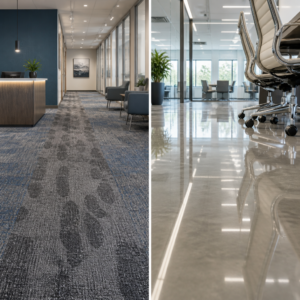
Dry soil is abrasive. Every time someone walks across a carpet that has not been professionally cleaned, the fine particles of grit and dirt embedded in the pile act like sandpaper against the fibres. This is the main cause of premature carpet wear in commercial settings, not stains. Stains are visible and get addressed. Abrasive dry soil is invisible until the carpet looks uniformly dull and worn.
A practical commercial carpet maintenance schedule works on three tiers. Daily vacuuming removes surface soiling before it embeds. Interim cleaning every 3 to 4 months using low-moisture techniques addresses moderate soiling in high-traffic zones. Full hot water extraction every 6 to 12 months restores the fibre structure, removes allergens and bacteria from the backing layer, and extends carpet life significantly.
For medical centres and schools in particular, deep extraction cleaning also addresses microbial contamination that vacuuming cannot touch. The IICRC S100 standard for commercial carpet care specifically recommends hot water extraction as the primary restorative method for facilities with hygiene requirements.
Property managers who work with Triple Star Commercial Cleaning in Christchurch and Auckland typically schedule carpet cleaning as part of a broader facility maintenance agreement. This approach means carpets are cleaned at the right intervals rather than only when visible damage prompts a response call.
When DIY Stain Cleaning Is Not Enough
A common mistake is assuming that if a stain is no longer visible to the naked eye, it has been fully removed. In practice, residue left in the carpet backing causes recurring stain reappearance as moisture is drawn back up through the pile. This is called wicking, and it is one of the most frequent issues in commercial carpets that have been spot-treated without professional follow-up.
There are specific situations where DIY treatment is not the right tool and professional carpet cleaning is the only effective solution. These include stains that have been present for more than 24 hours, widespread soiling across a large area, any stain that has penetrated to the backing or underlay, recurring stains that reappear after treatment, and end of lease or post-event cleaning where the carpet condition is subject to inspection.
For construction sites and newly completed builds, post-construction carpet cleaning involves not just stain removal but also the extraction of fine construction dust embedded deep in the pile. This dust is not visible on the surface but creates an abrasive environment that degrades new carpet fibres rapidly. Builders cleaning that includes professional carpet extraction significantly extends the life of new carpet installations.
If you manage commercial property across Christchurch or Auckland and are dealing with carpets that have been incorrectly treated or have accumulated set stains, a professional assessment will clarify what is restorable and what requires replacement. Acting on that assessment early is almost always more cost-effective than waiting.
Frequently Asked Questions
Does baking soda actually remove carpet stains?
Baking soda is effective as an absorbent for fresh liquid stains and as an odour neutraliser, particularly for pet urine. Applied to a fresh spill before any liquid treatment, it draws up liquid and reduces the total volume that penetrates the pile. However, baking soda alone does not chemically break down staining compounds. It works best as a first-response tool combined with appropriate liquid treatment afterward.
Can old or set stains be removed from carpet professionally?
Many set stains can be significantly reduced or fully removed with professional hot water extraction and pre-treatment chemicals. However, some stains such as bleach damage, permanent ink, and stains that have been repeatedly treated incorrectly with heat or harsh chemicals cause physical or chemical damage to carpet fibres that no cleaning process can reverse. A professional assessment before assuming replacement is necessary will identify which category a stain falls into.
How often should commercial carpet be professionally cleaned?
The appropriate frequency depends on foot traffic and the nature of the space. General office environments benefit from professional cleaning every 6 to 12 months. High-traffic reception areas, school corridors, and medical waiting rooms often require cleaning every 3 to 6 months. Facilities with hygiene obligations such as medical centres may require more frequent extraction cleaning. Regular vacuuming between professional cleans is essential and reduces the accumulation rate of embedded soiling.
Is it worth hiring professional carpet cleaning for a rental property at the end of lease?
Yes, for two practical reasons. First, many residential tenancy agreements in New Zealand require carpets to be professionally cleaned at end of lease, and the standard of clean expected is typically higher than what DIY machines deliver. Second, professional cleaning documentation provides evidence in the event of a bond dispute. The cost of professional end of lease carpet cleaning is almost always less than the cost of a partial or full bond deduction for carpet condition.
What is the best way to prevent carpet stains in a commercial office?
Prevention comes down to three things: mat placement at entry points to capture grit before it reaches carpet, a clear spill response protocol so staff act within the first few minutes of any spill, and a scheduled professional cleaning programme. Entry matting reduces the volume of abrasive soil entering carpeted areas by up to 80% according to carpet industry maintenance guidelines. Combining mats with a regular cleaning schedule is the most effective and cost-efficient approach to commercial carpet maintenance.
Does carpet protector spray actually work after a clean?
Yes, when applied correctly by a professional after hot water extraction, carpet protector products create a temporary fluorocarbon barrier on the fibre surface. This barrier slows the rate at which liquids are absorbed into the fibre, giving a longer window for blotting before the stain bonds. It does not make carpet stain-proof, but it materially improves stain cleaning outcomes in high-traffic commercial environments. The effect typically lasts 12 to 18 months under normal commercial foot traffic.
Have you dealt with a particularly stubborn carpet stain or found a treatment approach that worked unexpectedly well in a commercial setting? Share your experience in the comments, we read every one.