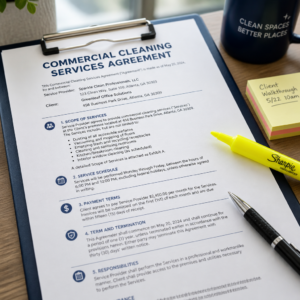
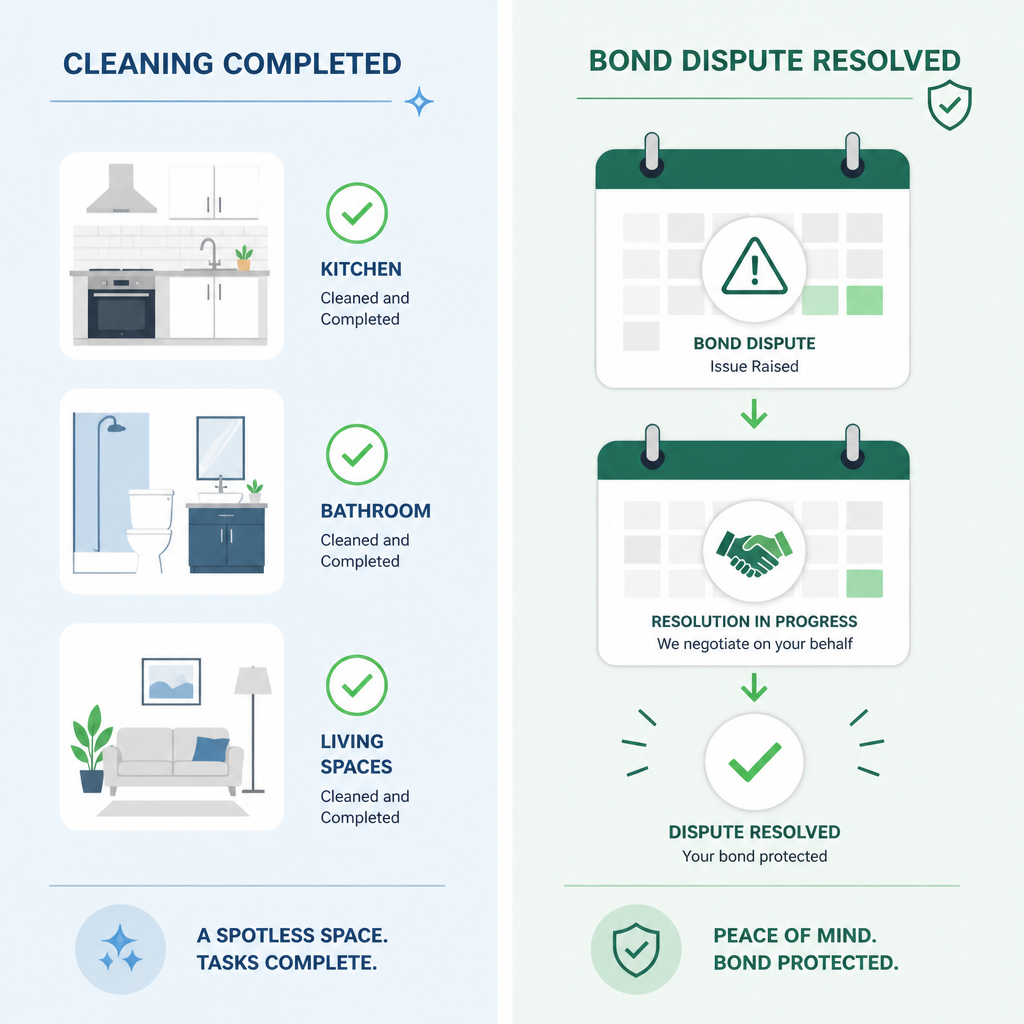
Bond disputes are one of the most common flashpoints between property managers and outgoing tenants in Christchurch. The difference between a smooth vacancy turnaround and a drawn-out Tenancy Tribunal claim almost always comes down to one thing: the condition the property was left in. This guide is written for property managers and business owners who need a clear, room-by-room framework to set cleaning expectations, conduct inspections, and decide when to bring in a professional end of lease cleaning Christchurch team rather than accepting a tenant’s DIY attempt. Get this process right and you protect the asset, minimise vacancy time, and eliminate most bond disputes before they start.
Table of Contents
- Quick Takeaways
- What NZ Law Actually Requires at Vacancy
- The Room-by-Room Inspection Checklist
- The Most Common Cleaning Failures Property Managers See
- DIY vs. Professional End of Lease Cleaning
- Bond Cleaning NZ: Setting the Right Standard from Day One
- Your Rental Property Cleaning Checklist for the Final Inspection
- Frequently Asked Questions
- References
Quick Takeaways
| Key Insight | Explanation |
|---|---|
| NZ law sets a relative standard, not an absolute one | Tenants must return the property to the condition documented in the ingoing report, allowing for fair wear and tear. Property managers must compare current state against ingoing photos, not against a perfect-clean ideal. |
| The oven is the single most-failed inspection item | Grease build-up inside the oven, on the door glass, and in the rangehood filter is the top reason bonds are withheld or reduced in Christchurch rental inspections. |
| Professional cleaning is only legally required if the tenancy agreement says so | Under the Residential Tenancies Act 1986, tenants are not automatically required to hire professionals. If your agreement includes a professional cleaning clause, it is enforceable. Check before the final inspection. |
| Window tracks are a reliable indicator of cleaning quality | Experienced property managers run a finger along window tracks. If tracks are dirty, the rest of the clean is usually insufficient. It is a fast proxy test for cleaning thoroughness. |
| A professional clean with a receipt is cheap bond insurance | For a three-bedroom Christchurch property, a professional end of lease clean typically costs far less than a bond deduction or Tenancy Tribunal filing fee. The receipt also provides documented evidence of compliance. |
| Carpet cleaning receipts matter when pets were allowed | Where a tenancy agreement permits pets, property managers routinely require professional carpet cleaning with a receipt as a condition of bond release. |
| Inspection checklists typically cover 30 to 50 line items | Property managers in Christchurch use structured checklists that compare every room against ingoing documentation. Tenants and contractors who prepare room by room fare significantly better than those who clean by feel. |
What NZ Law Actually Requires at Vacancy
Section 40(1)(e)(i) of the Residential Tenancies Act 1986 requires a tenant to leave a property in a “reasonably clean and reasonably tidy condition” and to remove all rubbish. That phrase sounds simple. In practice, it generates more disputes than almost any other clause in tenancy law.
The standard is relative, not absolute. Property managers must compare the current condition of the property against how it was documented at the start of the tenancy, specifically the ingoing condition report and accompanying photos. A tenant who moves into a property where the oven was already stained is not required to return it in better condition than they received it. Conversely, a tenant who moves into a freshly cleaned property is held to that standard.
Fair wear and tear is explicitly excluded from the tenant’s responsibility. Faded paint, minor wall scuffs from normal living, worn carpet in traffic areas, and small nail holes from picture hanging are not cleaning deficiencies. Property managers who attempt to charge tenants for fair wear and tear will lose at the Tenancy Tribunal. Keep this distinction clear when assessing vacancies.
The safest position for any outgoing tenant, and the clearest standard for any property manager, is to treat the ingoing condition report as the benchmark and work systematically from there. Everything above fair wear and tear is the tenant’s responsibility to restore.
Pro tip: Before the final inspection, compare your current inspection photos against the ingoing report side by side. Document every discrepancy with a date-stamped photo. This removes subjectivity from the conversation and gives you a defensible record if the matter goes to the Tenancy Tribunal.
The Room-by-Room Inspection Checklist
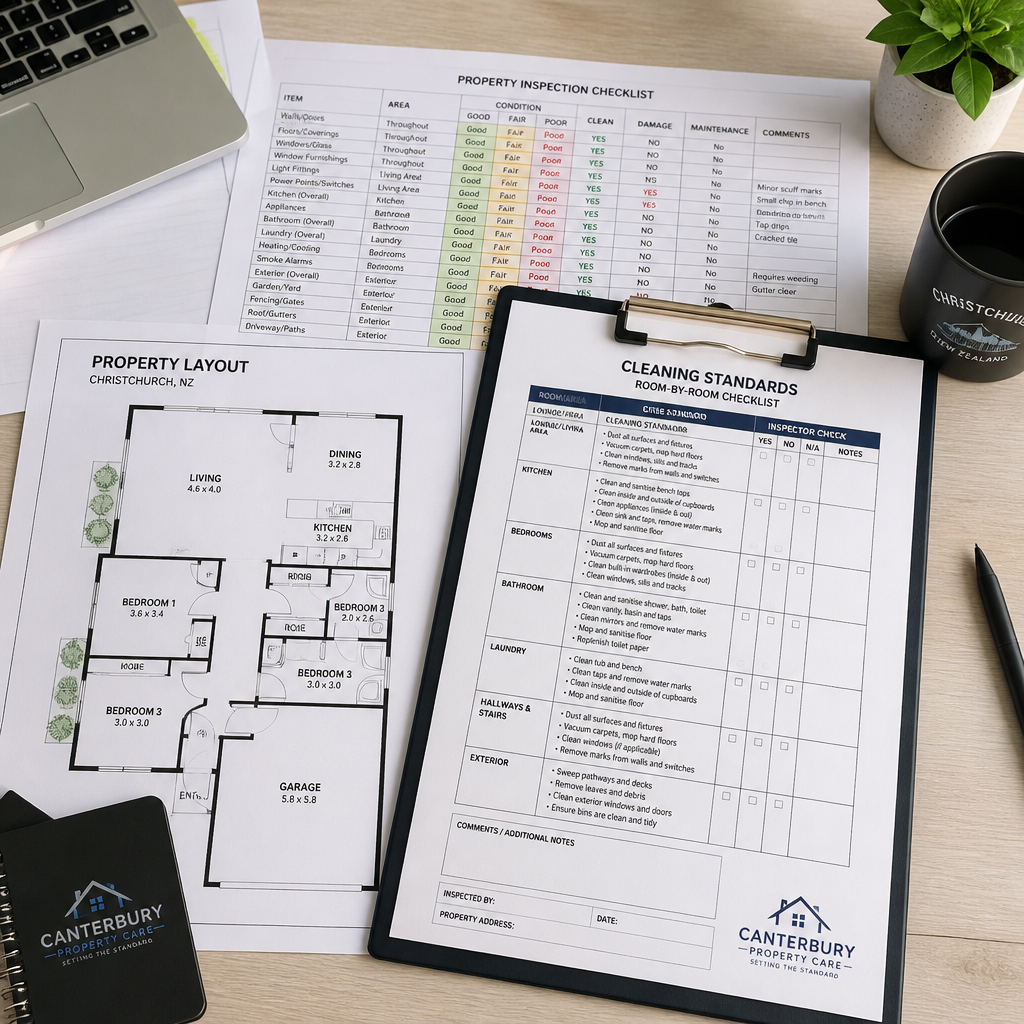
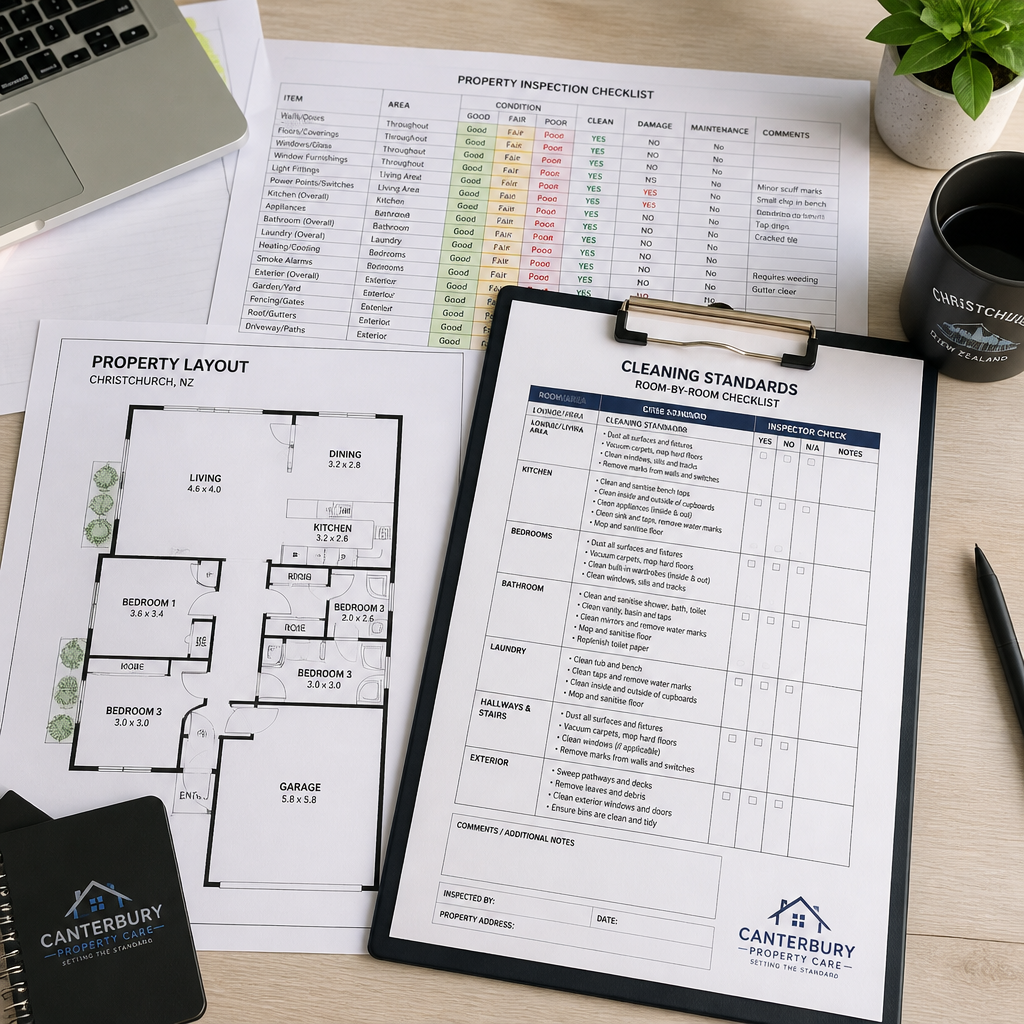
A structured inspection checklist is not optional, it is the tool that keeps your bond decisions defensible. Property managers in Christchurch typically work through 30 to 50 line items per property. Below is what that checklist should cover.
Kitchen
The kitchen is where bonds are won and lost. Oven interior, including walls, base, racks, door glass, and the door seal, must be degreased completely. The rangehood filter and underside are specifically checked for grease build-up. Stovetop burners, rings, and drip trays need individual attention. All cupboard and drawer interiors must be wiped, not just the fronts. Benchtops, splashback, and the sink should be descaled and streak-free. The fridge space and dishwasher, including behind and underneath if accessible, complete the kitchen checklist.
Bathroom and Laundry
Shower glass, tile grout, and door tracks must be descaled and free of mould. The toilet base, behind the base, cistern, and seat are all inspected. The mirror, vanity surfaces, and extractor fan grille should be clean and dry. In the laundry, the tub, behind the washing machine space, and any lint traps are checked.
Living Areas and Bedrooms
Windows inside, including tracks, sills, and latches, are a reliable indicator of overall clean quality. Walls are inspected for scuffs beyond fair wear and tear. Skirting boards, light switches, and door handles should be wiped. Light fittings must be free of insects and ceiling corners de-cobwebbed. Curtains and blinds should be dusted, and heat pump filters cleaned and reinserted correctly.
Carpets and Floors
Carpets must be vacuumed thoroughly. Where the tenancy agreement required professional carpet cleaning, such as in pet-friendly properties, the tenant must produce a receipt from a professional carpet cleaning service. Hard floors should be mopped and free of residue.
Outside and Garage
Lawns must be mowed, gardens left tidy, and all rubbish and green waste removed from the property. The garage should be swept and oil stains treated. The letterbox should be emptied and the exterior of the property left in the condition documented at ingoing.
The Most Common Cleaning Failures Property Managers See
After inspecting dozens of vacancies, patterns emerge. Certain items fail consistently, not because tenants are careless, but because these areas are easy to overlook or underestimate during a DIY clean.
The oven is the single most-failed inspection item in Christchurch rental properties. Baked-on grease inside the cavity, on the door glass, and in the rangehood filter is the top reason bonds are withheld or reduced. A self-clean oven cycle does not meet inspection standard. The rangehood filter typically needs to be soaked and scrubbed separately.
Window tracks are the second most commonly failed item. Inspectors run a finger along window tracks as a quick proxy test. If the tracks are dirty, it signals that the rest of the clean is likely to be superficial. The same logic applies to skirting boards, light switches, and the tops of door frames.
Heat pump filters are missed in nearly every DIY tenancy clean. They are out of sight, so tenants forget them. Property managers do not. A dirty heat pump filter is a straight deduction and sometimes signals a maintenance issue that needs addressing before the next tenant moves in.
Pro tip: If a tenant’s DIY clean fails your inspection on more than three items, call in a professional service rather than asking for a re-clean. A second DIY attempt rarely reaches the required standard, and the delay extends your vacancy period unnecessarily. Triple Star Commercial Cleaning handles end of lease cleaning in Christchurch with the exact checklist property managers use.
DIY vs. Professional End of Lease Cleaning
This is not a close call for most commercial and residential properties above a studio apartment. A full tenancy clean on a three-bedroom Christchurch property is a solid one to two days of hard, methodical work. Most tenants significantly underestimate the time and the standard required.
Comparing Your Options
| Approach | Typical Outcome for Property Managers | Best Suited For |
|---|---|---|
| Tenant DIY Clean | Frequently fails on ovens, window tracks, and heat pump filters. Re-inspection delays vacancy turnaround. Risk of bond dispute remains. No documented receipt for protection. | Small studios with a single long-term, diligent tenant and a low-standard ingoing condition. |
| Professional End of Lease Cleaning Service | Inspection-ready outcome. Receipt documents compliance. Covers the full 30 to 50 item checklist. Reduces re-inspection rate significantly. Protects both tenant bond and property manager timeline. | Most Christchurch rental properties, especially those with carpets, pets, or a high ingoing condition standard. |
| Property Manager-Arranged Clean (Charged to Bond) | Gives property manager full control over standard and timing. Cost deducted from bond if tenant fails to clean adequately. Requires clear documentation of failure at inspection. | Situations where a tenant has vacated without adequate cleaning and the property manager needs a fast, documented solution. |
Professional tenancy cleans exist as a distinct service category precisely because the standard expected at a final inspection is higher than a regular weekly clean. Companies that specialise in end of lease cleaning know what property managers in Christchurch look for and work through the checklist systematically, not by feel.
Bond Cleaning NZ: Setting the Right Standard from Day One
The phrase bond cleaning NZ is used loosely to describe any clean performed with the intent of securing a full bond return. But the standard is set at the beginning of the tenancy, not at the end. Property managers who want clean vacancies need to build the expectation into the tenancy from the first day.
The ingoing condition report is your most important document. Photograph every room, every appliance interior, every window track, and every carpet. Date-stamp everything. A detailed ingoing report makes the final inspection objective rather than subjective. It eliminates the “it was already like that” argument and protects both parties.
Where your tenancy agreements permit pets, include an explicit professional carpet cleaning clause with receipt requirement. This is enforceable if the tenant signed the agreement and it removes ambiguity entirely at the end of the tenancy.
For commercial properties and office buildings, the same principle applies. A well-documented ingoing inspection report, combined with a clear cleaning specification in the lease, gives property managers a defensible benchmark for every vacancy assessment. Triple Star Commercial Cleaning works with property managers and body corporates across Christchurch to establish and maintain these standards through commercial cleaning contracts and end of lease services.
Your Rental Property Cleaning Checklist for the Final Inspection
Use this as your structured walkthrough at every final inspection. Each item should be compared against the ingoing condition report. Mark pass or fail with a date-stamped photo for any failed item.
Kitchen
- Oven interior: walls, base, racks, door glass, seal
- Rangehood: filter cleaned, underside degreased
- Stovetop: all burners, rings, drip trays
- Cupboards and drawers: inside completely wiped
- Benchtops and splashback: clean and descaled
- Sink: descaled and streak-free
- Fridge space: clean behind and underneath
- Dishwasher: cleaned and run empty
Bathroom and Laundry
- Shower glass, tile grout, door tracks: descaled and mould-free
- Toilet: bowl, base, behind base, cistern, seat
- Mirror and vanity: clean and dry
- Extractor fan grille: dust-free
- Laundry tub: clean and dry
- Behind washing machine space: cleared and clean
All Rooms
- Windows inside: glass, tracks, sills, latches
- Walls: spot-cleaned for scuffs beyond fair wear and tear
- Skirting boards, light switches, door handles: wiped
- Light fittings: dust-free and insect-free
- Ceiling corners: de-cobwebbed
- Curtains and blinds: dusted
- Heat pump filters: cleaned and correctly reinserted
- Carpets: vacuumed, professional clean receipt if required
- Hard floors: mopped and residue-free
Outside
- Lawns: mowed and edges trimmed
- Gardens: tidy, no dead plants left
- Rubbish and green waste: fully removed
- Garage: swept, oil stains treated
- Letterbox: emptied
For property managers handling multiple vacancies, having a consistent printed or digital version of this rental property cleaning checklist removes subjectivity from every inspection and makes your bond decisions straightforward to document and defend.
Frequently Asked Questions
Is a tenant legally required to hire a professional cleaner in New Zealand?
No. Under Section 40(1)(e)(i) of the Residential Tenancies Act 1986, a tenant must leave the property in a reasonably clean and reasonably tidy condition. There is no automatic legal requirement to hire a professional. However, if the tenancy agreement contains a clause specifically requiring professional cleaning, that clause is enforceable if the tenant signed the agreement. Always check the tenancy agreement before the final inspection.
What happens if a tenant’s clean does not meet the required standard?
The property manager can document the deficiencies with photos, compare them against the ingoing condition report, and request remediation. If the tenant refuses or vacates without cleaning, the cost of a professional clean can be deducted from the bond. If the bond is insufficient to cover the cost, the matter can be taken to the Tenancy Tribunal with documented evidence of the shortfall.
How long does a professional end of lease clean take for a typical Christchurch property?
A full tenancy clean on a standard three-bedroom Christchurch house is a solid one to two days of work for a single experienced cleaner, or a half-day for a professional team. The exact time depends on the size of the property, the number of bathrooms, the condition of the oven and carpets, and whether carpet cleaning is included. Professional services give you a defined scope and a receipt, which is far more useful than an open-ended DIY effort with no documentation.
What is the difference between end of lease cleaning and a regular cleaning service?
End of lease cleaning is a one-off, inspection-standard clean that covers every surface in the property against a structured checklist, including areas that a regular weekly clean never touches, such as oven interiors, window tracks, rangehood filters, heat pump filters, and behind appliances. A regular maintenance clean keeps a property tidy during a tenancy. They are completely different services with different scopes, different time requirements, and different pricing.
Do property managers in Christchurch require carpet cleaning receipts?
Where a tenancy agreement permits pets, professional carpet cleaning with a receipt is routinely required as a condition of bond release. Even without a pet clause, if carpets were professionally cleaned at the start of the tenancy and the ingoing report documents this, there is a strong basis to require professional carpet cleaning at the end. A receipt protects both the tenant and the property manager by documenting that the work was completed to a professional standard.
Can a property manager arrange cleaning and charge it to the tenant’s bond?
Yes, provided the property manager has documented evidence that the tenant failed to leave the property in the required condition. This means a dated inspection report and photos comparing current condition against the ingoing report. The cost of cleaning must be reasonable and reflect actual market rates. Inflated cleaning invoices are challenged and often reduced at the Tenancy Tribunal, so use a reputable professional service and keep all invoices.
How does Triple Star Commercial Cleaning help property managers in Christchurch?
Triple Star Commercial Cleaning provides end of lease cleaning services for residential properties, commercial buildings, and offices across Christchurch. The team works through the same inspection checklist that property managers use, covers all rooms including ovens, carpets, window tracks, and heat pump filters, and provides a receipt on completion. Property managers and real estate agencies can coordinate directly with the team for vacancy turnaround cleaning on flexible scheduling. More information is available at www.3plestar.nz.
If you manage rental properties in Christchurch, we would like to hear what cleaning issues create the most friction at your final inspections. Share your experience in the comments or get in touch directly.
We would love your feedback and any insights you would share with others. What perspective would you add?