Most business owners in Christchurch and Auckland discover they hired the wrong commercial cleaning company after the damage is already done. The bins are still full on Monday morning, the carpets look worse than before, or a cleaner has been given after-hours access without anyone verifying their background. Choosing a commercial cleaning company in Christchurch or Auckland is not a straightforward price comparison exercise. It is a decision that directly affects your workplace hygiene, staff morale, compliance obligations, and the first impression you make on every client who walks through your door. This guide gives you the practical framework to get it right the first time.
Table of Contents
- Why the Wrong Choice Costs More Than the Right One
- Quick Takeaways
- What Types of Commercial Cleaning Does Your Business Actually Need
- The Five Questions to Ask Before Signing Any Contract
- Comparing Your Options: Franchise vs. Independent vs. Specialist
- Insurance, Compliance, and Health and Safety in NZ
- What Good Service Actually Looks Like in Practice
- Red Flags That Signal a Poor Cleaning Partner
- Frequently Asked Questions
- References
Why the Wrong Choice Costs More Than the Right One
The commercial cleaning industry in New Zealand is crowded. You will find franchises, one-person operations, large national networks, and specialist providers all competing for the same contracts. Price is the most visible differentiator, so many business owners default to the cheapest quote and assume performance will be roughly equivalent. It rarely is.
A missed clean before a board meeting, a hygiene complaint from a staff member, or an uninsured incident on your premises can each create costs that dwarf whatever you saved on monthly invoices. The real question is not “what is the cheapest option?” It is “which provider will perform consistently without me having to manage them?” That is the standard every professional cleaning service in NZ should be held to.
Quick Takeaways
| Key Insight | Explanation |
|---|---|
| Insurance is non-negotiable | Any commercial cleaner working on your premises must carry public liability insurance. Without it, property damage or injury incidents become your financial problem. |
| After-hours access requires vetting | Most commercial cleaning happens outside business hours. You need confidence that every person entering your building has been properly screened and managed. |
| Specialist services matter for your site type | An office cleaning team is not automatically qualified for post-construction cleaning, medical facility standards, or floor stripping and sealing. Match the provider to your actual needs. |
| Consistency beats one-off excellence | A sparkling first clean followed by declining standards is a common pattern. Look for evidence of consistent service delivery, not just an impressive first visit. |
| Approved supplier status adds accountability | Suppliers approved by bodies like UpstreamNZ operate within verified standards, giving property managers and facility teams an extra layer of assurance. |
| Local knowledge matters in Christchurch and Auckland | A company active in your city understands local business environments, scheduling demands, and the specific needs of your building type or industry sector. |
| Flexible scheduling is a practical requirement | Your operations will change. A cleaning partner who cannot adapt to schedule changes or emergency requests will create ongoing friction for your team. |
What Types of Commercial Cleaning Does Your Business Actually Need
Before you contact a single provider, get clear on what you actually need. “Commercial cleaning” covers a wide range of services, and assuming every company can handle every task is one of the most common mistakes property managers make.
Regular Maintenance Cleaning
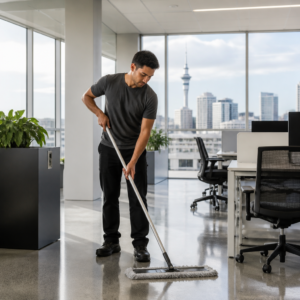
This is the foundation for most businesses. Regular maintenance cleaning covers vacuuming and mopping floors, emptying bins, sanitising bathrooms, wiping down surfaces, and maintaining kitchen and break room areas. Most businesses schedule this daily, a few times per week, or weekly depending on foot traffic and workplace size. For a busy Auckland office or a Christchurch retail store with high customer flow, daily cleaning is usually the minimum standard.
Deep Cleaning and Specialist Services
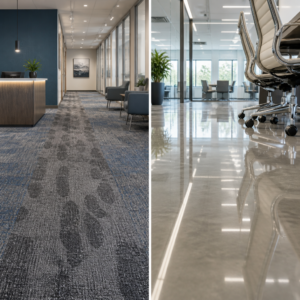
Deep cleaning goes beyond what regular maintenance covers. It includes carpet steam cleaning, high-level dusting of ceiling vents and light fittings, window cleaning, hard floor stripping and resealing, and detailed bathroom and kitchen cleaning. This is typically scheduled quarterly or biannually. If you manage a medical centre, you will also need cleaning that meets health sector infection control standards. If you are a construction company, you need post-construction cleaning that safely removes building dust, debris, and materials without damaging finished surfaces.
End of Lease and One-Off Cleaning
Tenants, real estate agencies, and property managers handling residential or commercial lease transitions need end of lease cleaning that meets landlord and property standards. This is a distinct service requiring detailed attention to areas that regular maintenance never touches. Getting it wrong means disputes over bond returns or failed handover inspections.
The Five Questions to Ask Before Signing Any Contract
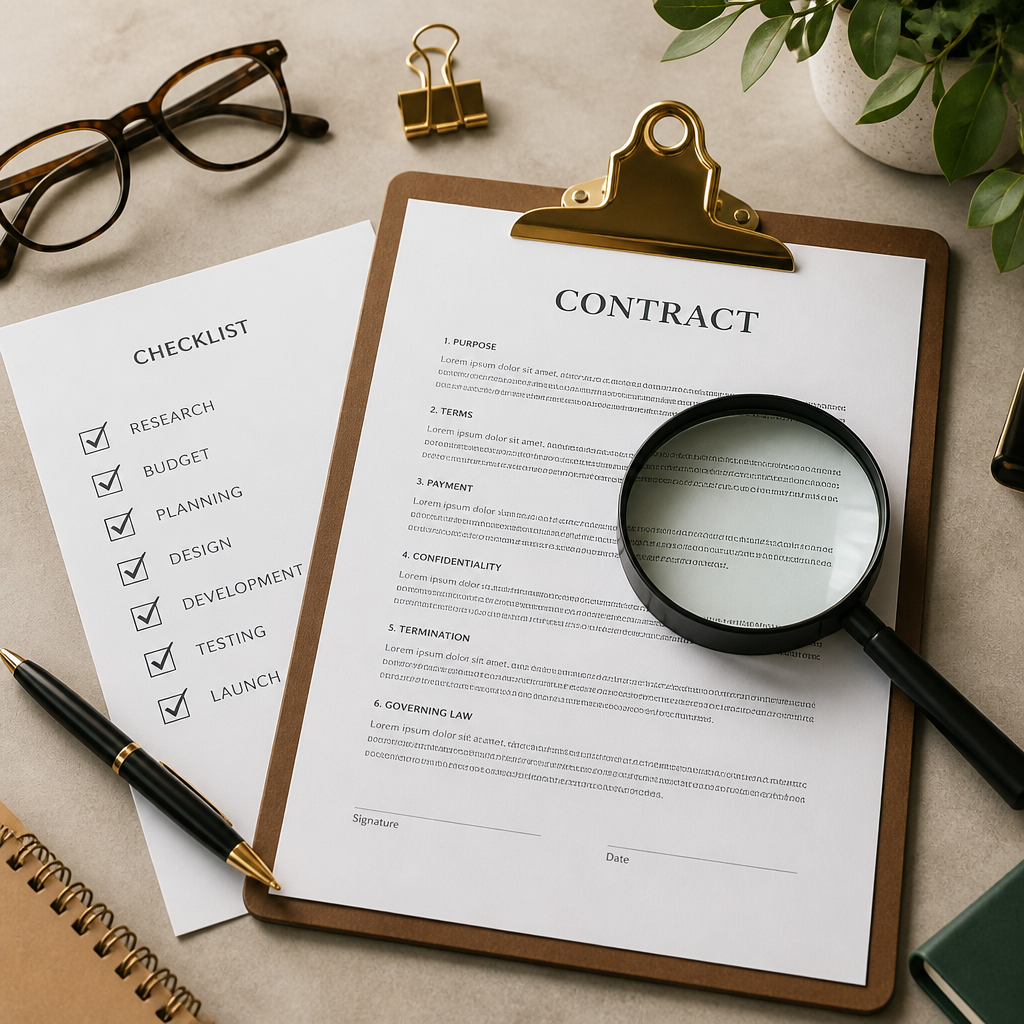
When you are evaluating providers for office cleaning in Auckland or commercial cleaning in Christchurch, the sales conversation will always focus on what the company does well. Your job is to probe the areas that reveal whether they will actually deliver once the contract is signed.
1. Are you fully insured and can you provide documentation?
Ask for proof of public liability insurance before any other conversation. A reputable commercial cleaning company will provide this without hesitation. If a provider hedges, delays, or provides a vague verbal assurance, walk away. Triple Star Commercial Cleaning, for example, covers all cleaning sites with public liability insurance and operates as an UpstreamNZ approved supplier, which means their standards are independently verified. That kind of documented accountability is what you should expect from any serious provider.
2. What is your staff vetting process?
Cleaners often work in your building after hours, sometimes alone. Ask specifically about police checks, employment verification, and how the company manages staff turnover. High turnover is endemic in the cleaning industry, and a company with no structured onboarding or vetting process will send different, unverified people to your site with little notice.
3. Who is my single point of contact when something goes wrong?
The Monday morning scenario where you walk in to find something was missed and cannot reach anyone who can fix it is a situation that is entirely avoidable. Ask the provider to explain their escalation process. If the answer involves calling a general phone line and logging a ticket, that is a warning sign. You want a named account manager or supervisor who knows your site and can respond within hours, not days.
4. Can you handle all the services my site needs, or will I need multiple providers?
A provider who can deliver regular maintenance cleaning, carpet cleaning, window cleaning, and floor care under one contract is significantly easier to manage than coordinating three separate companies. Ask specifically about the services you need now and those you may need in the next 12 months. A good commercial cleaning company in Christchurch or Auckland will give you an honest answer about what they handle in-house versus what they subcontract.
5. What does your quality assurance process look like?
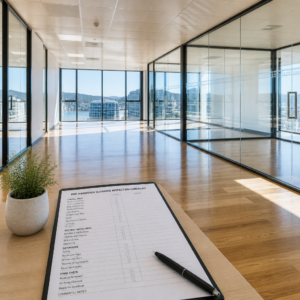
Regular site inspections, documented checklists, and a process for reporting missed tasks are the markers of a professionally run cleaning operation. Ask how they measure whether a clean was completed to standard and what happens when it is not. Vague answers like “we take pride in our work” are not a quality assurance process.
Pro tip: Request a trial period or a one-off clean before committing to a long-term contract. A company confident in their service quality will agree to this without pushback.
Comparing Your Options: Franchise vs. Independent vs. Specialist
The New Zealand commercial cleaning market is broadly divided into three types of providers. Understanding the structural differences between them helps you predict the kind of experience you will actually get, rather than relying solely on what a salesperson tells you.
| Provider Type | Typical Strengths | Common Limitations |
|---|---|---|
| Franchise Networks (e.g., national chains) | Established brand, standardised systems, broad geographic coverage | Individual franchise quality varies significantly, head office is remote from your site, complaints can be slow to resolve, high staff turnover in franchise units |
| Independent Local Cleaners | Lower overheads, owner often on-site, more flexible pricing | May lack insurance documentation, limited capacity for large or specialist sites, no backup if the operator is unavailable, limited service range |
| Specialist Commercial Cleaning Companies | Trained for specific environments (offices, construction, medical, schools), insured, accountable, consistent staffing, broad service range under one contract | Higher baseline cost than solo operators, may have minimum contract requirements |
For most property managers, facility managers, and business owners managing commercial or institutional spaces in Christchurch or Auckland, a specialist commercial cleaning company delivers the best balance of accountability, service range, and consistent quality. The cost difference compared to a franchise or independent operator is usually justified within the first two or three months of service, simply by the reduction in complaints and management time.
Insurance, Compliance, and Health and Safety in NZ
New Zealand businesses operate under health and safety obligations that extend to contractors working on their premises. If a cleaning contractor is injured at your site, or causes property damage, your exposure depends in part on what insurance and systems they carry. This is not a theoretical risk.
Public Liability Insurance
Public liability insurance protects you and the cleaning company if property is damaged or a third party is injured during a clean. Budget cleaning operators sometimes carry minimal or no cover, which transfers the financial risk directly to you as the property occupier or manager. Ask for a copy of the certificate, not just a verbal confirmation.
Health and Safety Compliance
Under New Zealand’s Health and Safety at Work Act 2015, businesses have a duty to manage risks created by contractors on their sites. A commercial cleaning company should be able to demonstrate documented safety procedures, hazard identification processes, and appropriate training for the environments they work in. For higher-risk environments like construction sites or industrial facilities, this standard is even more critical. Companies with verified supplier status, such as UpstreamNZ approved suppliers, have already passed independent checks that cover these compliance areas.
Letting a crew into your building after hours requires immense trust. The question is not whether a cleaning company has ever done good work. The question is whether they have the systems to do it consistently, on every visit, regardless of staff changes or scheduling pressures.
Staff Training and Workplace Standards
Cleaning staff working in medical centres, schools, or food preparation areas need specific training in hygiene standards, chemical handling, and infection control. Ask any provider working in these environments what their staff training process covers and whether it is documented. A company that cannot answer this clearly is not suitable for sensitive site types.
Pro tip: For body corporates and strata-managed buildings, confirm that the cleaning company has experience working within the specific access and scheduling requirements of multi-tenanted properties. The logistics are different from a single-occupancy office, and providers without that experience will struggle.
What Good Service Actually Looks Like in Practice
Good commercial cleaning is not invisible in the way people sometimes describe it. You do notice it. You notice that the bathrooms are consistently clean at 8am, that the carpets look professional, that surfaces are wiped down without being reminded, and that nobody on your team is complaining. What you do not notice is any disruption to your operations, any security incidents, or any gaps in service.
Consistent Staffing Makes a Real Difference
One of the biggest gaps between what cleaning companies promise and what they deliver is staff consistency. If a different person shows up to your site every second week, you lose continuity. Someone who knows your building, knows where the supplies are stored, knows your preferences and your pain points, delivers a fundamentally better result than a rotation of unfamiliar faces. Ask providers how they handle staff turnover and how they introduce new team members to your site.
Clear Communication and Scheduling Flexibility
Business schedules change. You will have events that require an early clean, construction projects that shift timelines, or seasonal peaks that need additional attention. A cleaning partner who can adapt to these changes without requiring weeks of notice or charging emergency premiums is genuinely valuable. This flexibility is one of the core reasons businesses in Christchurch and Auckland switch from large franchise networks to locally operated specialist providers who can respond to real-world scheduling needs.
Scope Creep and Service Gaps
A common problem in commercial cleaning contracts is scope creep in reverse: what started as a comprehensive clean gradually narrows as the team cuts corners or deprioritises tasks that are not checked. Site inspections and documented checklists prevent this. If your provider does not conduct regular quality checks, the scope of what actually gets done will quietly shrink over time.
Red Flags That Signal a Poor Cleaning Partner
In practice, the warning signs of a poor commercial cleaning company are consistent across the industry. Knowing what to look for before you sign a contract is far better than discovering these problems six months into a service agreement.
Watch for providers who cannot produce insurance documentation on request, who are vague about who specifically will be cleaning your site, or who offer a price significantly below every other quote without explaining why. Extremely low pricing usually means cutting corners on staff pay rates, insurance, or cleaning time per visit.
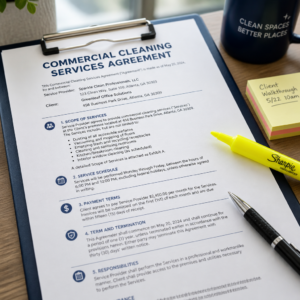
Be cautious of companies that resist putting detailed service specifications in writing. A professional provider will document exactly what is included in each clean, how frequently each task is performed, and what the escalation process is for missed tasks or complaints. If a company avoids this level of specificity, it protects them, not you.
Finally, watch for poor initial responsiveness. If a company takes days to respond to a quote request, misses a scheduled site visit, or sends someone to quote who cannot answer basic questions about service delivery, that behaviour will not improve once you are a contracted customer.
Frequently Asked Questions
How often should a commercial office be cleaned?
Most office environments benefit from cleaning three to five times per week. High-traffic offices with shared facilities, kitchens, and customer-facing areas typically need daily cleaning. Lower-traffic environments may be well-served by two or three cleans per week. The key variables are the number of staff, the nature of your work, and whether clients or patients visit your premises regularly.
What is the difference between commercial cleaning and janitorial services?
Commercial cleaning generally refers to professional cleaning services carried out by an external provider on a scheduled or as-needed basis. Janitorial services typically refer to on-site, in-house maintenance carried out by a dedicated staff member. Most New Zealand businesses outsource to commercial cleaning companies rather than employing in-house cleaners, as it provides access to specialist equipment, trained staff, and broader service coverage without the overhead of employment.
Do commercial cleaning companies in New Zealand need to be insured?
There is no legal requirement in New Zealand that forces every commercial cleaning company to carry insurance, which is exactly why you must ask for proof before signing a contract. Reputable providers carry public liability insurance as a baseline standard. Triple Star Commercial Cleaning, for example, covers all cleaning sites with public liability insurance and holds UpstreamNZ approved supplier status, which provides property managers with independent verification of their operating standards.
What should I look for in a post-construction or builders cleaning company?
Post-construction cleaning requires specific expertise and equipment to safely remove building dust, construction debris, and residual materials without damaging newly finished surfaces. Look for a provider with documented experience in builders and post-construction cleaning, the ability to work within construction site health and safety requirements, and a process for coordinating with your project manager on timing. General office cleaners are not equipped or trained for this work.
How do I find a reliable commercial cleaning company in Christchurch or Auckland?
Start with providers who are locally active in your city, carry verifiable public liability insurance, and have documented experience with your type of premises. Check for approved supplier status with bodies like UpstreamNZ, ask for site-specific references, and request a written service specification before signing anything. Avoid making price your primary filter. The cheapest option in commercial cleaning almost always reflects reduced service quality, inadequate insurance, or unsustainable staff pay rates. Triple Star Commercial Cleaning operates across both Christchurch and Auckland, covering office cleaning, commercial buildings, medical centres, schools, retail stores, construction sites, and residential properties, with all sites covered by public liability insurance.
Can one cleaning company handle all my cleaning needs across different sites?
Yes, and consolidating with a single provider who can deliver across regular maintenance, carpet cleaning, window cleaning, floor care, and specialist services is significantly easier to manage than coordinating multiple contractors. Ask any provider specifically which services they deliver in-house and which they subcontract, as subcontracting introduces a layer of accountability risk that you should factor into your decision.
If you manage commercial or office spaces in Christchurch or Auckland, we would like to hear what has worked well for you when vetting cleaning providers, and what you wish you had checked before signing your last contract.
We would love your feedback and any insights you would share with others. What perspective would you add?