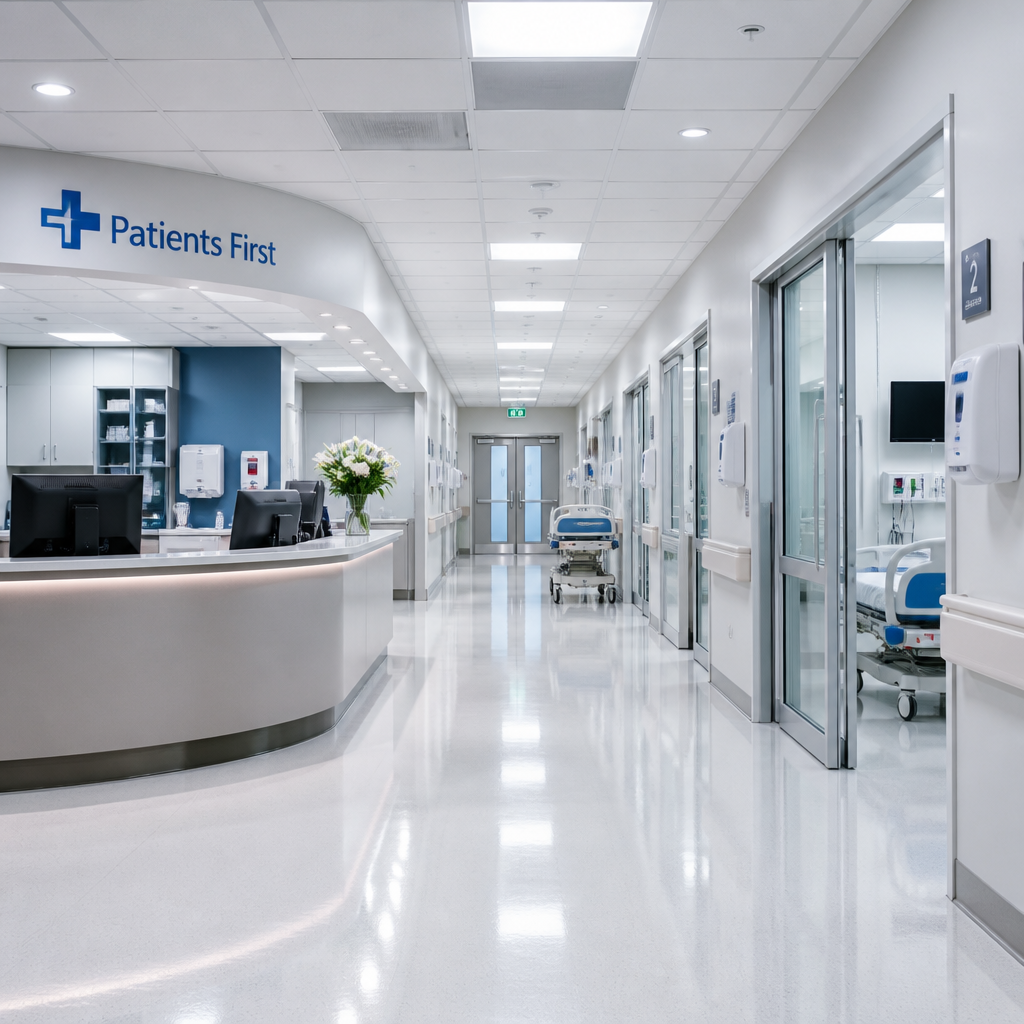
A school principal in Christchurch should never have to worry about whether the toilets were cleaned after the last school day. A practice manager at an Auckland medical centre should never have to wonder whether the waiting room surfaces were disinfected correctly before the first patient walks in. Yet these are the exact conversations that happen when cleaning contractors do not understand what these environments actually require. School cleaning in Christchurch and medical centre cleaning in Auckland are not simply harder versions of office cleaning. They operate under distinct legal obligations, different infection control frameworks, and occupant safety requirements that most general cleaning companies are simply not equipped to handle.
Table of Contents
- Why Schools and Medical Centres Require Specialist Cleaning
- NZ School Cleaning Requirements: What the Rules Actually Say
- Medical Centre Cleaning and NZS 8134: The Compliance Framework
- Zone Cleaning: The Non-Negotiable System for Healthcare Facilities
- Comparing Cleaning Approaches for Schools and Medical Centres
- What to Look for in a School or Healthcare Cleaning Contractor
- Frequently Asked Questions
- References
Why Schools and Medical Centres Require Specialist Cleaning
Both schools and medical centres share one characteristic that makes standard commercial cleaning protocols insufficient: high-density occupancy by vulnerable people. Children in classrooms spread respiratory illnesses rapidly through shared surfaces. Patients in waiting rooms are often already immunocompromised, making cross-contamination a genuine clinical risk rather than an abstract concern.
The difference between a general cleaning company and a specialist is not always visible on the day. It shows up six weeks later when a school suffers a gastroenteritis outbreak traced back to improperly sanitised bathroom fixtures, or when a medical centre fails an infection control audit because documentation from their cleaning contractor is incomplete or non-existent.
In practice, the cleaning standard required for a school or a healthcare facility is shaped by three things: who occupies the space, what regulatory framework governs the facility, and what happens when cleaning fails. Getting this right is not about doing more cleaning. It is about doing the right cleaning, in the right order, with the right products, and being able to prove it.
NZ School Cleaning Requirements: What the Rules Actually Say
Maintaining a clean and hygienic school environment in New Zealand is not optional good practice. The Ministry of Education, alongside public health authorities, sets expectations that schools maintain safe and hygienic environments to minimise the spread of illness and meet duty of care obligations. For school boards and property managers, this means that cleanliness is a governance responsibility, not just an operational preference.
What Ministry of Education Expectations Mean in Practice
The Ministry of Education’s expectations for school hygiene cover the consistent disinfection of shared contact surfaces, effective floor care, sanitary facility maintenance, and safe disposal of waste. These expectations translate into a cleaning schedule that must be structured, documented, and delivered reliably every school day, not just when a principal notices something is off.
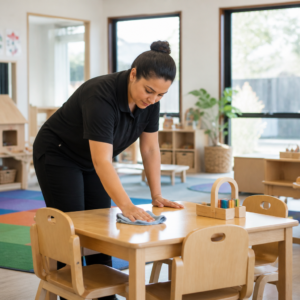
A common mistake is treating school cleaning as an after-hours janitorial task requiring nothing more than a mop and a vacuum. In reality, a compliant school cleaning programme must account for the specific areas of highest transmission risk: toilet blocks, classroom door handles, shared equipment surfaces, canteen and food preparation areas, and drinking fountain surrounds. Each of these requires different products and dwell times to achieve effective bacterial kill.
Pro tip: Ask any cleaning contractor tendering for a school contract to show you their written cleaning specification. If they cannot produce one broken down by area, frequency, and product, they are not ready for an education environment.
NZ Police Vetting for School Cleaning Staff
One requirement that separates school cleaning from almost every other commercial environment is staff vetting. Cleaning staff working in New Zealand schools must pass NZ Police vetting. This is not a box-ticking exercise. It is a legal safeguard that protects students and gives school boards the assurance they need when a contractor’s team is on site during or around school hours.
A cleaning company that cannot confirm all staff deployed to a school site have been police vetted should not be working in that environment, regardless of how competitive their quote is. Schools bear the reputational and legal risk if this is not enforced.
Term Changeovers and Holiday Deep Cleans
New Zealand’s school term structure creates predictable high-demand windows for specialist deep cleaning. The summer break is the most significant. Six weeks of school being closed does not mean six weeks of surfaces being clean. Dust accumulates on walls, skirting boards, and window sills. Carpets hold allergens that standard vacuuming during term time cannot fully extract. Floors that were stripped and sealed the previous year may need resealing.
A properly structured term-changeover clean covers deep cleaning of all vertical and horizontal surfaces, carpet steam cleaning to remove deep allergens, and floor stripping and resealing where required. Schools that skip this during the break consistently deal with preventable air quality complaints in the first weeks of Term 1.
Medical Centre Cleaning and NZS 8134: The Compliance Framework
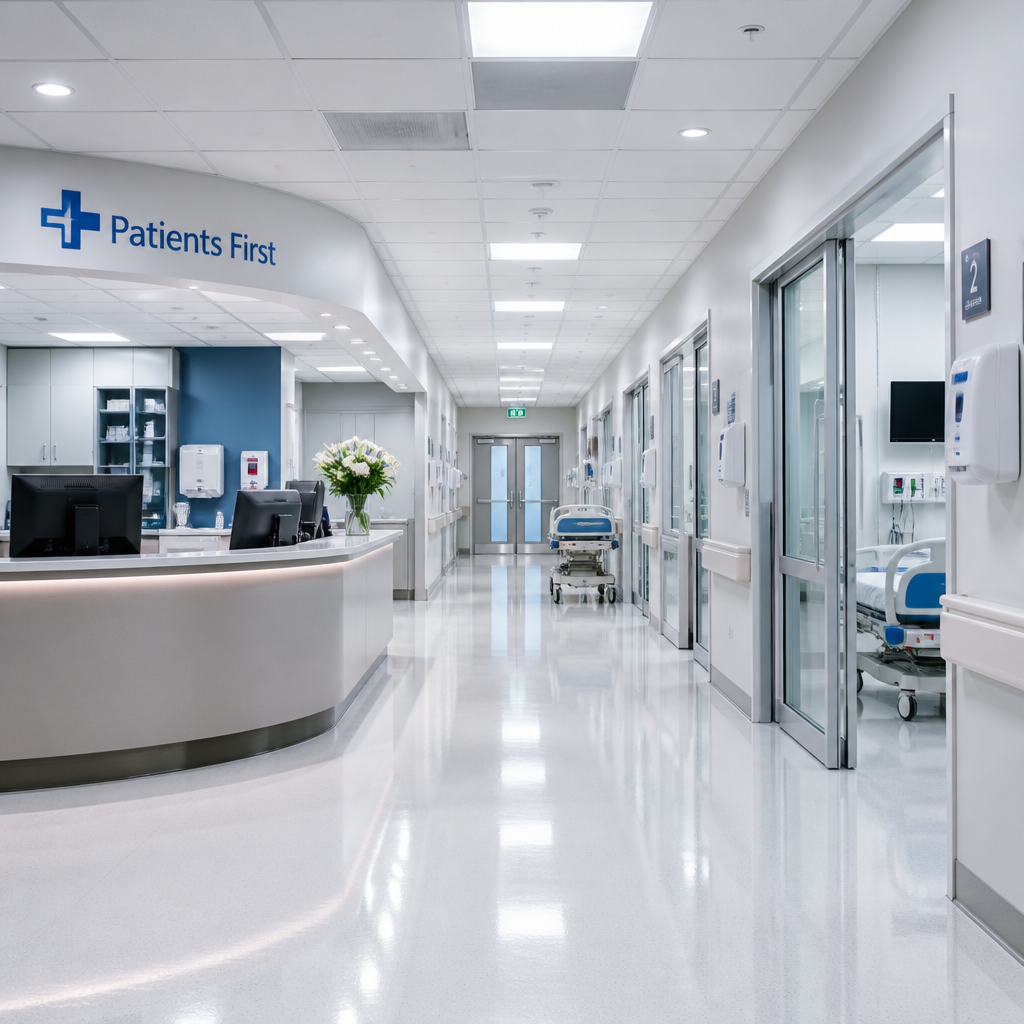
Healthcare facility cleaning in New Zealand operates under a formal regulatory framework that most other commercial environments do not face. The Health and Disability Services Standards, known as NZS 8134, govern the infection control environment in medical centres, clinics, and related facilities. The 2021 revision, NZS 8134:2021, specifically covers infection prevention and antimicrobial stewardship, and it is considered best practice for primary care.
The critical legal point that many practice managers do not fully appreciate is this: under NZS 8134, the medical centre, not the cleaning contractor, carries the compliance obligation. If a contractor fails to follow correct disinfection protocols and an infection incident occurs, the liability sits with the facility. Choosing the wrong contractor is therefore a governance risk, not simply an operational inconvenience.
The practical implication is that healthcare facility managers need to assess contractors against specific criteria: training records, product lists, zone cleaning protocols, documentation practices, and insurance coverage. A contractor who ticks these boxes is not automatically expensive.
What NZS 8134 Requires from a Cleaning Programme
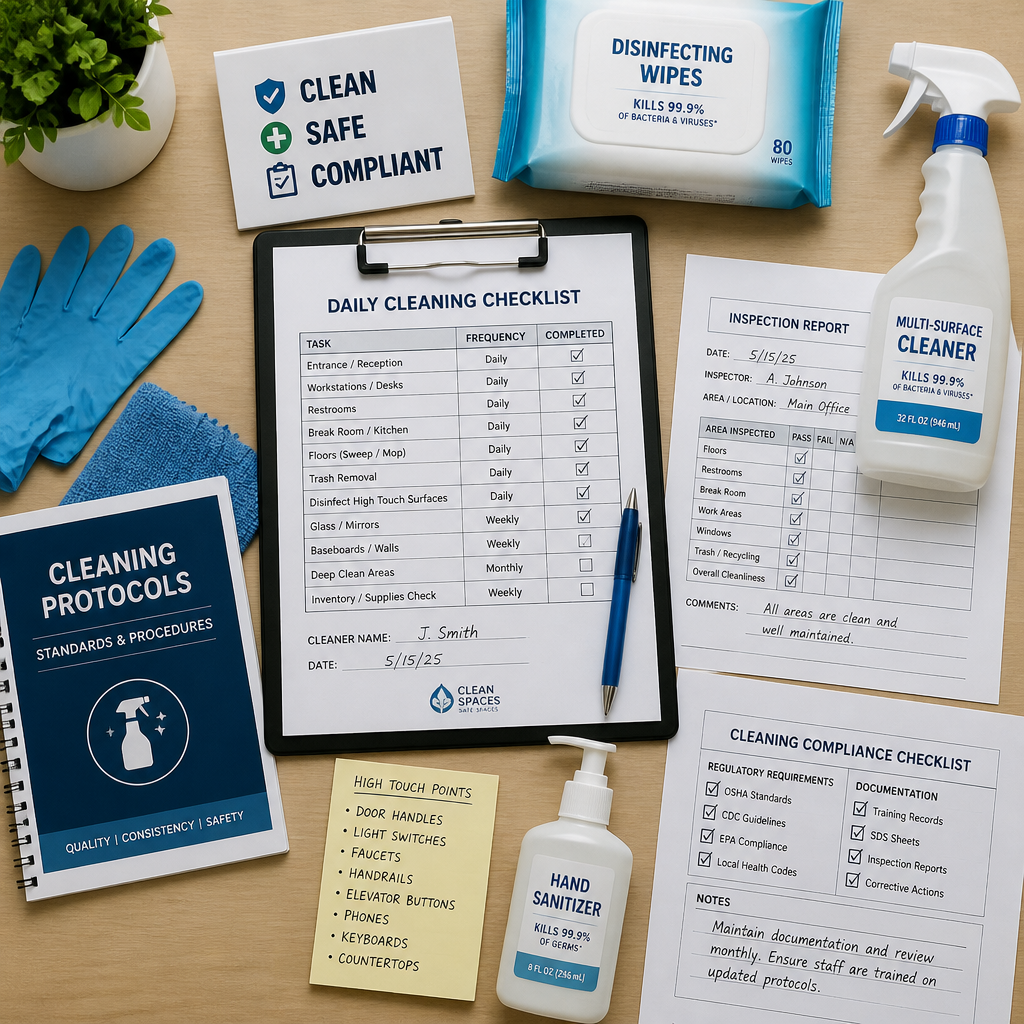
Standard 3.5 of NZS 8134 specifically addresses infection control, requiring that facilities have documented cleaning schedules, that cleaning activities are performed by trained personnel, and that the facility can demonstrate compliance through auditable records. A verbal description of what your cleaning contractor does is not evidence during an NZS 8134 audit. Written logs, signed completion records, and product specifications are what auditors look for.
Beyond NZS 8134, medical centres in New Zealand must also align with guidance from the Health Quality and Safety Commission New Zealand. For Auckland medical centres in particular, where patient volumes tend to be high and facilities may serve diverse communities, the infection control burden is significant.
Pro tip: Before signing a contract with any cleaning company for a medical centre or clinic, request a copy of their cleaning specification that references NZS 8134 compliance. If they have not heard of the standard, do not proceed.
Zone Cleaning: The Non-Negotiable System for Healthcare Facilities
Zone cleaning is the system by which different areas of a healthcare facility are cleaned using designated equipment, colour-coded cloths, and specific products that are not shared between zones. It exists to prevent cross-contamination between high-risk areas, such as treatment rooms and specimen handling areas, and lower-risk areas like waiting rooms and offices.
In practice, zone cleaning means a cleaner cannot use the mop from a patient bathroom to clean the reception floor. It means the cloth used on a clinical sink does not touch a waiting room table. These are not finicky preferences. They are infection control fundamentals that directly affect patient safety.
High-Touch Surfaces Demand Dedicated Attention
High-touch areas in medical centres require regular disinfection using products with verified kill claims against the pathogens of concern. Door handles, reception countertops, chair armrests, light switches, and bed rails in treatment rooms need to be disinfected on a scheduled frequency, not just when they visibly appear dirty. Many healthcare-associated infections are spread through surfaces that look clean to the eye but carry viable pathogen loads.
A cleaning company operating in a medical environment must be able to specify which disinfectant products they use, what their contact time is, and how they verify that staff are applying them correctly. This is non-negotiable for healthcare facility cleaning in New Zealand.
Documentation as a Clinical Record
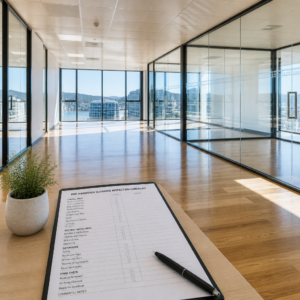
A cleaning programme is only as reliable as the documentation that supports it. Signed completion sheets, digital logs, and product usage records are not administrative overhead. They are the evidence base that protects a medical facility during audits, complaints, and, in serious cases, legal proceedings. Any contractor working in a healthcare environment should be providing this documentation as a standard deliverable, not as an optional add-on.
Comparing Cleaning Approaches for Schools and Medical Centres
The table below sets out the key differences between the three main cleaning approaches used in these specialised environments, so facility managers can assess what their situation actually requires.
| Approach | School Cleaning | Medical Centre Cleaning |
|---|---|---|
| Regulatory framework | Ministry of Education hygiene expectations and duty of care obligations | NZS 8134:2021 Health and Disability Services Standards, Health Quality and Safety Commission guidance |
| Staff vetting requirement | NZ Police vetting mandatory for all staff on site | Criminal background checks recommended; specific clinical environment training required |
| Key risk areas | Toilets, shared classroom surfaces, door handles, canteen areas, drinking fountain surrounds | Treatment rooms, waiting area high-touch surfaces, specimen handling areas, clinical sinks |
| Cleaning frequency | Daily during term; deep clean at each term break; major deep clean at summer changeover | Daily with documented frequency for high-touch surfaces; terminal cleans after infectious cases |
| Product requirements | Child-safe disinfectants with appropriate kill claims; allergen-safe floor care products | Hospital-grade disinfectants with verified pathogen kill claims; zone-specific product allocation |
| Documentation required | Cleaning schedules and completion records for board and ERO review | Auditable cleaning logs, product specifications, and training records for NZS 8134 compliance |
| Liability sits with | School board, under duty of care obligations to students and staff | Medical facility, not the cleaning contractor, under NZS 8134 |
What to Look for in a School or Healthcare Cleaning Contractor
The franchise cleaning model, offered by several large national operators, has a structural limitation in these environments: the person cleaning your school or medical centre may be a franchisee whose training, background, and accountability vary from site to site. Facilities with genuine compliance obligations need contractors where every person on site has been trained, vetted, and is working under a consistent quality system, not a franchise arrangement where standards depend on the individual operator.
When evaluating a contractor for school cleaning in Christchurch or medical centre cleaning in Auckland, the questions that matter are specific. Can they provide evidence of NZ Police vetting for all school-site staff? Do they operate a zone cleaning system with colour-coded equipment? Can they name the NZS 8134 standard and explain how their programme aligns with it? Do they carry public liability insurance that covers the sites they clean? Do they provide written documentation after every clean?
Insurance and Approved Supplier Status
Public liability insurance is non-negotiable. Any cleaning contractor operating in a school or medical facility without it exposes the facility to risk if an incident occurs on site. Approved supplier status with recognised bodies adds an additional layer of assurance that the contractor has been assessed against formal criteria, not just self-declared their own competence.
For schools and medical centres across Christchurch and Auckland, Triple Star Commercial Cleaning operates as an UpstreamNZ approved supplier with full public liability insurance coverage across all cleaning sites. The team works directly, not through a franchise model, which means the people cleaning your facility are accountable to a single quality standard, every visit.
Scheduling Around Operations
Schools and medical centres cannot simply be cleaned during business hours. A good contractor understands that school cleaning must work around student arrival and departure times, and that medical centre cleaning needs to minimise disruption to patient flow. Flexible scheduling, clear communication with facility managers, and the ability to respond to urgent cleaning needs, such as a containment clean after an infectious illness notification, are practical capabilities that matter as much as technical cleaning knowledge.
Triple Star’s services relevant to these environments include carpet cleaning, floor stripping and sealing, and regular commercial maintenance cleaning, all delivered with documented schedules tailored to each site’s operational requirements.
Frequently Asked Questions
Do all cleaning staff working in New Zealand schools need to be police vetted?
Yes. Cleaning staff working in New Zealand schools must pass NZ Police vetting. This applies to any person who is on site, regardless of whether students are present at the time. School boards carry the responsibility for ensuring their contracted cleaning providers comply with this requirement, and any contractor who cannot confirm police vetting for all deployed staff should not be engaged for school cleaning.
What is NZS 8134 and why does it matter for medical centre cleaning?
NZS 8134 is the Health and Disability Services Standard that governs infection prevention and control in New Zealand medical facilities. The 2021 version, NZS 8134:2021, sets out requirements for documented cleaning schedules, trained cleaning personnel, and auditable compliance records. Critically, the compliance obligation sits with the medical facility, not the cleaning contractor. This means that a medical centre that uses a non-compliant cleaning company is itself at risk during an audit or infection control review.
How often should high-touch surfaces in a medical waiting room be disinfected?
High-touch surfaces in medical waiting rooms, including door handles, chair armrests, reception counters, and light switches, should be disinfected at documented regular intervals throughout the day, not just once at the end of a session. The exact frequency should be specified in the facility’s cleaning schedule and aligned with the volume of patient traffic and any specific infection risk guidance from the Health Quality and Safety Commission New Zealand.
What is zone cleaning and is it required for healthcare facilities in New Zealand?
Zone cleaning is a system that assigns specific equipment, colour-coded cloths, and designated cleaning products to defined areas within a facility, preventing the transfer of pathogens between high-risk clinical zones and lower-risk general areas. While NZS 8134 does not prescribe the specific colour-coding scheme a contractor must use, the principle of preventing cross-contamination between zones is fundamental to infection control compliance. Any cleaning contractor working in a New Zealand medical centre should be operating a documented zone cleaning system.
Can a general commercial cleaning company handle school or medical centre cleaning in Christchurch or Auckland?
In most cases, no, not without specific additional protocols, training, and documentation in place. General commercial cleaning companies are typically set up for office environments where the infection control stakes and regulatory obligations are lower. Schools require police-vetted staff and compliance with Ministry of Education hygiene expectations. Medical centres require alignment with NZS 8134, zone cleaning systems, hospital-grade disinfectants, and auditable documentation. A contractor that cannot demonstrate these capabilities specifically is not an appropriate choice for either environment, regardless of price.
What should a school or medical centre ask a cleaning contractor before signing a contract?
Ask for: a written cleaning specification broken down by area and frequency; confirmation of NZ Police vetting for all staff assigned to the site (for schools); evidence of NZS 8134 alignment including product lists and zone cleaning protocols (for medical centres); a copy of their public liability insurance certificate; and examples of the documentation they provide after each clean. A contractor who cannot provide clear, written answers to all of these questions is not ready for a regulated cleaning environment.
Have you experienced a situation where your cleaning provider did not meet the standards required for your school or medical centre? Share what happened and what you changed, as your experience may help other facility managers avoid the same problem.
References
- New Zealand school cleaning requirements guide covering Ministry of Education expectations and compliance strategies
- Why school cleaning in New Zealand is a specialised service, including staff vetting requirements
- Healthcare cleaning compliance guide covering NZS 8134 obligations for New Zealand medical centres
- Royal New Zealand College of General Practitioners guidance on infection control and NZS 8134:2021 for primary care
- NZS 8134.3 Health and Disability Services infection prevention and control standard from Standards New Zealand