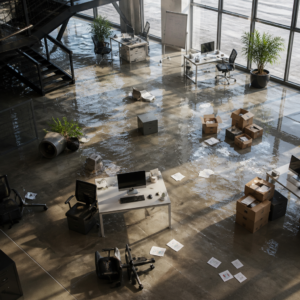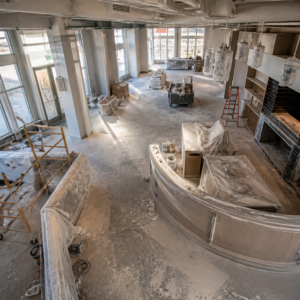
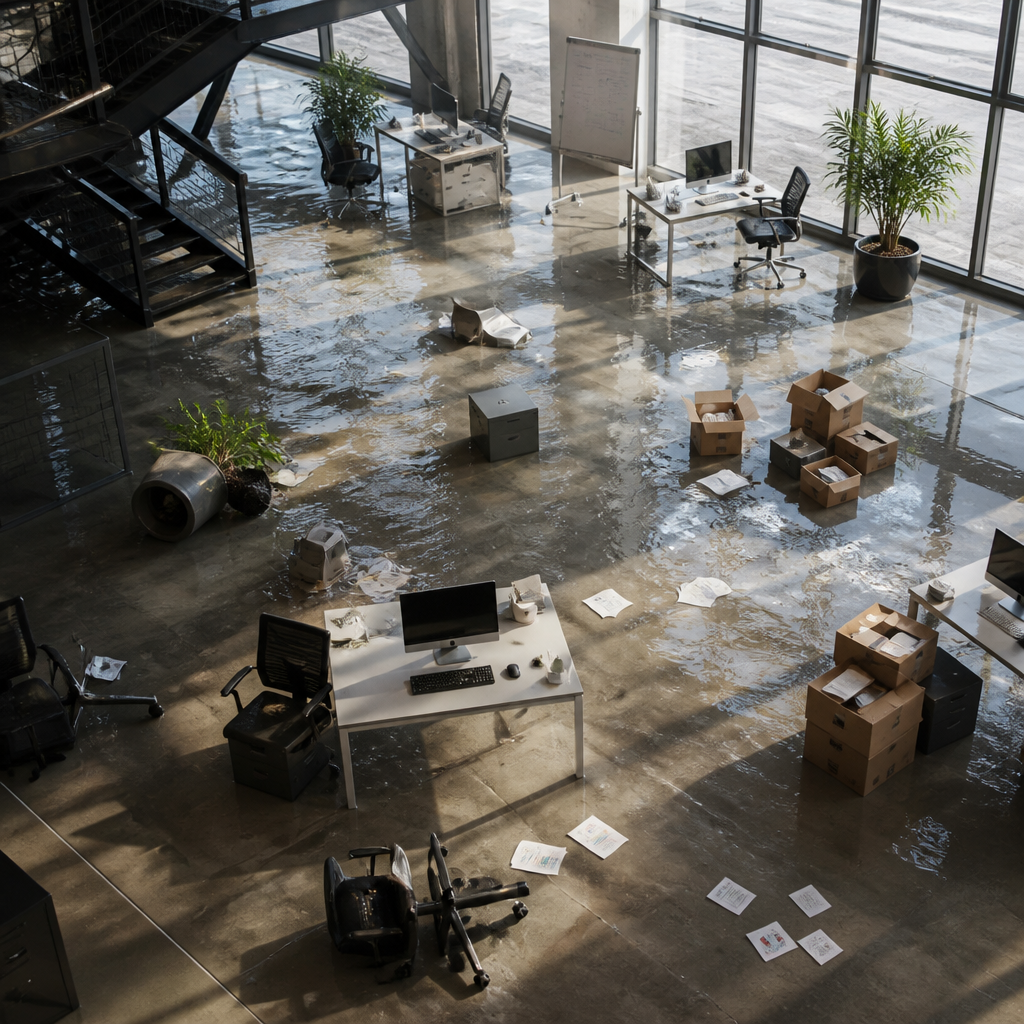
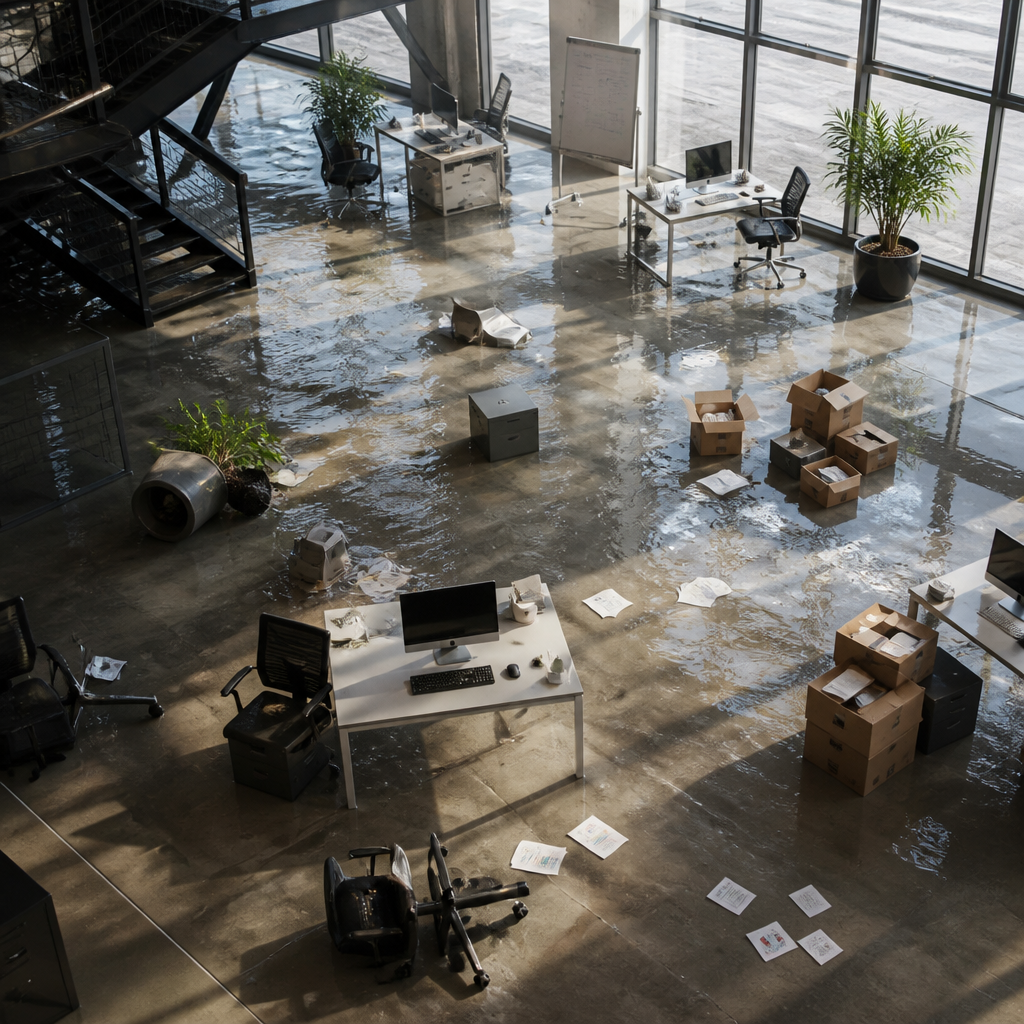
A burst pipe at 2am. A storm surge swamping a ground-floor office in central Christchurch. An appliance overflow soaking the carpet of an Auckland medical centre waiting room. Flooding in a commercial or residential property does not wait for business hours, and the decisions made in the first hour determine how bad the damage gets. Flood restoration in Christchurch and Auckland is a specialist process that goes well beyond mopping up, and the most expensive mistake most property managers and business owners make is treating it like routine cleaning. This guide tells you exactly what to do first, in order, so you protect your people, your property, and your insurance position.
Table of Contents
- Quick Takeaways
- Why the First Hour Matters More Than Anything Else
- Immediate Safety Steps Before Anyone Enters a Flooded Space
- Not All Floodwater Is the Same: Grey, Black, and Clean Water
- The Professional Flood Restoration Process: Step by Step
- Insurance, EQC, and What Commercial Properties Actually Get Covered For
- Comparison: DIY Cleanup vs. Emergency Cleaning Service vs. Full Flood Restoration
- Common Mistakes That Make Water Damage Far Worse
- Frequently Asked Questions
- References
Quick Takeaways
| Key Insight | Explanation |
|---|---|
| Mould can start growing within 24 to 48 hours | Moisture trapped in GIB board, carpet, and subfloor framing creates the right conditions for mould to establish before you can see or smell it. |
| Cut power before entering a flooded area | Electrical hazards in a wet environment are the number one immediate risk. Switch off at the mains before anyone walks into a flooded space. |
| Photograph everything before touching it | Insurers and EQC require documented evidence of damage. Photo and video records taken before cleanup are the strongest form of evidence you have. |
| Floodwater contamination type changes everything | Grey water from appliances and black water from sewers or external flooding carry bacteria and pathogens. Each category requires a different level of decontamination. |
| Fans and towels are not a restoration strategy | Surface drying does not remove moisture from inside walls, subfloor cavities, or concrete. Only industrial moisture meters and drying equipment confirm actual dryness. |
| Commercial properties are not covered by EQC | EQC (Toka Tu Ake) applies to residential land only. Commercial flood restoration costs come from your commercial property insurance policy. |
| Save your provider’s number before an event occurs | In a flood event, searching for a reliable emergency cleaning service costs precious time. Have a verified contact already saved for Christchurch and Auckland response. |
Why the First Hour Matters More Than Anything Else
Water does not sit still. From the moment a flood begins, water moves into every porous material it contacts: carpet underlay, GIB board, timber framing, concrete slab, ceiling panels. The structural and financial damage compounds the longer water stays in place. In commercial buildings, a flooded office or retail floor can mean closed premises, disrupted staff, and liability concerns, all of which compound by the hour.
The biology is even more urgent. Mould can begin growing on surfaces including GIB board, carpet, wood, and upholstery within 24 to 48 hours of moisture exposure. That is not a future problem. It is a problem that starts the same day as the flood event. Once mould establishes itself inside wall cavities or beneath flooring, remediation becomes substantially more involved and more expensive than it would have been with an immediate professional response.
The single most important decision is calling a professional flood restoration team immediately, not the following morning when it is more convenient. In Christchurch and Auckland, Triple Star Commercial Cleaning provides flood restoration services with 24/7 emergency availability, so your first step after ensuring safety is making that call.
Immediate Safety Steps Before Anyone Enters a Flooded Space
Before anything else, deal with the immediate hazards. A flooded building is not safe to walk into without checking these items first. Work through them in order.
Switch off power at the mains
Water and live electrical circuits are a fatal combination. Shut off power at the main switch before anyone enters a flooded area. If the switchboard is itself in the flooded zone and you cannot safely reach it, contact your electricity provider or an emergency electrician before entry. Do not assume the floor is safe just because the water looks shallow.
Stop the source if you can
If the flood is caused by a burst pipe, overflowing appliance, or internal plumbing failure, turn off the main water supply immediately. This limits the total volume of water entering the building. If the source is external flooding from a storm event, your focus is on containment rather than stopping the source.
Photograph and video document everything
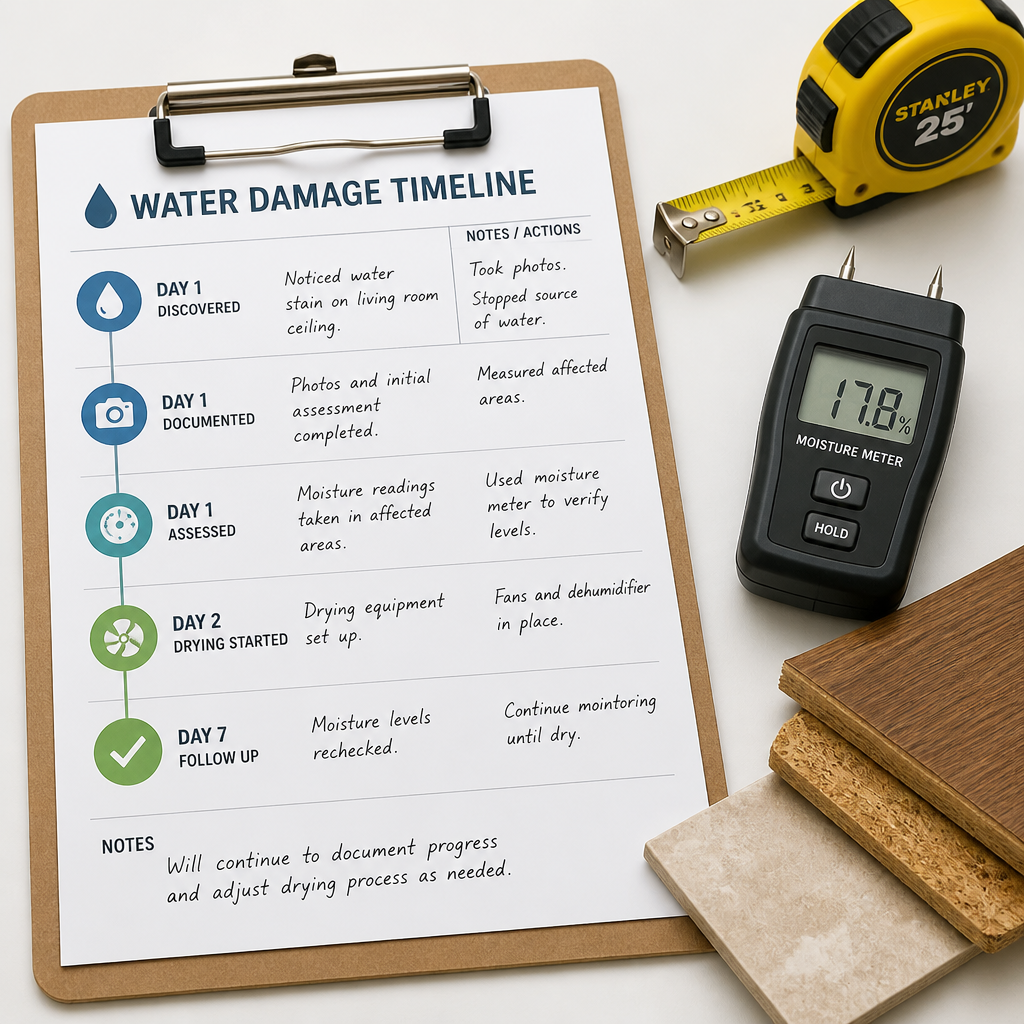
Before a single item is moved or a single litre of water is removed, take thorough photographic and video documentation of every affected area. Capture waterlines on walls, submerged items, damage to flooring, and any visible structural issues. This documentation is essential for your insurance claim. Do not skip this step even if you feel urgent pressure to start cleaning.
Move salvageable items out of the water
Protect electronics, documents, and important equipment by moving them to a dry area as quickly as possible, but only after power is confirmed off in the affected zone. Furniture, stock, files, and any items with irreplaceable data should be prioritised. Do not move items that are too heavy to lift safely with the people available, and never work alone in a flooded space.
Pro tip: Keep a one-page emergency response sheet for each property you manage, listing: mains water shutoff location, main electrical switchboard location, your flood restoration provider’s contact number, and your insurer’s emergency claims line. Stick it inside the main plant room door. When water is on the floor, you will not remember where to look.
Not All Floodwater Is the Same: Grey, Black, and Clean Water
The contamination category of the water involved determines how the site must be treated. This is not a minor detail. Misidentifying the water type leads to inadequate decontamination and ongoing health risks for anyone who uses the building.
Clean water comes from broken supply pipes, rainwater entry, or appliance supply line failures. It does not carry significant contamination at the point of entry, but it becomes contaminated the longer it sits and the more materials it contacts.
Grey water is contaminated with bacteria, mould, or chemicals. Sources include washing machine or dishwasher overflows, sink overflow, and water that has been sitting for more than 24 hours. Grey water poses genuine health risks and requires appropriate protective equipment and decontamination procedures during cleanup.
Black water is the most serious category. It includes sewer backflows, overflowing toilets, and external floodwaters from rivers or stormwater systems. Black water contains bacteria and pathogens that can cause disease. Any building flooded with black water requires professional decontamination before reoccupation, regardless of how the water looks once it has dried.
Floodwaters may contain sewage, which can harbour pathogens including E. coli and Salmonella. Even limited exposure to contaminated water or residue can pose significant health risks, which is why professional assessment and cleaning are essential before reoccupying a flooded property.
If you are not certain of the water category, treat it as the more serious type. A professional flood restoration assessment will confirm the contamination level and determine the appropriate response.
The Professional Flood Restoration Process: Step by Step
Flood restoration is a specialist remediation process. It is substantially different from routine commercial cleaning in its equipment, method, and verification requirements. Here is how it works when done properly.
Step 1: Damage assessment
A qualified team begins with a thorough assessment of the affected areas. This includes identifying the water source and category, mapping the extent of water spread using moisture meters and thermal imaging, and establishing a scope of work. Moisture meters are non-negotiable. Visual inspection alone misses water that has migrated inside walls and beneath flooring.
Step 2: Water extraction
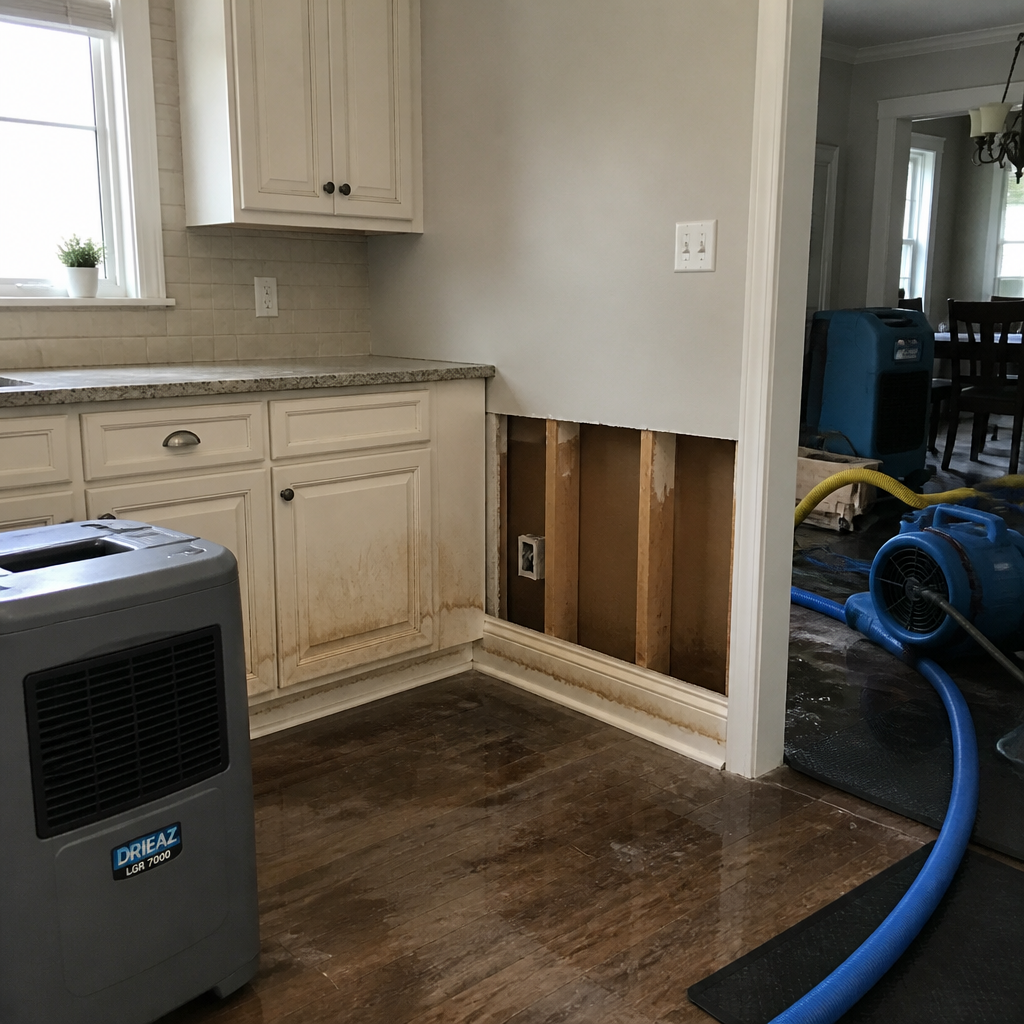
Industrial-grade extraction pumps remove standing water from the premises. This is not a job for a wet-dry vacuum. The volume and efficiency of commercial extraction equipment shortens the overall drying time significantly, which reduces the risk of mould and structural damage. Speed at this stage matters more than almost anything else.
Step 3: Structural drying and dehumidification
Once standing water is removed, industrial fans and dehumidifiers are deployed across the affected area. This is not the end of the process. Structural drying continues until moisture readings in walls, flooring, and subfloor cavities return to safe levels. This is monitored with moisture meters across multiple measurement points. A property that looks dry on the surface can still have moisture content in wall framing well above the threshold that sustains mould growth.
Step 4: Antimicrobial treatment
Affected surfaces are cleaned and treated with antimicrobial solutions. This step eliminates bacteria, mould spores, and other contaminants introduced by the water. For grey or black water events, this step is not optional. It determines whether the building is safe for people to return to.
Step 5: Documented confirmation of pre-event moisture levels
A professional restoration team provides documented confirmation that the building has returned to pre-event moisture levels. This documentation matters for insurance claims, for lease obligations, and for your own confidence that the problem is actually resolved. Triple Star’s flood restoration services in Christchurch and Auckland include this full-process approach, from assessment through to verified completion.
Pro tip: Ask your flood restoration provider for written moisture readings at the start and end of the drying process. If a provider cannot produce these readings, they cannot confirm the building is actually dry. Documented pre- and post-readings are the only objective evidence that structural drying was completed properly.
Insurance, EQC, and What Commercial Properties Actually Get Covered For
Understanding the insurance picture before an event saves significant time and stress when one occurs. The rules are different for residential and commercial properties, and the difference matters.
Residential properties: EQC and private insurance
For residential properties, natural hazard flood and storm damage is covered through the New Zealand Natural Hazards Insurance scheme (administered by Toka Tu Ake EQC), provided the home has a current private insurance policy that includes fire cover. EQC cover applies to certain areas of land under and around the insured home. Damage to the home itself is dealt with through the private insurance policy. If your home has been affected by a storm or flood, contact your private insurer first, who will manage the claim and involve EQC where relevant.
Commercial properties: no EQC cover
Commercial properties are not covered by EQC. All flood restoration costs for commercial buildings are managed through the commercial property insurance policy. This is an important distinction for property managers who manage both residential and commercial properties. The terms of commercial flood cover vary significantly between policies. Confirm with your insurer what water damage cover applies to each building before an event occurs, not after.
Documentation for insurance claims
Insurers require documented evidence. The photos and video taken before cleanup, the written scope from the restoration provider, and the moisture readings from the drying process all form the evidentiary basis of a claim. A professional restoration team familiar with insurance processes will provide job documentation in a format that supports your claim. If you manage commercial properties in Christchurch or Auckland, read Triple Star’s emergency guide specifically for property managers for additional detail on the insurance and response process.
Comparison: DIY Cleanup vs. Emergency Cleaning Service vs. Full Flood Restoration
Not every water event requires the same level of response. A small appliance overflow caught within minutes is a different situation from a storm surge that has sat in a building for six hours. The table below compares three common response approaches to help you decide what is appropriate for your situation.
| Response Approach | Best Suited For | Key Limitations |
|---|---|---|
| DIY cleanup (towels, mops, household fans) | Very minor spills caught immediately, affecting only hard, non-porous surfaces with no carpet or wall contact | Cannot remove moisture from inside walls, subfloor, or carpet underlay. Does not detect hidden moisture. No decontamination for grey or black water. Leaves mould risk unaddressed. |
| Emergency general cleaning service | Post-flood surface clean once water is extracted, e.g. removing debris and sanitising hard surfaces | General cleaners are not flood restoration specialists. They do not carry extraction equipment, moisture meters, or thermal imaging. They cannot confirm structural drying. |
| Professional flood restoration (full-process, specialist team) | Any event where water has contacted carpet, walls, flooring, or porous materials, or where the water source is grey or black category | Higher upfront cost than DIY, but prevents mould remediation, structural repair, and liability costs that follow incomplete treatment. Produces insurance documentation. |
In practice, the mistake most property managers make is using a general cleaning service for what is actually a flood restoration event, finding out three weeks later that moisture inside the walls has produced a mould problem, and then spending far more on remediation than the original restoration would have cost.
Common Mistakes That Make Water Damage Far Worse
Having responded to water damage events across commercial buildings, offices, and residential properties in Christchurch and Auckland, the same avoidable errors come up repeatedly. Here is what to avoid.
Waiting until business hours to call for help
Floods do not happen on schedule. Every hour of delay between the event and the start of extraction increases total moisture uptake by building materials. The biological clock for mould starts at the moment water contacts a porous surface, not at 9am the following morning. Use a provider with genuine 24/7 emergency availability.
Relying on visual inspection to confirm dryness
A wall can look and feel dry on its surface while the framing behind the cladding is still at moisture content well above safe thresholds. Professional moisture meters read through surfaces. Moisture meter readings are the only objective confirmation of actual structural dryness. Properties that “dried out” without proper moisture monitoring have produced mould growth months after the original event.
Not securing the building after a flood
A flooded building with structural damage, wet flooring, or exposed wiring presents genuine liability risk. Secure the entry points, post appropriate hazard notices, and ensure no staff or tenants re-enter until the area has been assessed. This applies to commercial properties especially, where duty of care to employees and visitors creates a legal obligation.
Treating all water damage events as the same job
A clean water pipe burst on an upper floor is not the same event as a stormwater backflow in a basement. The category of water, the duration of exposure, and the materials affected all determine the correct response. Applying a light cleanup to a black water event does not make the building safe. Always confirm the water category with your restoration provider before deciding on the scope of work.
Not having a pre-event emergency plan
When water is on the floor, people make poor decisions under stress. A documented emergency response plan, which includes your restoration provider’s contact number, your insurer’s emergency line, the location of the mains water shutoff, and the location of the electrical main, reduces the time wasted and the decisions made badly in the moment. For property managers overseeing multiple buildings, this plan should be specific to each site. Triple Star Commercial Cleaning covers both Christchurch and Auckland, and having the right contact saved before an event is the most effective preparation you can do.
Frequently Asked Questions
How quickly does mould start growing after a flood?
Mould can begin growing on surfaces including GIB board, carpet, wood, and upholstery within 24 to 48 hours of moisture exposure. This is why professional flood restoration needs to start immediately, not the following day. In warmer conditions or in areas with existing humidity, the timeline can be even shorter.
Is flood restoration covered by insurance in New Zealand?
For residential properties, natural hazard flood damage may be covered through the Natural Hazards Insurance scheme (Toka Tu Ake EQC) and your private home insurance policy, provided you have a current policy with fire cover. Commercial properties are not covered by EQC. Commercial flood restoration costs are covered through commercial property insurance. Review your policy terms with your insurer before an event occurs, because cover limits and exclusions vary significantly between policies.
What is the difference between flood restoration and regular commercial cleaning?
Flood restoration is a specialist remediation process that involves industrial water extraction, structural drying monitored with moisture meters and thermal imaging, antimicrobial decontamination, and documented confirmation that the building has returned to pre-event moisture levels. Regular commercial cleaning maintains a building in its normal condition. The equipment, training, and process are substantially different. Using a general cleaning team for a flood event typically results in incomplete drying and mould growth weeks later.
Can I use fans and dehumidifiers from a hardware store to dry out a flooded room?
Consumer-grade fans and dehumidifiers do not have the capacity to dry building structures in a timeframe that prevents mould growth. They can help with surface evaporation, but they will not remove moisture from inside wall cavities, beneath flooring, or from carpet underlay. Without industrial equipment and moisture meter verification, you cannot confirm the building is actually dry. For any flood event affecting carpet, walls, or subfloor, professional equipment is necessary.
Who should I call first when a commercial property floods?
Your priority sequence should be: ensure all occupants are safe and evacuated if needed, switch off power at the mains, stop the water source if possible, document damage with photos and video, then call your flood restoration provider and your insurer simultaneously. Do not wait until you have assessed all the damage before calling. The sooner a professional team is dispatched, the less total damage occurs. For Christchurch and Auckland commercial properties, Triple Star Commercial Cleaning is available for emergency flood restoration and can be reached at any time.
What types of commercial properties does flood restoration apply to?
Any commercial building can experience water damage. In practice, offices, retail stores, medical centres, schools, and body corporate managed buildings are among the most common commercial property types affected by flooding. Each type has different considerations. A medical centre, for example, requires a higher standard of antimicrobial treatment than a storage warehouse. Triple Star’s commercial flood restoration services in Christchurch and Auckland cover all these property types, including healthcare, education, and office environments.
How long does professional flood restoration take?
Timeline depends on the volume of water, the materials affected, the size of the area, and the water category. A single room affected by a clean water pipe burst may be fully dried and confirmed within a few days. A larger commercial space affected by external flooding with grey or black water contamination will take longer. A reputable provider will give you a realistic scope at the assessment stage and update you as moisture readings change throughout the drying process.
If you manage commercial or residential properties in Christchurch or Auckland and have dealt with a water damage event, share what worked in your response and what you would do differently next time in the comments below.
We would love your feedback and any insights you would share with others. What perspective would you add?
References
- Triple Star Commercial Cleaning: Flood restoration services for Christchurch and Auckland properties
- Triple Star Commercial Cleaning: Emergency flood restoration guide for property managers
- Mould health risks following flooding: what property owners need to know
- NHC Toka Tu Ake EQC: What is covered for storm and flood damage in New Zealand
- Water category classification and extraction process in professional flood restoration