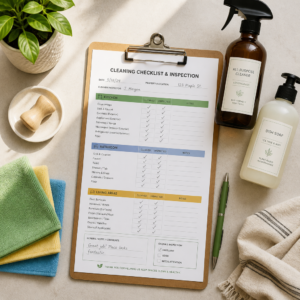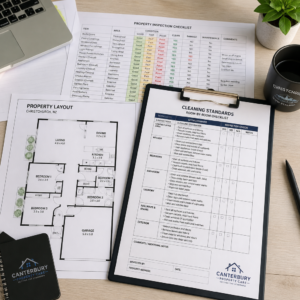

Most business owners in Christchurch find out their commercial cleaning company is the wrong fit only after something goes wrong. A missed clean before an important client visit. A cleaner without insurance who damages a floor. A company that sends different staff every week and has no idea where the mop bucket lives. Choosing the right commercial cleaning Christchurch provider is not complicated, but it does require asking the right questions before you sign anything. This checklist gives you a clear, practical framework to evaluate any commercial cleaning company, and to avoid the mistakes that waste time and money.
Table of Contents
- Why Most Businesses Choose the Wrong Cleaning Company
- Quick Takeaways
- Verify Insurance and Compliance First
- Evaluate Experience in Your Specific Sector
- Assess Service Range and Flexibility
- Comparing Commercial Cleaning Company Types
- Check Communication Standards and Staff Consistency
- Read Contracts Carefully Before You Commit
- Frequently Asked Questions
- References
Why Most Businesses Choose the Wrong Cleaning Company
The most common reason businesses end up locked into a bad cleaning contract is that they chose on price alone. A low hourly rate looks attractive until you realise the crew is under-resourced, the equipment is inadequate, and the company has no formal quality control process. Price should be a factor, but it should never be the only factor.
In practice, the businesses that get the most value from their commercial cleaning arrangements are those who treat the selection process like hiring a long-term supplier, not buying a commodity service. They verify credentials, ask for references from similar industries, and confirm what happens when something goes wrong.
Christchurch has a broad market of cleaning providers, from large national franchise networks to small independent operators. Each model has real trade-offs, and the right choice depends heavily on your building type, cleaning frequency, and how much direct oversight you want.
Quick Takeaways
| Key Insight | Explanation |
|---|---|
| Insurance is non-negotiable | Any cleaning company operating in your commercial premises must hold current public liability insurance. Ask for a certificate of currency before work begins. |
| Sector experience matters more than general experience | A company that cleans offices well may not understand the hygiene standards required for a medical centre or school. Confirm they have documented experience in your specific sector. |
| Staff consistency reduces risk | High staff turnover means unfamiliar cleaners accessing your premises regularly. Ask about average staff tenure and how the company manages substitutions. |
| Service range signals capability | A provider offering office cleaning, carpet cleaning, window cleaning, and floor stripping under one account is easier to manage and more accountable than coordinating multiple contractors. |
| Approved supplier status is a quality signal | Membership in networks like UpstreamNZ indicates the company has been independently vetted for compliance and service standards. |
| Clear communication protocols matter | You need a single point of contact who responds within a reasonable timeframe. Vague escalation paths lead to problems being ignored. |
| Contract exit terms reveal confidence | A cleaning company confident in its service will offer fair exit clauses. Overly long lock-in periods with no performance clauses are a warning sign. |
Verify Insurance and Compliance First
This is the step most businesses skip because it feels administrative. Do not skip it. If a cleaner without insurance slips on your premises, damages a client asset, or breaks equipment, the liability question becomes complicated very quickly.
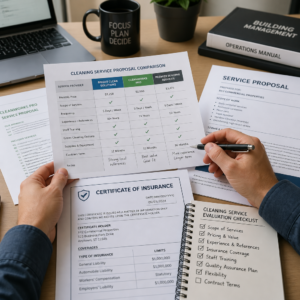
Ask any prospective professional cleaning services Christchurch provider to supply a current certificate of public liability insurance before they set foot in your building. Reputable companies have this documentation ready and will share it without hesitation. Companies that hedge or say they will send it later are flagging a problem.
What Approved Supplier Status Actually Means
Some commercial cleaning companies in Christchurch operate under approved supplier programmes such as UpstreamNZ. These programmes vet suppliers for compliance with health and safety requirements, insurance standards, and service quality benchmarks. It is not a guarantee of perfect service, but it does mean an independent third party has reviewed the company’s credentials. When comparing providers, approved supplier status is a meaningful differentiator, not just a logo on a website.
Pro tip: Always ask for the insurer’s name and policy number, not just a confirmation that insurance exists. Cross-check that the policy covers the type of work being performed, including specialist services like carpet cleaning or flood restoration if you need them.


Evaluate Experience in Your Specific Sector
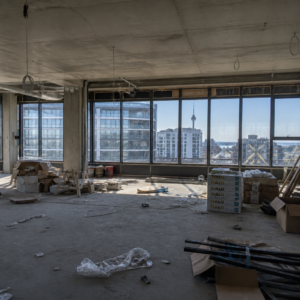
A cleaning company that services retail stores may not understand the infection control protocols required in a medical centre. A team experienced in large office blocks may be less effective in a post-construction environment where debris management and surface protection require different equipment and technique. Sector-specific experience is not optional for high-risk environments.
When evaluating office cleaning Christchurch providers, ask directly: how many clients do you currently service in this sector, and can you provide references from them? A credible company will have references available. A company that cannot name a current client in your sector is not the right fit for that environment.
Construction and Post-Construction Cleaning
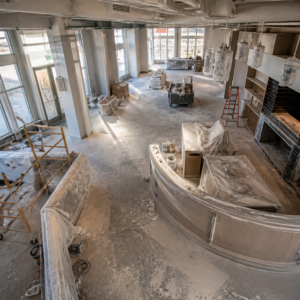
Builders cleaning and post-construction cleaning require a different operational approach to routine office cleaning. Crews need to work around active build schedules, understand the difference between rough clean, fix clean, and final clean stages, and use equipment appropriate for construction-grade dust and debris. Companies that treat builders cleaning as just another job will produce results that reflect that approach.
Medical Centres and Schools
These environments require documented hygiene protocols, often specific chemical certifications, and in many cases police vetting or working with children checks for staff. Confirm these requirements are met before engaging a provider. A cleaning company that is unprepared for these questions has not operated in regulated environments before.
“Businesses that standardise supplier vetting processes, including verifying credentials and sector experience, consistently reduce operational disruptions compared to those that select on convenience alone.” – McKinsey and Company, Operational Excellence research
Assess Service Range and Flexibility
Managing three different cleaning contractors for your office, your carpets, and your windows creates unnecessary administrative overhead and diffuses accountability. When something goes wrong, each company points at the other. A full-service provider who handles office cleaning, carpet cleaning, window cleaning, floor stripping and sealing, and end of lease cleaning under a single account simplifies management and creates a clearer accountability structure.
Beyond service range, scheduling flexibility is a real operational requirement, not a nice-to-have. Your building may need daily cleaning, or three times per week, or fortnightly deep cleans alongside weekly maintenance. Some facilities need after-hours cleaning to avoid disruption to staff. Ask prospective providers specifically how they accommodate schedule changes and what happens when you need to add or reduce services mid-contract.
Flood Restoration and Emergency Services
Christchurch businesses are not strangers to weather events and unexpected water damage. Having a cleaning company that also provides flood restoration services means you have a trusted, vetted supplier ready when an emergency happens, rather than scrambling to find someone new under pressure. This is a practical consideration worth raising during your initial conversations with any provider.
Pro tip: Ask the company what their response time is for urgent or emergency cleaning requests. A next-business-day response for a routine issue is acceptable. An emergency flood situation requires same-day capacity. Know what you are getting before you need it.

Comparing Commercial Cleaning Company Types
The Christchurch commercial cleaning market broadly breaks into three models: national franchise networks, independent local companies, and hybrid operators with local management and structured systems. Each has legitimate advantages and real limitations depending on your context.
| Company Type | Strengths | Limitations |
|---|---|---|
| National Franchise Networks (e.g., large multi-city brands) | Brand consistency, standardised systems, broad service coverage across multiple cities | Franchisee quality varies significantly, less personalised service, communication can go through multiple layers, local responsiveness can be slow |
| Independent Local Operators | Direct owner involvement, flexible pricing, strong local knowledge | May lack capacity for large or complex sites, insurance and compliance standards vary widely, limited service range |
| Established Local Company with Structured Systems (e.g., Triple Star Commercial Cleaning) | Local accountability with professional systems, approved supplier status, full service range including specialist services, direct communication with consistent staff | May not cover all regions outside their operating cities |
The data consistently shows that mid-size established local companies with documented processes outperform both ends of the spectrum for most commercial clients. You get the accountability of a local operator with the systems reliability of a larger organisation.
Check Communication Standards and Staff Consistency
Poor communication is the number one complaint commercial clients make about cleaning companies, and it is entirely predictable. If a company cannot give you a clear answer about who your account manager is, how to log a complaint, and what their expected response time is during the sales conversation, that ambiguity will get worse once the contract is signed.
Ask these questions directly before committing. Who is my main point of contact? What is your typical response time to a service complaint? If my regular cleaner is unavailable, what is the substitution process and how will I be informed? A company with real operational maturity will answer these questions without hesitation.
Staff Turnover and Security Implications
Commercial cleaning staff access your premises, often outside business hours, often unsupervised. High staff turnover means a different person accessing your building every few weeks, which creates both security and quality risks. Ask what the average staff tenure is at the company and how they conduct background checks for new staff.
A common mistake is assuming that all cleaning companies manage this the same way. They do not. Companies with strong retention and structured onboarding produce consistently better results than those operating with a revolving door of casual workers.
Read Contracts Carefully Before You Commit
Commercial cleaning contracts vary enormously in their terms. Some are month-to-month arrangements with reasonable notice periods. Others lock businesses in for 12 or 24 months with penalty clauses for early exit. Before you sign, make sure you understand the notice period required to terminate, what constitutes a breach of service, and what remedies you have if performance drops.
A performance-linked contract, or at minimum a clear service specification document attached to the agreement, gives you a benchmark against which to measure delivery. Vague contracts that describe services only in general terms make it difficult to hold the company accountable when standards slip.
According to research published by consumer and business advisory bodies, businesses that document service expectations clearly before a contract begins experience significantly fewer disputes over service quality than those who operate on verbal agreements or generic scope descriptions. Put your expectations in writing, and confirm the company has signed off on them specifically.
If you are operating across multiple sites in both Christchurch and Auckland, confirm that the cleaning company has genuine operational capacity in both cities, with local staff and local management, not a single head office managing crews remotely. The quality difference between genuinely local operations and remotely managed teams is significant and consistent.
Frequently Asked Questions
How much does commercial cleaning cost in Christchurch?
Commercial cleaning costs in Christchurch vary based on site size, cleaning frequency, and service type. Routine office cleaning for a small to medium office generally ranges from $25 to $50 per hour depending on scope. Specialist services like carpet cleaning, floor stripping and sealing, or post-construction cleaning are priced differently based on area and condition. Always request a site-specific quote rather than accepting a phone estimate, as accurate pricing requires understanding the actual space.
What questions should I ask a commercial cleaning company before hiring them?
Ask about their public liability insurance and approved supplier status, their experience in your specific industry sector, who your dedicated account contact will be, how they handle staff substitutions, what their complaint resolution process looks like, and what the contract exit terms are. These questions separate professional operators from companies who look good on paper but underdeliver in practice.
Is it better to hire a local Christchurch cleaning company or a national franchise?
For most commercial clients in Christchurch, an established local company with professional systems delivers better results than a national franchise. Local operators are more accountable, easier to communicate with, and more responsive to site-specific requirements. National franchises offer brand consistency but often struggle with variable franchisee quality and slower communication chains. The right answer depends on your specific requirements, but local and professional is a strong default position.
How do I know if a commercial cleaning company is trustworthy?
Verify their public liability insurance certificate directly, check whether they hold approved supplier status with a recognised programme, ask for references from current clients in a similar industry, and review how clearly they communicate their processes and service expectations. Trustworthy companies are transparent about their credentials and happy to provide documentation without being asked twice.
Do commercial cleaning companies in Christchurch offer specialist services like carpet cleaning or end of lease cleaning?
Many do, but not all. Some commercial cleaning companies subcontract specialist work to third parties, which reduces accountability. Look for a provider who performs carpet cleaning, window cleaning, floor stripping and sealing, and end of lease cleaning with their own trained staff and equipment. This keeps accountability in one place and makes it easier to manage quality across all services.
What is builders cleaning and when do I need it?
Builders cleaning refers to post-construction cleaning services carried out after a build or renovation project is complete. It typically involves removing construction dust and debris, cleaning all surfaces, sanitising bathrooms and kitchens, and preparing the space for occupation. You need it at the end of a construction project before the space is handed over or occupied. Builders cleaning requires specialist equipment and technique that differs from routine commercial cleaning, so confirm the company has documented experience in this area before engaging them.
If you manage commercial properties or facilities in Christchurch or Auckland, we would value your thoughts on what factors mattered most when you chose your current cleaning provider.
References
- WorkSafe New Zealand: guidance on contractor health and safety obligations for businesses engaging cleaning service providers
- Forbes: research and analysis on operational supplier vetting and small business procurement best practices
- McKinsey and Company: operational excellence frameworks for selecting and managing service suppliers in commercial environments
- Statista: commercial cleaning industry market data and growth trends relevant to Australasia and New Zealand
- Business.govt.nz: New Zealand government guidance on commercial contracts, supplier selection, and business compliance requirements